





 Portuguese
  English
  Spanish
  3 min of reading
  30 comments


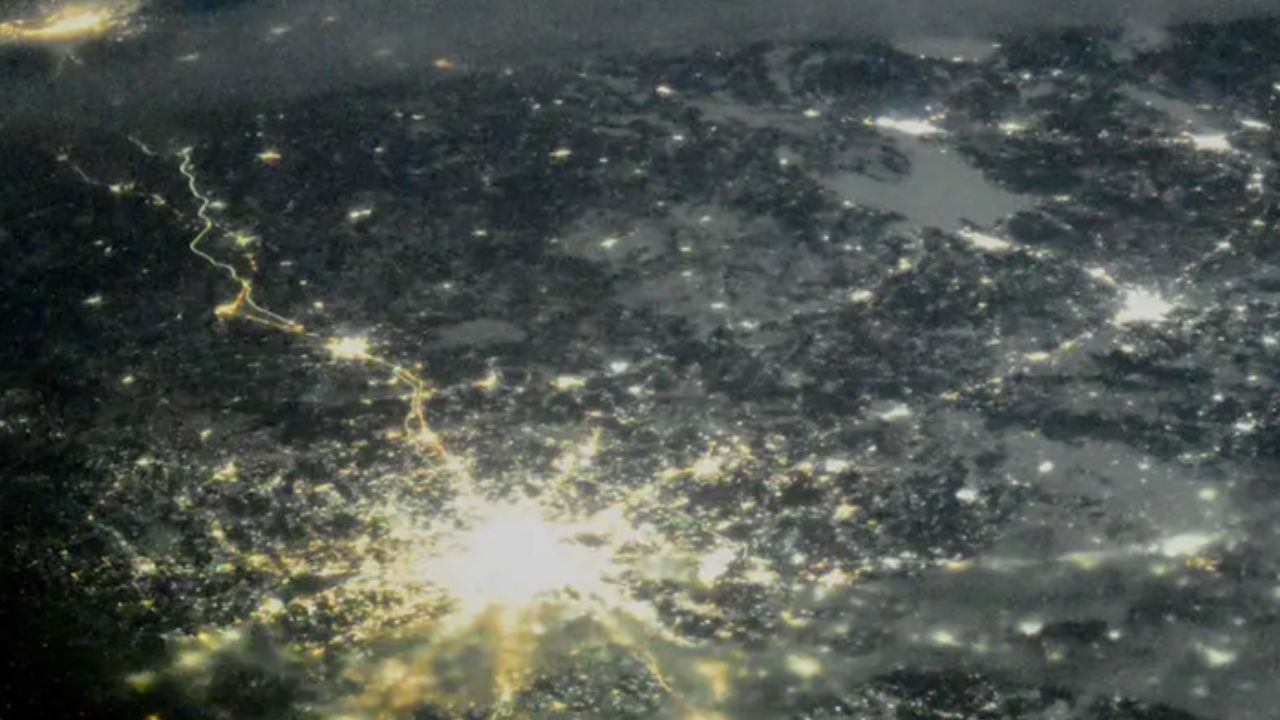


As Russia’s Economy Faces Stagnation, Falling Ruble, and Record High Interest Rates, Sweden Turned to Satellite Images to Expose Signs of Economic Slowdown in Moscow, Challenging the Kremlin’s Official Numbers.
The Russian economy is an enigma for many. While the Kremlin insists on narratives of stability and resilience, data shows worrying signs of slowdown. After the invasion of Ukraine, the Russian economy seemed to maintain a rapid pace with a “war economy.” But that is changing. Recent data indicates stagnation in civilian sectors and increasing economic uncertainty.
Tensions between the economic elites are also rising. The ruble recently hit its lowest point in two years as companies face difficulties with loans and payments. Is the Russian economy facing a dead end?
Sanctions and War

There is no denying that the sanctions imposed by the West have shaken Russia. These restrictions have limited the country’s options, reducing its ability to use military spending to sustain economic growth. Companies like Russian Railways have reported significant drops in cargo transport, cutting investments and raising prices.
-
Brazilian city bets on the business environment to generate jobs and attract investments in the energy sector — secretary reveals strategy at Macaé Energy 2026.

-
50 viaducts, 4 tunnels, 28 bridges, and 40 kilometers of bike paths: BR-262 in Espírito Santo will receive 8.6 billion reais for the largest engineering project in the state’s history, inspired by the Immigrant Highway in São Paulo.

-
Brazil produces too much clean energy and doesn’t know what to do with it: over 20% of solar and wind capacity was wasted in 2025 while investors flee and 509 renewable generation projects were abandoned in the last year.

-
Piauí will produce a new fuel that replaces diesel without needing to change anything in the truck’s engine and reduces pollutant gas emissions by half: truck drivers from all over the Northeast are already celebrating the news that will arrive later this decade.


Additionally, the Central Bank of Russia has drastically raised interest rates to 21%, the highest level since the fall of the Soviet Union. This increase, while necessary to control inflation, has made the economic environment even more challenging for the private sector. The combination of sanctions, inflation, and high rates makes it clear: the situation is complicated.
Sweden’s Distrust in Russia’s Official Data
Sweden, on the other hand, does not trust the numbers released by the Kremlin. Elisabeth Svantesson, Sweden’s Finance Minister, pointed out glaring inconsistencies. According to her, the official data indicating an inflation rate of 9.5% does not match the reality of high interest rates, capital flight, and drastic cuts in domestic consumption.
Svantesson argues that the Kremlin’s narrative is constructed to appear resilient to sanctions, but the alternative economic data tells a different story of Russia. This distrust led Sweden to seek unconventional methods to assess the Russian economy.
Observing Moscow from Space
If the official data is unreliable, what to do? Sweden found a creative solution: satellite images. By comparing nighttime images of Moscow from 2021 to 2023, a significant reduction in lighting was observed, especially in the suburbs. This indicates lower energy consumption, reflecting a drop in economic activity.
But how are nighttime lights related to Russia’s economy? It is simple: more illuminated cities generally mean higher production and consumption. The reduction of lights in Moscow could be a sign of power cuts or even the shrinking of the local economy.
Narrative Manipulation and the Hidden Truth
Despite the evidence, Russia continues to promote the idea that the Russian economy is stable. This narrative is crucial for maintaining internal support and deterring Ukraine and its allies from believing that the sanctions are working. However, alternative analyses, such as satellite images, weaken this narrative.
The use of creative methods, such as observing nighttime lighting, highlights the importance of looking beyond the official numbers. It is a clear metaphor: sometimes, it is necessary to “illuminate the darkness” to see the truth. Sweden has shown that when data is manipulated, space can provide a more accurate view of reality.







Os BRICS criado em 2009, até hoje não se viu nada de concreto, quer enfrentar o DÓLAR americano, com excessão da China tirando vantagem econômica. Temos dois países FHUDDIDOS economicamente, nesse BRICS , Brasil e Russia. Tá difícil decolar! A Rússia ainda tem a vantagem das ogivas nucleares em caso de guerra. Já o Brasil, fará guerra disparando “ABROBA”…kkk
Sem dinheiro, e cochilando em cima de 6.500 bombas atômicas, vendendo tecnologia de mísseis e bombas , para Korea, Paquistão, Irã, e quem mais pagar!!
Sempre a mesmas desculpas caolhas… a Rússia vai quebrar, ta falida, naondura 1 mês…. sempre as mesmas visões caolhas…. e a Rússia persiste mesmo com seus problemas como qualquer outra nação…. que tem seus problemas… porém segue firme e forte….