





 Portuguese
  English
  Spanish
  4 min of reading
  0 comments


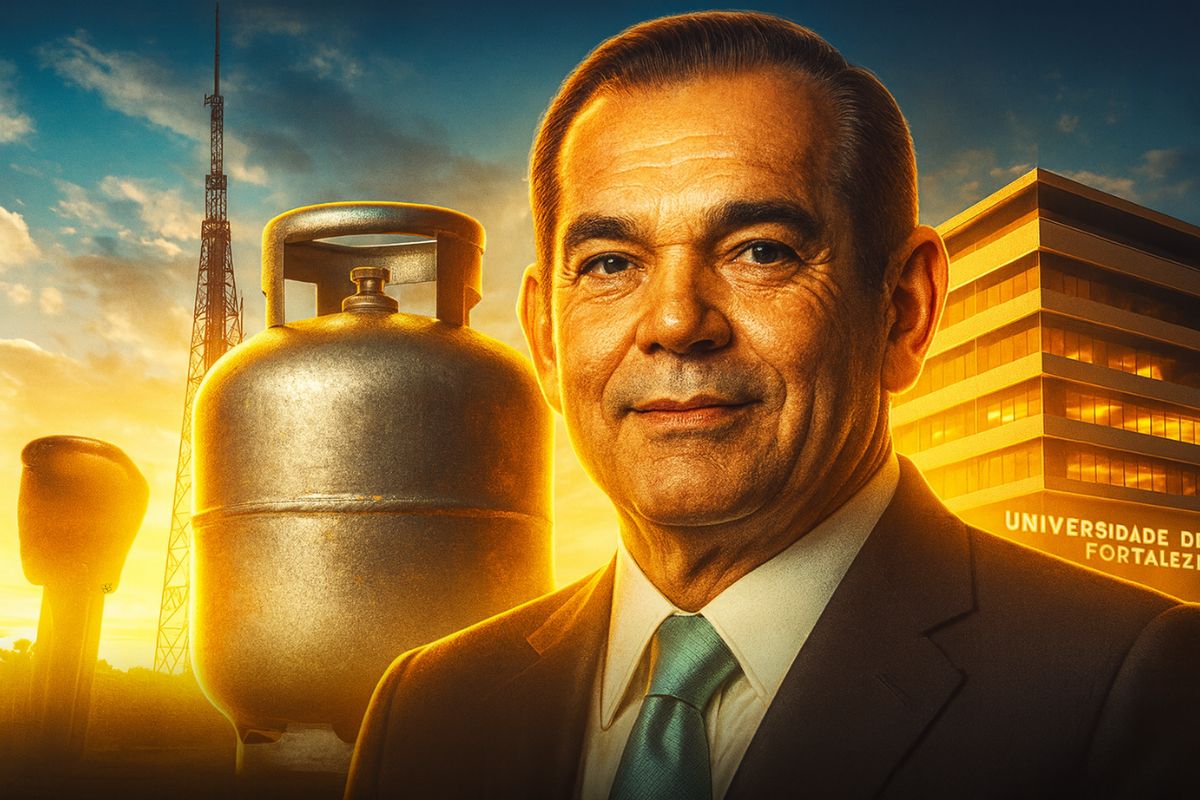
Edson Queiroz: The Visionary Who Transformed the Northeast. The Journey of Edson Queiroz Reveals How Innovation, Boldness, and Constant Work Changed the Economic and Social Landscape of the Region
The story of Edson Queiroz is one of the most remarkable in Brazilian entrepreneurship. From a boy who disassembled bicycles and sold confetti during carnival, he became one of the country’s largest businessmen, leaving a legacy that transcends borders and remains alive to this day. More than just founding companies, Edson built an empire that changed the economy of Ceará and projected the Northeast in sectors such as energy, industry, communication, agribusiness, and education.
According to the official biography written by Lira Neto, based on family and business documents, Edson Queiroz left a profound impact not only on business but also on the cultural and social life of the region. His strategic vision, combined with a rare courage to take risks where others retreated, made him one of the most influential figures in Brazil’s recent history.
From Small Sales to Boldness in Business
The young Edson Queiroz began working early in Fortaleza, helping at the family grocery store and selling trinkets on the streets. His creativity led him to make homemade paints and adapt products according to festive dates. Even as a youth, he demonstrated the formula that would guide his life: creativity, experimentation, and a nose for opportunities.
-
Brazilian city bets on the business environment to generate jobs and attract investments in the energy sector — secretary reveals strategy at Macaé Energy 2026.

-
50 viaducts, 4 tunnels, 28 bridges, and 40 kilometers of bike paths: BR-262 in Espírito Santo will receive 8.6 billion reais for the largest engineering project in the state’s history, inspired by the Immigrant Highway in São Paulo.

-
Brazil produces too much clean energy and doesn’t know what to do with it: over 20% of solar and wind capacity was wasted in 2025 while investors flee and 509 renewable generation projects were abandoned in the last year.

-
Piauí will produce a new fuel that replaces diesel without needing to change anything in the truck’s engine and reduces pollutant gas emissions by half: truck drivers from all over the Northeast are already celebrating the news that will arrive later this decade.


In the 1940s, during World War II, Edson realized that the sugar trade could be exploited in Fortaleza. Boldly, he used small sailboats to evade submarine attacks, ensuring exclusive supply and high profits. This experience showcased his ability to turn crises into opportunities.
The Leap to the Energy Sector
In 1951, Edson founded Ceará Gás Butano, at a time when the use of cooking gas was still viewed with suspicion. Even facing cultural resistance and high costs, he persisted. He invested in aggressive campaigns, installment sales, and strategic partnerships until he secured a foothold in the market. A few years later, his group established itself as a regional leader and paved the way for national expansion.
His strategy was not limited to distribution: Edson invested in metalworks, stove factories, and gas cylinders, ensuring control over the production chain. This integrated vision allowed the group to become an industrial powerhouse in the Northeast.
Communication, Education, and the Brand in Culture
In addition to energy, Edson Queiroz revolutionized the communication sector by acquiring Rádio Verdes Mares and founding TV Verdes Mares, a Globo affiliate in Ceará. His boldness was exemplified when he personally climbed an 80-meter transmission tower to inspect the work. The gesture symbolized his style: leading by example and not fearing risks.
Another milestone in his life was the creation of Universidade de Fortaleza (Unifor) in 1971. Today, with over 100,000 graduates, the institution has become a reference in private higher education in the North and Northeast. Edson understood that education was a pillar of regional development and invested a significant portion of the group’s profits to keep the university competitive and of high quality.
The Legacy After the Tragedy
On June 8, 1982, Vasp flight 168 collided with Serra da Aratanha in Ceará, killing 137 people. Among them was Edson Queiroz, at the age of 57. His sudden death shocked the country and left a void in the business world.
His widow, Yolanda Queiroz, took over the leadership of the group, ensuring business continuity and preserving her husband’s legacy. Today, the Grupo Edson Queiroz is a reference in sectors such as gas, mineral water, communication, agribusiness, and education, with billion-dollar revenue and a presence throughout the country.
The life of Edson Queiroz proves that the courage to innovate and the determination to face obstacles can transform entire realities. From street commerce to building a national conglomerate, he showed that the Northeast could compete on equal footing with the largest centers in Brazil.
And you, do you believe that stories like that of Edson Queiroz can still be repeated in today’s Brazil? What characteristics of this legacy should inspire new entrepreneurs? Leave your opinion in the comments — we want to hear from those who live this reality firsthand.







-

Uma pessoa reagiu a isso.