





 Portuguese
  English
  Spanish
  6 min of reading
  0 comments


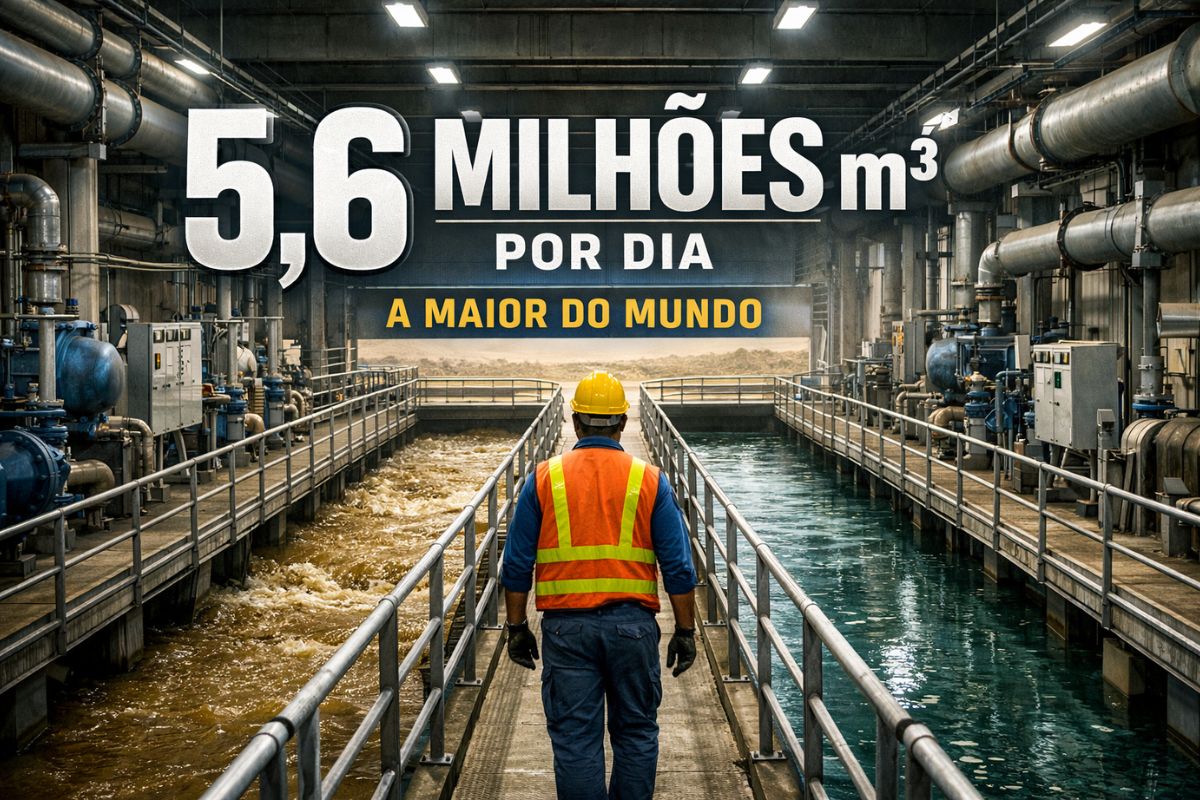
Designed To Capture And Treat Wastewater From The Bahr El Baqar Canal, The Largest Sewage Treatment Plant In The World Reuses 5.6 Million Cubic Meters Per Day, Irrigating 140 Thousand Hectares And Becoming An Egyptian Shield Against Scarcity, Extreme Heat And Future Water Insecurity In The Warmer 21st Century
In September 2021, Egypt inaugurated in the Port Said region, in the north of the country, the largest sewage treatment plant in the world, the Bahr el Baqar complex, built between September 2019 and May 2021 to treat up to 5.6 million cubic meters of water per day and process 64.8 cubic meters per second in four identical lines of advanced treatment.
The project, budgeted at about US$ 739 million with financing split between the Egyptian government, the Arab Fund for Economic and Social Development, and the Kuwait Fund, was conceived to reverse decades of pollution in the open canal constructed in the late 1960s, while addressing a growing water crisis in a country whose population jumped from 34.78 million inhabitants in 1970 to 107.5 million in 2020 and recorded in 2021 the hottest summer in over 70 years of measurements, with an average of 31.2 degrees Celsius.
From Agricultural Drainage Canal To Critical Pollution Focus

The history of the largest sewage treatment plant in the world begins with another engineering project, the Bahr el Baqar canal, built in the late 1960s to drain agricultural and industrial wastewater from secondary areas of the Nile delta.
-
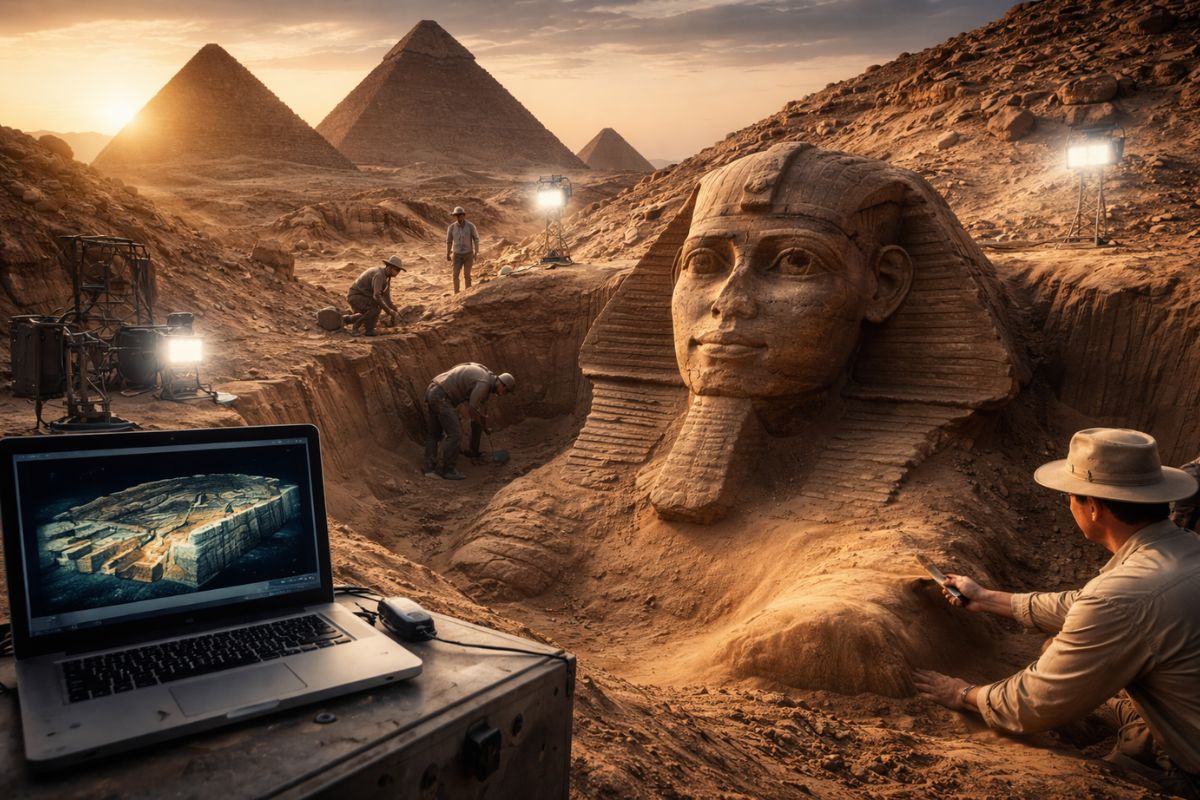
Italian researchers have detected what appears to be a second Sphinx buried under the sands of Egypt, and satellite scans reveal a gigantic underground megastructure hidden beneath the Giza Plateau for over 3,000 years.
-
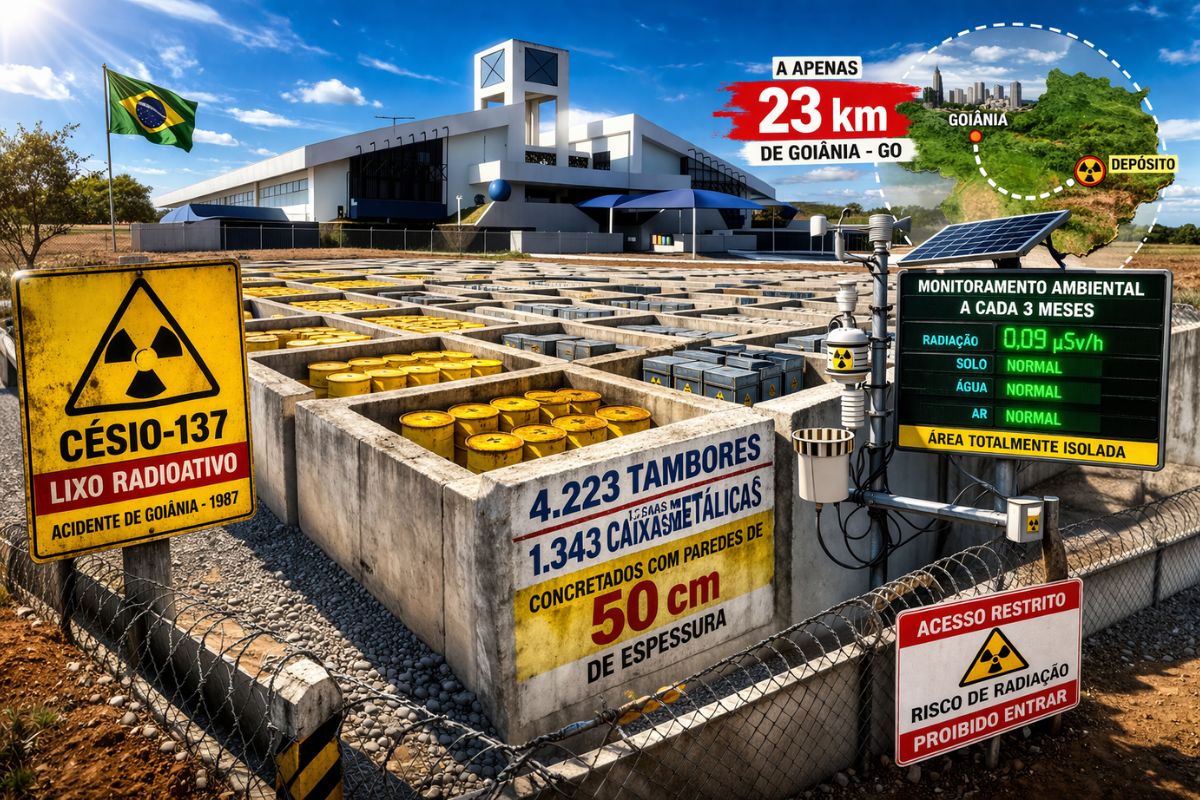
There are 4,223 drums and 1,343 metal boxes concreted with 50-centimeter walls that store the radioactive waste from Cesium-137 in the worst radiological accident in Brazil, just 23 kilometers from Goiânia, with environmental monitoring every three months.
-
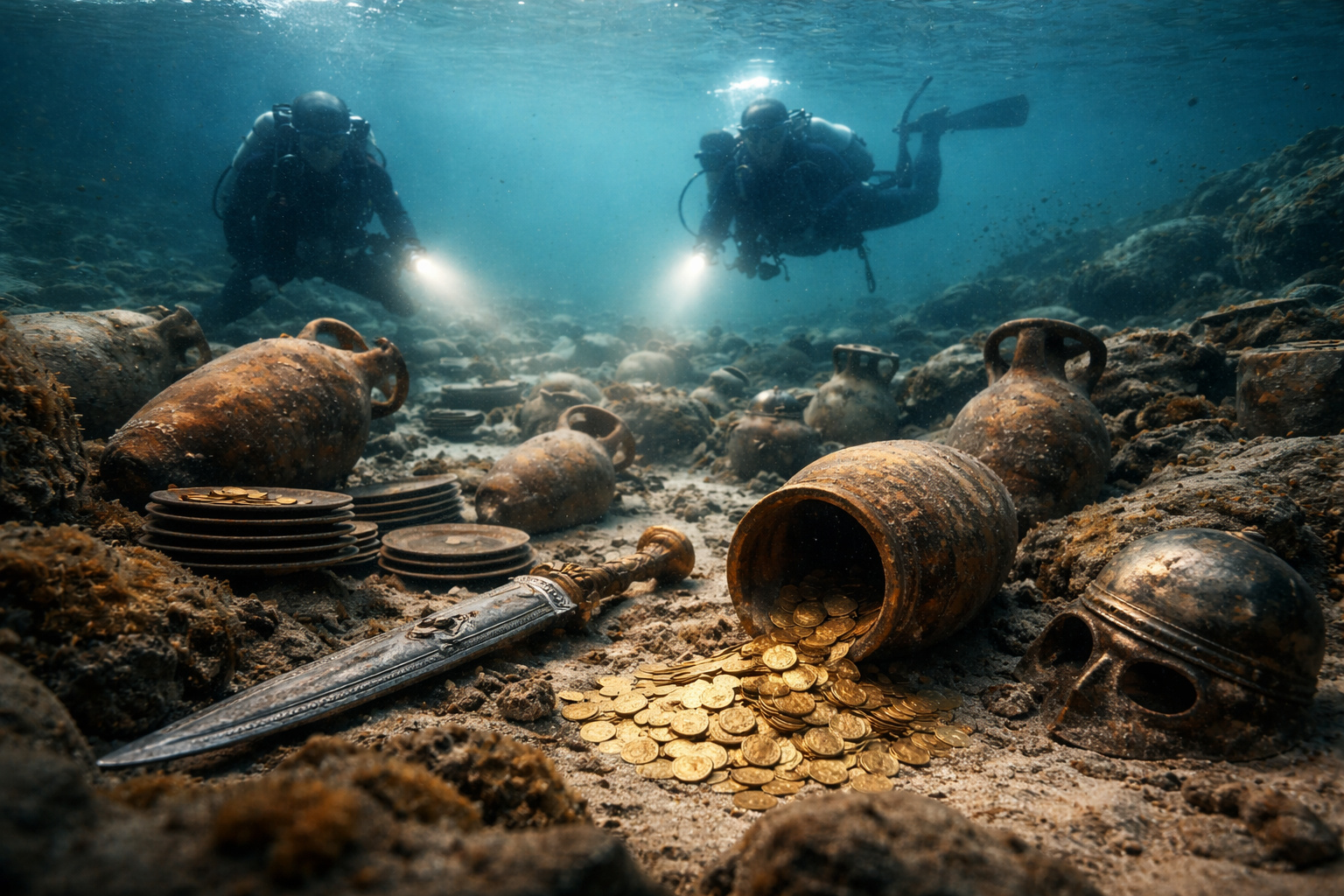
Giant Roman treasure found at the bottom of Lake Neuchâtel in Switzerland reveals an advanced trade system, circulation of goods, and armed escort in the Roman Empire about two thousand years ago.
-
He buried 1,200 old tires in the walls to build his own self-sufficient house in the mountains with glass bottles, rainwater, and an integrated greenhouse.

The original goal was to divert excess water from the river and reclaim land for agriculture in a strategic region near the Mediterranean and the Suez Canal.
With the advance of industrialization in Port Said, the fifth most populous city in Egypt, the canal ceased to be just an agricultural drainage route and became a dumping ground for industrial effluents, agricultural runoff, and partially treated domestic sewage.
The result was a highly polluted watercourse, with elevated levels of organic matter, nitrogen, phosphorus, heavy metals, and pathogens, compromising aquatic life and the health of the surrounding population.
The deterioration of water quality added to a global context in which only about 1 percent of the planet’s water is suitable for consumption, 40 percent of land is arid, and approximately 4.2 billion people live without basic sanitation, according to UN data, which put additional pressure on arid climate countries like Egypt.
How The Largest Sewage Treatment Plant In The World Works

The Bahr el Baqar complex occupies about 650,000 square meters near Port Said and was built in approximately 20 months, with more than 6,500 workers operating in three shifts and requiring the driving of 6,500 piles of 80 by 100 centimeters to stabilize the sandy soil and support the foundations.
Wastewater reaches the largest sewage treatment plant in the world through three major drains, one of which is 106 kilometers long connecting the eastern part of Greater Cairo to Lake Manzala.
From there, the water goes through catchment channels, pumping stations, rapid and slow mixing basins, coagulation, flocculation, sedimentation, filtration, and disinfection with ozone and chlorine, in a physical and chemical tertiary treatment designed to produce water of suitable quality for irrigation and aquaculture.
The system consists of four identical treatment units, each with its complete line of catchment, mixing, sedimentation, and filtration, which allows for operation to be modular according to flow and maintenance without stopping the entire plant.
At full capacity, the set can process about 5.6 million cubic meters of water per day, equivalent to filling approximately 2,000 Olympic swimming pools daily.
Sludge, Solar Energy And Three World Records In The Desert
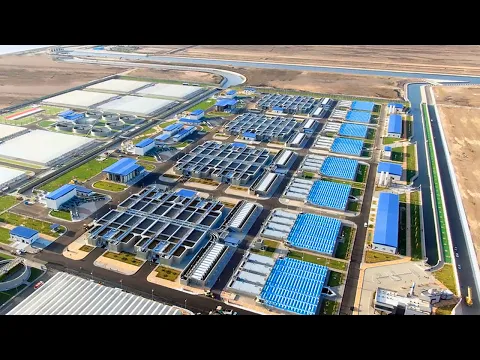

In addition to water treatment, the largest sewage treatment plant in the world operates a complex sludge management line.
The system includes thickening basins, mechanical drying units, and solar drying structures that together allow for processing about 490,000 tons of sludge per year to a drying level of 24 percent, converted into approximately 165,000 tons at 75 percent drying.
These drying units form the largest solar-powered sludge drying system in the world, with about 250,000 square meters of dedicated area, which reduces the use of conventional energy and decreases the volume of waste to be disposed of or reused.
In terms of numbers and the scale of the equipment, Bahr el Baqar holds three records approved by the Guinness World Records: largest water treatment installation with a capacity of 64.8 cubic meters per second, largest sludge treatment plant, and largest ozone generator operated by a single operator, consolidating the project as a showcase of water engineering in arid climate.
Irrigation Of 140 Thousand Hectares And Reinforcement Of Agricultural Production
The treated water at the largest sewage treatment plant in the world does not simply return to the canal.
The project envisions that the processed volume will be sent through tunnels that cross under and along the Suez Canal to the Sheikh Jaber canal, from where it is distributed to agricultural areas.
According to official figures, the reused water allows for the irrigation of about 140 thousand hectares of land, approximately equivalent to 129,629 standard FIFA football fields, expanding the agricultural frontier in a region marked by dry climate and soils that heavily rely on irrigation to be productive.
In practice, this means that every cubic meter recovered at Bahr el Baqar is no longer just waste and becomes an input for local agriculture and fishing, alleviating pressure on the Nile and transforming sewage and agricultural drainage into part of the solution for water supply in rural areas of the country.
Population Growth, Extreme Heat And The Egyptian Water Crisis
Egypt is identified by the UN as a country on track for a potential water crisis by 2050, pressured by three main vectors: more frequent droughts, rising average temperatures, and accelerated population growth.
World Bank data indicates that the Egyptian population increased from 34.78 million in 1970 to 107.5 million in 2020, a growth of approximately three times in half a century, surpassing the proportional increase recorded in Brazil during the same period.
The recent warming exacerbates the scenario.
Records from the German meteorological service show that 2021 recorded the hottest summer in over 70 years of measurements in the country, with an average of 31.2 degrees Celsius.
Higher temperatures mean greater water demand for human consumption and, especially, for agricultural irrigation, which is precisely the sector that consumes the most water and depends on the stability of projects like Bahr el Baqar.
In this context, the largest sewage treatment plant in the world appears as a centerpiece of the Vision 2030 strategy, a plan of the Egyptian government that prioritizes water reuse for the agricultural sector and integrates a package of infrastructure, transportation, sanitation, and housing projects that received over US$ 20 billion in investments between 2014 and 2020.
Billion-Dollar Investment And Demonstration Effect For Other Arid Countries
The investment of approximately US$ 739 million in Bahr el Baqar, with significant participation from multilateral Arab funds, goes beyond the local solution.
The project serves as a showcase of how it is technically possible to recover large volumes of wastewater, treat sludge on an industrial scale, and sustain irrigation based on reuse in arid regions, combining heavy civil engineering, advanced treatment technology, and integrated management.
By bringing together record water treatment capacity, the largest sludge treatment plant, and the largest ozone generator under a single operator, the largest sewage treatment plant in the world is likely to inspire similar initiatives in other arid climate countries facing combined challenges of scarcity, population growth, and the need to expand agricultural production without depleting traditional freshwater sources.
At the same time, the project reinforces the basic message highlighted by global water data: even on a planet where 70 percent of the surface is covered by water, the portion effectively available and safe for consumption is limited, and large-scale reuse solutions are becoming a structural part of national water security strategies.
In light of a scenario where Egypt turns to the largest sewage treatment plant in the world to transform sewage and agricultural drainage into useful water and irrigate 140 thousand hectares in arid areas, in your opinion, should giant reuse projects like Bahr el Baqar be an absolute priority in other countries with chronic drought, or is there still resistance to investing so much money in this long-term solution?









-

-

-

7 pessoas reagiram a isso.