





 Portuguese
  English
  Spanish
  4 min of reading
  0 comments


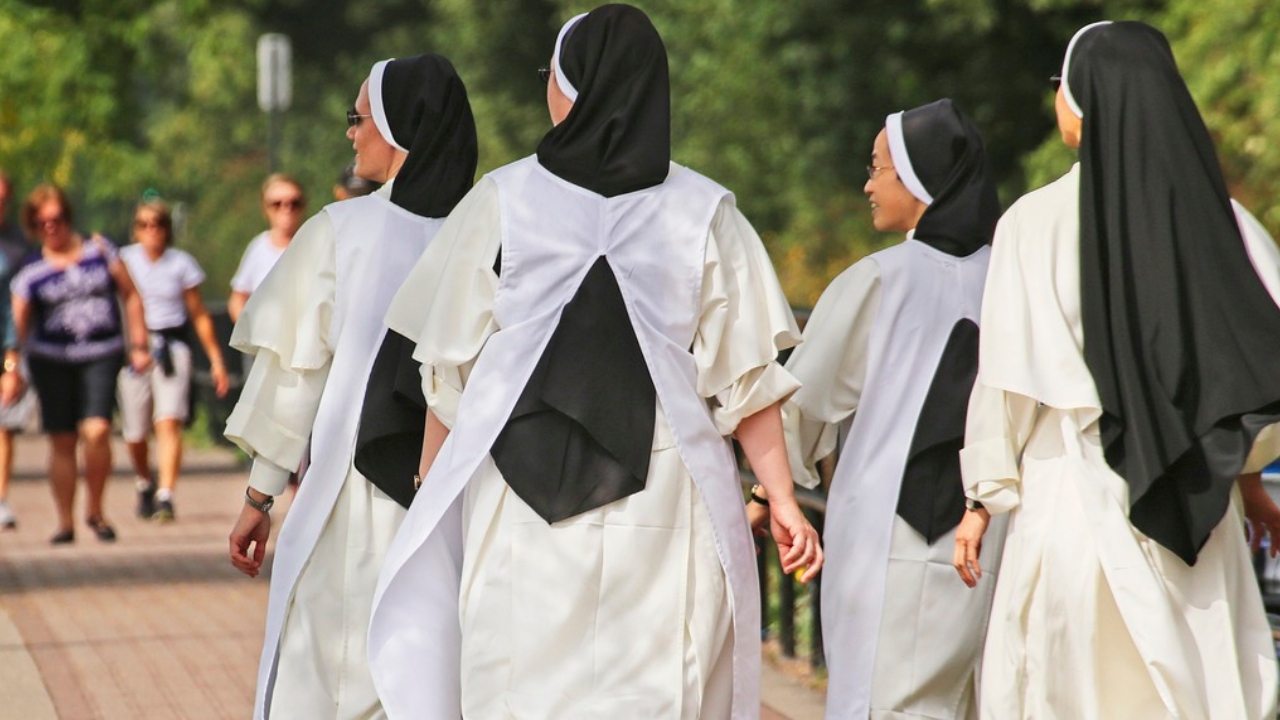
Videos Recorded in Goiânia Boosted the Visibility of a Young Religious Woman with a Beauty Pageant Background, Reigniting Discussions About Faith, Social Media, and Public Engagement Outside the Traditional Religious Environment.
The nun known as Sister Eva, aged 21, gained attention on social media after videos surfaced showing her selling religious articles, such as rosaries, in a bar in Goiânia (GO).
The images drew attention due to the contrast between the location and the religious activity, which boosted the content’s spread and sparked curiosity about her personal journey.
The young woman’s name is Kamila Cardoso, and she has been associated in posts and comments on social media with the label “the most beautiful in the world.”
-
Friends have been building a small “town” for 30 years to grow old together, with compact houses, a common area, nature surrounding it, and a collective life project designed for friendship, coexistence, and simplicity.

-
This small town in Germany created its own currency 24 years ago, today it circulates millions per year, is accepted in over 300 stores, and the German government allowed all of this to happen under one condition.

-
Curitiba is shrinking and is expected to lose 97,000 residents by 2050, while inland cities in Paraná such as Sarandi, Araucária, and Toledo are experiencing accelerated growth that is changing the entire state’s map.

-
Tourists were poisoned on Everest in a million-dollar fraud scheme involving helicopters that diverted over $19 million and shocked international authorities.


The expression does not correspond to an official title, but it is linked to her previous participation in beauty pageants before entering religious life.
Among these accomplishments is the title of Miss Continente Teen Sol Nascente, obtained in a regional stage of the competition.
Who is Kamila Cardoso Before Religious Life

Originally from Patos de Minas (MG), Kamila Cardoso had a stint in the world of fashion and beauty pageants during her teenage years.
Photographs from this period were shared by family members and resurfaced after the video recorded in Goiânia went viral, helping to reconstruct her journey before her religious decision.
According to reports from various media outlets, Kamila even prepared to compete in a national beauty pageant final.
However, she chose to withdraw from the competition just days before the event to fully dedicate herself to religious life, a decision that has since been highlighted as a milestone in her personal story.
Since then, she has adopted the religious name Sister Eva and has engaged in activities related to the community she is part of, which includes social actions and the sale of religious items to raise funds.
Non-Catholic Nun: Clarification About the Congregation
Although many comments automatically associate religious habits with the Catholic Church, Sister Eva is not part of the Roman Catholic Apostolic Church.
According to information released by the community itself and confirmed in reports, she follows the Orthodox faith and is part of the Congregation Sancta Dei Genitrix, described as an independent religious community.
The congregation is linked to a structure registered as the Renewed Syrian Orthodox Catholic Church and is headquartered in Brasília (DF).
This differentiation gained prominence after the case’s repercussion, as some of the public initially interpreted her as a Catholic nun, which does not correspond to the religious affiliation presented on the community’s official channels.
In institutional materials, the congregation states that it maintains religious and social activities concentrated in the area known as Sol Nascente, in the Federal District, where the Chácara da Gruta operates, a space used for hosting and community projects.
Sale of Religious Items in a Bar and Missionary Work
The video that sparked the buzz shows Sister Eva offering religious items in a bar, raising questions about the use of non-religious spaces for such activities.
In an interview with g1, the nun explained that the initiative is part of a strategy to connect with people who do not frequent traditional religious environments.
According to the nun herself, the sale of these items serves two purposes: to promote evangelization and to raise funds for the community’s maintenance and social projects.
In a statement published by the portal, she said:
“There, among ordinary people, often hurting, is where Christ most desires to be, in addition to spreading charity by raising funds for our community. Since I was a model, I want our project to gain fame, not just for me.”
Folha de S.Paulo also highlighted that, according to Kamila, the commercialization of the items should not be understood merely as a financial transaction, but as a means of religious dialogue and gathering support for the assistance initiatives maintained by the congregation.
Social Projects Maintained by the Religious Community
The social work of the congregation has received more attention following the viral case.
On its institutional page, the community reports that it maintains over 18 social projects in Brasília, around the Federal District, and in cities in Goiás, primarily aimed at people in vulnerable situations.
Among the initiatives mentioned are educational reinforcement actions, psychological support, dental services, as well as visits to prisons and hospitals.
The information is presented as part of the regular activities conducted by the community, with support from volunteers and resources raised through actions such as the sale of religious items.
The projects are also mentioned in reports that covered the case, reinforcing that the funds raised in external activities are directed towards maintaining these initiatives, according to the congregation itself.
Alert About Fake Profiles and Exposure on Social Media
With the increase in visibility, fake profiles emerged using the nun’s name and image.
In light of this, Sister Eva released a statement asking the public not to follow pages that are not linked to the community’s institutional channels.
In a video published on the official networks, she stated:
“These profiles, please do not follow, do not like, do not engage with, because they are not real profiles.”
The guidance was for those interested in following activities to seek only the communication channels recognized by the congregation.
The extensive circulation of the images reignited debates about religion, exposure on social media, and the boundaries between religious life and public space.









-

-

2 pessoas reagiram a isso.