





 Portuguese
  English
  Spanish
  4 min of reading
  0 comments


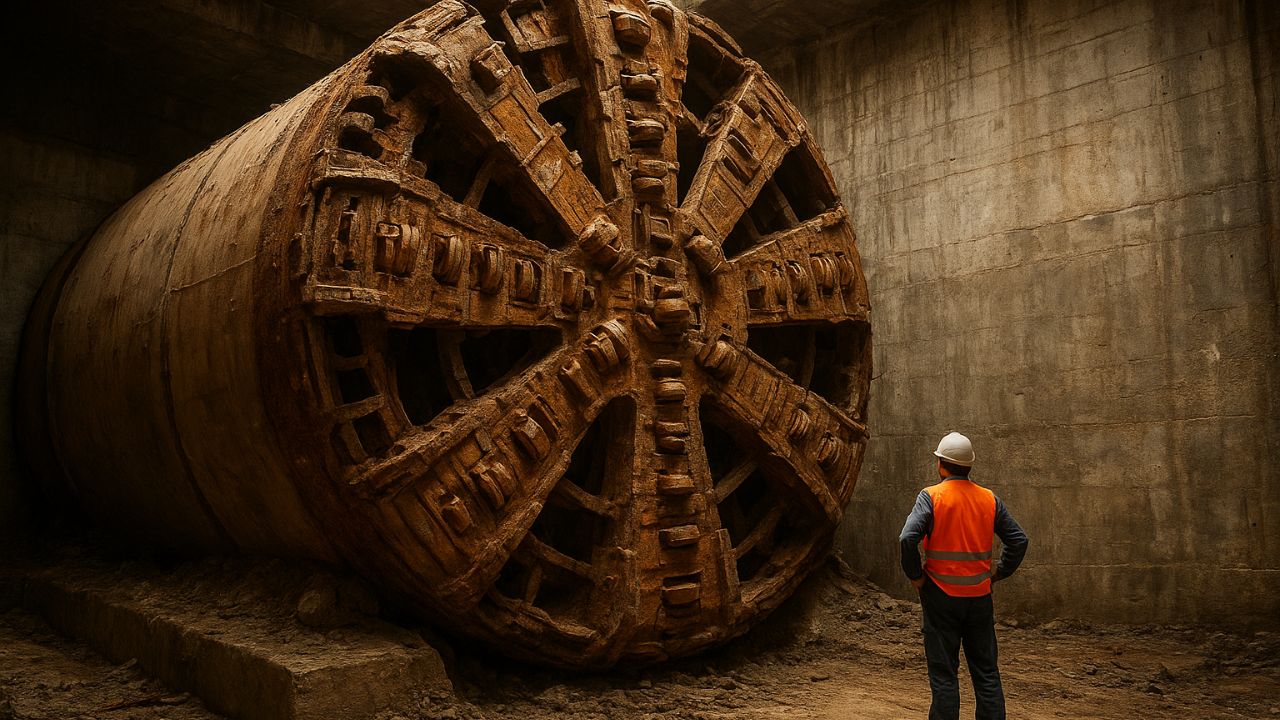
Understand Why A Giant Machine, 150 Meters Long And Heavier Than A Building, Is ‘Sacrificed’ On Purpose After Finishing Its Work
A colossal machine, about 150 meters long and weighing as much as a 20-story building, drills kilometers underground in a city, builds a vital tunnel, and at the end of the mission, is powered down and sealed underground forever. This is not an accident or an engineering failure, but a planned procedure, known as “in situ decommissioning”.
Nicknamed “Mole Machines” in Brazil, these underground factories are so gigantic that their removal is often more expensive and risky than the machine’s residual value. The decision to “abandon” the equipment is a cold calculation of logistics, safety, and economy practiced in mega-engineering projects around the world.
Anatomy of a Giant: What Are the “Mole Machines”?
The term “Mole Machine” popularized the nickname for these tunnel boring machines (TBMs). Confusion about their size is common. The 150 meters in length does not refer to a single “drill,” but to an industrial process train; a true “horizontal factory” on wheels.
-
One of the most important lakes in the United States for birds, the balance of nature, and the climate has dried to historic levels, leaving boats stranded, revealing salt flats, and showing how the lack of water can transform an entire landscape.

-
It’s not Cristiano Ronaldo or Messi: the richest football player in the world is only 27 years old, has a fortune of 100 billion reais, and is the nephew of a sultan from an Asian country that few people know about.

-
At 77, the king of one of the most famous and powerful crowns on the planet is said to be under pressure to leave the throne, while behind the scenes there are already talks of a new coronation that could cost R$ 260 million.

-
Chinese researchers have created bamboo drones that fly with the same precision as conventional models and have released the flight control software for free to the entire world in a technology that could revolutionize sustainable aviation.


To contextualize the size and function, one source described the TBM “Bertha” from Seattle as a “subterranean factory on tracks”. The “Bertha,” at the time one of the largest in the world, measured 99 meters in length, 17.5 meters in diameter, and weighed 7,000 tons, requiring a crew of 25 people and 18 engineers in a control room. This massive structure allows the machine not only to excavate but also to construct the tunnel simultaneously, installing concrete rings (segments) right behind the cutting head.
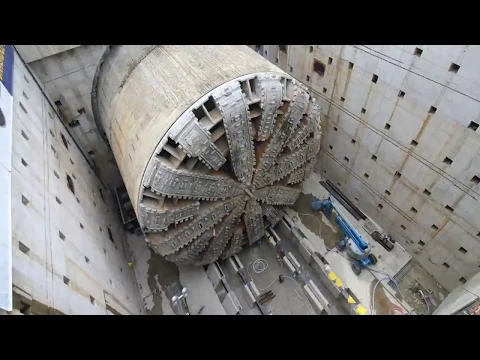

In Brazil, a notable example is the “Mole Machine” from the Line 6-Orange of the São Paulo Metro. With 109 meters in length and a weight of 2.7 thousand tons, the machine was named “Tarsila,” in honor of the painter Tarsila do Amaral, following the tradition of naming equipment.
The Underwater Mission: The Risk of Drilling Under Rivers
The mission of these machines often involves extreme geotechnical challenges, metaphorically compared to drilling “under the ocean.” In urban environments, the real danger is the crossing of rivers and saturated soils.
The “Mole Machine” “Tarsila” from Line 6-Orange, for example, had the complex mission of drilling under the Tietê River, as described by the source about the São Paulo project. This type of operation requires an almost perfect pressure balance (known as EPB – Earth Pressure Balance) to prevent water and unstable soil from flooding the tunnel or causing sinkholes on the surface.
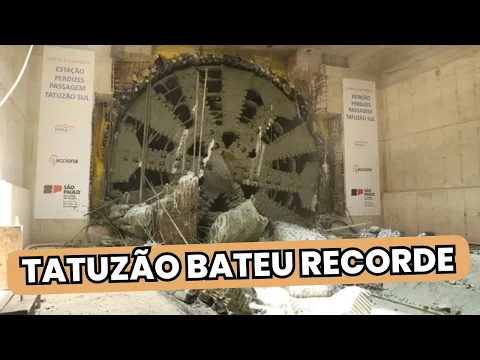
Why “Abandon” A Million-Dollar Machine?
Here lies the big question: why leave such an expensive machine behind? The answer is a pragmatic cost-benefit calculation. The TBM is designed to move forward; it does not have a “reverse gear”. At the end of the journey, it would be necessary to build a “recovery shaft” vertically, a massive, structurally complex, and extremely costly excavation, just to disassemble it.
The practice of “intentional abandonment” is a standard operating procedure. A detailed article about the Crossrail project in London, for example, explicitly confirms the fate of its TBMs, “Phyllis” and “Ada.” The source explains that the 1,000-ton machines were left on-site after completing their journeys.
Crucially, it is not the 150 meters in length that is abandoned. According to the Crossrail project source, the rear components (called gantries), which contain the motors, electronics, and control systems (the most expensive and reusable part), were pulled out through the newly constructed tunnel. Only the cutting heads and shields, the most worn parts with the least residual value, were filled with concrete and “abandoned” underground, as recovering them would be too costly and complex.
The Concrete Sarcophagus: The Final Destination of the ‘Mole’
The steel head is not simply “left” hollow. It is “sealed forever” by being filled with low-strength concrete or mortar (grout). This process is vital for long-term engineering and the safety of the infrastructure above.
An empty hollow steel shield would inevitably corrode and collapse over time. This collapse would create a void underground, which could migrate to the surface and cause sinkholes, jeopardizing the tunnel and the buildings above. Filling transforms the steel “ghost” into a solid, stable block that also prevents the migration of groundwater, becoming, functionally, part of the local geology.
The “sacrifice” of a “Mole Machine” head is not waste, but the climax of engineering optimization. The machine is a sacrificial tool designed for a single purpose: to deliver a functional tunnel. The legacy is not the buried machine, but the mobility or sanitation infrastructure it left behind, which will serve millions of people for decades.
Did you ever imagine that such expensive equipment was left behind on purpose? What is your opinion on this engineering practice: is it a necessary waste or an example of maximum efficiency? We want to know what you think. Leave your comments.





-

Uma pessoa reagiu a isso.