





 English
  Francês
  Alemão
  Italiano
  Japonês
  Norueguês
  Portuguese
  Spanish
  3 min of reading


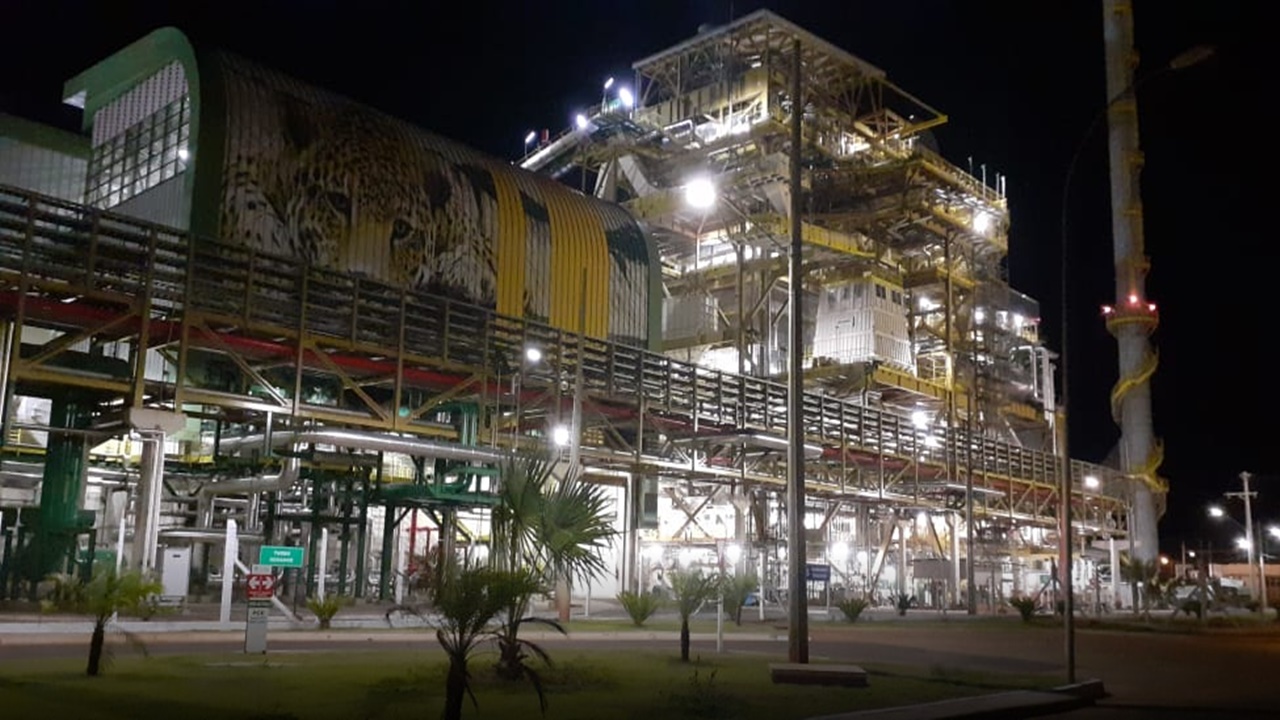
The First Thermoelectric Plant in Brazil Powered by Stumps and Roots Operates Inside the Eldorado Brasil Pulp Mill Complex
The leading pulp producer Eldorado Brasil started operations on April 9 of the first thermoelectric plant powered by eucalyptus stumps and roots in Brazil. The facility is located in Mato Grosso do Sul and has been named Onça Pintada. The plant received investments of approximately R$ 400 million and will have the capacity to generate 432 thousand MegaWatts of energy per year.
Also Read
- Shell Aims at Electric Energy Auctions and Investments in Gas, Solar, and Offshore Wind Projects in Brazil
- Job Openings for Elementary and High School Graduates Available Today (04/21) to Work at Ethanol Plant
- Odebrecht Distributes Million-Dollar Bonuses to Employees; Meanwhile, Group’s Ethanol Plants File for Bankruptcy
- Ethanol Production Drops and Plants Increase Sugar Production Due to Low Cane Prices
The new plant operates within the Eldorado Brasil pulp mill complex in Três Lagoas, a city located 338 kilometers from the capital.
The raw material used for energy production comes from the biomass of trees harvested for pulp manufacturing at the Eldorado mill.
-
While Russia dominates the global wheat market, Brazil emerges as an unexpected competitor in the Cerrado, offering grain available in July and August when stocks in the Northern Hemisphere are at their lowest point of the year.

-
China returned almost 20 Brazilian ships with soybeans, but now everything could change: the country that buys 80% of the grain is considering relaxing regulations after impurities held up shipments of thousands of tons and caused million-dollar losses.

-
Chinese giant worth nearly R$ 4 billion that manufactures cables for electric cars, solar energy, and robotics wants to open a factory in SC.

-
Many employers do not know, but the law guarantees domestic workers a 25% increase in salary during trips, 50% for overtime, 20% for night shifts, and 17 additional benefits that can lead to labor lawsuits if not paid.

“This is an absolutely innovative project with the capacity to promote renewal in the Brazilian forestry sector, leading to investments and the creation of thousands of jobs throughout the country,” says Carlos Monteiro, industrial director of Eldorado Brasil. “With the activation of the plant, Eldorado Brasil achieves a 100% utilization cycle of eucalyptus, which it plants itself, and reaffirms its role of excellence in the green economy,” he concludes.
The Leader in Pulp Production Eldorado Brasil is Already Energy Self-Sufficient
Eldorado Brasil uses byproducts from the pulp manufacturing process as an energy source to supply its manufacturing park, making the company energy self-sufficient.
The new thermoelectric plant in Brazil, powered by stumps and roots, will offer 100% clean and sustainable energy to the national electricity grid, via ACR (Regulated Contracting Environment), under a contract managed by ONS (National Electric System Operator).
Eldorado Brasil has been conducting tests for project approval and obtaining licensing for the start of operations since March, under the supervision of environmental and electricity sector authorities.
The tests were completed this week, confirming the proper functioning of the turbine, boiler, and other equipment involved in the operation. The project received an Operating License, issued by Imasul (Mato Grosso do Sul Environmental Institute), valid for four years.
Direct Sale of Ethanol from Plants Will Encourage Competition and Curb Gasoline Price Increases at Fuel Stations
In an effort to curb rising gasoline and diesel prices at fuel stations, the Legislative Decree Project (PDC 916/2018), which addresses the direct sale of ethanol by mills – without going through distributors, has gained momentum in recent weeks with government support.
The director-general of ANP, Rodolfo Saboia, stated that the creation of the so-called linked distributor – a regulatory alternative to enable ethanol sales by producers directly to fuel stations – was delayed due to the Ministry of Economy taking time to present a tax solution.
There are estimates that concentrating production and distribution margins on the producer and increasing competition between producers and distributors in the fuel market could reduce the price of hydrated ethanol for the final consumer by up to 20 cents per liter.
Raízen, a Shell Group Company, Wants to Build Three Ethanol Plants Made from Bagasse and Sugarcane Straw
Raízen, the global ethanol production giant in partnership with Shell, plans to build three more cellulosic ethanol plants – or second-generation plants. The good news was announced by entrepreneur Rubens Ometto from Cosan on Monday (03/15).
The technology for producing cellulosic ethanol was developed through a partnership between Shell and the Canadian company logen, specialized in biotechnology. In the last harvest (2019/20), the Piracicaba unit produced 226 liters of ethanol for each ton of dry biomass.








Seja o primeiro a reagir!