





 Portuguese
  English
  Spanish
  4 min of reading
  1 comment


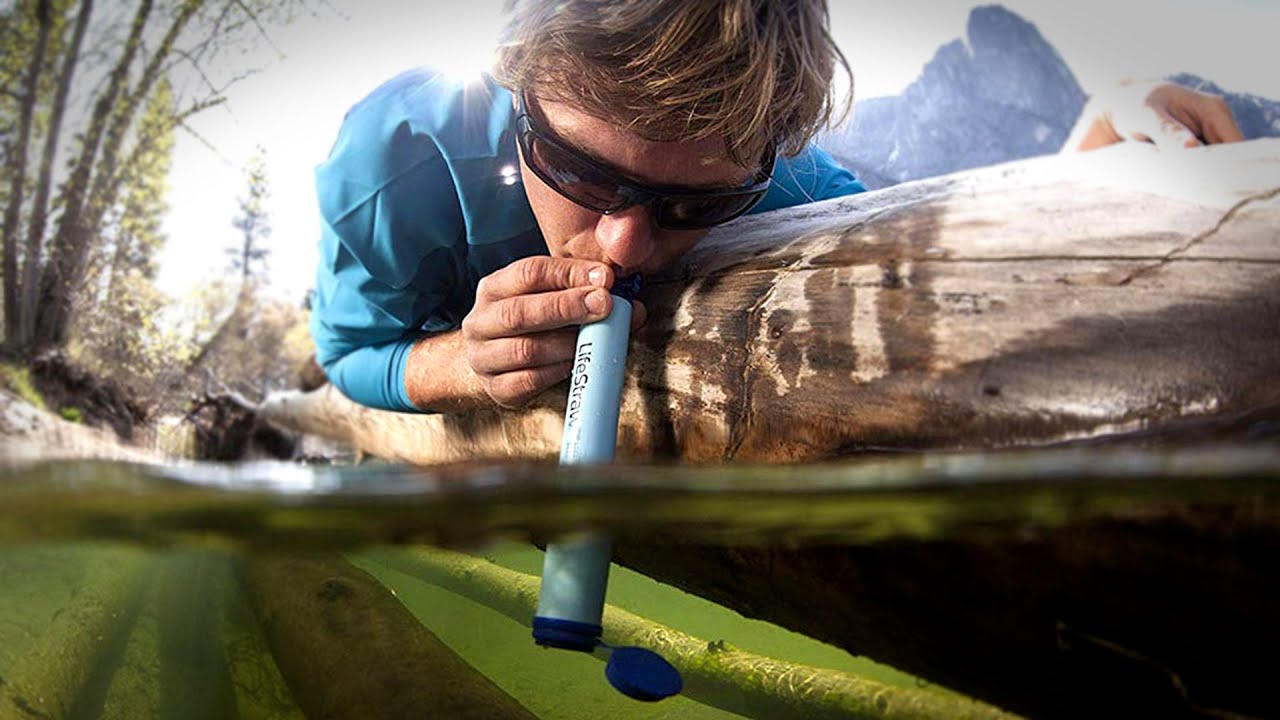


At 19, Mikkel Vestergaard Witnessed People Drinking Contaminated Water in Nigeria and Decided to Change Course: He Left the Trucking Business to Develop Solutions Against Waterborne Diseases in Africa
In 1992, Mikkel Vestergaard Frandsen was 19 years old and in Lagos, Nigeria, managing a small truck import business. It wasn’t the obvious path for a young Danish man — but Mikkel never showed interest in taking over the family’s traditional business, a uniform factory founded by his grandfather in 1957. Lagos was more interesting. More unpredictable. It was there that he witnessed something that would change his trajectory and create LifeStraw. Men and women knelt in puddles of muddy water and drank directly from the ground with improvised straws. Not out of carelessness. Out of absolute lack of alternatives. In much of rural Africa, that was the only available source, and it transmitted serious diseases.
Waterborne diseases claimed hundreds of thousands of lives each year, especially children. Mikkel returned to Denmark, left the trucking business behind, and spent the next decade trying to turn that image into a concrete solution for access to safe drinking water.
The Conversation That Inspired LifeStraw: From Guinea Worm Disease to Portable Filtration
The turning point did not come from the laboratory, but from the field. In the 1990s, Mikkel took over the family business and completely redirected the focus toward humanitarian products. Vestergaard Frandsen began producing insecticide-treated bed nets to combat malaria.
-
Motorola launched the Signature with a gold seal from DxOMark, tying with the iPhone 17 Pro in camera performance, Snapdragon 8 Gen 5 that surpassed 3 million in benchmarks, and a zoom that impresses even at night.

-
Satellites reveal beneath the Sahara a giant river buried for thousands of kilometers: study shows that the largest hot desert on the planet was once traversed by a river system comparable to the largest on Earth.

-
Scientists have captured something never seen in space: newly born stars are creating gigantic rings of light a thousand times larger than the distance between the Earth and the Sun, and this changes everything we knew about stellar birth.

-
Geologists find traces of a continent that disappeared 155 million years ago after separating from Australia and reveal that it did not sink, but broke into fragments scattered across Southeast Asia.


During a partnership with the Carter Center, the foundation of former President Jimmy Carter, to eradicate Guinea worm disease, the central insight arose. Doctor Ernesto Ruiz-Tiben reported that nomads drank from shallow puddles using straws to avoid larger particles.
The logic was simple: filter what is visible. The bigger question was: could it also filter the invisible? Bacteria. Parasites. Microscopic larvae. The answer would take years to transform into LifeStraw.
How LifeStraw Works: Hollow Fiber Membrane Technology
LifeStraw measures about 25 centimeters and works without batteries, electricity, or chemicals. Its core is a hollow fiber membrane made up of thousands of microtubes with 0.2-micron pores. When the user sucks in the water, it passes through these microscopic pores.
The water passes. Bacteria, parasites, microplastics, and particles are retained. The declared technical performance includes:
- 99.99% bacteria elimination
- 99.9% parasite elimination
- Ability to filter up to 700 liters per unit
This represents nearly a year of drinking water for the average individual.
Maintenance is simple: blow the air back through the straw to remove accumulated debris. No tools. No replacement parts.
The Role of LifeStraw in the Near Eradication of Guinea Worm Disease
When LifeStraw was officially launched in 2005, Guinea worm disease affected about 3.5 million people annually in 21 countries.

With no vaccine and no medicinal treatment, the only strategy was to interrupt the cycle of water contamination. The Carter Center distributed approximately 23 million units of LifeStraw in field campaigns. By 2024, only 14 cases of the disease were recorded globally.
The reduction from millions of cases to dozens in less than three decades is considered one of the most successful eradication campaigns in the history of modern public health.
From Humanitarian Aid to the Global Outdoor Product Market
Initially, LifeStraw was distributed exclusively in humanitarian contexts: conflict zones, natural disasters, refugee camps, and communities without water infrastructure.
After Cyclone Nargis (2008) and the earthquake in Haiti (2010), thousands of units were sent as emergency response. In 2012, the company adopted a hybrid model: selling the product in the outdoor market to fund distribution in low-income countries.

The ‘Give Back’ model began financing filters for children for every unit sold. LifeStraw started being sold in major retailers, received innovation awards, and entered the permanent collection of the Museum of Modern Art in New York.
Since 2014:
- 7.6 million children have received annual access to safe drinking water
- 2,600 schools have received purification systems
- 39 million filters have been distributed in the fight against Guinea worm
The Global Crisis of Access to Safe Drinking Water: 2 Billion Still Awaiting Solutions
Approximately 2 billion people worldwide still lack safe access to drinking water close to home. Most are concentrated in Sub-Saharan Africa and South Asia — regions where waterborne diseases remain a significant cause of child mortality.
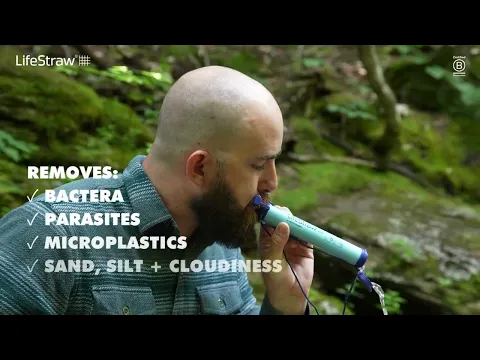
LifeStraw does not replace public treatment and distribution systems. But it offers an immediate and portable solution for contexts where infrastructure has not yet arrived.
Today, the company operates independently, expanding its line with:
- Home purifiers of up to 100,000 liters
- Bottles with integrated filters
- Community systems for schools
Financial Sustainability as a Humanitarian Strategy
Mikkel Vestergaard Frandsen stepped down from direct management of the company in 2020 to focus on new technological projects. Still, the model he helped create remains.
LifeStraw has become an example of a humanitarian product that found financial sustainability through the market.
The straw that emerged from the image of nomads drinking contaminated water in Lagos is now on the shelves of outdoor gear in Europe and North America.
And the revenue generated in these markets continues to fund access to safe drinking water in regions where water still poses a risk of death.








Tem quê vender no Brasil tem muitas regiões do Brasil.que água também nao e tratada