





 Portuguese
  English
  Spanish
  4 min of reading
  0 comments


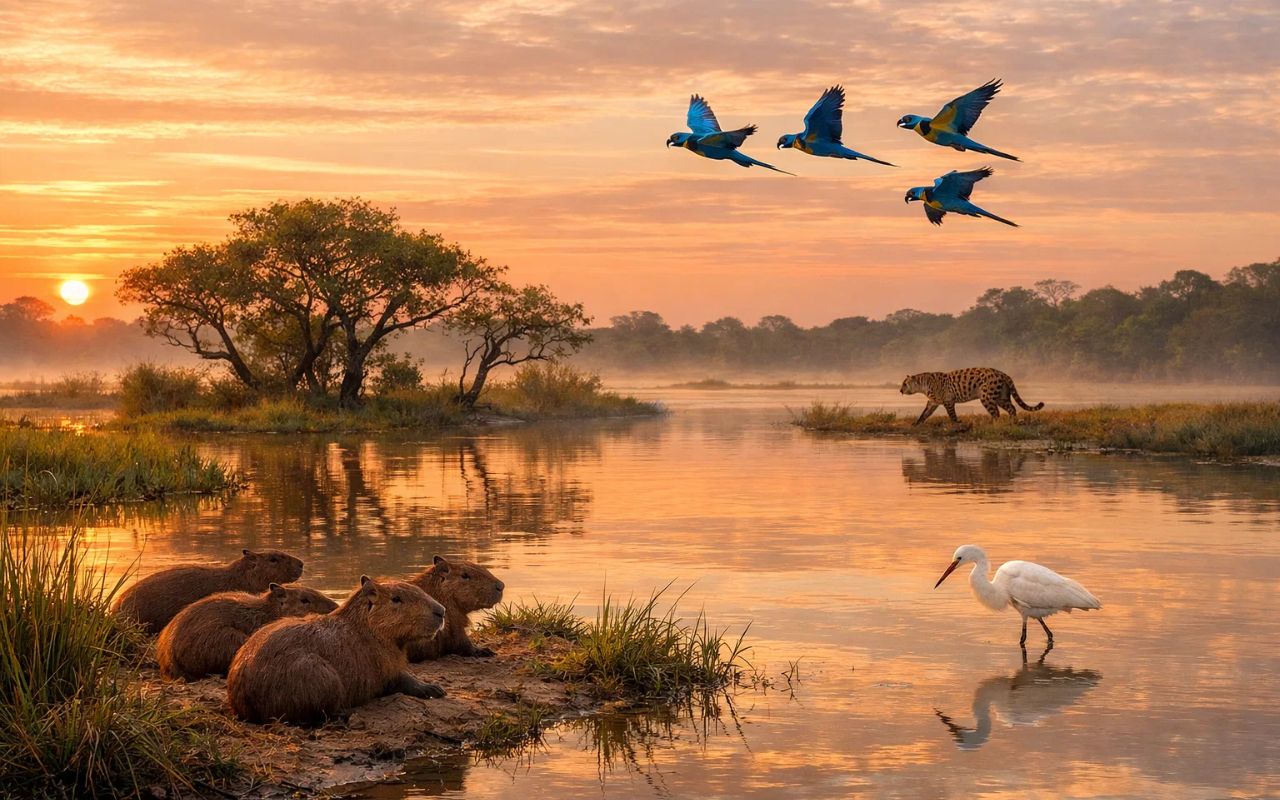
The Smallest Biome in Brazil, the Pantanal, Suffers from Water Loss, Record Fires, and Economic Pressures, Despite Harboring One of the Largest Biodiversities on the Planet.
Although recognized for its natural exuberance, the Pantanal, the smallest biome in Brazil, lives in a scenario of contrasts. While it hosts one of the largest biodiversities on the planet, the region faces water reduction, severe fires, and impacts associated with productive activities.
Recent data shows that environmental transformations are already affecting the dynamics of the biome. Furthermore, experts warn that extreme events have become more frequent.
Water Loss Raises Alert in the Smallest Biome in Brazil
The Pantanal is the biome that has lost the most water surface area compared to the national historical average, according to MapBiomas. Between 2009 and 2024, the reduction reached 61%.
-
Maria Branyas Morera lived to be 117 years old, eating three yogurts a day without developing cancer or dementia, and when scientists analyzed her DNA, they found a secret that no one expected: her biological clocks indicated an age two decades younger than her actual age.

-
Upside Down House transforms abandoned warehouses from the 1970s, blending art with concrete and steel engineering, becoming a phenomenon in South Korea and impressing with a surreal experience that attracts tourists from around the world.

-
Brazil became 18 square kilometers smaller in the new official update from IBGE, which redrew the boundaries of 784 municipalities in 13 states and even changed the names of cities that you might know, such as Açu, which is now called Assú.

-
Stephen Hawking said that the worst enemy of knowledge is not ignorance but the illusion of knowledge, and he dedicated his entire career to proving that science dies when people act as if they already have all the answers.


“In 2024, the Pantanal was below the historical average for all 12 months,” reports the portal.
The survey also highlights that “eight of the 10 driest years in the entire [historical] series occurred in the last decade.”
The decrease in water directly contributes to the worsening of another recurring problem: fires.
Record Fires and Environmental Impact
In 2020, the biome recorded the worst burning season in recent history. Over 3.9 million hectares were consumed by fire — about 26% of the Pantanal.
According to the organization SOS Pantanal, “In the Pantanal, more than 95% of fires are caused by human actions, intentional or not.”
The entity further explains:
“In dry periods, the uncontrolled spread of fire in forest and savanna areas occurs more frequently and intensely. Factors such as low humidity associated with heat waves present a very high-risk scenario for the spread of flames.”
Economic Pressures Shape the Territory
The main economic activity of the smallest biome in Brazil is <strong extensive livestock farming. It is estimated that there are 3 to 4 million cattle, according to data from Embrapa Pantanal.
About 80% of productive areas are designated for pastures, generating approximately R$ 2 billion per year.
In addition, up to 95% of the Pantanal farms depend on livestock activity, according to the Portal CNA Brasil.
On the other hand, there is a characteristic that differentiates the Pantanal from other biomes.
Natural Pastures Reduce Some Impacts
Up to 90% of pasture areas are formed by natural vegetation. This factor reduces impacts compared to regions where there is intensive conversion of native areas to mechanized agriculture.
Still, experts warn that the expansion of the agricultural frontier and changes in land use increase ecological risks.
It is estimated that the Pantanal still maintains about 80% of its original vegetation preserved. This number, while positive, does not eliminate concerns.
The combination of prolonged droughts, fires, and human interventions creates an environment of increasing vulnerability.
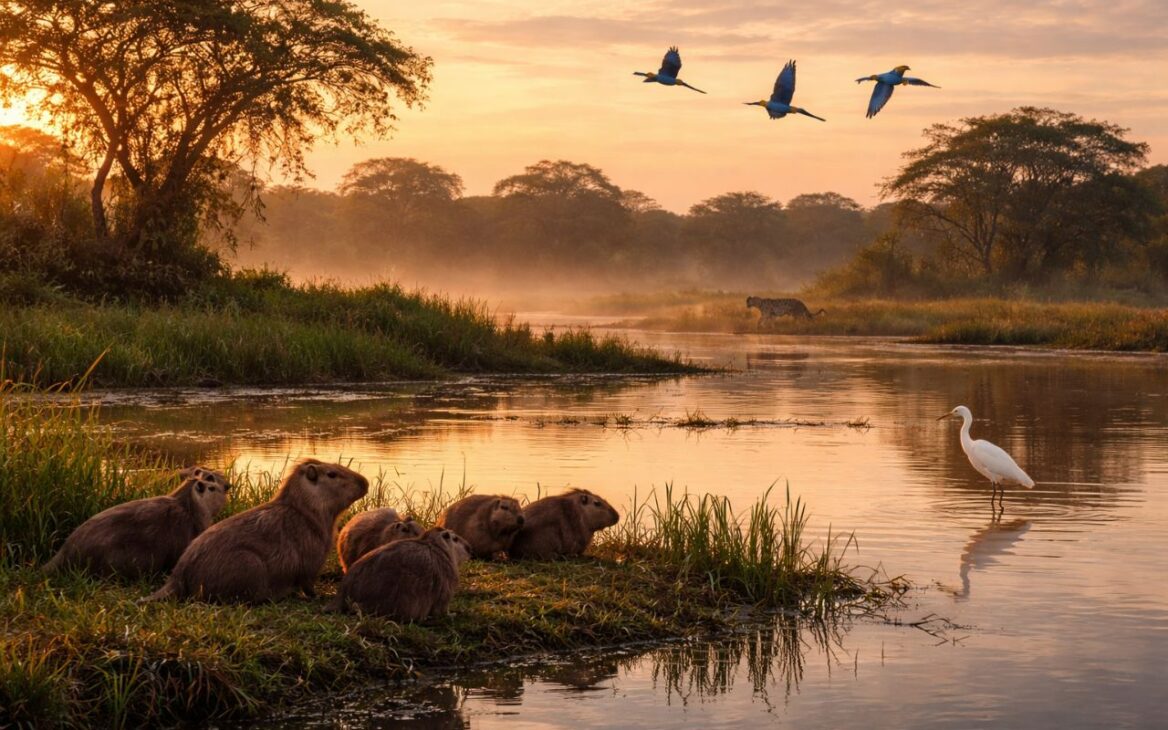
Environmental Greatness Despite the Smallest Extension
With an estimated area between 150,000 and 210,000 km², the Pantanal occupies less than 2% of Brazilian territory.
Yet, it forms one of the largest continuous wetland areas on the planet. Its dynamics are marked by alternating annual cycles of flooding and drought.
During the rainy season, up to 80% of the biome can become flooded, forming a vast network of interconnected rivers and lagoons. This seasonality sustains an impressive biodiversity.
Biological Diversity Surprises in the Smallest Biome in Brazil
According to ICMBio, the Pantanal flora includes more than 3,500 plant species, in a mix of influences from Cerrado, Amazon, and Chaco.
The fauna is also impressive:
- 124 species of mammals
- 325 species of fish
- Hundreds of reptiles and amphibians
- 463 species of birds
This set positions the Pantanal among the richest ecosystems on the planet.
Jaguar: Predator-Symbol of the Biome
The Pantanal concentrates the highest population density of jaguars. It is estimated that up to 50% of the world’s population of the species is in Brazilian territory, especially in the Pantanal region.
Surveys indicate the presence of 2 to 7 individuals per 100 km².
Emblematic Species Reinforce the Identity of the Pantanal
In addition to the jaguar, the biome is home to:
- Great Blue Macaw
- Pantanal Alligator
- Capybara
- Jabiru (Tuiuiú)
The jabiru, a symbolic bird, can reach 1.6 meters in height, weigh around 8 kg, and have a wingspan of up to three meters.
Protected Area is an International Reference
The Pantanal Matogrossense National Park, created in 1981, comprises over 135,000 hectares of floodable areas, rivers, and lagoons.
Administered by ICMBio, it is considered one of the best destinations in the world for wildlife observation.
Even being the smallest biome in Brazil, the Pantanal plays a global ecological role.
However, it faces a delicate balance between conservation, climate change, and economic activities.
Preserving this natural heritage has become an increasingly strategic issue for Brazil and for the planet.
With information from Revista Fórum.






Seja o primeiro a reagir!