





 Portuguese
  English
  Spanish
  4 min of reading
  0 comments


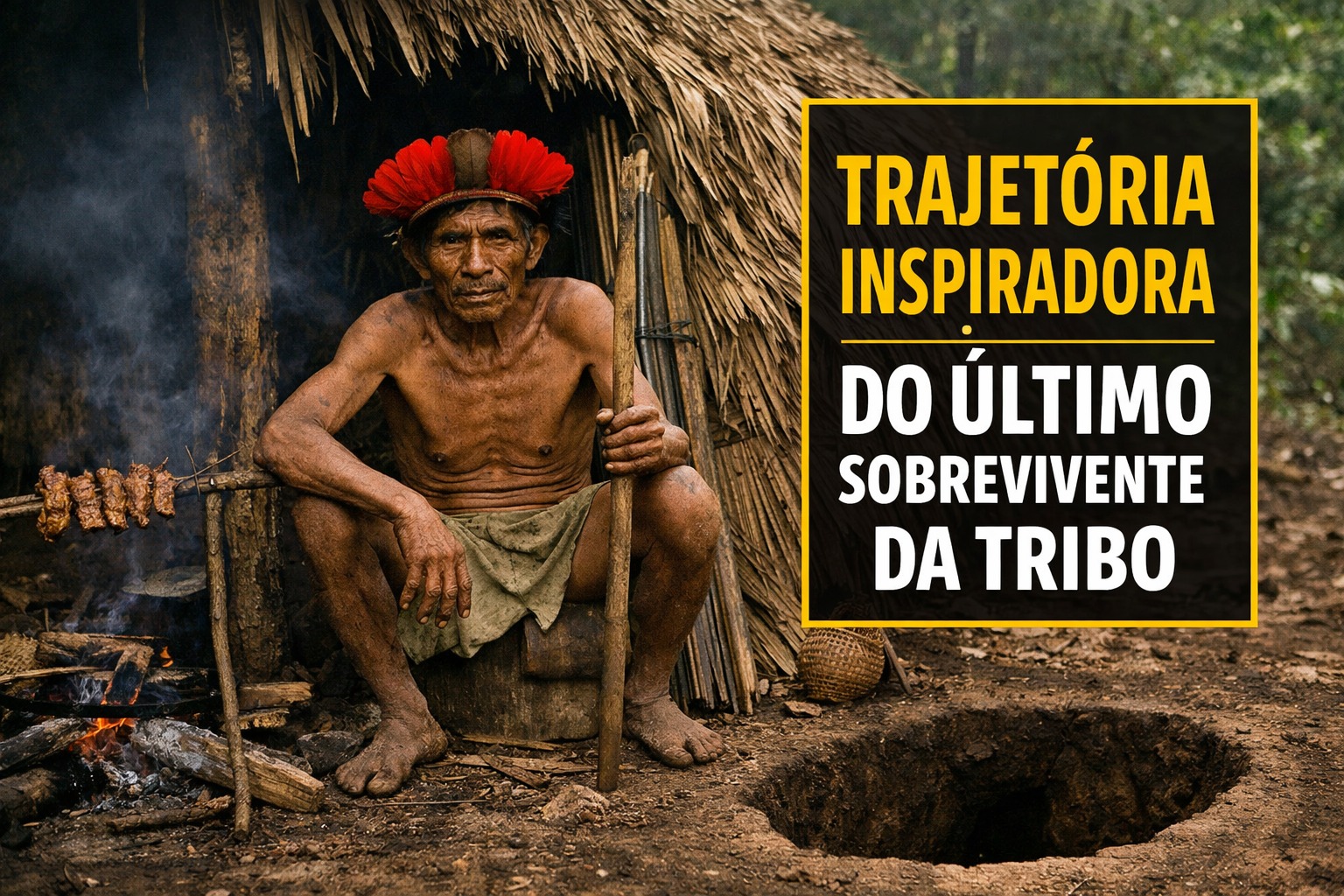
The Man of the Hole, Last Survivor of His People in the Tanaru Indigenous Territory, in Rondônia, Lived Decades in Forced Isolation After Massacres Between 1970 and 1990, Becoming an Extreme Symbol of Indigenous Genocide, State Delays in Territorial Protection, and the Continuous Risks Faced by Isolated Peoples in Contemporary Brazil
The Man of the Hole, an isolated indigenous man who lived alone in the Amazon rainforest of Rondônia, died in 2022 after decades of solitary survival, becoming an extreme symbol of the impacts of indigenous genocide, delayed territorial protection, and the ongoing risks faced by isolated peoples in Brazil.
Forced Isolation in the Amazon
Known as The Man of the Hole or the Tanaru Indian, he lived alone in the current Tanaru Indigenous Territory, an area officially protected by the Brazilian government in 2007, in the state of Rondônia.
His solitary existence was not a result of personal choice, but a direct consequence of the complete destruction of his people through successive violent attacks.
-
He started running at 66 years old, broke records at 82, and is now a subject of study for having a metabolic age comparable to that of a 20-year-old, in a case that is intriguing scientists and inspiring the world.

-
Oldest tree on the planet reappears after 130 years of searches: Wattieza, 385 million years old, was 10 meters tall and had no leaves or seeds; Gilboa fossils in New York solved the mystery in 2007.

-
A 48-square-meter house assembled in hours with 4,000 bricks made of recycled plastic that does not absorb moisture, has natural thermal insulation, and costs less than 90,000 reais in a complete kit.

-
Luciano Hang revealed that Havan’s air fleet has already accumulated more than 20,000 landings, 10,000 flight hours, and 6 million kilometers traveled, and he says that without the planes, the company would never have grown so quickly.


There are no records of the indigenous man’s original name, nor confirmation of what his people called themselves or which language they spoke, although it might have been Tupí.
The man was the last survivor after massacres committed by Brazilian colonists between the 1970s and 1990s, a period marked by uncontrolled agricultural expansion.
Neighboring peoples, such as the Akuntsu and Kanoê, suffered similar attacks, indicating a regional pattern of violence against isolated indigenous communities during that time.
The last survivors of his group, except for him, were killed in an attack by illegal miners in 1995.

Destroyed Village and Late Surveillance
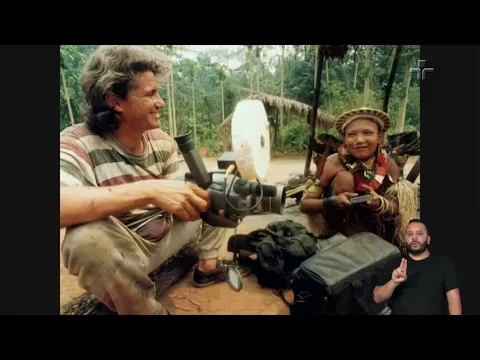
The National Indian Foundation located the remnants of the group’s village in 1996, completely destroyed by bulldozers the previous year.
Following this discovery, the agency began to monitor the region, identifying the man’s isolated presence and documenting his frequent movements.
He built simple thatched huts, periodically moving to different points in the forest, a strategy that made it difficult for others to approach and increased his security.
Over the years, more than 50 huts built by him were identified by FUNAI during territorial surveillance actions.
Each abandoned dwelling featured a deep hole dug in the ground, a characteristic that gave rise to the nickname by which he became known.
The Holes and Daily Survival
The holes found were narrow and over 1.8 meters deep, always positioned inside the huts.
Initially, it was believed they served to capture animals or functioned as defensive hideouts in case of unexpected attacks.
Some observers raised the hypothesis that the holes might also have spiritual significance, although this was never confirmed.
Similar excavations were located in the destroyed village, reinforcing the idea that the practice was part of the group’s culture.
To survive, the man hunted wild animals, gathered fruits, honey, and maintained small crops of corn and cassava.
His routine demonstrated a deep knowledge of the forest, with mastery of traditional subsistence techniques passed down through generations.
Territorial Protection and New Attacks
The Brazilian Constitution guarantees indigenous peoples the right to the lands they traditionally occupy, a foundation used for the demarcation of the territory.
In 2007, FUNAI officially delineated 8,000 hectares as a protected area, creating the Tanaru Indigenous Territory.
After the demarcation, the agency intensified surveillance to prevent invasions, but threats never completely ceased.
In November 2009, the indigenous man was attacked by armed men, an episode from which he survived without direct contact with authorities.
Even avoiding any human contact, he demonstrated awareness that he was being monitored by external teams.
Indirect Contact and Historical Record
FUNAI occasionally left tools and seeds in the area, a strategy described as a way to generate a certain level of trust.
On some occasions, the indigenous man signaled to agents to avoid traps dug in the ground, indicating constant awareness of external presence.
In 2018, FUNAI released a video of the man to alert the world about the risks faced by isolated peoples.
In the footage, he appeared to be about 50 years old and was in good health, despite his prolonged isolation.
The record became one of the rare visual documents of an indigenous person living completely alone in the Brazilian Amazon.
Death and Consequences
On August 24, 2022, the man was found dead in his last hut by FUNAI agent Altair José Algayer.
He was lying on a hammock, adorned with macaw feathers, with no signs of violence or struggle at the scene.
Estimates indicated that his death occurred in July 2022, when he was approximately 60 years old.
The body was taken to the capital Porto Velho, in Rondônia, for an autopsy.
The burial took place on November 4, following a court decision, in the same location where he had been found.
Shortly after, the grave was vandalized by farmers, reigniting calls for permanent protection of the Tanaru Indigenous Territory and its collective memory.
With information from Wikipedia.







-

-

-

-

-

14 pessoas reagiram a isso.