





 Portuguese
  English
  Spanish
  6 min of reading
  0 comments


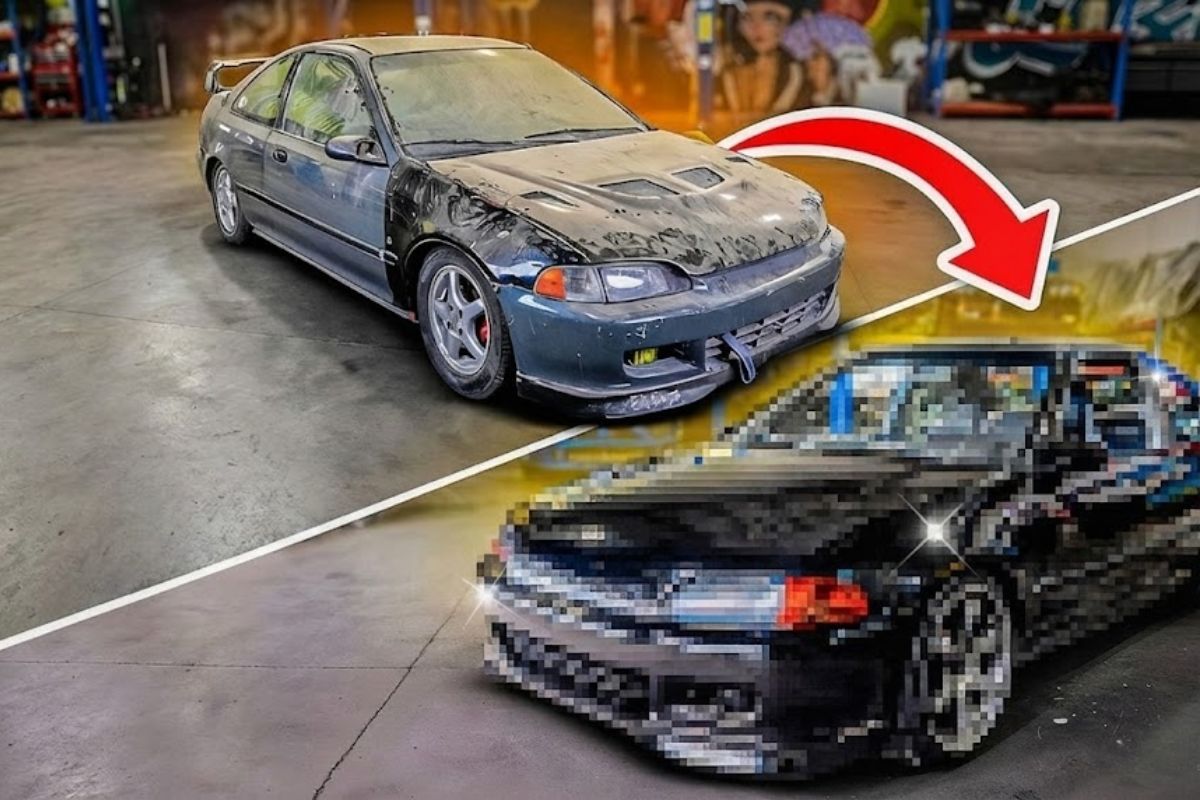
With Minimum Budget, A 1995 Honda Civic Coupe Bought For 30,000 Pesos Turned Into A Daily Driver After Black Paint, Interior Adjustments, And Suspension Replacement. The Project Revealed Missing Parts, Cracked Windshield, Removed Cage, And Mixed Engine, As Well As A Final Bill Of 32,400 Pesos With 320 Grit Sandpaper And Varnish.
The Honda Civic Came Into The Plan As A Solution For Daily Use After Four Years Of Different Projects And A Direct Observation: There Was A Lack Of Money And A Reliable Car. The Purchase Was A 1995 Coupe For 30,000 Pesos, Referred To As US$ 1,500, With An Additional 15,500 Set Aside To Keep The Project Within A Tight Budget.
The Reality Of The Honda Civic Became Apparent Before The First Paint Job: Peeling Paint, Damaged Bumpers, Missing Mirror, Worn Suspension, Missing Door Panels, Broken Dashboard Plastics, No Rear Seats, No Rear Trims, And A Cracked Windshield. There Was Still A Protective Cage, Which Needed To Be Removed To Bring The Interior Back To Standard.
Cheap Purchase, Expensive Problems With The Honda Civic

The Honda Civic Arrived As “Someone Else’s Restoration Project,” And That Explains The Overall Condition.
-
The car stored for 38 years: when opening the barn door, what appears is breathtaking and looks like a scene from a movie!

-
Fiat works miracles in the Brazilian market, lowers the price of its 0 km hatch to R$ 69,990, reestablishes the model as the cheapest car in the country, and reignites the battle against Kwid and C3.
-
Chevette with cooking gas: How the gas cylinder ends up being used in cars clandestinely and why this makeshift solution can result in leaks, explosions, damaged engines, and seized vehicles.
-
Fiat launches the new 2027 Toro hybrid with 48V, 176 hp, an electric motor of 15.5 hp, a 0.85 kWh battery, up to 7% fuel savings, 8% fewer emissions, and possible exemption from IPVA.


There Were Small Body Defects All Over The Car, Finishing Flaws, And An Engine Compartment With A Bright Yellow Appearance.
The Hood Was Made Of Carbon Fiber And Was Mentioned As More Valuable Than The Car Itself, But It Was Also Broken.
At The First Practical Check, The Honda Civic Started, But Was Not Stable.
When Releasing The Clutch, The Car Shuddered, Indicating A Pending Mechanical Adjustment.
Nevertheless, The Budget Was Kept As A Rule, And The Priority Became What Was Visible: Paint And Interior.
Engine Out, Heavy Cleaning, And The Beginning Of Painting

To Move Forward With The Painting, The Engine Was Removed.
Before That, The Honda Civic Underwent A Complete Wash With Dish Detergent, Chosen To Remove Grease And Not Leave Residues That Would Hinder Adhesion.
Then Came The “Killing The Shine” Stage: 320 Grit Sandpaper On The Entire Car To Prepare The Base.
While Sanding, Larger Dents Appeared Than Were Initially Noticed During Inspection.
The Correction Followed A Direct Method, With Simple Tools: Pressure From The Inside Out, Controlled Strikes, And Application Of Filler To Level.
A Cleaning Product Was Used As A Visual Trick To Simulate The Clear Coat And Reveal Distortions In The Reflection.
Filled Primer, Guide Hand, And 24 Hours Of Drying


After The Filler And Sanding, The Report Describes Micro-Scratches And Remaining Pores, Which Led To The Application Of Filled Primer Before The Color.
The Mixture Was Described As Four Parts Primer, One Reducer, And One Catalyst.
After That, The “Guide Hand” Was Introduced, Which Highlights Flaws During The Sanding For Leveling.
The Painting Process Was Described In Sequence: Primer, A Few Minutes Of Waiting, Base In Two Or Three Coats With The First One Lighter And The Following Ones Heavier, And Varnish In Three Coats.
The Curing Time Was Cited As At Least 24 Hours. Even After Curing, The Newly Done Paint Was Described As Easy To Scratch, With Visible Marks Even With A Finger.
Budget Blown On Paint And Cost Choices
The Budget For Paint Started With A Reserve Of 4,000 Pesos.
During The Purchase, Prices Per Liter Were Mentioned: Pyroxylin Primer For 276 Pesos, Base For 607 Pesos, And Clarity Clear Varnish For 331 Pesos.
There Was Also A Transparent Option For 1,000 Pesos Per Liter, Mentioned As A More Expensive Reference.
The Final Bill For This Purchase Was Given As 4,782 Pesos, 700 Above The Planned Amount.
The Cited Location Was Saltillo, Coahuila, On Avenida Luis Cheverría, In Front Of Parque La Maquinita, Colonia Del Valle, With A Store Called “The King Of Paints”.
The Central Argument Was To Avoid “The Cheapest” As It Leads To Rework And Weighs Heavier On The Budget.
Interior Dismantled, Cage Removed And A Safety Alert
With The Painting On Track, The Interior Became A Priority. Seats And Carpets Were Removed For Deep Cleaning, With The Idea That The Small Details Change The Final Appearance.
The Protective Cage Was Removed With Controlled Cutting To Relieve Tension From The Material, And The Report Describes That Some Of The Welds Were Incomplete, Which Was Treated As A Risk In Case Of Impact.
With The Cage Removed, There Was Rust In Some Areas Of The Interior.
The Correction Described Was A Wire Brush, Cleaning, And A Coat Of Paint To “Make It Look Nice,” Always Within The Possible Budget.
Seats, Trim, And Vinyl Resin In The Interior Of The Honda Civic
The Initial Attempt For The Seats Was To Take 2,500 Pesos To The Upholsterer And Ask For What Could Be Done.
The Final Price Cited To Reupholster The Front Seats Was 3,000 Pesos.
This Helped To Reconstruct The Minimum Interior For Daily Use, Even Without Seeking Absolute Perfection.
In The Door Trims, The Process Was Divided Between Fabric And Plastic.
The Piece Was Degreased, Sanded With 600 Grit Sandpaper, And Received Vinyl Resin Applied With A Low-Pressure Gun.
The First Coat Was Light And The Second Thicker After 10 To 15 Minutes, Aiming For A Finish That Wasn’t “Too Shiny.”
The Fabric Part Was Covered With Alcantara Obtained As Scraps.
Lost Steering Wheel, Cheap Parts, And Makeshift Repairs
The Honda Civic Had A Steering Wheel When It Was Purchased, But It “Disappeared” During The Project.
The Replacement Came From An Online Purchase: An Adapter And Quick Release Set Was Cited For 8 Dollars, And A Steering Wheel For 68 Dollars.
A Shift Knob Also Appeared For 16 Dollars And A Sound System For 350 Pesos To Fill The Space In The Dashboard.
To Fix A Hole In A Button On The Console, A Plastic Repair Was Described, Involving Heating And Filling, Followed By Smoothing With A File, Sandpaper, And A Dremel.
Small Porosities Were Filled With Instant Glue, And The Piece Received A Coat Of Vinyl Resin To Restore The Appearance Of The Plastic.
An Engine Of Mixed Parts And The Decision Not To Tinker
Upon Closer Inspection, The Project Found A Puzzle In The Engine.
The Block Was Identified As B18A, Associated With 1.8 L, While The Cylinder Head Was Associated With A Honda CRB 2.0 L.
The Computer Was Also Described As P75, Linked To 2.0 L, Creating Uncertainty About The Actual Setup.
As The Budget Was Already At Its Limit, The Described Decision Was To Work With What Was Available: The Honda Civic Started And Ran, But Fine Tuning Was Left For Another Time.
Still, The Engine Received Cleaning, New Tape In Necessary Areas, And A Gasket That Was Torn.
Suspension, Wheels, And The Closure Of The Budget
The Suspension That Was On The Honda Civic Was Recognized As Skunk2 With A Spring Set Referred To As “Resorteppe,” Reinforcing A Past Of More Aggressive Use.
For Daily Use, Coilovers Were Installed For 3,500 Pesos, And A Set Of Used Wheels Was Bought For 8,000 Pesos, With An Additional 500 For Sanding And Painting.
In Closing, The Project Totaled 32,400 Pesos, 800 Above The Initial Budget. Among The Items Cited, Besides The Paint, Headlights Came In At 11,100 Pesos, Scrap Iron Steps For 100 Pesos, Interior For 4,000 Pesos, Upholstery For 3,000 Pesos, And Small Purchases Like The Air Filter For 2 Dollars.
The Result Was A Honda Civic Running As A Daily Driver And Ready To Evolve, Even With Pending Mechanical Issues.
Would You Consider A Honda Civic Like This For Daily Use And Still Think About Modifying, Or Would You Prefer To Stop Before The First Shock In The Bill?









-

-

3 pessoas reagiram a isso.