





 Portuguese
  English
  Spanish
  7 min of reading
  9 comments


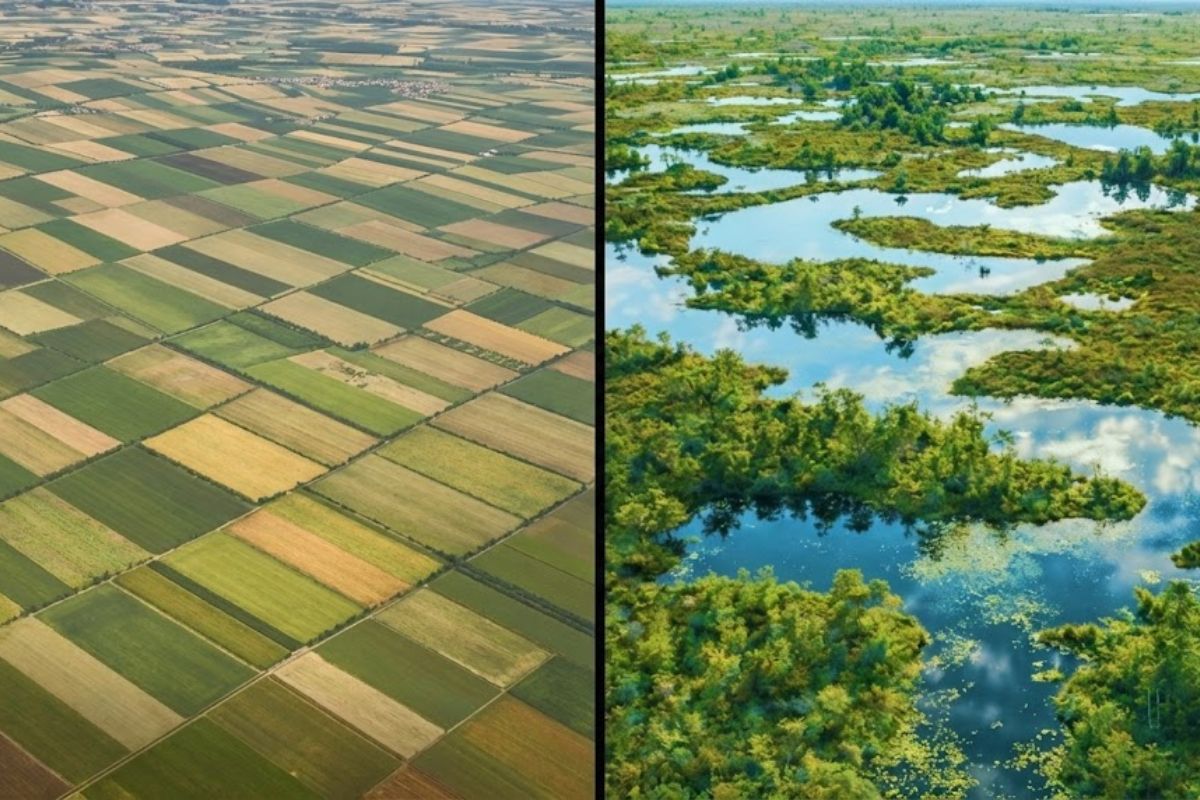


In The Black Creek Valley, In Belgium, Ecotree And Natuurpunt Teams Flood Fields, Close Ditches, And Fell Trees To Recover Ancestral Peat Bogs. The Goal Is To Stop CO2 Emissions, Protect Water, Halt Droughts, And Reactivate Wildlife, With 7.5 Hectares Funded And Five Years Of Planned Works
The restoration of ancestral peat bogs in Belgium is being carried out with decisions that may seem radical at first glance: cutting down trees that did not belong to the site, closing drainage ditches, and allowing water to return to agricultural areas. The goal is to stop CO2 release and recover an ecosystem that functions as natural infrastructure, directly impacting climate, water, and biodiversity.
The operation takes place in the Black Creek Valley and brings together technical teams, heavy machinery, and community participation to reverse a model that transformed the European landscape into drained and cultivable fields. The return of ancestral peat bogs is presented as a race against time, because old peat, if it continues to dry out, tends to decompose and release more carbon into the atmosphere.
Drainage Ditches, Agriculture, And Europe That Lost Water

The starting point is a detail of rural daily life: ditches alongside fields. These drainage lines channel excess surface water into streams and rivers, making the land cultivable and altering the landscape on a large scale. With this type of intervention, large portions of the continent have stopped behaving like wetland areas and have started functioning as fast-draining areas.
-
Health issues urgent alert for flu and calls for the vaccination of the elderly, children, and pregnant women this Saturday with Day D and drive-thru in Curitiba.

-
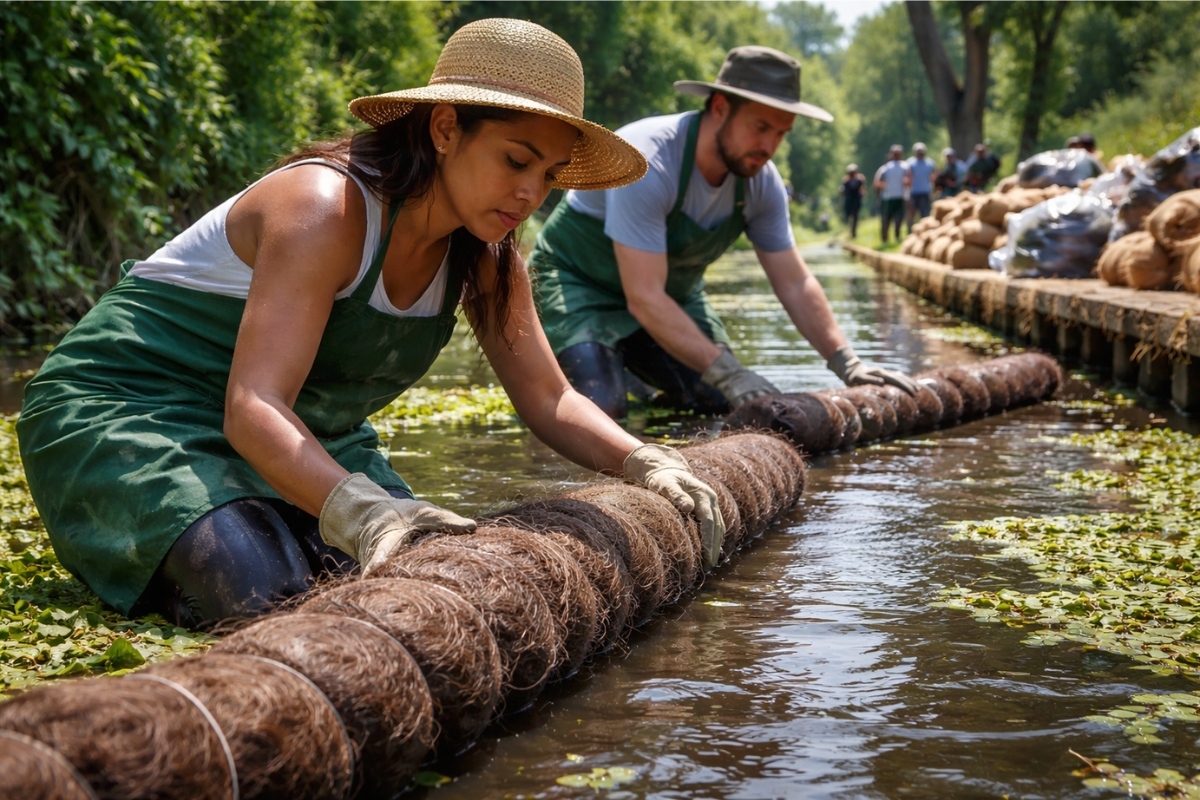
What seemed like waste has turned into a barrier, and now human hair collected from salons helps retain debris in the water of ancestral channels in Latin America.
-
China has deployed more than 1,400 fishing boats in formation, creating a barrier of 320 kilometers at sea, and the whole world wants to know if this is fishing, a military exercise, or a message of war.

-
Spain surprises the world by erecting 62 artificial dunes, mixing sand with natural remains of posidonia, and causing the structure to lose only 1.4% of its volume in 1 year.


The historical comparison used to measure the change is straightforward. It is believed that up to 20% of Europe was covered by wetlands just 100 years ago, and the estimated loss is about 80% of these areas. The practical consequence is a Europe with less natural capacity to retain water in the soil and sustain habitats that depend on continuous flooding.
Wetlands As Infrastructure: Sponge, Filter, And Habitat For Species

Wetlands carry a negative reputation in cultural narratives, but the highlighted ecological function is the opposite of the idea of “useless land.” They function as giant sponges capable of retaining large amounts of water, protecting the land from both flooding and droughts. In addition, they filter water before it reaches rivers and oceans, acting as a natural barrier for water quality.
The role in biodiversity is also central. About 40% of plant and animal species depend on wetlands in some way, and many species are only found in this type of environment. The return of ancestral peat bogs, therefore, is not just a land-use shift but a reactivation of ecological chains that are interrupted when water is withdrawn.
Peat Bogs And Ancestral Bogs: Why Peat Is Worth More Than Forest In Carbon

The ancestral bogs mentioned in the project are largely peat bogs, a special type of wetland formed where water does not flow or drain, keeping the ground constantly waterlogged. This saturation prevents oxygen from reaching the dead plants that sink into the soil. Without oxygen, the microbes that normally decompose organic matter cannot operate with the same intensity.
The result is a slow and continuous accumulation: layer after layer of dead plants deposits in the wet soil and, over centuries, transforms into peat. As the plants do not fully decompose, the carbon absorbed during their lifetime does not escape, and remains stored underground for long periods.
The global scale of this mechanism is the fact that changes the hierarchy of the debate. Although peatlands cover only 3% of the Earth’s surface, they store double the carbon of all the forests in the world combined. This is why, in the climate logic presented, protecting and restoring ancestral peat bogs can stop emissions at a level that isolated reforestation does not achieve.
What Goes Wrong When Water Disappears: Drying, Oxygen, And CO2 Released


Drainage is treated as the trigger of the problem. When ditches remove water from a valley, the layers of peat begin to dry out and oxygen penetrates again. This reactivates decomposers that have been inactive for millennia and initiates a progressive decomposition, from top to bottom, releasing large amounts of CO2 as ancient plant material is consumed.
In the Black Creek Valley, the local impact is described with an intervention number: one thousand kilometers of ditches were dug only in this valley to completely drain it. The image used to explain the effect is simple and physical: like a full bathtub that, when the drainage is opened, loses water abruptly.
The effect is also put in a global perspective. The drainage of peatlands accounts for 5% of all CO2 emissions related to peatlands worldwide, reinforcing why the return of water and the blocking of ditches are treated as climate action, not just environmental.
The Restoration Plan In Four Fronts: Kill Trees, Mow, And Close Ditches
The restoration in Black Creek was organized into four operational fronts, with repetitive and long-term tasks.
The first is to cut down trees. The justification is technical and counterintuitive: these forests did not belong to the site, and the roots suck moisture from the soil, preventing the more rare and delicate peatland ecosystem from recovering. Killing trees, in this context, is a step to return water to the system.
The second is to remove unwanted vegetation. The guidance is to keep the land clean and manually remove new shoots for years, until the water level is high enough to stabilize the environment and reduce recolonization by plants that dominate drained areas.
The third is a lot of mowing. Decades of agriculture have left the soil excessively fertilized, favoring fast-growing grasses that take up space from species typical of peatlands. Cutting the grass repeatedly becomes a controlled impoverishment strategy, preparing the soil for the return of vegetation more compatible with the waterlogged environment.
The fourth is the action that summarizes the entire project: putting the lid back on the bathtub by closing the drainage system. In practice, this means blocking ditches and keeping water in the valley to raise the water table and sustain the continuous flooding that peatlands require.
Who Executes And Who Finances: Ecotree, Natuurpunt, And The Mission 35
The restoration involves Louise, associated with Ecotree, an organization that transforms degraded landscapes into prosperous ecosystems and has already restored about 2,000 hectares of land across Europe. Ecotree, founded with the vision of planting trees, has also begun to prioritize wetlands in search of more effective climate solutions, with peat as a focus.
In Black Creek, the local partner is Natuurpunt, described as an organization that has been restoring the area for decades and has local experience. The operation is presented as a team effort, combining technical planning, manual labor, and heavy machinery.
Community mobilization appears as a logistical component. A bus with community members was taken to Belgium to help, and the effort was described as significant in volume of work, with shovels, sweat, and machines. The project, in this view, depends on labor for repetitive tasks, such as manual removal of shoots and maintaining the terrain.
Restored Area, Timeline, And Peat Of Up To 14,000 Years
The funded scope for this stage is 7.5 hectares of peatland in the Black Creek Valley. The complete reconstruction is described as a process of five years, with ecological transformation occurring at different paces.
In the short term, the water table rises slowly because rain and groundwater remain in the valley, interrupting the decomposition process of the deeper peat. The reference of antiquity to measure what is being protected is striking: there are layers with up to 14,000 years, whose decomposition would release carbon accumulated for millennia.
In the long term, new layers of peat begin to form above, a slow process that may take generations. The climate gain is immediate by stopping emissions, while the reconstruction of the peat stock is intergenerational.
Return Of Species: Raccoons, Wolves, And Beavers As Thermometers Of Flooding
The most visible effects on biodiversity are reported to be faster than the formation of new peat. One cited example is the return of a pair of common grouse to Belgium to breed and establish themselves in the restored areas of the valley.
There is also record that raccoons have successfully returned to Belgium to breed and have established themselves in Black Creek. The return of predators and ecosystem engineers appears as a symbol of the new balance: after 200 years of absence, wolves have been sighted again in the valley, and beavers are returning, with the additional effect of their dams helping to retain water within the landscape.
At this point, the ancestral peat bogs cease to be just a climate project and become a living laboratory of ecological reoccupation, where water, habitat, and fauna return together.
Modern Agriculture Versus Wetlands: The Dispute Over Soil Value
The central conflict is not just environmental, but economic and cultural. Ditches have made the land “useful” for cultivation and grazing, and reversing this process means partially giving up an immediate productivity logic in favor of a natural infrastructure that reduces drought risk, improves water retention, and traps CO2 emissions.
The bet in Black Creek suggests that wetlands, when intact, may be worth more than modern agriculture in certain locations, because they provide environmental services that do not appear in the market price of the hectare, but influence climate cost, water stability, and biodiversity.
The restoration of ancestral peat bogs, therefore, acts as a test: if the return of water reduces emissions, restores species, and stabilizes the valley, the argument for wetlands gains strength in a Europe that has drained most of these areas in just a few generations.
Do you think Europe should prioritize ancestral peat bogs and peatlands even when it reduces agricultural area, or should modern agriculture still take preference in these drained valleys?






Realmente, alimentar pessoas é menos importante do que criar lobos, castores, mosquitos, cobras, etc.
Incrível!
Na Hungria também estão alagando áreas de floresta pra repôr o lençol freático, a China, apesar de ser emissora de CO2 do planeta devido ao processo de industrialização tem plantado milhões de hectares recuperando áreas em outros países, vi na COP 30 representante de um país agradecendo a China por isso.
Um fenômeno de “DESDESENVOLVIMENTO”.
A ENGENHARIA DA VIDA surge como tendência.
O atual modelo do agronegócio brasileiro coloca em risco vários biomas e uma hora a conta vai chegar.
Alimentar bilhões de pessoas no planeta no atual cenário climático não é uma tarefa fácil. Temos que repensar valores e modelo de desenvolvimento com agricultura agroecológica se quisermos sustentar a vida no planeta por longo prazo, antes de um colapso.
Sim!😁
Se fizermos o mesmo nos nossos pântanos não estaríamos salvando nossas vidas selvagens que morrem com incêndio **** nos nossos pântanos,.
🤔