





 Portuguese
  English
  Spanish
  7 min of reading
  0 comments


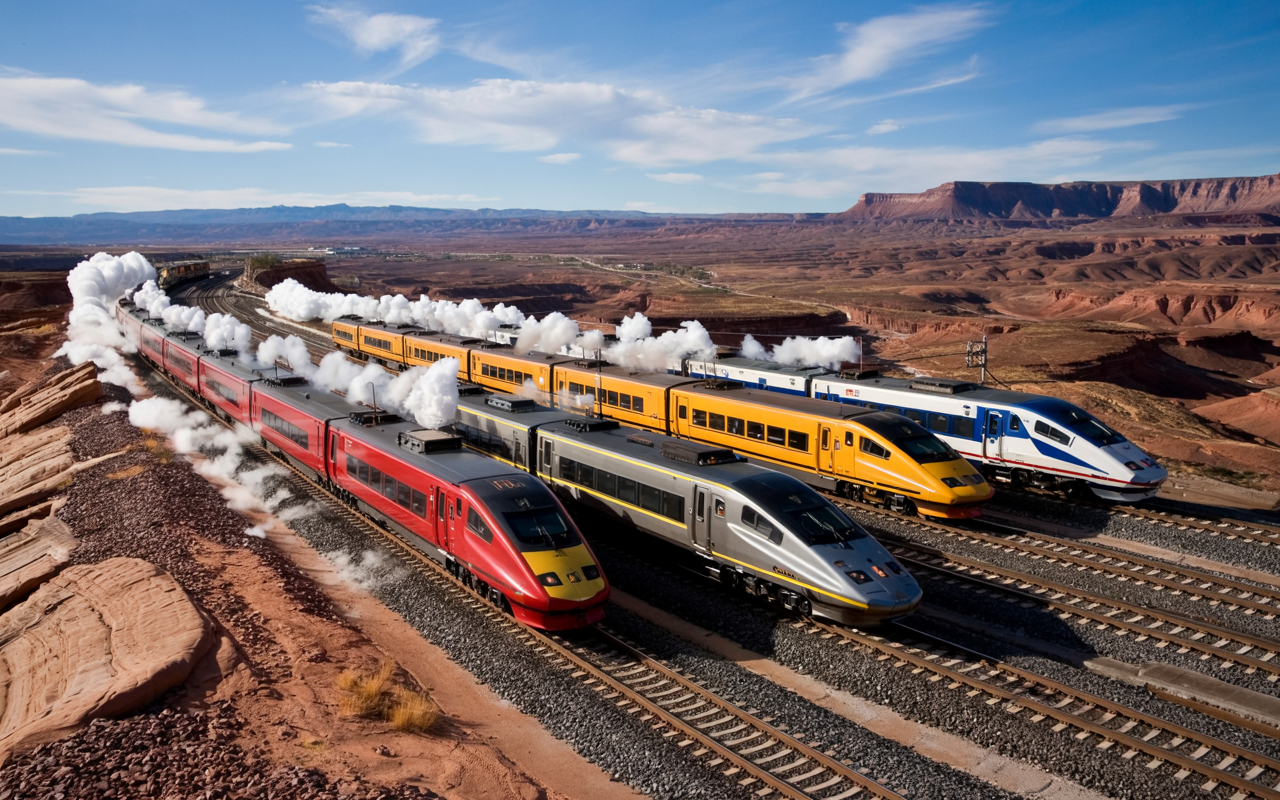
Discover The Most Powerful Trains In The World: Giant Locomotives Weighing Hundreds Of Tons, Traveling Thousands Of Kilometers And Sustaining Entire Economies Through The Rail Transport Of Freight And Passengers.
When thinking of brute power on tracks, it’s not just about speed or design. The most powerful trains in the world are industrial giants capable of pulling hundreds of freight cars, traversing inhospitable regions, and maintaining the flow of raw materials that supply everything from steel industries to port terminals. They are locomotives that, even operating far from the public eye, sustain the logistical infrastructure of entire countries — and, consequently, the growth of their economies.
From Australian deserts to frozen regions of Siberia, across vast American plains and mineral corridors in Brazil, these trains challenge the limits of ground transport. Equipped with engines of tens of thousands of horsepower, synchronized traction systems, and autonomy for days of uninterrupted operation, they represent the most advanced in heavy rail transport. Get to know also the ‘monster’ of the tracks: meet the longest freight train in the world and what it transports
What Defines The Power Of A Train? And What Are The Most Powerful Trains In The World?
The power of a train goes far beyond the engine’s force. It encompasses a combination of mechanical and electrical engineering, traction capacity, structural resilience, and energy consumption efficiency. A powerful train is one capable of safely transporting very high loads over long distances with stability and economy.
-
Friends have been building a small “town” for 30 years to grow old together, with compact houses, a common area, nature surrounding it, and a collective life project designed for friendship, coexistence, and simplicity.

-
This small town in Germany created its own currency 24 years ago, today it circulates millions per year, is accepted in over 300 stores, and the German government allowed all of this to happen under one condition.

-
Curitiba is shrinking and is expected to lose 97,000 residents by 2050, while inland cities in Paraná such as Sarandi, Araucária, and Toledo are experiencing accelerated growth that is changing the entire state’s map.

-
Tourists were poisoned on Everest in a million-dollar fraud scheme involving helicopters that diverted over $19 million and shocked international authorities.


These trains are usually made up of multiple locomotives operating in sync, a system known as Distributed Power. This technology allows the force to be distributed along the cars, preventing breakages and enabling trains that exceed 3, 4 or even 7 kilometers in length, as has already happened in Australia.
The Australian Colossus: BHP Iron Ore Train – One Of The Most Powerful Trains In The World
In the Pilbara region of Western Australia, the train that is considered the longest and heaviest in the world operates. Managed by the mining giant BHP, this train runs the line that connects the iron ore mines of Newman to the port of Port Hedland, carrying up to 82 thousand tons of iron ore in compositions that have already surpassed 7.3 kilometers in length, with eight GE AC6000CW locomotives distributed along the cars.
The record was certified by the Guinness World Records in 2001, but the operation remains a logistical feat to this day. In the arid Australian desert, where temperatures can exceed 45 °C, this train performs one of the most demanding operations on the planet, being crucial for the Australian economy — which relies on mining as one of its main export pillars.
China Railway HXD1: Maximum Electric Power
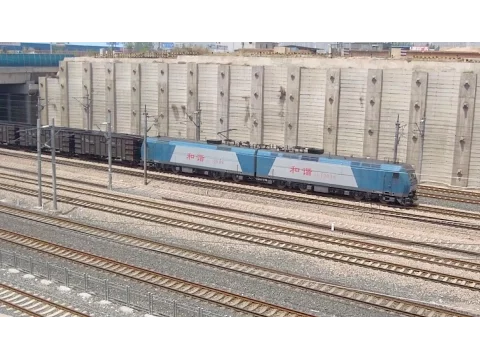

In China, rail power takes on a different form: electric and highly technological. The HXD1 locomotive, developed by CSR Zhuzhou in partnership with Siemens Mobility, is considered the most powerful electric locomotive in the world in continuous operation. With an impressive power of 13,410 horsepower (about 10,000 kW), this train was designed to transport coal and ore through industrial corridors in northern China.
With the capacity to tow more than 7,000 tons on sloped terrain and maintain a constant speed over long distances, the HXD1 symbolizes China’s effort to replace diesel with electric power in the transport of heavy cargo. In addition, it integrates a digitized rail system, with remote central control, satellite communication, and real-time sensors, making it a benchmark for efficiency and sustainability.
Big Boy And The American Tradition Of Power On The Tracks
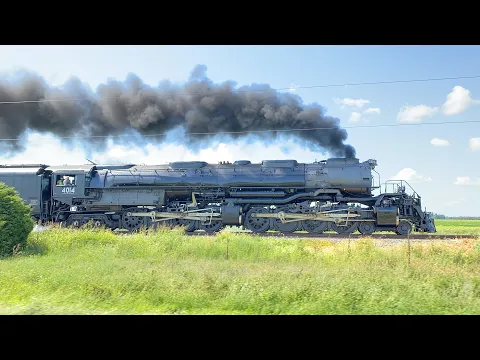
In the United States, the story of rail strength is told by the iconic locomotive Big Boy 4014, from Union Pacific. Built in the 1940s to handle the mountainous terrain between Wyoming and Utah, it was steam-powered and had 7,000 HP — an impressive number for the time. Although decommissioned in the 1960s, it was recently restored and remains a symbol of the golden age of American trains.
Today, rail power in the U.S. is led by locomotives like the GE Evolution Series, which operates with up to three units simultaneously on coal and grain lines, forming compositions of up to 4 km in length and moving 30,000 tons in a single trip. The American rail network is one of the most efficient in the world, responsible for 40% of land freight transport in the country, especially commodities.
Brazil Also Operates Some Of The Most Powerful Trains On The Planet
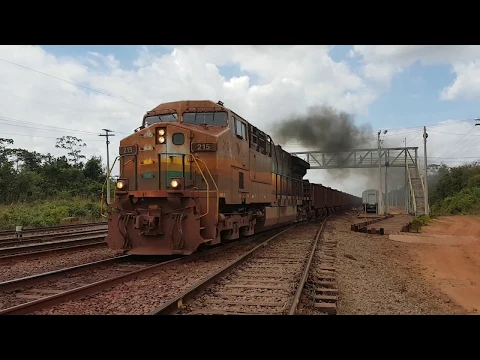
Although often out of the global spotlight, Brazil is a protagonist in the use of extremely heavy freight trains, especially in the mining sector. The Vale S.A., one of the largest iron ore exporters in the world, operates trains over 3 km in length, with four high-power locomotives pulling over 32,000 tons of ore on the Carajás Railroad and the Vitória-Minas Railroad.
These trains run daily along strategic corridors connecting mineral extraction areas in Pará and Minas Gerais to maritime export ports. In addition to drastically reducing logistics costs per ton, this model also decreases CO₂ emissions per ton-kilometer transported, making the national rail modal an environmental asset.
Russia And Its Steel Trains Under The Ice
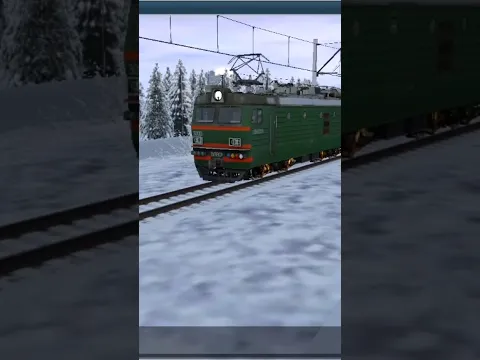
In the vastness of Russia, trains face an additional challenge: the climate. In regions like Siberia and the Ural Mountains, temperatures can drop to -50 °C, and yet rail transport cannot stop. The VL85 locomotive, manufactured during the Soviet era and still widely used, is an electric monster with over 12,000 HP, designed to pull up to 6,000 tons even under heavy snow.
These machines are equipped with internal heating systems, structural reinforcement against freezing, and thermal insulation, operating in conditions that no other mode can withstand. Additionally, the Russian railways are vital for transporting oil, natural gas, heavy metals, and grains, connecting the extremes of the country through one of the largest rail networks on the planet.
Trains And Their Direct Impact On The Economy
The presence of powerful trains in a nation has direct effects on its economic competitiveness. By allowing the transport of large volumes with low operational cost, trains are strategic allies of industry, mining, agribusiness, and even export.
In Brazil, for example, transporting ore by train reduces logistics costs by up to 60% compared to road transport. In the U.S., rail transport is essential to maintain the competitiveness of agricultural commodities. In China, the electrification of railways allows faster deliveries, integration of production chains, and reduced dependence on fossil fuels.
Besides the economic aspect, there is also a positive environmental impact: a train can replace hundreds of trucks, freeing up roads and drastically reducing pollutant emissions.
The Future Of Powerful Trains: Autonomous, Green, And Even Bigger
Heavy rail transport has not ceased to evolve. Countries like Australia, the United States, and Germany are already testing autonomous trains, without human operators, with onboard artificial intelligence for route optimization, intelligent braking, and accident prevention. Vale, in Brazil, has already initiated pilot projects for remote operation on mineral railways.
Additionally, locomotives powered by hydrogen, high-capacity batteries, and hybrid systems are beginning to gain traction as alternatives to diesel. The expectation is that these models will drive sustainable transport, especially in countries with rigorous environmental goals for 2030 and 2050.
Global demand for rail freight transport is expected to grow exponentially in the coming decades, particularly in Asia, Africa, and South America — where rail infrastructures are expanding to support new export corridors.
The most powerful trains in the world are much more than colossal machines. They represent technology, strategy, and efficiency in their rawest form. Connecting industrial zones, agricultural regions, remote areas, and large urban centers, these trains sustain entire logistical chains, supply markets, and help shape the growth of nations.
In a global scenario that demands productivity with sustainability, these fortresses on tracks play a central role in a new development model — more efficient, cleaner, and more connected. Whether in interior Pará, on Russian roller coasters, or in Australian deserts, trains continue to be the beating heart of great economies.
Official Sources Used
- GE Transportation (Wabtec) – www.wabteccorp.com
- Siemens Mobility – www.mobility.siemens.com
- Union Pacific Railroad – www.up.com
- BHP – Mining Operations – www.bhp.com
- Vale S.A. – www.vale.com
- ANTT – National Agency For Land Transportation – www.antt.gov.br
- Ministry Of Transport – www.gov.br/transportes










Seja o primeiro a reagir!