





 Portuguese
  English
  Spanish
  4 min of reading
  0 comments


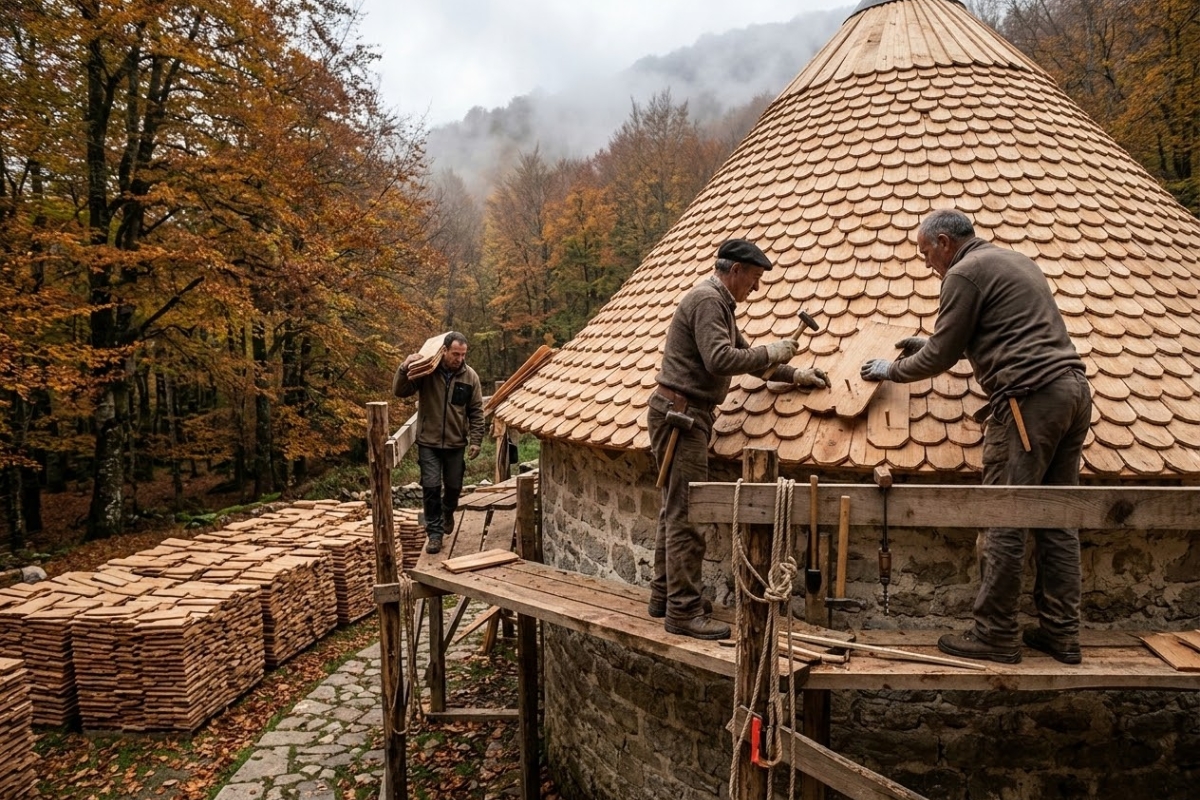
Specialized Team Handcrafts 7000 Rustic Pieces in the Spanish Forest to Restore an Ancient Church and Create Unmatched Thermal Insulation
Modern construction often relies on gigantic machines and high-tech factories to erect large structures. But an audacious architectural restoration project decided to take the opposite path and return to the roots of pure carpentry to cover an old stone building.
A group of experienced workers entered the forest to produce from scratch all the material needed for the new roof. The team used only human strength and heavy manual tools to slice massive logs and create thousands of pieces with a completely analog technique.
The final result impresses with its technical precision and the remarkable ability to withstand the worst storms for decades. This ancestral technique creates an incredibly resilient natural barrier that protects the interior of the building and regulates temperature impeccably.
-
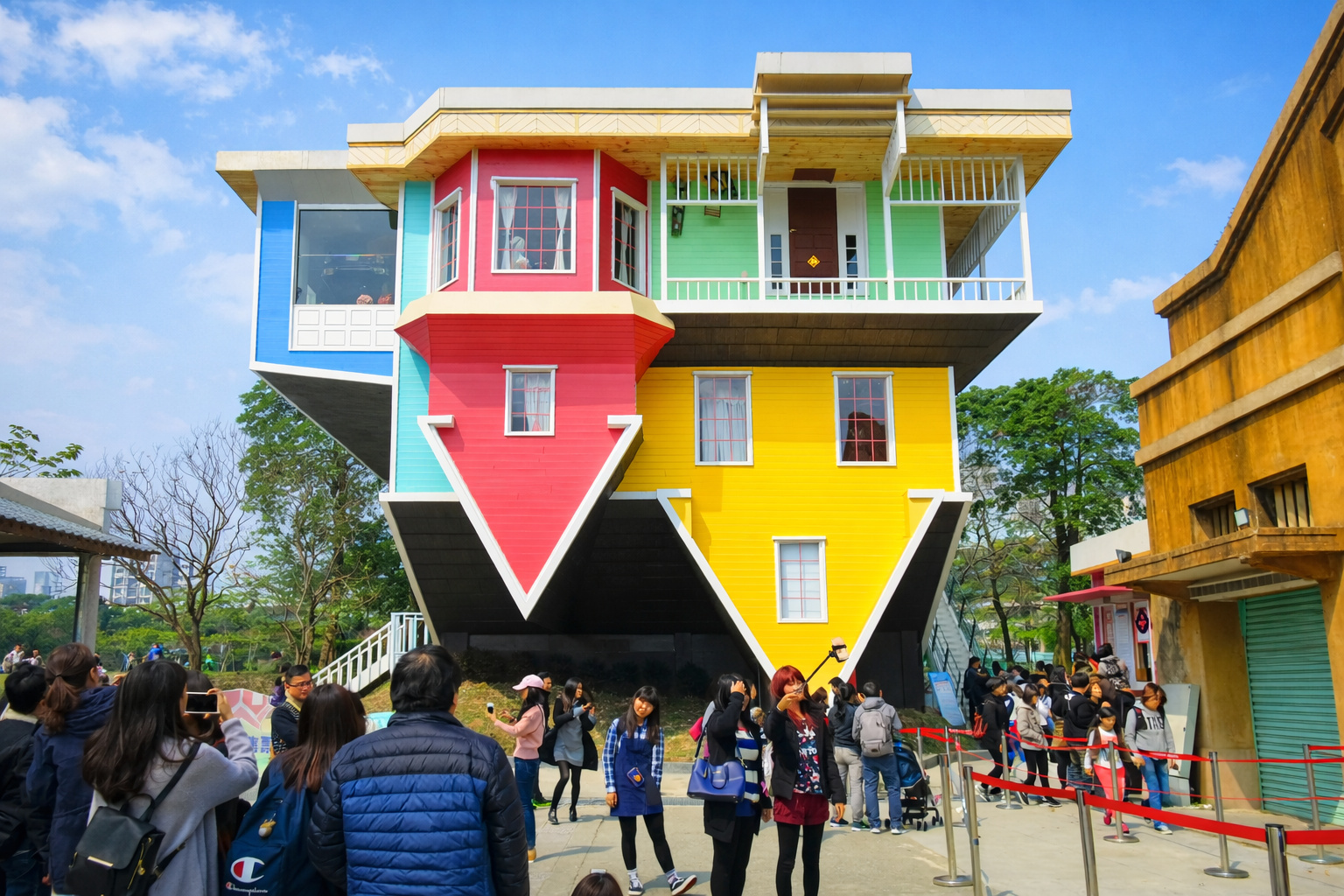
Upside Down House transforms abandoned warehouses from the 1970s, blending art with concrete and steel engineering, becoming a phenomenon in South Korea and impressing with a surreal experience that attracts tourists from around the world.
-
Brazil became 18 square kilometers smaller in the new official update from IBGE, which redrew the boundaries of 784 municipalities in 13 states and even changed the names of cities that you might know, such as Açu, which is now called Assú.

-
Stephen Hawking said that the worst enemy of knowledge is not ignorance but the illusion of knowledge, and he dedicated his entire career to proving that science dies when people act as if they already have all the answers.

-
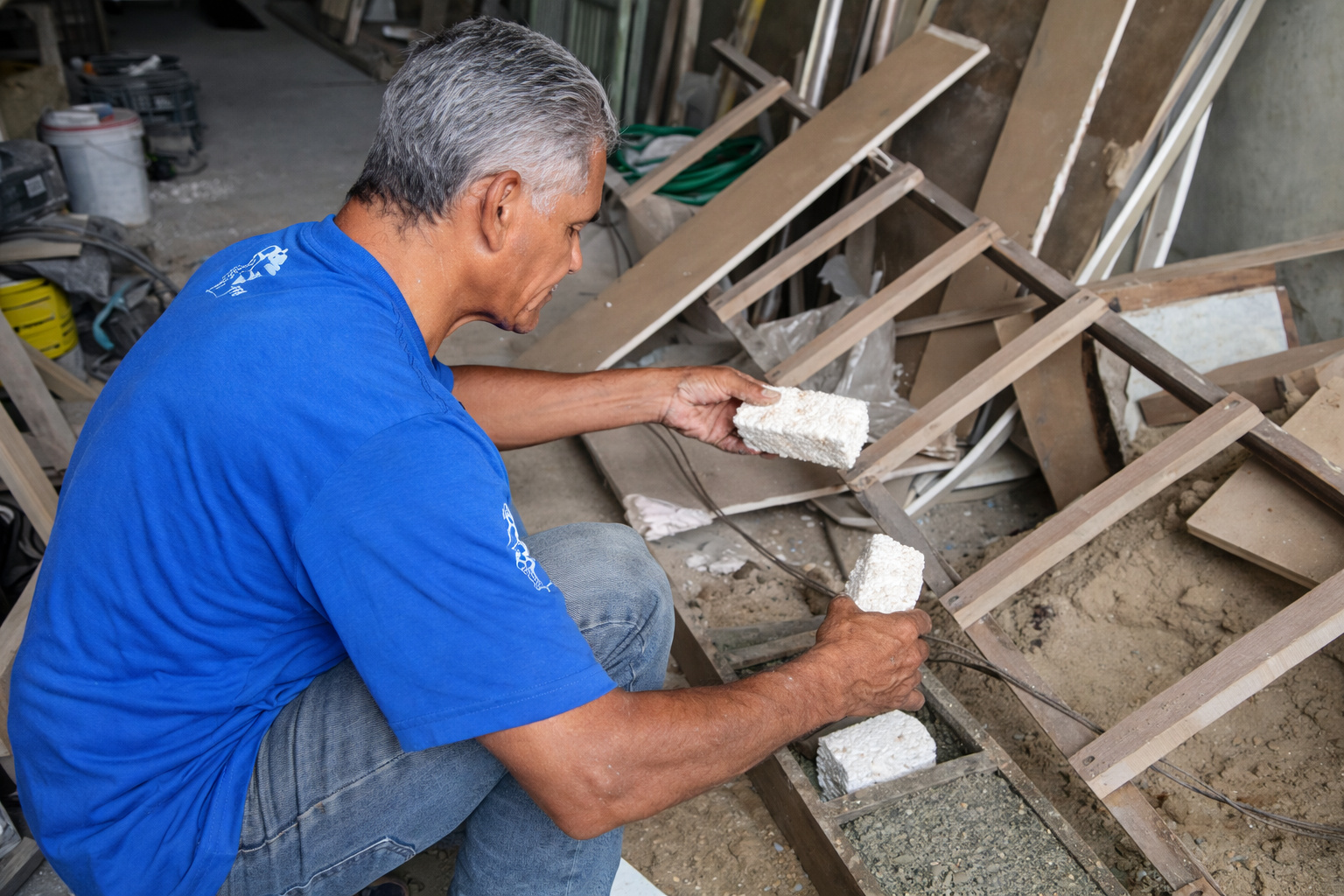
A man gathered Styrofoam, PET bottles, sand, and cement to build a recycled block using a mold made from an old board and a 50mm pipe to easily raise walls.

The Initial Challenge of Cutting Logs Every 65 Centimeters
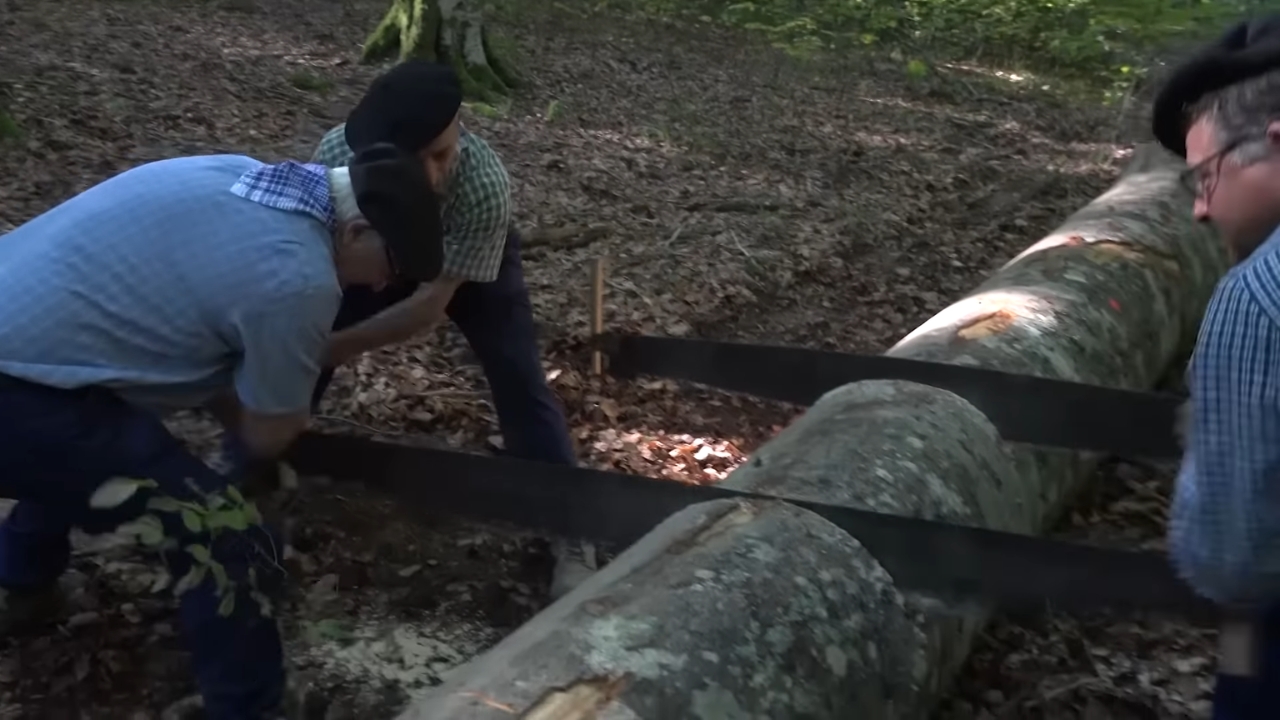
The heavy work begins at the base of the giant trees in the Spanish mountainous region. The artisans use a huge saw operated by two people to separate the raw wood into precise slices of 65 centimeters in length.
This standardized size facilitates the handling of extremely heavy pieces in the dense forest. The continuous cutting requires enormous precision and a lot of breath to maintain the work pace without jamming the metal tool into the solid log.
The repetitive action expels accumulated sawdust and prepares the primary material for the next stage. Discarding the soft center of the wood ensures that only the densest and most armored bark proceeds to the geometric modeling phase.
The Exact Split Preserves the Natural Strength of the Material
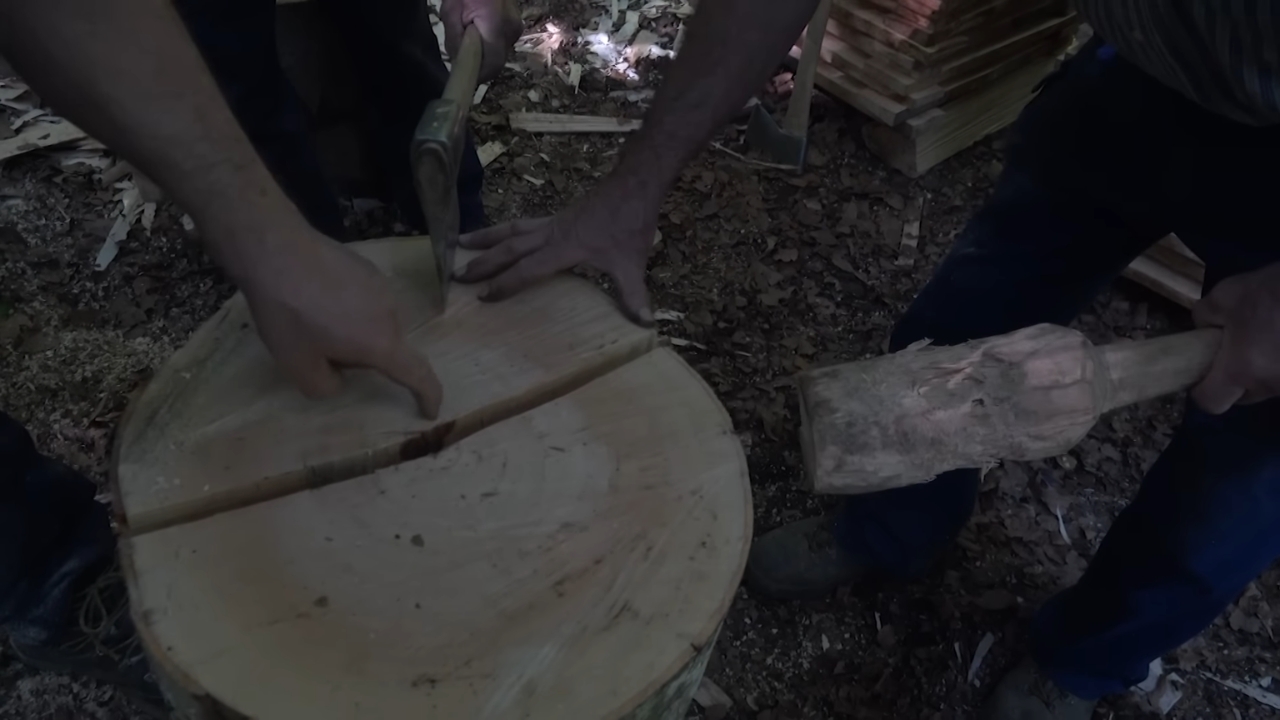
The team uses iron mallets to drive heavy metal wedges directly into the visible markings of the round wood. The brutal impact splits the log into wide slices following the exact direction of the original fibers of the imposing fallen tree.
This extreme care in separation ensures that rainwater never penetrates the cut pieces. Avoiding the cross-cutting of the fibers creates an impenetrable biological shield that rejects moisture even before the board takes its final shape.
The conversion of the large raw cylinder into several irregular planks marks the transition from the forest to the thickness adjustment table. The subsequent finishing removes unwanted edges and delivers elongated, clean strips for the main batch.
The Strategic Rest of the 7000 Boards on the Snowy Mountain
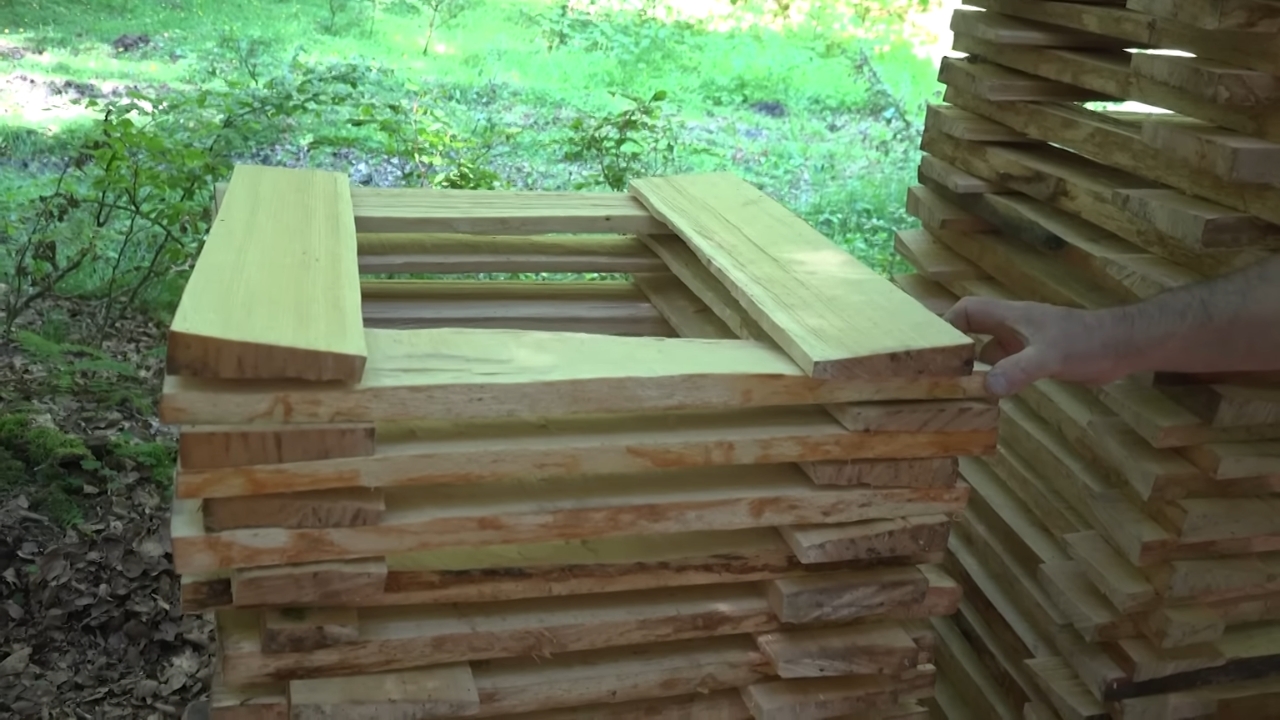
According to the project’s specialists, a group of artisans dedicated to historical preservation, the cut wood needs to rest for a whole year on the mountain itself. The boards are stacked facing the weight of thick layers of snow and the strong humidity typical of the autumn season.
This long period of climatic exposure acts as a highly efficient natural press. The constant pressure molds the material and leaves the 7000 boards perfectly flat and ready for the rigorous final fitting without any risk of unwanted warping.
The organic aging forced by the elements hardens the remaining sap and crystallizes the strength of each isolated plate. The frozen mountain acts as a huge natural laboratory that certifies the quality of each unit before being raised to the stone roof.
Support Pins and Overlapping Create the Perfect Insulation
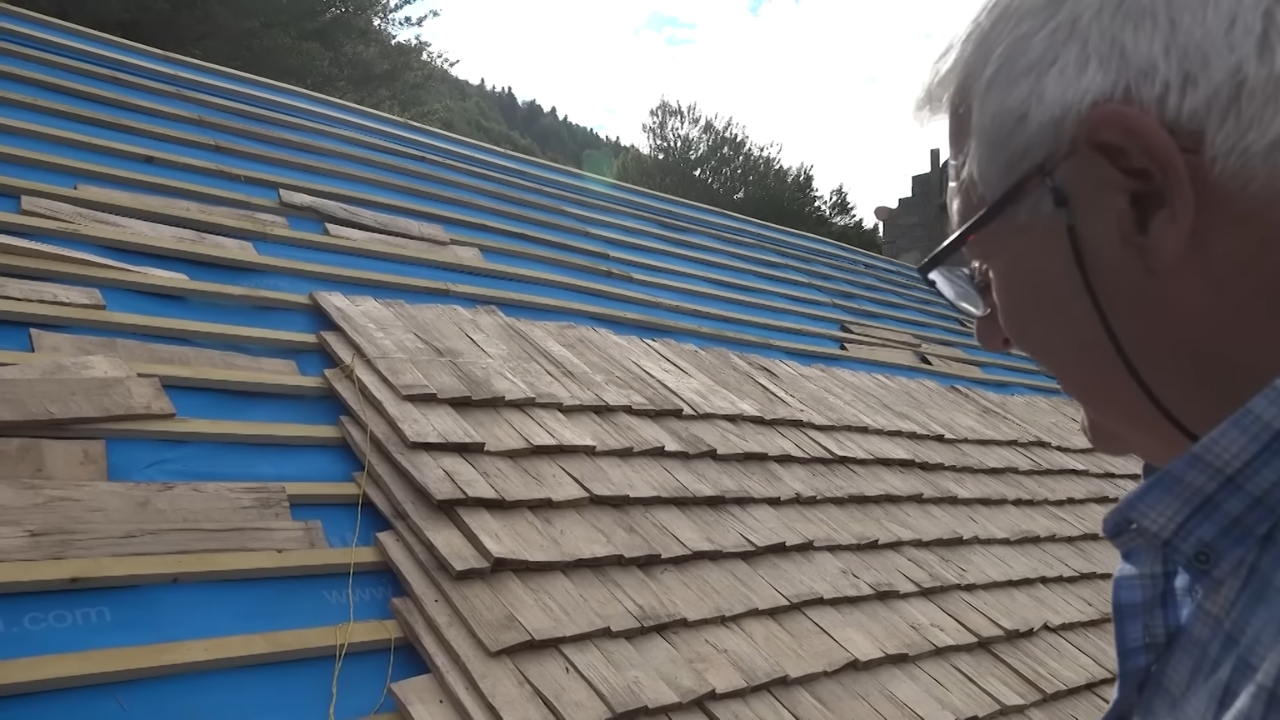
The installation at the top of the building requires the complete replacement of the old rotting oak slats due to erosion over time. Workers fit the new pieces onto the base structure by drilling the wood and driving a round fastening pin into each flat board.
The clever assembly intersperses thick and thin slices, leaving a deliberate hollow space between the multiple overlapping layers. This millimeter gap ensures constant aeration of the roof and creates a powerful thermal chamber that prevents the accumulation of moisture that causes premature rotting.
The individual anchoring of each wood shard prevents dangerous slips during aggressive mountain gusts. The final visual arrangement resembles a robust scaled skin that firmly embraces the crossbeams of the restored church.
Thermal Protection Guaranteed for Over 50 Years Under Sun and Rain
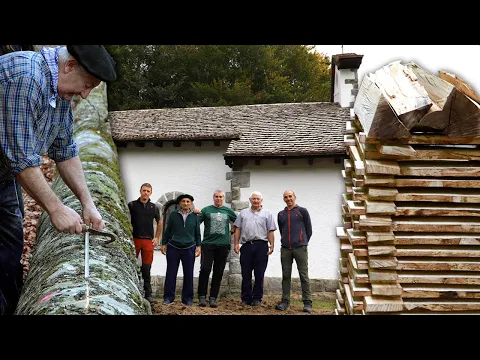

The progressive advance of the light, textured coating completely covers the bare, old armor of the ancient building. The pieces are aligned so rigorously that they absolutely block any minimal passage of light or cold air currents.
The final technique delivers an ingenious conical finish that promises to remain intact for a period of up to 52 years under the most varied climatic aggressions. The smart step-shaped design allows water to flow quickly, cleaning the top of the structure and sweeping the organic dirt accumulation to the ground.
The methodical crafting of this massive rustic assembly proves the absolute power of primitive techniques for environmental adaptation. The strength of the physical fittings and the long organic preparation of the forest material far exceeds the durability of many modern synthetic solutions sold today.
This admirable architectural rescue undeniably demonstrates how human work allied with the time of nature builds impenetrable fortifications. The completed roof restores maximum grandeur to the rocky structure and consolidates a formidable thermal barrier that will endure for decades with great structural firmness.







-

-

-

-

8 pessoas reagiram a isso.