





 English
  Francês
  Alemão
  Italiano
  Japonês
  Norueguês
  Portuguese
  Spanish
 4 min of reading
  0 comments


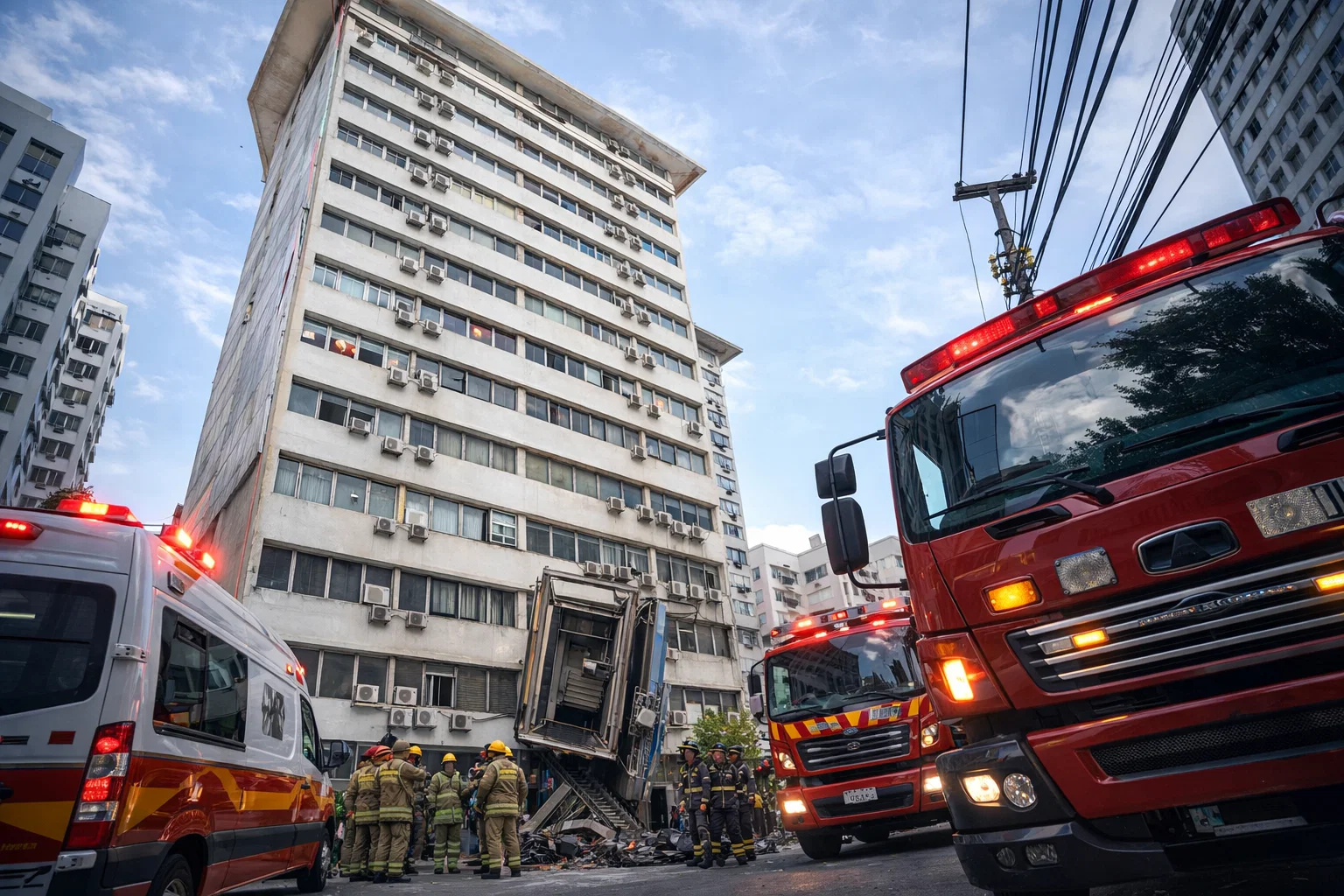
Elevator Accident in Recife Exposes Technical Limits and Safety Mechanisms in Vertical Transportation Systems
The case of the elevator that plummeted in Recife inside a commercial building drew attention to the engineering behind one of the most used pieces of equipment in modern cities. The fall occurred in a business building located in Boa Viagem and left four women injured, including two elderly women and a pregnant woman.
The equipment fell from the tenth floor to the ground, generating moments of tension among those in the cabin. The incident sparked discussions about safety, maintenance, and operation of elevators, systems that operate daily in commercial and residential buildings.
The investigation was published by the Civil Police of Pernambuco, the state agency responsible for criminal investigations, which opened an inquiry to understand the circumstances of the accident.
-
Cyclist Hit by Car in Sobradinho, DF Is Rescued After Traffic Accident This Sunday

-
Civil Defense Issues Alert and Advises Evacuation in 51 Streets of Juiz de Fora After Risk of Instability; See the Complete List of Affected Neighborhoods
-
Military Plane With Money Crashes In Bolivia, Leaves 20 Dead And Leads Central Bank To Annul 10, 20, And 50 Bolivianos Notes After Chaos At Airport
-
Rain in Juiz de Fora Leaves Trail of Destruction and Confirms Historic Tragedy in Zona da Mata


Operation of Elevator Engineering Depends on Balance Between Weight, Motor, and Electronic Control
Modern elevators operate based on a set of integrated systems that need to function with absolute precision. Electric motors, sensors, steel cables, and electronic control systems work together to move the cabin between floors.
Any unexpected change in this balance can cause the equipment to stop operating for safety. Vertical transportation systems have automatic protection protocols, designed to react when there is an operational irregularity.
In busy commercial buildings like the one where the accident occurred, these machines transport hundreds of people throughout the day. This requires constant technical maintenance and monitoring of mechanical and electronic components.
Even with these safety systems, unexpected situations can occur when there is an electrical failure or a change in the load supported by the cabin.
Passenger Report Indicates Signs of Irregularity Before Elevator Plummeted
A witness reported that the elevator was already showing unusual behavior before the fall. The passenger stated that the cabin was uneven at the moment he entered the equipment, even during the journey between floors.
The elevator was supposed to ascend to the eleventh floor. However, the equipment was unable to complete the journey and began to lose power.
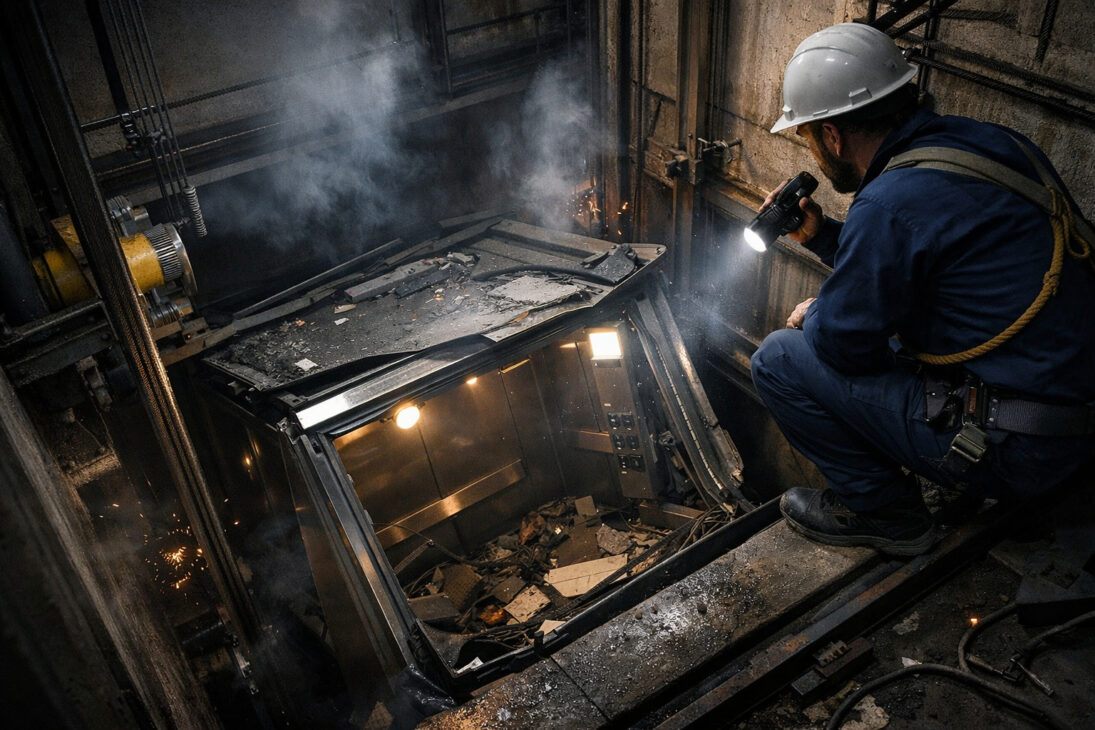
The report indicates that the elevator started to descend slowly and then gained speed until it reached the ground, at which point the impact on the lower floor occurred.
This type of behavior draws the attention of specialists because it may involve position sensors, traction systems, or electronic speed control.
Electricity Fluctuations and Excessive Load Appear Among Analyzed Hypotheses
Following the incident, the maintenance team responsible for the equipment conducted a technical evaluation. The document prepared by the engineers points to possible factors related to the episode.
Among the cited hypotheses are fluctuations in the electricity supply and temporary excessive load within the cabin.
Fluctuations in the electrical network can directly interfere with the operation of the motor and the electronic system controlling the elevator. When the system detects this type of instability, the equipment may enter automatic protection mode.
The presence of a load above the limit can also trigger an automatic response from the system, which halts operation to prevent structural or mechanical damage.
Safety System Can Interrupt Operation When Operational Limits Are Reached
Elevators have various safety mechanisms developed by vertical transportation engineering. These systems activate when sensors detect irregularities in operation.
Among the existing resources are automatic brakes, speed sensors, and electronic control systems that constantly monitor the cabin’s behavior.
The technical report indicates that the elevator may have stopped after reaching a programmed safety limit of the system. This mechanism halts operation when any parameter deviates from the expected standard.
The maintenance was called at 12:05 PM and arrived at the location a few minutes later. People were removed from the cabin around 12:10 PM, and the equipment underwent operational tests.
After the technical analysis, the elevator was cleared for operation again at 12:47 PM.
Business Buildings Depend on Permanent Maintenance of Vertical Transportation Systems
Commercial buildings with high foot traffic rely on continuously operating elevators. Therefore, technical maintenance contracts are part of the operation of these enterprises.
The building administration reported that there is a permanent maintenance contract for the elevators installed in the building.
The investigation into the case remains ongoing. The incident has been recorded at the Boa Viagem Police Station and is under review by the Civil Police of Pernambuco, the state agency responsible for criminal investigations.
Accidents involving elevators are rare, but incidents like this emphasize the importance of preventive engineering and constant technical maintenance in equipment that is part of urban routine.
The incident reignites the discussion about safety in vertical transportation systems and shows how any failure in electricity, sensors, or electronic control can directly impact the operation of these devices.
If you have ever experienced a similar situation with elevators or work with building equipment maintenance, please leave your opinion in the comments and share this information with others who use elevators daily.










Seja o primeiro a reagir!