





 Portuguese
  English
  Spanish
  3 min of reading
  0 comments


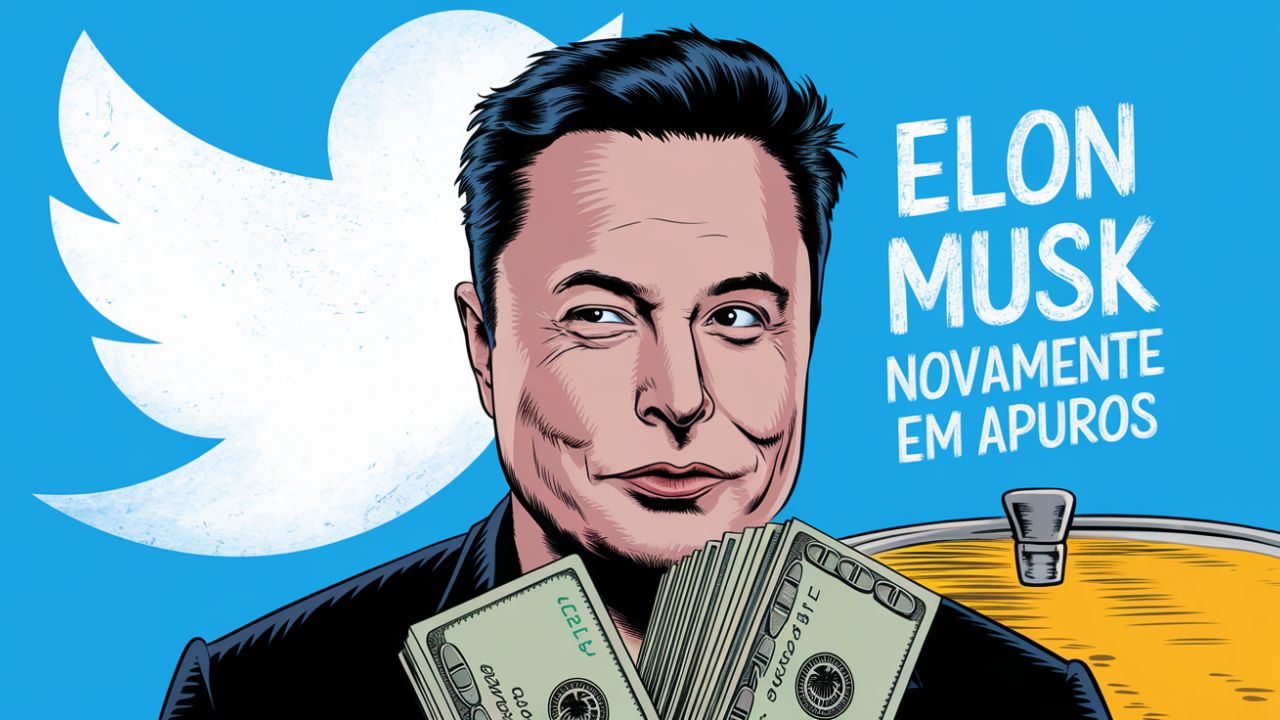
Billionaire Allegedly Hidden Stock Purchases to Avoid Price Increase, Causing US$ 150 Million Loss to Investors; SEC Denounces Strategy Used by Elon Musk in Twitter Acquisition.
Elon Musk, the eccentric billionaire and CEO of giants like Tesla and SpaceX, is once again embroiled in controversy. This time, he faces accusations of defrauding investors in the purchase of Twitter, now called X. Did he really evade the rules to profit more? Let’s explore this intriguing case that mixes business, laws, and, of course, Musk’s unique personality.
The Silent Stock Purchase of Twitter
In the financial market, major players like Musk need to follow a well-defined manual. One of these rules requires investors to notify the U.S. Securities and Exchange Commission (SEC) when their stake in a company exceeds 5%. This prevents billion-dollar maneuvers from negatively impacting small investors.
However, Musk seems to have ignored this norm while increasing his stake in Twitter in 2022. He crossed the 5% threshold in March but only notified the authorities in April, when his share had already reached 9.2%. This strategic delay may have been the key piece to keep prices low while he continued buying.
-
A new Brazilian shopping center worth R$ 400 million will be built in an area equivalent to more than 4 football fields, featuring 90 stores, 5 cinemas, a supermarket, a college, and parking for 1,700 cars, potentially generating 3,000 jobs.

-
Larger than entire cities in Brazil: BYD is building a 4.6 km² complex in Bahia with a capacity for 600,000 vehicles per year, but the discovery of 163 workers in conditions analogous to slavery has shaken the entire project.

-
With an investment of R$ 612 million, a capacity to process 1.2 million liters of milk per day, Piracanjuba inaugurates a mega cheese factory that increases national production, reduces dependence on imports, and repositions Brazil on the global dairy map.

-
Brazilian city gains industrial hub for 85 companies that is equivalent to 55 football fields.


Musk’s tactic appears to have been simple: keep silent to save money. By not disclosing his intentions, he avoided the market from reacting to the news, which would have driven up Twitter’s stock price. When the purchase was finally revealed, the stock surged 27%. According to the SEC, this resulted in an estimated loss of US$ 150 million for other investors.
The SEC Investigation: A Costly Move
The SEC is like a referee in the financial game, ensuring everyone follows the rules. In Musk’s case, the commission alleges that he broke the rule by not reporting his stock movements within the 10-day deadline after reaching a 5% stake. This omission is not just a technical infraction; it is seen as an attempt at manipulation.
The SEC’s complaint states that Musk’s strategy harmed small investors. The financial impact was significant: by hiding his purchases, he secured low prices for himself but left other investors unprotected when the market finally reacted. The regulator considers this a serious violation, although Musk’s attorney downplays the incident as an “administrative error”.
Musk’s Reaction: Attacks on the SEC and Justifications
As always, Musk did not waste time and used X to respond. He called the SEC “a completely broken organization” and questioned why the agency is focusing on him instead of dealing with more serious crimes. A typical response from the billionaire, who never backs down from controversy.
Alex Spiro, Musk’s attorney, dismissed the accusations as insignificant. According to him, it is a minor failure in completing a form, which, even if proven, would result in a minimal penalty. For Spiro, the SEC is simply trying to “harass” Musk in a campaign that has already lasted for years.
Political Context: Regulators versus Innovation
This scandal arises amid a turbulent political landscape. The SEC’s complaint was filed days before Donald Trump’s inauguration, who has supported reducing regulations in sectors like technology and finance. The clash between Musk and regulators reflects a larger struggle between innovation and government control.
Musk is no stranger to confrontations with agencies like the SEC, NASA, and FAA. For him, these institutions often hinder progress. But are his bold methods a way to break paradigms or just risky strategies to earn more money?







-

-

-

4 pessoas reagiram a isso.