





 Portuguese
  English
  Spanish
  3 min of reading
  0 comments


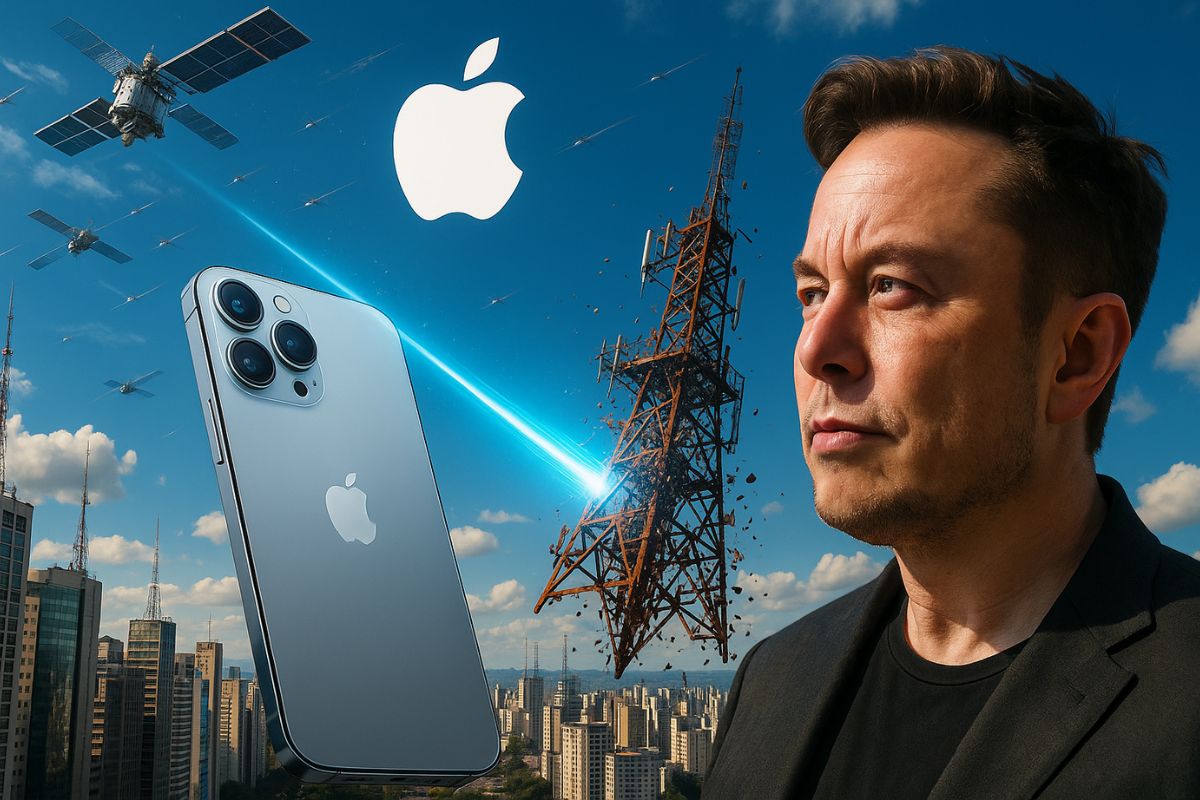
Billion-Dollar Plan of SpaceX Includes Purchase of Strategic Frequencies, Possible Alliance with Apple and iPhones Connected Directly to Satellites
For decades, the direct connection between a regular cellphone and a satellite seemed like something reserved for science fiction or military use. But the end of cell towers as we know them is now at the center of a bold movement led by Elon Musk. With the acquisition of key frequencies and plans for integration with iPhones, SpaceX is about to offer global connectivity without relying on terrestrial structures.
The project progresses with the purchase of a spectrum worth US$ 2.6 billion from EchoStar, allowing regular smartphones to communicate directly with low-earth orbit satellites. The impact could be profound: coverage holes will cease to exist, and the cellular network of the future could emerge directly from space.
Rare Frequencies and a Novel Infrastructure
For the plan to work, it was necessary to obtain uplink bands, rare frequencies regulated by governments that allow the phone to send signals to the satellite.
-
In Mexico, a 3,000-year-old Maya site with the dimensions of an entire city may have been built as a colossal map of the cosmos, created to represent the order of the universe and reveal how this people organized space, time, and rituals.

-
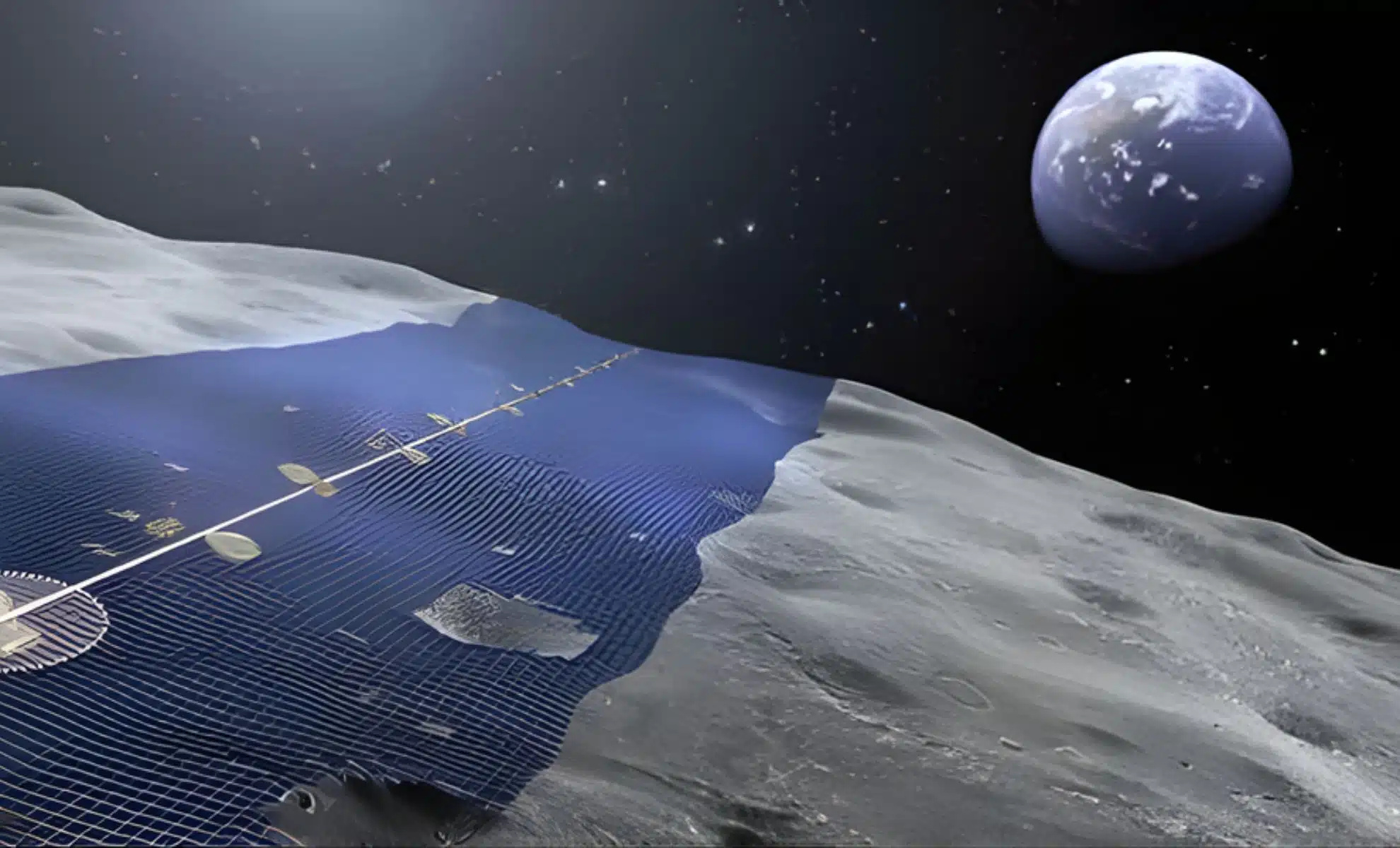
Japan wants to build a solar ring of 10,900 kilometers on the Moon to continuously send energy to Earth.
-
Weighing almost 1 ton, with temperatures of up to 3,000°C, the ability to launch 10,000 fragments within a radius of 1 km, capable of penetrating concrete and melting steel, Turkey’s terrifying bomb emerges as one of the most destructive non-nuclear weapons ever presented.

-
After a submarine disappeared beneath the “Doomsday Glacier,” scientists announce a new monstrous machine capable of operating at 3,000 meters depth to return to the heart of the ice and investigate a threat that could raise sea levels worldwide.


This was the missing component for SpaceX to complete its global mobile architecture.
EchoStar was unsuccessful in trying to apply these bands to terrestrial 5G, but SpaceX intends to use them in a completely new way.
The key lies in the authorization from the FCC, the regulatory body in the United States, which is still assessing the full satellite use of these bands.
If permission is granted, the end of cell towers will enter a concrete phase of transition.
Connectivity will cease to depend on fixed structures and will operate with low latency, directly from the Starlink constellation.
Partnership with Apple Could Change the Game
A strategic element of this plan is the possible acquisition of Globalstar by SpaceX, revealed by Bloomberg.
The company is responsible for the emergency satellite feature of iPhones, launched in 2022.
Apple, which has already invested US$ 1.5 billion in the network and holds a 20% stake, would be central in consolidating the partnership.
If the purchase occurs, an unprecedented hybrid infrastructure in the industry will emerge, comprising:
low-earth orbit satellites from SpaceX
exclusive spectrum capable of operating direct services
native integration with iPhone devices
expansion of satellite functions beyond emergencies
The potential impact rivals the emergence of the first mobile networks, as it represents a technological leap that ignores conventional coverage models.
The Obstacles: Interference, Weather, and Regulation
Despite the technical advancement, there are considerable political and regulatory obstacles. The FCC is analyzing risks of interference with weather systems operating in adjacent bands.
Major traditional operators see the plan as a direct threat to their business model.
The decisions made by the FCC, pressured by cross-interests, will define the pace of implementation.
At the same time, technical issues involving weather, orbital stability, and spectrum management require robust solutions.
A Mobile Architecture Coming from Space
SpaceX has already conducted tests with T-Mobile using borrowed spectrums, but the current plan is much more ambitious: to create a global, autonomous, and continuous service, directly from the sky to any compatible device.
In this scenario, the end of cell towers would cease to be speculation and become a technical reality, with the elimination of coverage gaps and the decentralization of fixed infrastructures.
What Is at Stake with This Turn
If the project is approved and implemented, the mobile industry could be redrawn from scratch.
SpaceX, which has already redefined space transportation, is now aiming at everyday telecommunications.
Apple, for its part, could natively integrate this new architecture into its devices, consolidating an alliance that goes far beyond emergencies.
The phrase “I have no signal” could literally disappear. And with it, cell towers — at least as we know them today.
Do you believe that the end of cell towers is really going to happen? Or do you think political and economic interests will prevent this turn? Comment below!








Seja o primeiro a reagir!