





 Portuguese
  English
  Spanish
  6 min of reading
  3 comments


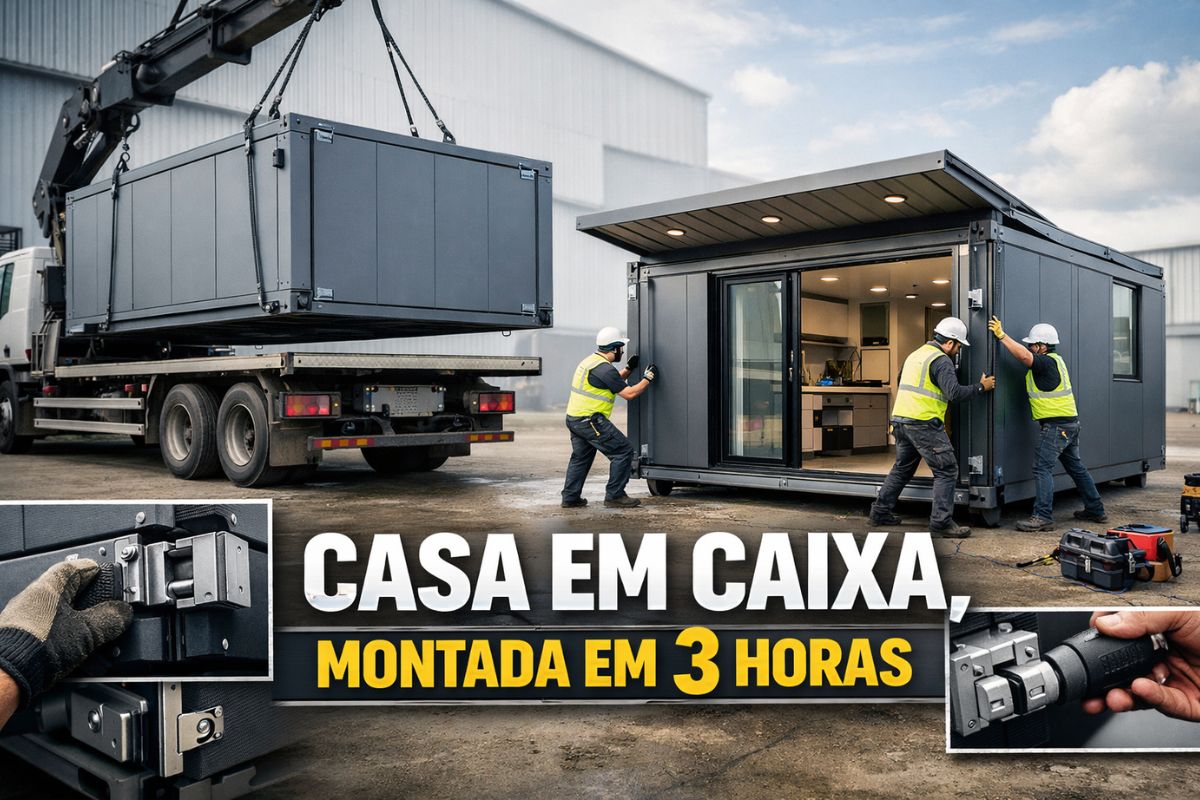


Expected For 2026, Elon Musk’s Tesla Tiny House Is a Mini House Priced at US$ 7,999 with Optional Solar Power, Arrives Folded in a Truck, Assembles in a Few Hours, Includes Full Bathroom and May Come with Free Land in Areas Defined by the Company in Projects in the United States and Selected Markets
In May 2020, after selling almost all the mansions he owned, Elon Musk decided to live in a compact house near work, practically applying the concept of minimal living that now supports the Tesla Tiny House project, set to launch in 2026 with a base price of US$ 7,999.
In this new phase, Tesla plans to treat the house as an industrial product, manufactured at the Fremont Gigafactory on an automated line, shipped folded in common trucks, and assembled in a few hours, with modules of about 26 square meters, optional solar energy, integrated water systems, and the promise of free land in pre-defined areas by the company.
How the US$ 7,999 Foldable Mini House Works
The Tesla Tiny House is designed to be a house produced like an electronic device, not a conventional construction.
-
Brazilian city bets on the business environment to generate jobs and attract investments in the energy sector — secretary reveals strategy at Macaé Energy 2026.
-
50 viaducts, 4 tunnels, 28 bridges, and 40 kilometers of bike paths: BR-262 in Espírito Santo will receive 8.6 billion reais for the largest engineering project in the state’s history, inspired by the Immigrant Highway in São Paulo.

-
Brazil produces too much clean energy and doesn’t know what to do with it: over 20% of solar and wind capacity was wasted in 2025 while investors flee and 509 renewable generation projects were abandoned in the last year.

-
Piauí will produce a new fuel that replaces diesel without needing to change anything in the truck’s engine and reduces pollutant gas emissions by half: truck drivers from all over the Northeast are already celebrating the news that will arrive later this decade.

The walls, kitchen, bathroom, and living areas come pre-assembled from the factory, with electrical, plumbing, and ventilation systems in a plug and play setup, ready for connection on site.
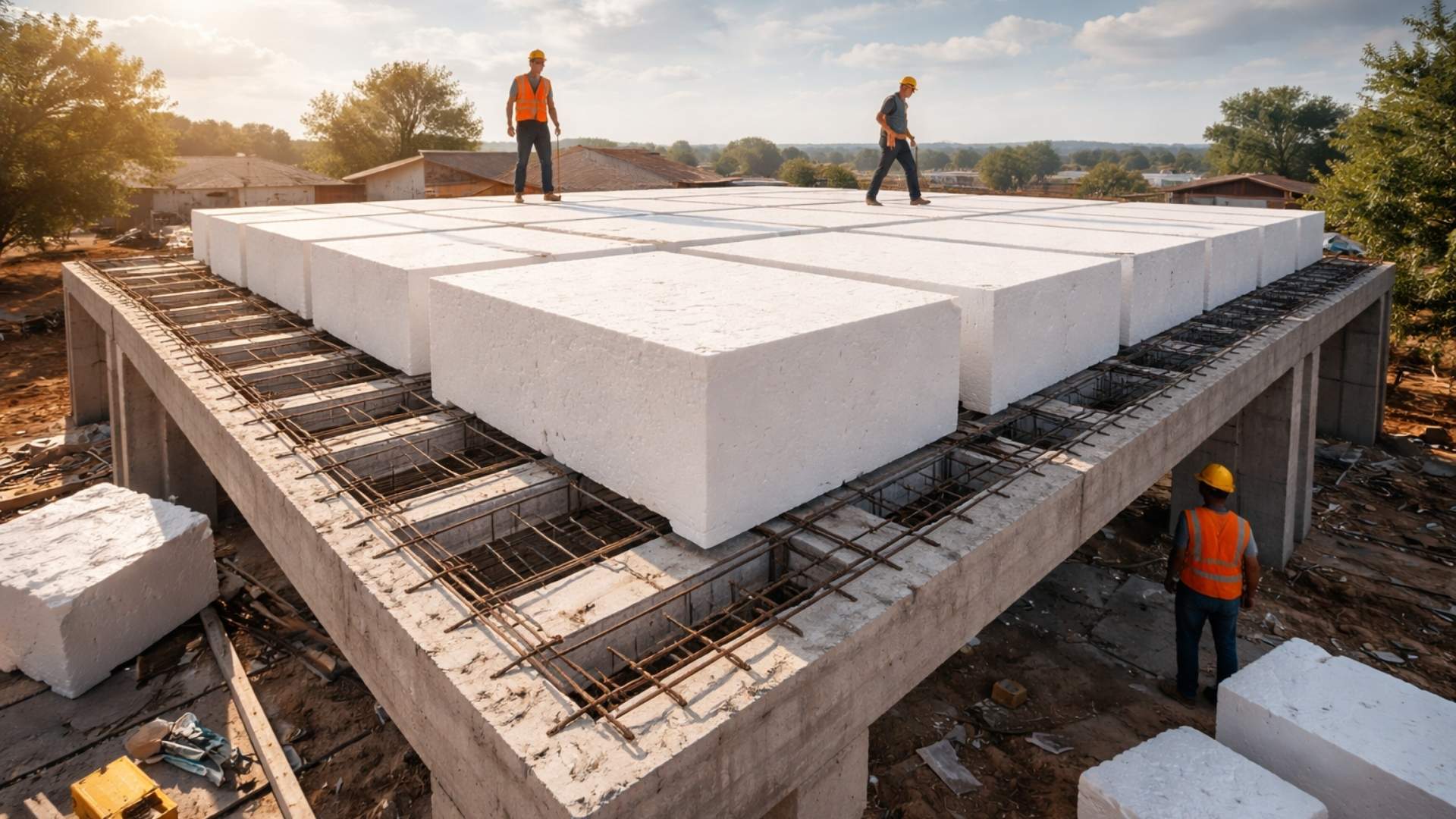
Instead of fragile drywall, the structure combines reinforced steel, high-strength concrete panels, EPS insulation foam, and composite layers designed for durability and thermal performance.
The stated goal of Elon Musk is to reduce construction to a standardized, fast, and repeatable process, with minimal improvisation on site.
The structural parts are molded under high pressure, reaching dozens of tons in the production set, forming rigid modules of approximately 8.5 meters long by 4 meters wide.
Each unit, while robust, is light enough to be transported in trucks and shipping containers, allowing for global delivery in volume.
Folded Transportation, Assembly in Hours, and Partnership with Boxable
Upon leaving the production line, the house transforms into a compact rectangular block, folded to fit on the bed of a Tesla truck
Semi or in a standard container. Each module weighs about 2.38 tons, making it feasible to transport to remote locations, far from traditional urban centers.
Tesla has teamed up with Boxable, a company specializing in foldable houses, and Elon Musk lived for three months in a compact unit in Texas to validate the concept of minimum comfort and test the viability of this solution at scale.
This experience serves as a basis for engineering decisions and for defining weight limits, insulation, and modularity.
At the destination, installation follows a standardized script.
The modules are unfolded and fixed to a lightweight foundation, which can use metal stakes, pre-cast concrete slabs, or adjustable bases. Electrical and plumbing connections are made with sealed quick connects, followed by testing.
In one to three hours, the unit is functional and ready for occupancy, in contrast to constructions that take weeks or months.
Compact Interior, Zone Layout, and Space Solutions
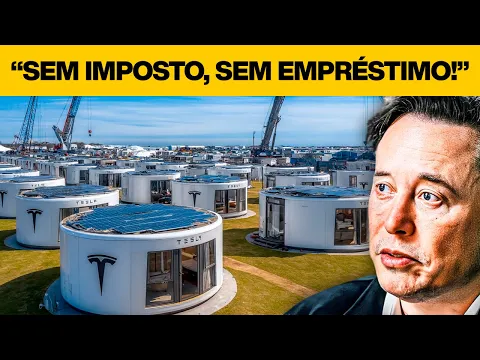

Although it has about 26 square meters, the Tesla Tiny House is designed to appear more spacious, with a ceiling height of around 2.8 meters and doors and windows close to 2.3 meters tall, allowing for intense natural light to enter.
The interior is divided into four main zones: living room, kitchen, bedroom, and bathroom.
The living room, right at the entrance, accommodates two or three people, with a sofa that transforms into a bed, a coffee table, and a panel for a TV or workstation.
The composite flooring is designed to maintain a sense of thermal comfort in different climates, reinforcing the idea of a house ready for immediate use.
In the compact kitchen, the design includes an induction stove, sink, refrigerator, dishwasher, oven, and cabinets at multiple levels.
An integrated foldable table helps to make the most of every inch. Ventilation and air purification systems reduce odors and humidity, keeping the environment more stable on a day-to-day basis.
The bedroom uses a Murphy-style pull-down bed, which folds up into the wall to free up space during the day. The bathroom is small but contains a shower with a glass door, a minimalist sink, a low-flow toilet, and controls for temperature and ventilation.
Hidden compartments, suspended shelves, and built-in drawers are part of the strategy to avoid wasting internal space.
Solar Energy, Water, Sanitation, and Nearly Off-Grid Living
The basic version of the mini house already includes essential water and electricity systems, connectable to the local grid.
For an additional cost, Tesla offers an upgrade with a solar roof and Powerwall battery, all integrated into the brand’s app, allowing for near-independent operation from the electrical grid, depending on consumption.
With the complete package, the Tesla Tiny House can generate and store enough energy for air conditioning, induction stove, washing machine, and even electric vehicle charging.
Internal reservoirs store potable water, rainwater harvesting undergoes filtration, gray water is reused in toilets, and there is a sealed tank for waste treatment, bringing the whole setup closer to a nearly self-sufficient domestic ecosystem.
This configuration aligns with Elon Musk’s vision of reducing emissions and dependence on fossil sources, integrating electric transportation and compact housing within the same technological ecosystem.
In practice, the house becomes part of an integrated infrastructure that includes an electric car, distributed generation, and energy storage.
Free Land, Business Model, and Impact on the Real Estate Market
One of the most aggressive points of the model is the promise that, for those without land, Tesla will provide free lots in the first two years of the program, in areas designated by the company, reducing initial costs and the traditional bureaucracy of property purchase.
The idea is to bring the house closer to the car buying model, with a simplified order process and direct delivery.
In the projection presented by Elon Musk, the customer places the order online, receives the unit in a Tesla Semi truck, and within a few hours, the house is assembled, connected, inspected, and ready for use, without the sequence of licenses and lengthy construction processes that characterize the conventional market.
This design specifically targets young people, middle-income families, and those trying to escape high rents.
If this approach scales, the Tesla Tiny House could pressure the traditional model of real estate development and construction, where the value of the land often exceeds that of the house itself.
For construction companies, the competition would come from an electric vehicle manufacturer that starts to compete for the same family budget allocated for housing.
Technical Limitations, Maintenance, and Obstacles to Becoming a Mass Product
The project, however, is far from being a magic solution.
Tesla admits that, despite using stainless steel, high-density insulation, and materials resistant to water and mold, no structure is maintenance-free.
In extreme weather, seal failures, mold formation, or panel wear can compromise comfort and repair costs.
Thermal insulation is another sensitive point.
If performance does not meet expectations, harsh winters and very hot summers may require more use of air conditioning, increasing the energy bill and reducing the promised advantage of efficiency.
In just 26 square meters, privacy also becomes a concrete challenge, especially for more than one person.
There is also the factor of priorities.
Tesla’s housing division internally competes with already complex fronts, such as electric vehicles, humanoid robots, and industrial expansion.
For the US$ 7,999 mini house to reach the global market, it will be necessary to reduce costs for solar panels, batteries, structural materials, and logistics, in addition to overcoming different urban regulations in each country.
Even so, the mere indication that Elon Musk and Tesla are studying a line of mini houses has already generated strong interest in the prefabricated housing market, reinforcing the trend of tiny houses as a cheaper, modular housing alternative that is aligned with discourses of simplicity and sustainability.
In light of a foldable mini house priced at US$ 7,999 with a promise of free land and optional solar energy, would you adopt this compact housing model instead of a larger traditional house?








Is there any project where two or more Tesla houses could be assembled together as to be able to get to a house of 72 sqmts (2 units) or 108 sqmts ( 2units) . Or even more ?
Is this Tesla house will be in Southern Ca? If yes, where is will be? Thanks!
Testing