





 Portuguese
  English
  Spanish
  6 min of reading
  0 comments


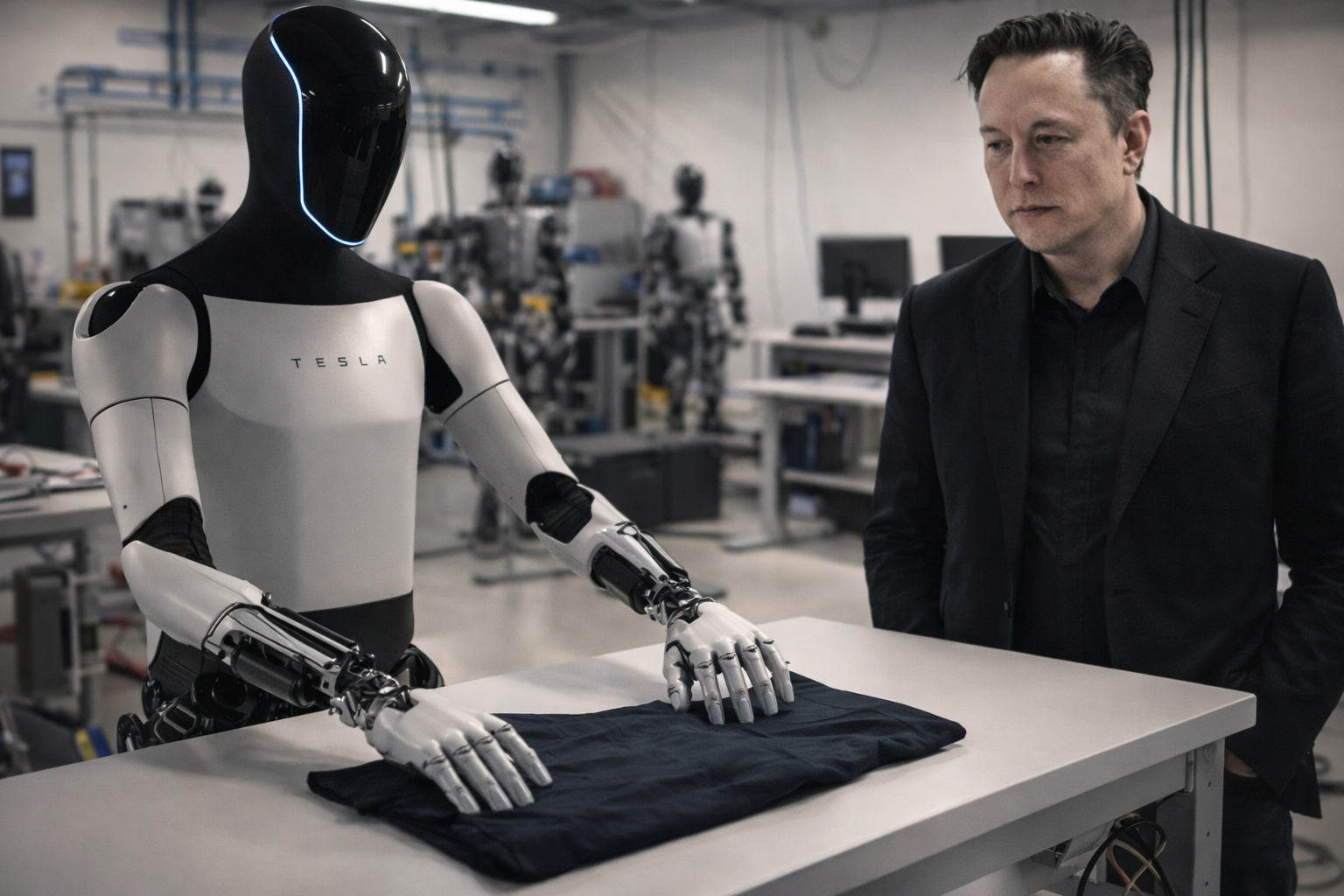
The dispute to bring artificial intelligence to the physical world advances among technology giants, expands the race for humanoid robots, and puts back in the center of the debate the effects of automation on companies, production, and the labor market.
The race to bring artificial intelligence to the physical world has gained new momentum with Elon Musk among the names most associated with this bet.
The proposal, known in the sector as “physical AI”, brings together companies trying to transform humanoid robots and autonomous systems into machines capable of performing tasks currently done by people, especially in factories, warehouses, logistics, transportation, and services.
The movement involves Tesla, Nvidia, Figure, and other technology groups, while also expanding the debate about productivity, income, and job replacement.
-
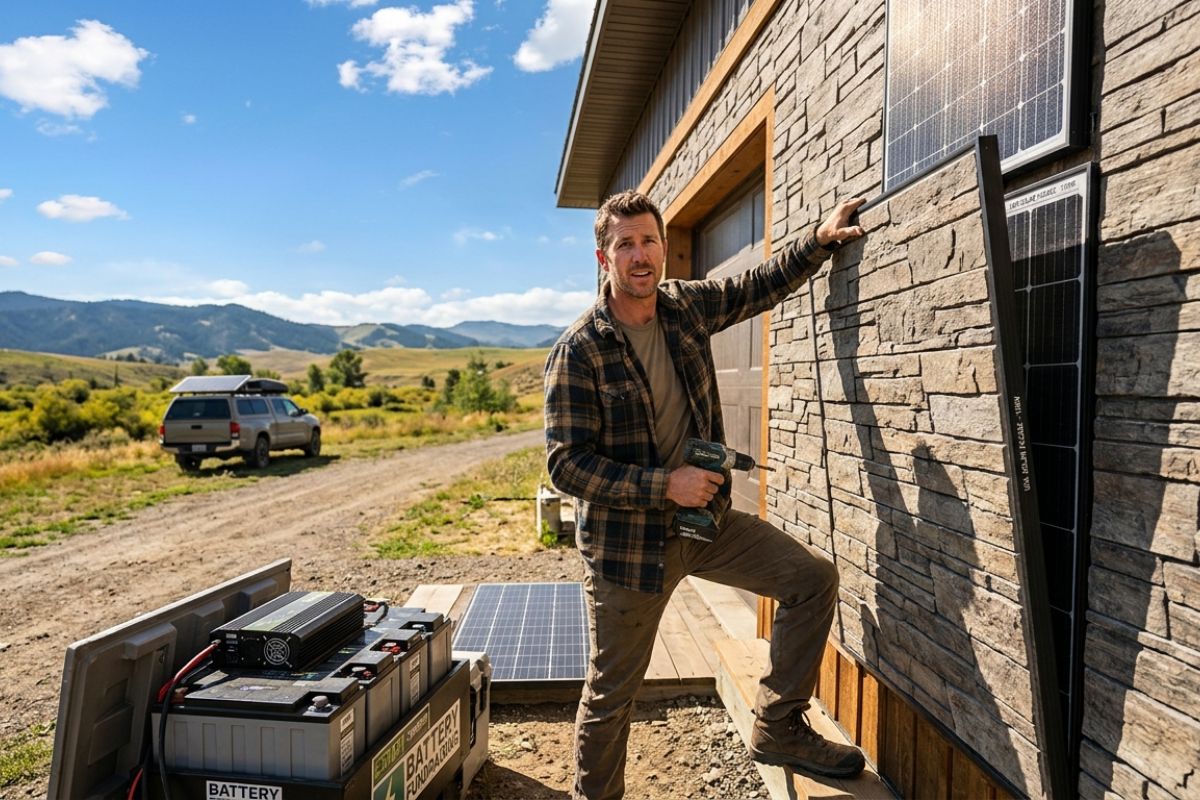
A US company creates a facade that looks like stone or wood but generates energy: “invisible” solar panels for walls, easy installation, up to 130 W, and an off-grid YouTuber showcases it and raises funds for a battery.
-
Scientists at the world’s largest particle accelerator accidentally managed to turn lead into gold during a simulation of the Big Bang, but the amount produced is so small that it fits in trillionths of a gram.

-
Intense heat at the beginning of April already has a defined scenario in Rio Grande do Sul, and forecasts indicate temperatures above 30°C, little rain, and a risk of drought in several regions.

-
Friend or villain? See how much it costs to keep the air conditioning on for 8 hours a day in 2026.


In Musk’s case, the plan has been explicitly presented in interviews and public events.
According to a report from The Washington Post, the billionaire advocates a scenario where billions of robots, supported by autonomous vehicles and abundant energy, would do the necessary work to sustain the economy.
In this vision, work would cease to be an obligation and become a choice.
At the moment, however, the practical focus is on the development of Optimus, Tesla’s humanoid.
Tesla bets on humanoid robots and physical AI
Tesla has been repositioning its public strategy for some time.
Instead of presenting itself solely as a car manufacturer, the company has begun to reinforce its image as a AI and robotics company.
Recent reports from Reuters and The Washington Post show that Musk treats Optimus as a central piece of the long-term strategy and claims that the robot could, in the future, gain greater importance within the company.

This redirection has not been limited to discourse.
International coverage indicates that the company has accelerated the assembly of industrial structure aimed at the project, while investors closely monitor the change due to the slowdown in traditional areas of Tesla.
The company itself and Musk have been repeating that the humanoid could become its most relevant product, although large-scale production remains surrounded by technical challenges and ambitious goals.
At the same time, the integration between Musk’s companies has reinforced this agenda.
In February 2026, SpaceX completed the acquisition of xAI, in an operation reported by Reuters as part of the approach between the entrepreneur’s strategic assets.
Although Tesla and SpaceX are separate companies, the move has been interpreted by market analysts as another step to bring together infrastructure, software, and computational capacity in the race for AI systems applied to the real world.
The advancement of AI beyond software
The term “physical AI” has gained traction because the sector is trying to advance beyond chatbots and office tools.
Instead of just generating text, images, or code, the proposal is to create systems capable of perceiving the environment, making decisions, and executing physical actions safely and accurately.
Nvidia has publicly adopted this concept.
In March 2026, Jensen Huang stated that “physical AI has arrived” and that every industrial company tends to become, in some way, a robotics company.
Months earlier, in May 2025, the company had already argued that robotics and physical AI could drive a new industrial revolution.
The topic, therefore, has begun to occupy an increasing space among chip manufacturers, software developers, and automation startups.

Other groups are also moving in this market.
Figure, one of the most well-known companies in the humanoid sector, expanded its public exposure by bringing the Figure 03 robot to an event at the White House with First Lady Melania Trump in March 2026.
In the same vein, Amazon maintains research and operational fronts in robotics, while Travis Kalanick, co-founder of Uber, launched Atoms focusing on industrial automation and AI applied to the physical world.
Current limits of physical automation
The advancement of companies, however, faces the current stage of technology.
A report from Anthropic shows that many tasks remain beyond the reach of AI, especially those requiring motor coordination in unpredictable environments.
The document cites, among the examples, physical agricultural work, such as tree pruning and machine operation, as well as in-person legal activities, such as representing clients in court.
This limitation helps explain why the leap from software to humanoid robots is still treated as a more complex challenge than automating digital tasks.
In offices, AI can already summarize documents, draft responses, analyze spreadsheets, and assist in programming.
In the physical world, on the other hand, it needs to deal with objects, balance, space, force, risk, and constant variations in the scenario.
Still, industry executives claim that this barrier may diminish with the advancement of AI models.
The argument is that more sophisticated systems, combined with sensors, motion data, and continuous training, would tend to reduce the gap between understanding a task and executing it.
It is at this point that Musk and other industry leaders are trying to position themselves ahead of the full maturation of this market.
Humanoid robots and the impact on the labor market
The expansion of this agenda has reignited an old discussion in the labor market.
If the first wave of AI hit administrative, creative, and technical functions, the next stage targets occupations linked to physical effort and routine operation.
For proponents of the project, this could raise productivity and shift workers to other functions.

Critics, however, point to the risk of deepening inequality and large-scale job loss.
Senator Bernie Sanders is among those calling for more public control over this transformation.
In recent articles and statements, he has criticized the concentration of technological power in the hands of billionaires and questioned whether the new race for AI and robotics is being guided by social interest or by large-scale private gains.
The criticism has gained traction because the promise of abundance coexists, in the present, with concrete fears of worker replacement.
Even analysts favorable to the expansion of robotics do not ignore this risk.
The coverage from The Washington Post notes that there are investors and experts viewing automation as a relevant economic opportunity, but also recognizing that job replacement has already entered the center of the debate.
This occurs as companies have begun to treat humanoid robots not just as prototypes, but as products in commercial development.
Industrial scale, costs, and economic viability
For now, the project remains in the phase of industrial consolidation and testing for economic viability.
Musk maintains the idea of a future where poverty would be reduced by an abundance produced by machines.
Meanwhile, companies in the sector and industry executives describe this process as part of a new industrial revolution.
The open point, according to specialists and market analysts, lies less in the direction of research and more in the pace at which it will be able to move from public demonstration to reliable, safe, and financially sustainable operation.
This difference between vision and execution helps explain why the topic arouses interest and caution at the same time.
There is enough capital, business competition, and technological development to push the sector forward.
At the same time, doubts remain about the speed at which humanoid robots will leave the testing environment to occupy roles in companies and about the effects of this transition on the labor market.





Seja o primeiro a reagir!