





 Portuguese
  English
  Spanish
  5 min of reading
  12 comments


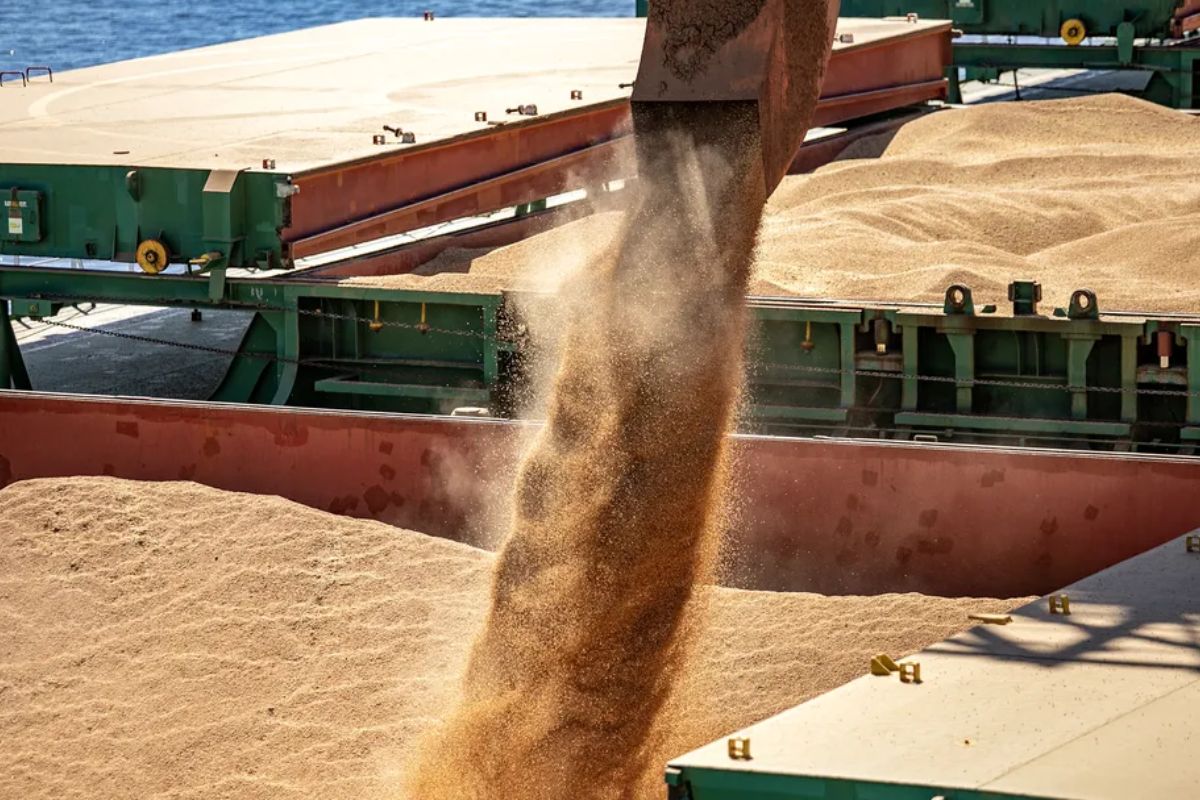


Decline in Agricultural Purchases by the United States from China Shifts Demand to the Brazilian Fields, Causing Soybean and Peanut Shipments to Surge in 2025, Redefining the Global Agro Map and Preparing for the National Sorghum Debut in the Chinese Market in 2026, with New Contracts, Protocols, and Risks.
Amid the intensification of the trade war between the United States and China, Brazil reaches December 2025 with an unprecedented milestone: soybean and peanut exports to the Chinese market reached the highest volume in history between January and November 2025, according to data from exporter associations. The shift in Chinese purchases from American farms to Brazilian fields has established the country as the main alternative supplier to its North American rival.
Between January and November 2025, peanut shipments totaled 63 thousand tons and soybean exports reached 80.9 million tons destined for China, surpassing the previous record from 2023 and paving the way for a new business cycle that includes not only soybeans and peanuts but also the start of sorghum sales beginning in 2026.
China Reduces Purchases from the U.S. and Targets the Brazilian Fields
The trade war between Washington and Beijing, marked by additional tariffs on agricultural products, has changed the global flow of grains and oilseeds. With the reduction of imports from the United States, China has started seeking suppliers capable of ensuring volume, regularity, and competitive prices, finding Brazil as a strategic partner to supply its food, oil, and animal feed industries.
-
Brazilian city bets on the business environment to generate jobs and attract investments in the energy sector — secretary reveals strategy at Macaé Energy 2026.

-
50 viaducts, 4 tunnels, 28 bridges, and 40 kilometers of bike paths: BR-262 in Espírito Santo will receive 8.6 billion reais for the largest engineering project in the state’s history, inspired by the Immigrant Highway in São Paulo.

-
Brazil produces too much clean energy and doesn’t know what to do with it: over 20% of solar and wind capacity was wasted in 2025 while investors flee and 509 renewable generation projects were abandoned in the last year.

-
Piauí will produce a new fuel that replaces diesel without needing to change anything in the truck’s engine and reduces pollutant gas emissions by half: truck drivers from all over the Northeast are already celebrating the news that will arrive later this decade.


According to the National Association of Peanut Exporters (Abex-BR), this repositioning became clear in 2025. The decline in purchases of American agricultural products opened a direct path for Brazilian soybeans and peanuts, in a move that strengthens the national agribusiness and increases Chinese dependence on the grain and oil produced here.
For the vice president of Abex-BR, Pablo Rivera, this shift is a direct consequence of the trade dispute. He recalls that China used to buy about 300 thousand tons per year of in-shell peanuts from the United States to produce oil and is now replacing a significant part of that supply with Brazilian products. In practice, what used to be a stable flow of American peanuts has largely become an opportunity for Brazilian fields.
Historic Leap in Peanut Sales to China
The numbers from peanuts help frame the change. Between January and November 2025, Brazil exported 63 thousand tons of the product to China. This volume represents an increase of over 2,600% compared to the 2,316 tons shipped to the country between September 2022, when Chinese purchases began, and December 2024.
Until the transition of this cycle, the biggest buyers of Brazilian peanuts were Russia and the European Union. The Chinese demand in 2025 changed that order. China surpassed the former leaders and became the main individual destination for Brazilian peanuts, reinforcing the importance of the Asian market in the sector’s export agenda.
The impact was not limited to the grain. There was also a significant increase in crude peanut oil. Brazilian exports of this derivative grew by 170%, and about 90% of all the volume shipped was destined for China, showing that the Asian country is not only buying raw materials but also driving the value chain linked to peanut processing.
For exporters, Brazilian peanuts gain competitiveness because they fill the gap left by the reduction of American-origin purchases. The combination of favorable exchange rates, product availability, and the ability to meet large volumes puts Brazil in a privileged position to secure new long-term contracts with the Chinese industry.
Soybean Leads Record and Drives New Cycle of Soybean and Peanut Exports
If peanuts are experiencing a surge, soybeans continue to lead the movement. From January to November 2025, soybean exports to China totaled 80.9 million tons, according to the National Association of Cereal Exporters (Anec). This is the largest volume ever recorded for the period, surpassing the previous record of 2023, when 75.5 million tons were shipped.
The Chinese demand is so strong that it is expected to lead Brazil to break the overall soybean export record in 2025 as well. About 105 million tons are projected to be exported by the end of the year, and approximately 80% of that total is expected to be directed to China, which has been the largest importer of Brazilian soybeans for nearly two decades.
In practice, the trend is showing a long-term consolidation. With the trade war reducing the attractiveness of American soybeans, Brazil is establishing itself as the central supplier of soybeans and peanuts consumed in China, for both animal feed production and the oil and processed food industry. This prominence reinforces the country’s role in China’s food security and enhances the relevance of Brazilian logistics, from ports to storage.
For the national agribusiness, the soybean record in 2025 is not just a historical number but an indication of a structural change. The combination of soybeans and peanuts as anchors of the Brazilian export agenda to China creates a more diversified commercial bridge, capable of sustaining new investments in planting, processing, and infrastructure.
Sorghum is the Next Brazilian Bet in the Chinese Market
After soybeans and peanuts, the next chapter of the agro-export relationship between Brazil and China has a name: Brazilian sorghum. Exports of sorghum to the Chinese market are expected to begin in 2026, expanding the range of grains sent to the Asian country and opening a new business front for producers and trading companies.
Sorghum is mainly used in animal feed production and has applications in the food and beverage industries. The change in direction is also linked to the trade dispute. Anec agronomist Wallas Ferreira highlights that Chinese purchases of sorghum from the United States have been reduced by about 90%, which explains Beijing’s growing interest in Brazilian cereal.
The protocol between Brazil and China to enable sorghum exports has already been signed, and now the 2025 crop needs to be approved from a sanitary and phytosanitary standpoint. If this step is confirmed, Brazil is expected to start sorghum shipments to China in 2026, adding a third relevant product to the list of strategic grains for the Chinese market, alongside soybeans and peanuts.
For producers and exporters, the entry of sorghum into this route could act as a risk buffer, better distributing production among different crops and utilizing the same infrastructure currently used to handle soybeans and peanuts.
Historic Opportunity and New Risks for Brazilian Agribusiness
The combination of the trade war, punitive tariffs, and redirection of Chinese purchases has created a window that the Brazilian fields have adeptly exploited. The records of soybean and peanut exports in 2025 and the prospect of selling sorghum starting in 2026 place Brazil at an unprecedented level of influence over China’s grain supply.
At the same time, this trend also raises alerts. The concentration of sales with a single major buyer increases Brazil’s exposure to political, regulatory, or sanitary changes decided in Beijing. Still, the short-term balance is clearly favorable to Brazilian exporters, who see in the demand for soybeans and peanuts and the future purchase of sorghum an opportunity to expand margins, diversify contracts, and consolidate the country’s image as a reliable supplier.









O Trump (TACO) bricou de ameaçar a China e se deu mal
… [Trackback]
[…] Here you can find 88559 more Info to that Topic: en.en.clickpetroleoegas.com.br/In-a-trade-war-with-the-US–China-is-swapping-American-farms-for-Brazilian-soybeans-and-peanuts–knocking-down-rivals–boosting-export-records–and-opening-the-door-for-…
… [Trackback]
[…] Read More here to that Topic: en.en.clickpetroleoegas.com.br/In-a-trade-war-with-the-US–China-is-swapping-American-farms-for-Brazilian-soybeans-and-peanuts–knocking-down-rivals–boosting-export-records–and-opening-the-door-for-sorghum-in-2026.-mh…