





 Português
  Inglês
  Espanhol
  8 min de leitura
  0 comentários


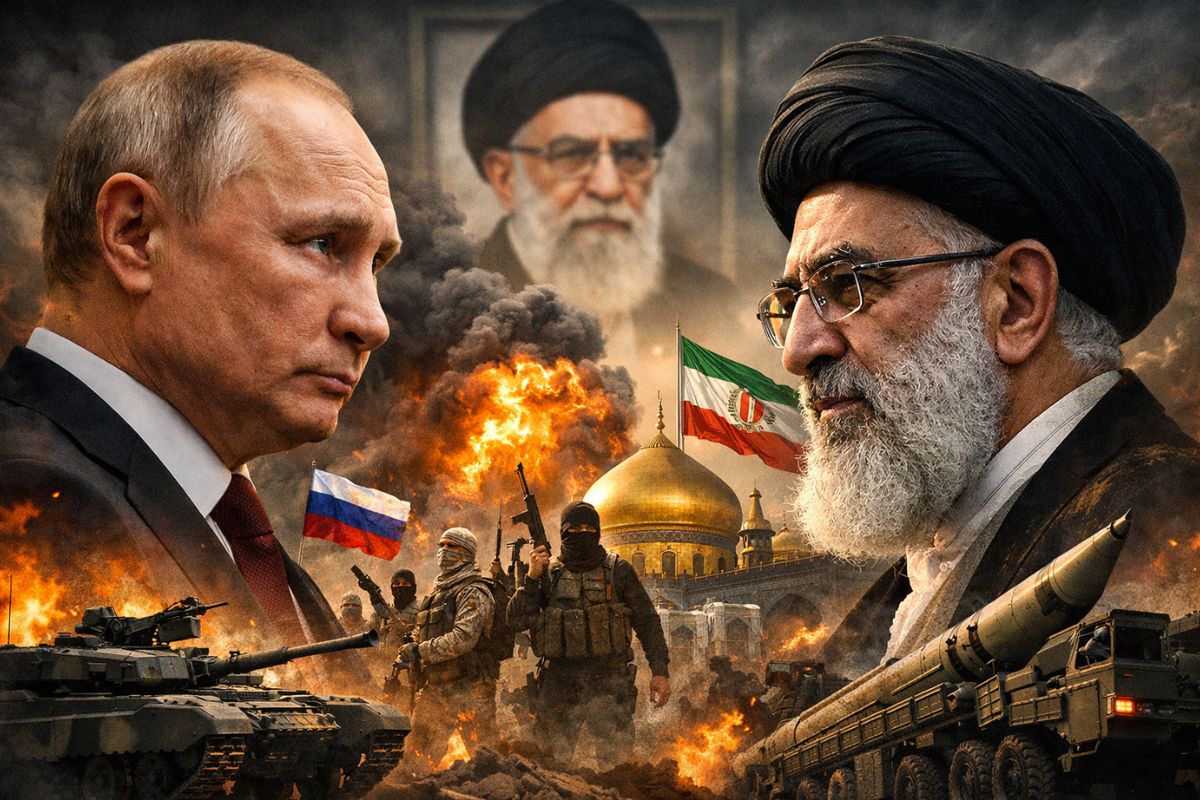
The War In The Middle East Enters An Even More Sensitive Phase After The Death Of Ali Khamenei, The Choice Of Mojtaba Khamenei As New Supreme Leader Of Iran And The Unwavering Support Declaration Made By Vladimir Putin, While The Rise In Oil Prices Amplifies Global Economic And Geopolitical Fears.
The war in the Middle East has gained a new component of gravity with the death of Ali Khamenei, the rise of Mojtaba Khamenei to the position of supreme leader of Iran and the public expression of support from Vladimir Putin, who promised “unwavering support” to the new leadership in Tehran. More than a diplomatic phrase, the Russian gesture projects direct effects on regional security, markets, and international alliances.
The succession in Iranian power occurs amid attacks, bombings, and chain reactions that have already surpassed the country’s borders. At the same time, oil has once again surpassed the US$ 100 per barrel mark, signaling that political and military instability is not limited to the strategic field: it is also putting pressure on the global economy and increasing the level of uncertainty about the next moves in the crisis.
The Succession In Iran And The Political Message Sent By Moscow
Vladimir Putin’s declaration comes a week after Ali Khamenei’s death and directly reinforces the continuity of rapprochement between Moscow and Tehran. By classifying Russia as a “reliable partner” and promising support to the new supreme leader, the Russian president not only recognizes Mojtaba Khamenei as the central authority of the Iranian regime, but also makes it clear that he intends to preserve a strategic relationship in one of the most delicate moments of the war in the Middle East.
-
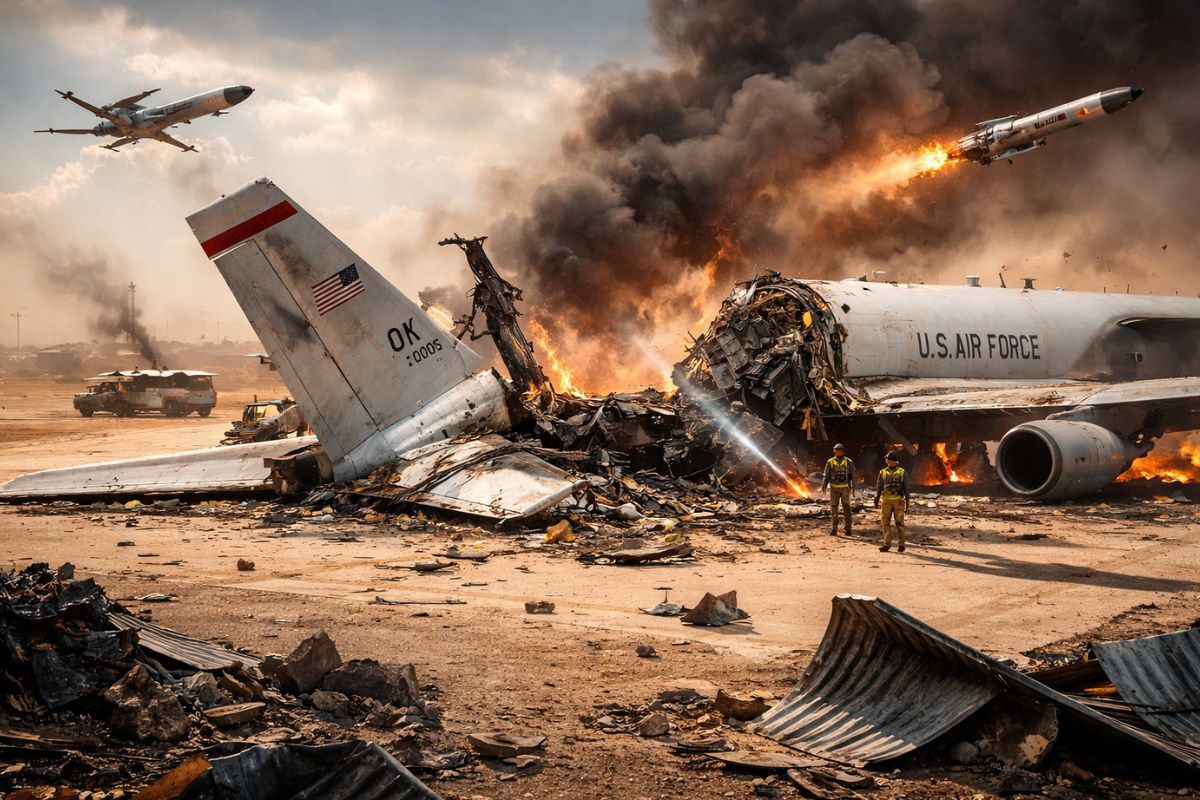
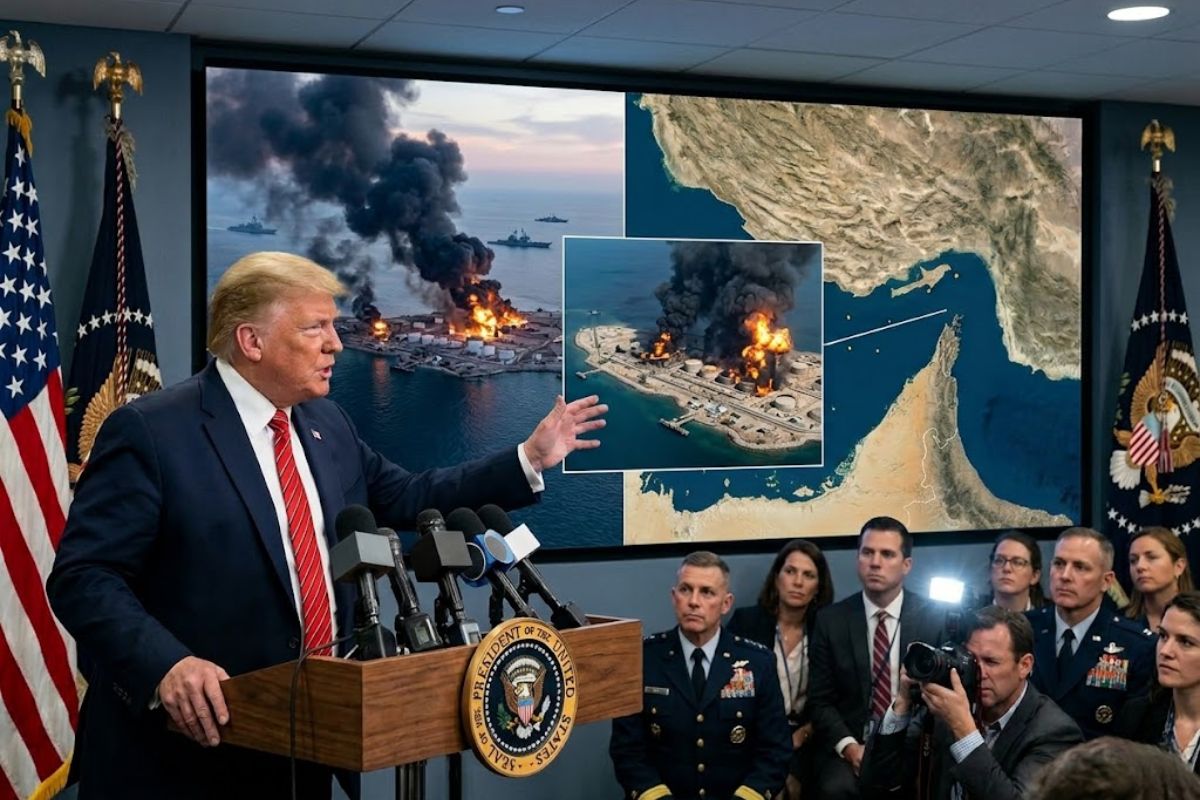
Iranian drones and missiles destroyed a 270 million dollar American spy plane in Saudi Arabia, splitting the E-3 Sentry aircraft in half and injuring 12 military personnel in an attack that exposes the vulnerability of U.S. bases in the Persian Gulf.
-
If the USA were to go to war with Brazil, Washington’s greatest fear would not be the attack itself, but facing a vast territory, prolonged resistance, and a costly, chaotic, and unpredictable occupation.
-
In 2013, Nicaragua sold the concession for a canal to rival Panama to a Chinese billionaire who lost 85% of his fortune, disappeared, and was declared bankrupt. Now the project resurfaces with a new route, a new Chinese partner, and a cost of $64.5 billion.
-
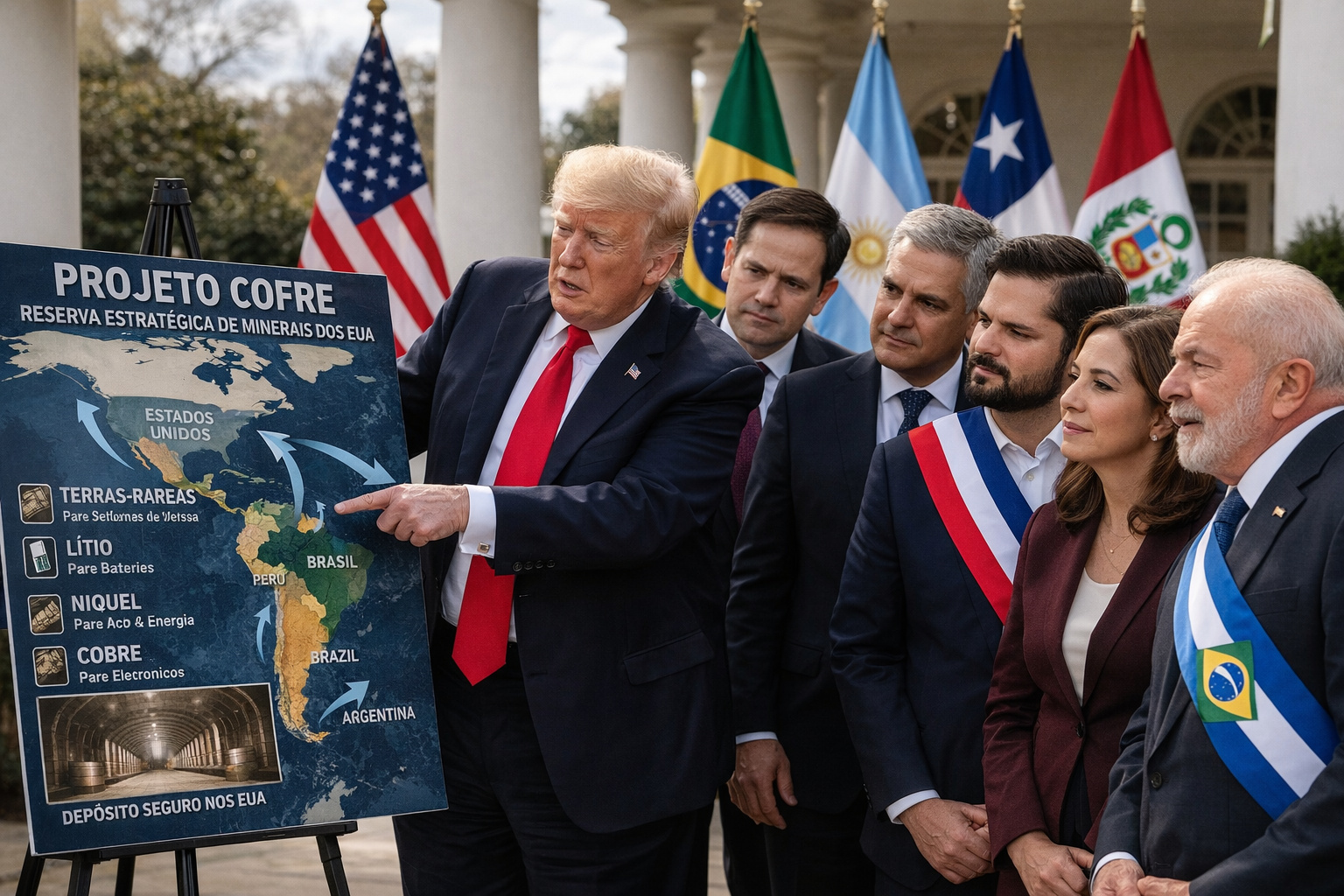
The USA announces a mysterious billion-dollar vault project to store critical minerals, but what intrigues experts is not just the plan itself, but why Latin America, including Brazil, has entered the center of this global dispute against China.

This positioning gains weight because it was not made in a scenario of institutional normality, but rather amid a command transition marked by military tension and strong political symbolism. When an external power demonstrates immediate loyalty to the new Iranian power center, it helps to internally consolidate that succession while sending a message to the rest of the international system. The message is simple: the change at the top of Iran has not weakened the alliance with Russia.
Mojtaba Khamenei, at 55, becomes the third supreme leader of Iran since the 1979 Revolution. His appointment was made by the Assembly of Experts, composed of 88 clerics, which gives the process institutional weight within the political and religious structure of the country. Nevertheless, his arrival at the position is observed with attention because he is seen as a hardliner, associated with the continuity of the project led by his father.
This perception helps to explain why his rise has been welcomed by armed factions in Iraq, such as the Hezbollah Brigades, who see in him the maintenance of the same ideological and strategic axis. The succession, therefore, is not just a change of leadership; it represents the continuity of a political orientation that tends to keep Iran’s hard tone in an already inflamed environment.
The War In The Middle East Enters A New Phase Of Regional Tension
The war in the Middle East has advanced to an even more sensitive level with simultaneous episodes occurring in different parts of the region. In Bahrain, an attack on the Al Ma’ameer oil complex caused a major fire and left 32 civilians injured, including children. The episode amplifies the perception of vulnerability of energy facilities and shows how economic targets have become a central part of military calculations.
In Iraq, U.S. diplomatic facilities near Baghdad Airport were also targeted by attacks and bombings, although defense systems intercepted the offensive. At the same time, Israel confirmed bombings against Hezbollah targets in southern Beirut during the night. When different fronts ignite simultaneously, the conflict ceases to be merely local and begins to operate as a high-density regional crisis.
This chain of episodes helps to understand why the death of Ali Khamenei and the inauguration of Mojtaba occur in such an unstable environment. The new leader assumes not only in a moment of institutional transition but amid a context of cross-attacks, external pressures, and an increased risk of escalation of confrontation. Putin’s own statement, mentioning courage in the face of armed aggression faced by Iran, fits into this interpretation that the new administration begins surrounded by a hostile context.
The central point is that the war in the Middle East no longer impacts only combatants or governments. It affects diplomatic centers, urban areas, oil structures, and crucial routes of the global economy. The more the conflict reaches strategic and civilian points, the greater the political, military, and economic cost for all involved, including actors who do not directly participate in the attacks.
Oil Above US$ 100 Reflects The Immediate Impact Of The Crisis
One of the most visible effects of this escalation has been the surge in oil prices above US$ 100 per barrel, around R$ 521.88. According to the information presented, it is the first time in over three and a half years that prices have surpassed this threshold.
The movement reveals how the war in the Middle East influences the international energy market almost instantaneously, especially when tension falls on producing areas, oil complexes, and crucial logistical corridors.
The logic behind this rise is straightforward. When there is a risk of disruption in production or transportation on crucial routes, the market begins to price in the possibility of shortages, delays, and increased supply costs.
In crises like this, the price of oil rises not only due to the damage already caused but also due to the fear of what might still happen. Therefore, political and military instability quickly turns into global economic pressure.
The market’s perception has also been influenced by Mojtaba Khamenei’s profile. His appointment, associated with the image of a hardline cleric, has increased the perception of continuity in Iran’s rigid stance in the current conflict.
In tense geopolitical scenarios, the identity of the new leadership weighs as much as known military facts, because investors and governments try to anticipate the political behavior of the newly established leadership.
In light of this situation, G7 countries are considering the use of strategic reserves to curb rising energy prices. This possibility shows that the war in the Middle East is already producing reflections beyond diplomacy and security: it directly enters the debate on inflation, supply, transportation costs, and pressure on governments that depend on the stability of the oil market. When oil breaks the symbolic barrier of US$ 100, the regional crisis begins to be felt in the pocket and in the economic planning of several countries.
International Reactions Reveal Caution, Alignments, And Narrative Dispute
While Russia opted for an explicit demonstration of support, China adopted a more cautious tone. Beijing stated that the Iranian succession is an “internal matter,” but emphasized that Iran’s territorial integrity must be respected. Spokesperson Guo Jiakun also opposed attempts to attack the new leader. This position does not break with Tehran, but avoids an endorsement as direct as that given by Moscow.
The difference in tone is relevant because it reveals distinct strategies between powers closely monitoring the war in the Middle East. Russia assumes a more frontal role in reinforcing its alliance with the new Iranian leadership.
China, on the other hand, seeks to preserve diplomatic space, upholding the principle of sovereignty without turning its expression into an overt alignment. This contrast helps to gauge how each power calculates costs, opportunities, and margins for action within the crisis.
On the Iranian side, the reaction was one of accusation. Tehran blamed European countries for collaborating with the United States and Israel by allowing the resumption of sanctions in the UN Security Council. According to Iranian positions, this stance would have encouraged crimes against the country’s people. It is a narrative that attempts to shift part of the responsibility for the escalation onto adversaries and their Western allies.
This blame game reinforces a well-known trait of prolonged conflicts: each military movement is accompanied by a political dispute over legitimacy, guilt, and interpretation of facts.
In the current case, the death of Ali Khamenei, the rise of Mojtaba, and Putin’s support reorganize not only formal alliances but also the diplomatic language used by each block. The crisis unfolds simultaneously in military, economic, and narrative fields, making the situation even more complex and unpredictable.
What Changes With Mojtaba Khamenei At The Center Of Iranian Power
The arrival of Mojtaba Khamenei to the supreme leadership tends to be observed from two main fronts. The first is internal: his appointment indicates continuity within the Iranian power structure and reduces, at least at this initial moment, the perception of immediate rupture in the country’s ruling core.
The second is external: his profile and the way he has been received by allies and adversaries directly influence the diplomatic and strategic behavior surrounding Iran.
Being the third supreme leader since 1979 is no small detail. In a political architecture marked by strong religious and institutional centralization, each succession at this level carries enormous symbolic weight. Mojtaba does not just assume a position; he inherits the leadership of a political project with regional ramifications, support from allied groups, and decisive influence over Iran’s response to the war in the Middle East.
The immediate support coming from Russia strengthens his international position right at the beginning of his term. At the same time, China’s caution and Iran’s accusations against Europeans and Westerners show that the new leader will find a tense external environment, where each gesture may be interpreted as a sign of escalation or containment.
His margin for action will be judged not only by what he says but by how Iran will move in response to attacks, sanctions, and the boiling energy market.
Therefore, Mojtaba Khamenei’s rise cannot be interpreted as an isolated event within Iranian politics. It emerges connected to the war in the Middle East, the response of powers, the reaction of markets, and the behavior of allied armed groups.
In a scenario like this, leadership and conjuncture merge: the new command is already born pressured by a crisis that demands firmness, calculation, and the capacity to manage consequences far beyond Iran’s borders.
The combination of the war in the Middle East, the death of Ali Khamenei, Mojtaba’s rise to the top of Iranian power, Vladimir Putin’s declared support, and oil above US$ 100 shows that the crisis has entered a phase of wide and immediate effects. This is not just a change of leadership, but a geopolitical rearrangement with a direct impact on security, energy, and international balance.
In your assessment, does Putin’s public support strengthen Mojtaba Khamenei or further increase the risk of escalation in the war in the Middle East? The way you view this alliance may say a lot about the next steps of the crisis.







Seja o primeiro a reagir!