





 Portuguese
  English
  Spanish
  5 min of reading
  0 comments


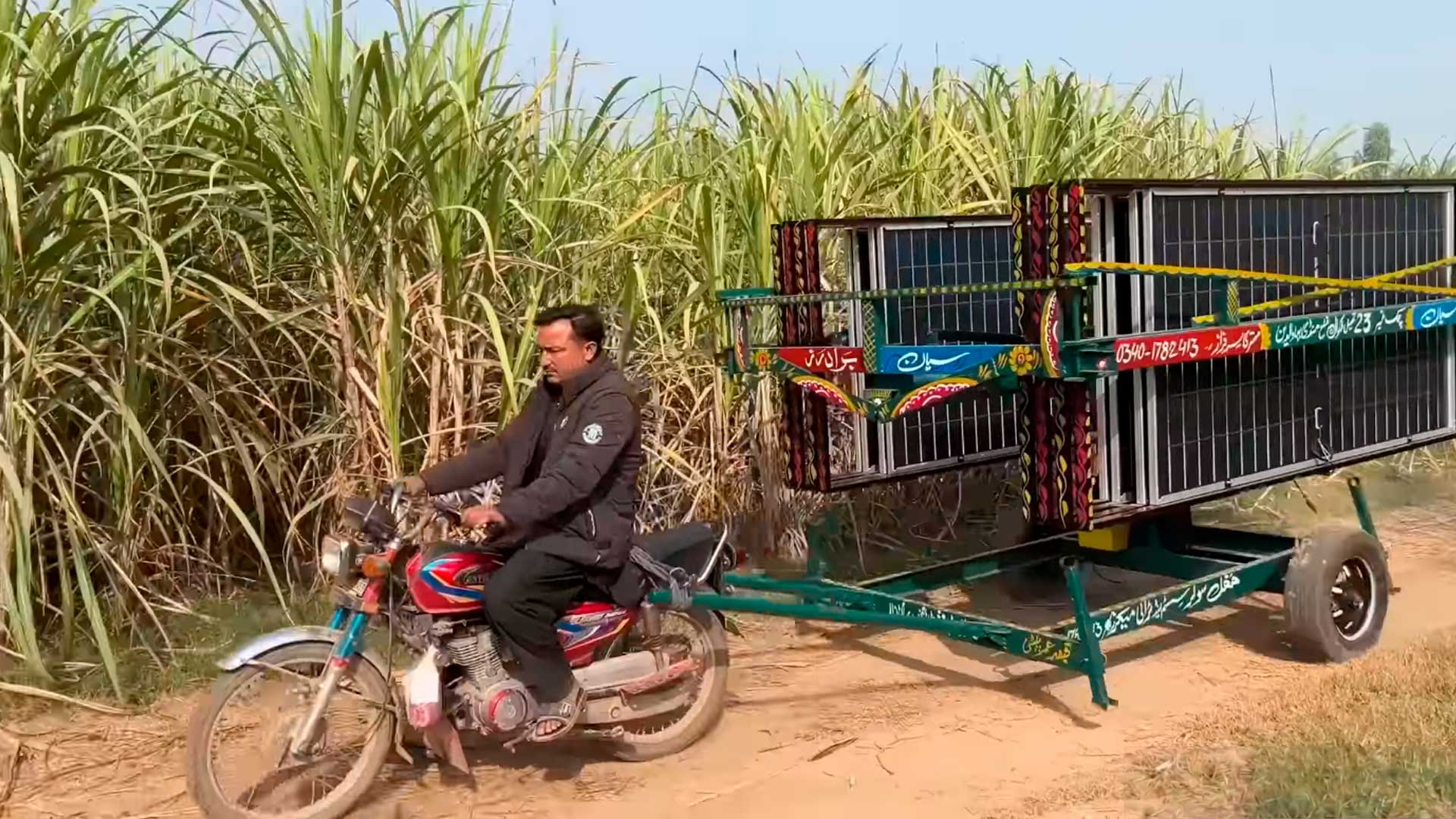
Simple Structures With Reused Panels Become Portable Energy Sources To Pump Water At The Right Time And Reduce Daily Costs In The Field
In narrow streets, among markets and makeshift workshops, an unusual scene has been drawing attention in Pakistan. A small motorcycle pulls a metal cart with tilted solar panels, as if it were common neighborhood work equipment. The difference is that it houses a “power plant” capable of providing electricity where the grid fails, especially for irrigation.
The idea seems simple, but it addresses an old problem in the Pakistani countryside: dependence on unstable energy to pump water. In many rural areas, frequent power cuts are part of everyday life, delaying irrigation and reducing productivity, as described in a study in the journal Utilities Policy that analyzed the impacts of “load shedding” on farming families.
The video shows that the system does not originate from a lab or state incentives, but from workshops that cut and weld parts by hand, with adjustments made “by eye” and reinforcements designed to withstand poor roads. The most striking point is the cost disclosed in the video itself, around US$ 1,000 for the presented set, a figure that contrasts with market references in countries like Brazil.
-
Motorola launched the Signature with a gold seal from DxOMark, tying with the iPhone 17 Pro in camera performance, Snapdragon 8 Gen 5 that surpassed 3 million in benchmarks, and a zoom that impresses even at night.

-
Satellites reveal beneath the Sahara a giant river buried for thousands of kilometers: study shows that the largest hot desert on the planet was once traversed by a river system comparable to the largest on Earth.

-
Scientists have captured something never seen in space: newly born stars are creating gigantic rings of light a thousand times larger than the distance between the Earth and the Sun, and this changes everything we knew about stellar birth.

-
Geologists find traces of a continent that disappeared 155 million years ago after separating from Australia and reveal that it did not sink, but broke into fragments scattered across Southeast Asia.

The story gains weight because agriculture remains a major pillar of the country. Data from the World Bank DataBank indicates that the share of employment in agriculture in Pakistan was around 36.5% in the most recent data displayed for 2023, which helps explain why energy and irrigation have become matters of economic survival.
How The Portable Solar Power Plant Works Moving From Field To Field


The concept is to transform solar panels and a metal structure into a portable platform ready to be moved to the point where water needs to be pumped. Instead of being fixed for decades, it is designed to withstand vibration, dust, and heat, with reinforced supports and weld points intended for quick maintenance.
In the model shown in the video, the plant can serve more than one area throughout the day, which dilutes the investment. A farmer uses it in the morning in one part of the crop and then the equipment moves to another field, often through informal agreements within the community.
This kind of mobility aligns with what academic research has been observing in similar technologies. An article in Scientific Reports (Nature) about “solar trolleys” in Punjab describes mobile solar energy units that enhance usage flexibility and can improve income and productivity in intensive irrigation scenarios.
Why Irrigating In Pakistan Is Expensive And Heavily Relies On Energy
The agricultural heart of the country is strongly linked to the Indus water system and a massive irrigation infrastructure. The World Bank describes the Indus Basin Irrigation System as the world’s largest contiguous surface water irrigation system, with dams and thousands of kilometers of canals that irrigate millions of hectares and sustain water and food security.
Even with this network, irrigation doesn’t happen “on its own.” Pumping water requires energy, and when the electrical grid fails, the traditional alternative is often a diesel engine, which makes the farmer dependent on fuel prices and daily operational costs.
The electricity supply crisis, especially outside urban centers, appears in studies measuring the direct impact on the field. A study published in 2019 reports that lack of energy and “load shedding” negatively affect yield, income, and food security, citing that in rural areas, cuts can reach 15 to 16 hours a day during analyzed periods.
There is also the weight of underground pumping. An analysis report on solar irrigation in Pakistan, linked to IWMI, points out approximately 1.3 million tubewells in the country and highlights the predominance of diesel pumps, while discussing how solar energy is emerging as an alternative to diesel and electricity, while raising concerns about excessive water extraction.
What Changes In Production Cost When Solar Replaces Diesel And Unstable Grid
The immediate gain is simple to understand. When the pump relies on diesel or expensive and unstable electricity, each irrigated hour becomes a cost and a risk. When energy comes from the sun, daily spending decreases and irrigation can happen at the right time, which reduces loss from delays and improves crop predictability.
The IWMI report describes this logic precisely. It points out that the lower operational costs of solar systems make the switch financially attractive in many cases, as long as the initial investment is feasible, and warns of the dilemma, lower costs may encourage indiscriminate pumping without proper governance.
Meanwhile, the study in Scientific Reports quantifies benefits in a regional focus in Punjab. The research reports shorter payback times in more efficient scenarios and economic gains per area for irrigated crops, as well as increases in non-agricultural income when excess energy is available.
The Controversy That Accompanies The “Solar Revolution” In The Field
The very energy that makes irrigation cheaper can accelerate a silent problem. If pumping water becomes “almost free,” the risk of extracting beyond what the aquifer can support increases, especially in regions already stressed by heat and drought.
A report by Reuters from October 2, 2025, describes the accelerated expansion of solar-powered pumps in Punjab and raises concerns about declining groundwater levels, associating the solar boom with more irrigation and the expansion of thirsty crops, such as rice, while mentioning estimates of tens or hundreds of thousands of tubewells converted or added.
This is where the mobile plants from the video become an ambiguous symbol. They represent low-cost ingenuity and energy autonomy for small producers, but also raise the discussion about how to prevent today’s solution from becoming tomorrow’s water crisis, especially in systems so dependent on the Indus and local pumping.
In Brazil, where the conversation about solar energy often revolves around savings on bills and grid stability, the story from Pakistan offers a different angle. It suggests that innovation can arise from urgency and function outside the norms, but it also reminds us that cheap technology without clear rules can push costs onto the environment and future harvests.
If you think this type of solution is brilliant and necessary or could become a trap for water and soil, leave your opinion in the comments and say where you would draw the line between autonomy in the field and control of natural resource use.








-

-

-

-

5 pessoas reagiram a isso.