





 Portuguese
  English
  Spanish
  6 min of reading
  0 comments


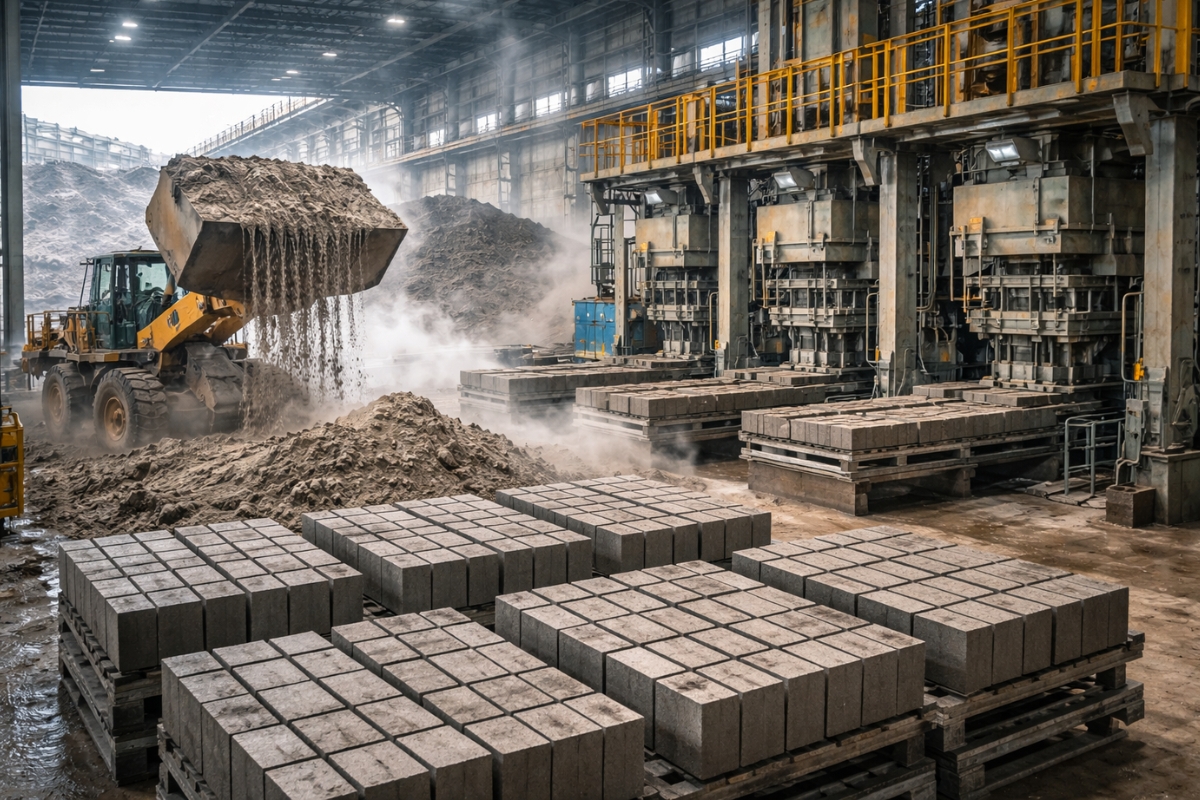
Each Batch Needs to Prove It’s Not Just “Hard Block”: Standardized Tests Measure Compression, Water Absorption, and Leaching, and It’s in This Combination That the Product Leaves Behind Being Compact Waste and Becomes Accepted Construction Material
Giant machines are beginning to transform one of mining’s largest liabilities into useful building blocks. Instead of accumulating toxic waste in vulnerable dams, new technologies are able to solidify this material into stable pieces, immobilizing heavy metals while also feeding the construction industry with an alternative source of aggregates. It’s a shift that simultaneously impacts environmental safety, economics, and the image of the mineral sector.
From Toxic Waste to Concrete Block
Mining waste is a mixture of finely crushed rocks, clay, water, and trace metals that remain after the desired ore is separated. For decades, the standard solution was to store this material in large dams or piles, occupying vast areas while carrying the risk of ruptures and contamination. Today, however, research shows that part of this waste can be converted into raw material for blocks, bricks, and pavements, as long as it is treated correctly.
The central principle is solidification and stabilization. Instead of leaving the fines loose in slurry form, the waste is mixed with binders such as Portland cement or alternative binders and pressed or molded into rigid pieces. In this form, the pores close, free water decreases, and potentially toxic metals are encapsulated within the solid matrix, with a low tendency for leaching. Laboratory tests show that, when well formulated, these blocks meet mechanical strength requirements and leaching limits, paving the way for safe application in construction.
-
USA and China compete for Brazil over resources that could be worth trillions — rare earths put the country at the center of a global dispute

-
After China, it’s now the turn of the USA to ‘secure’ a share of Brazil’s natural resources: the country buys critical rare earths for R$ 3 billion and enters the center of the global technology dispute.
-
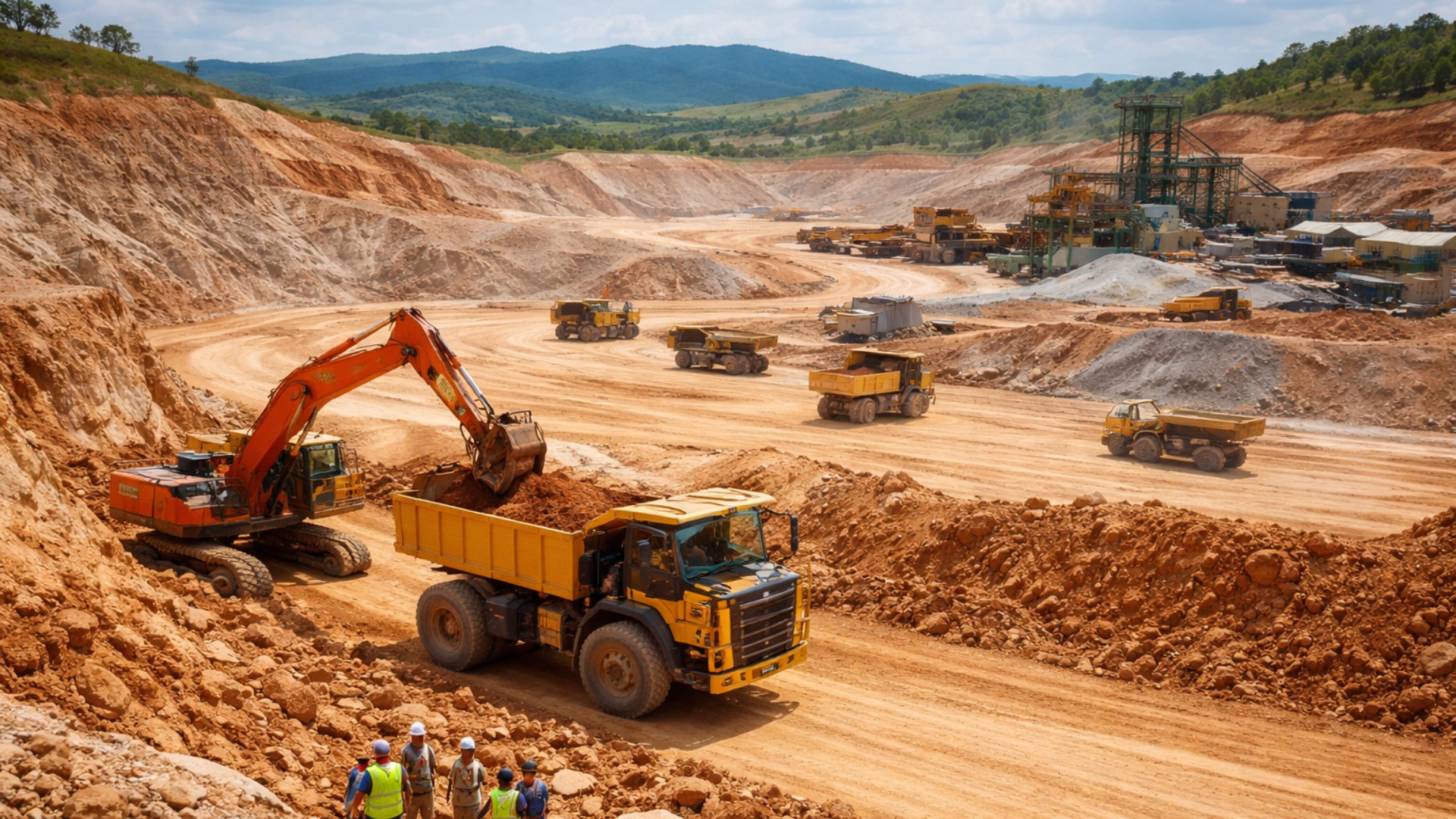
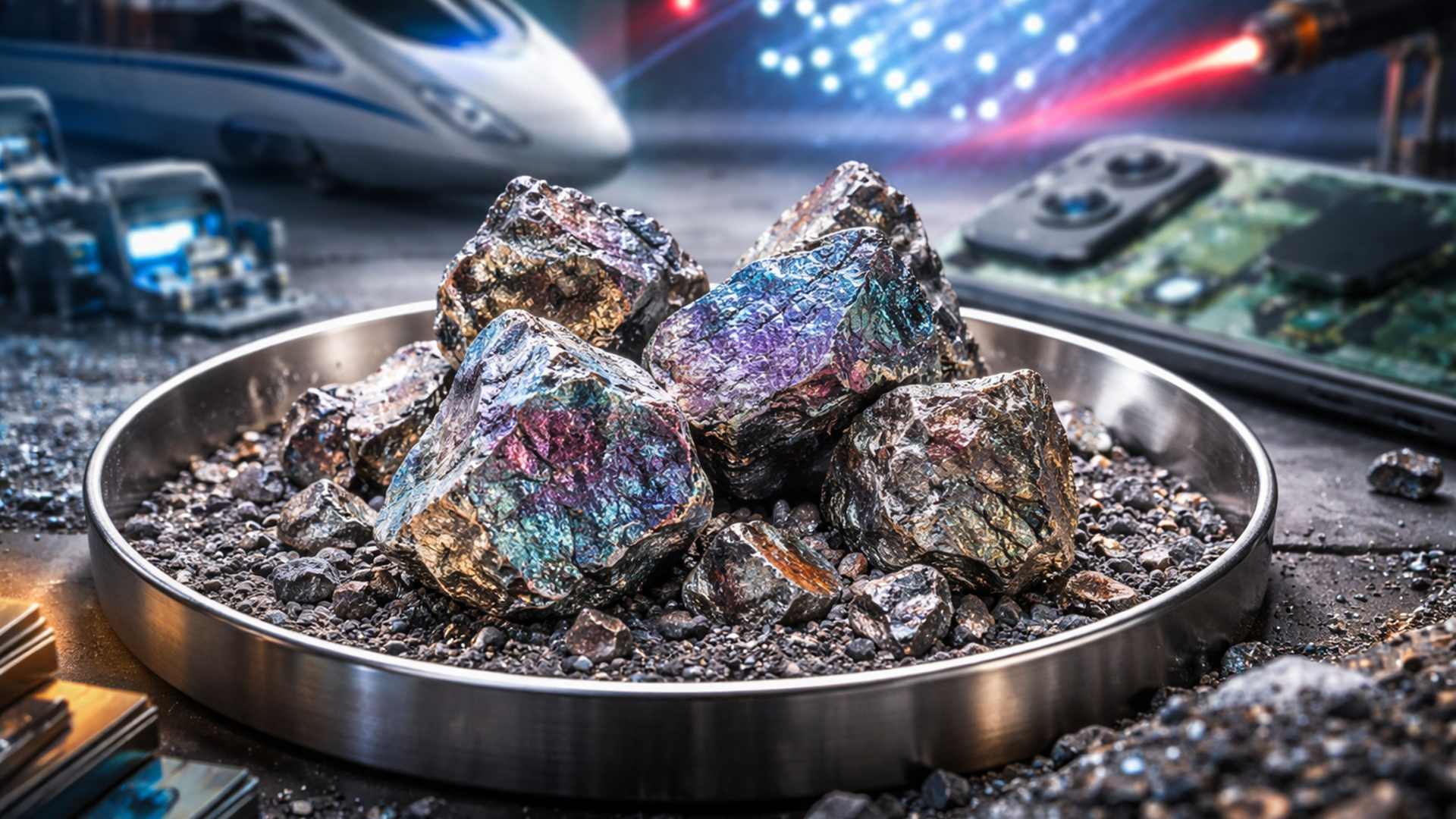
Rare earths are in everything, from cell phones to bullet trains, and what almost no one realizes is why they have become the target of such a delicate global war.
-
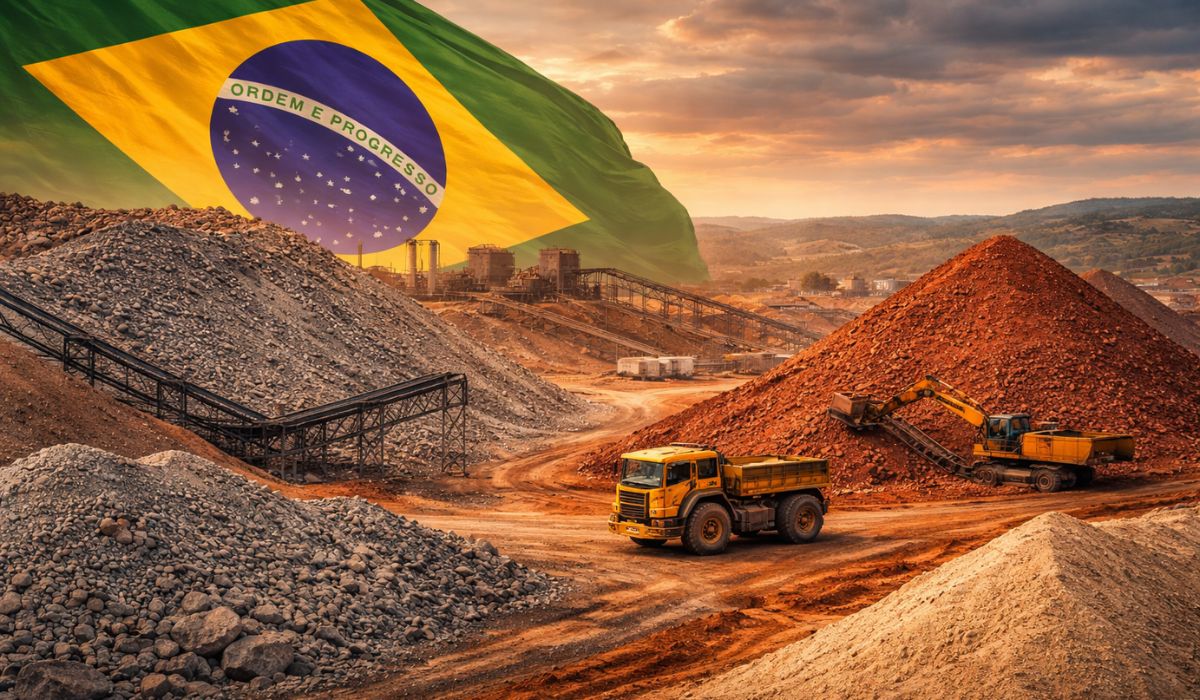
Brazil extracts 26.3 million tons of ore from what was previously treated as waste, transforming residues into wealth, producing over 3 million tons of sand, and demonstrating how national mining is relearning to generate value.


Geopolymers: Green Cement Made from Waste
One of the most promising fronts is the use of geopolymers, a type of binder that replaces part of traditional cement with materials rich in aluminosilicates, such as ashes, slags, and mining waste. Scientists from CSIRO in Australia have been converting waste into geopolymeric concrete that can reduce CO₂ emissions by up to 90% compared to conventional Portland cement, while also providing a useful destination for millions of tons of waste.
In these systems, the waste is chemically activated by alkaline solutions that form a three-dimensional network of aluminum and silicon, creating an extremely stable matrix. The result is blocks and precast elements with strengths ranging from 20 to 50 MPa, comparable to common structural concrete, and with superior performance at high temperatures. Additionally, the geopolymeric matrix is particularly effective at immobilizing metals, reducing the mobility of potentially toxic elements contained in the waste.
The Vale Plant That Manufactures Blocks from Waste
In Brazil, one of the most concrete examples of this transformation is the pilot plant Pico Block, inaugurated by Vale in Minas Gerais. Located in an area of 10,000 square meters within the Pico unit, the complex is designed to produce over 60 types of construction products using sandy waste as the main raw material. Among the manufactured items are interlocking floors, structural blocks, slabs, and other precast components used in housing, infrastructure, and urban works.
The scale of the project is revealing. After the testing phase, the company estimates it will process about 30,000 tons of waste per year, converting this volume into approximately 3.8 million precast pieces. Instead of going to dams or piles, this material enters a productive cycle with economic value. According to the company, the plant was designed in modules, which facilitates replication in other mines in Minas Gerais, should the technical and economic results be confirmed.
How Giant Machines Make the Magic Happen
Behind the photos of stacked blocks is a highly automated production line. Pre-classified waste enters dosing systems along with binders and, in some cases, chemical additives that assist with curing and final strength. High-capacity mixers homogenize the material, which is then fed into vibrating presses and industrial molds capable of producing thousands of units per day.
These giant machines ensure strict control of proportions, compaction, and moisture—decisive factors for both strength and immobilization of metals. After molding, the pieces move to curing chambers, where they complete the hardening process under controlled temperature and humidity conditions. Standardized tests measure compression, water absorption, and leaching, ensuring that each batch meets the required parameters for use in paving, masonry, or other applications.

Environmental Benefits: Less Dams, Less CO₂
Transforming waste into building blocks tackles two environmental problems at once. On one side, it reduces the volume of material deposited in dams and piles, decreasing the risk of accidents, leaks, and soil and watercourse contamination. On the other, it replaces natural sand and part of the cement—materials whose production and extraction have significant impacts on greenhouse gas emissions and river degradation.
Reports indicate that using waste in geopolymeric concretes can cut emissions associated with the binder by up to 90%, especially when avoiding Portland cement clinker. At the same time, initiatives like Vale’s sustainable sand show that sandy iron ore waste can substitute for sand extracted from riverbeds, an increasingly scarce resource and target of illegal exploitation. In a circular economy scenario, every ton of waste incorporated into blocks or concrete represents less pressure on waste deposits and on virgin natural resources.
Technical Challenges and Market Acceptance
Despite the potential, transforming waste into building blocks is not a trivial solution. Each type of waste has its own mineralogical composition, which requires specific studies on formulation, curing, and long-term behavior. Some materials may contain sulfides that generate acid drainage if not properly stabilized, or metal levels that demand heightened attention in leaching tests.
Another point is market acceptance. Even when technical performance is proven, construction companies and public agencies may hesitate to adopt a product “made with mine waste.” Therefore, many initiatives start in internal mining projects, pilot paving programs, or partnerships with universities and municipalities. As technical standards are updated and success stories accumulate, the trend is for these materials to gain space in bids and more visible construction works.
A Decisive Step Towards Circular Mining
Giant machines compressing waste into blocks may seem like just another niche innovation, but collectively, these technologies point towards a structural change in how mineral waste is viewed. Instead of considering waste as an inevitable cost to be confined for decades, companies and research centers are beginning to treat it as a stock of raw material for a new generation of building materials.
If plants like Pico Block are replicated on a large scale and geopolymeric solutions based on waste become competitive, millions of tons of waste currently sitting in dams could re-enter the economy as pavements, blocks, slabs, and structures. It’s a movement that reduces risks, cuts emissions, and brings mining closer to the circular economy narrative, where every fraction of what is extracted from the ground finds a useful and lasting destination.
This article was based on information from Vale (vale.com), which details its factory dedicated to transforming mining waste into products for the construction industry, such as blocks, floors, and other precast components.








-

-

-

-

7 pessoas reagiram a isso.