





 Portuguese
  English
  Spanish
  4 min of reading
  0 comments


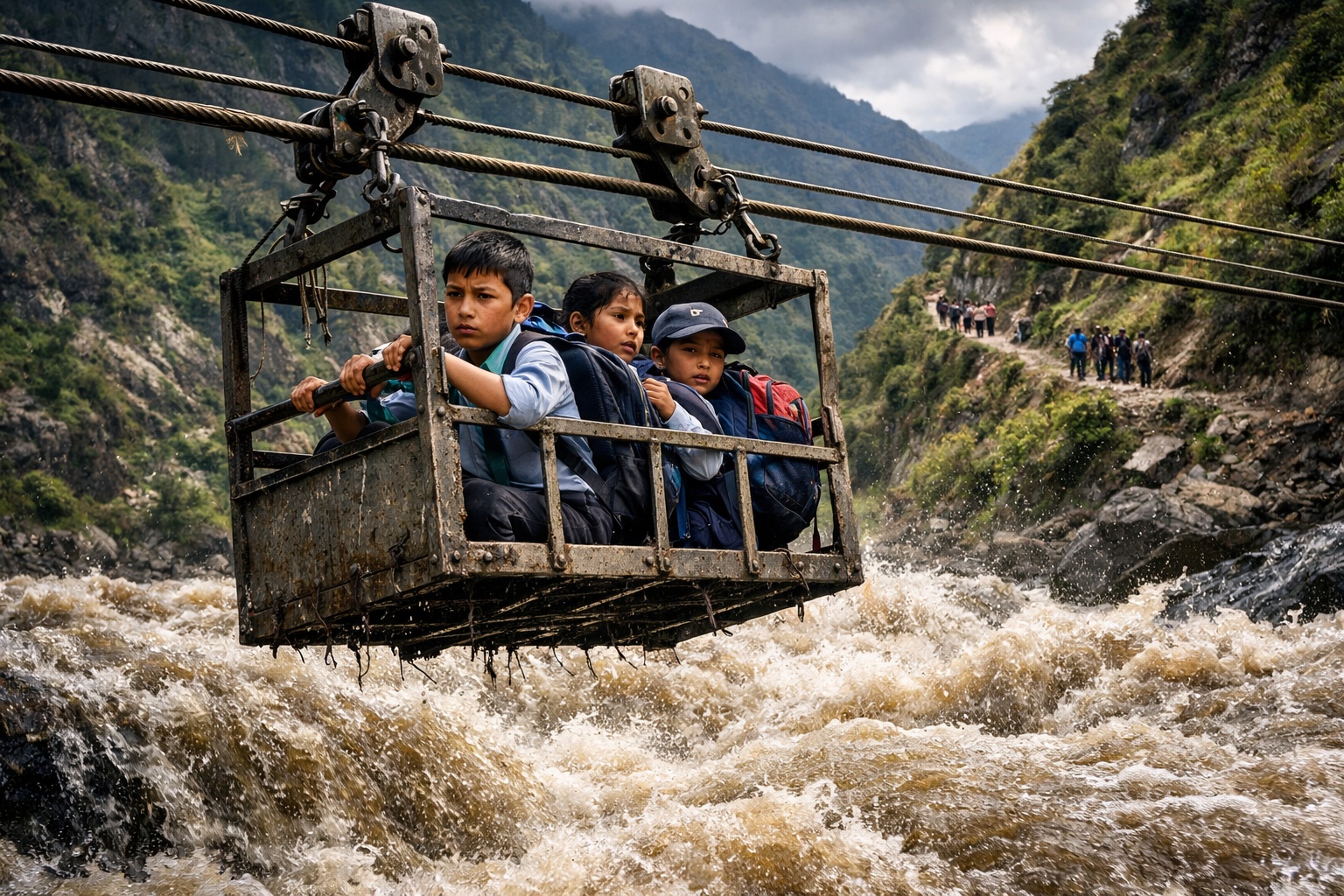
In Uttarakhand, India, Children Cross Rivers on Wire Ropes and Face Long Trails to Study; The Case Exposes Extreme Isolation, Daily Risks, and Improvised Solutions.
In the state of Uttarakhand, in northern India, scenes that seem straight out of an extreme documentary are part of the school routine. In mountain villages of Pithoragarh district, near the border with Nepal, children have to cross swollen rivers using improvised carts attached to wire ropes, before walking kilometers on narrow, steep trails to reach school. The most well-known records of this type of crossing gained international attention between 2017 and 2019, when reports from BBC News, Reuters, and The Guardian documented the daily lives of these families and identified the local authorities responsible for installing the cables, usually community councils with occasional support from district authorities.
Where This Happens and Why the Risk Is So High
Uttarakhand is a region of the Indian Himalayas marked by deep valleys, glacial rivers, and monsoon rains. For part of the year, makeshift bridges are washed away by floods or become impassable.
In areas like Madkot and Bogadi in Pithoragarh district, road access is limited, and schools are located on the other side of swift rivers, such as the Kali and its tributaries. Without permanent bridges, residents have installed tensioned wire ropes between the banks and adapted carts (small platforms with pulleys) to transport people and goods.
-
Friends have been building a small “town” for 30 years to grow old together, with compact houses, a common area, nature surrounding it, and a collective life project designed for friendship, coexistence, and simplicity.

-
This small town in Germany created its own currency 24 years ago, today it circulates millions per year, is accepted in over 300 stores, and the German government allowed all of this to happen under one condition.

-
Curitiba is shrinking and is expected to lose 97,000 residents by 2050, while inland cities in Paraná such as Sarandi, Araucária, and Toledo are experiencing accelerated growth that is changing the entire state’s map.

-
Tourists were poisoned on Everest in a million-dollar fraud scheme involving helicopters that diverted over $19 million and shocked international authorities.


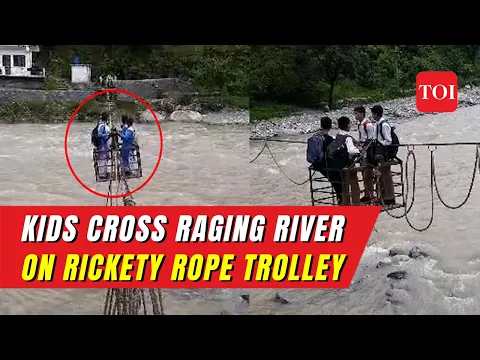

These structures are not standardized, do not follow formal engineering standards, and rely on community maintenance. The risk increases during the monsoon (June to September), when water volume rises and gusts of wind make the crossing more unstable.
How The Cable Crossing Works
The carts are pulled manually by auxiliary ropes. Children enter one by one, often with backpacks on their backs, while an adult assists with boarding and another receives them on the opposite side. The route can span dozens of meters over turbulent water.
Reports from BBC News (2017) and Reuters (2019) showed children aged 7 to 12 making the crossing daily, especially during the school term.
Despite the danger, families report that interrupting classes is not an option. Closer schools would require permanent relocation or costs that they cannot afford.
After The River, The Hike Continues
The cable crossing is just part of the challenge. On the other side, students still trek mountain trails for up to 10 to 15 kilometers, with significant elevation changes.
In some cases documented by The Guardian (2018), the total travel time exceeds 2 hours per leg, combining the crossing, uphill, and downhill on narrow slopes.
In winter, fog and cold make it even more challenging; in summer, heat and humidity increase physical strain. School dropout rates rise precisely during the most critical periods.
Who Installed The Cables and What The Authorities Say
The carts originated from local initiative. Village councils and families pooled resources to buy wire ropes, pulleys, and wood.
In some cases, district authorities acknowledged the situation and promised bridges— promises recorded in notes from the Pithoragarh administration mentioned by Reuters. However, permanent works encounter high costs, environmental licensing, and unstable terrain.
After the international attention, the Uttarakhand state government announced studies for suspension footbridges and pedestrian bridges at critical points. Some structures have indeed been initiated, but not all villages have received definitive solutions to this day.
Education Versus Daily Survival
School principals interviewed by BBC News reported that absences increase during the monsoon and that teachers need to be flexible with schedules.
In more isolated villages, boarding schools are seen as an alternative, but the distance from families and costs limit accessibility.
Local NGOs work with safety kits (simple vests, helmets) and campaigns for school transport. Still, the cable crossing remains as a last resort solution.
Comparisons With Other Cases Around The World
Similar situations have been recorded:
- Colombia: children crossing rivers on zip lines in rural areas (cases documented by Reuters).
- Vietnam: improvised crossings during seasonal floods in mountainous regions of the north (reports from AFP).
- Nepal: community footbridges in remote valleys, with support from international NGOs.
In all cases, the pattern repeats: improvised engineering, education at risk, and slow responses from public authorities.
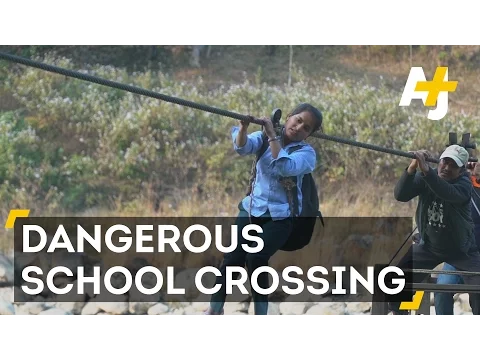
Civil engineers interviewed by Reuters warn that cables without structural calculation and without redundancy can fail due to material fatigue.
Public policy experts emphasize that low-cost pedestrian bridges, with a modular design and community maintenance, reduce accidents and cost less than emergency interventions after tragedies.
Why These Stories Keep Happening
The case of Uttarakhand exposes a global dilemma: extreme geography + poverty + inadequate infrastructure. Where roads do not reach, improvised solutions arise. The difference between attending school or dropping out comes down to the courage to cross a river on a cart.
As permanent bridges do not multiply, families continue to choose risk to ensure education for their children. It is a daily decision that reveals resilience, but also the urgency of public policies capable of transforming improvisation into safety.










-

-

2 pessoas reagiram a isso.