





 Português
  Inglês
  Espanhol
 3 min de leitura


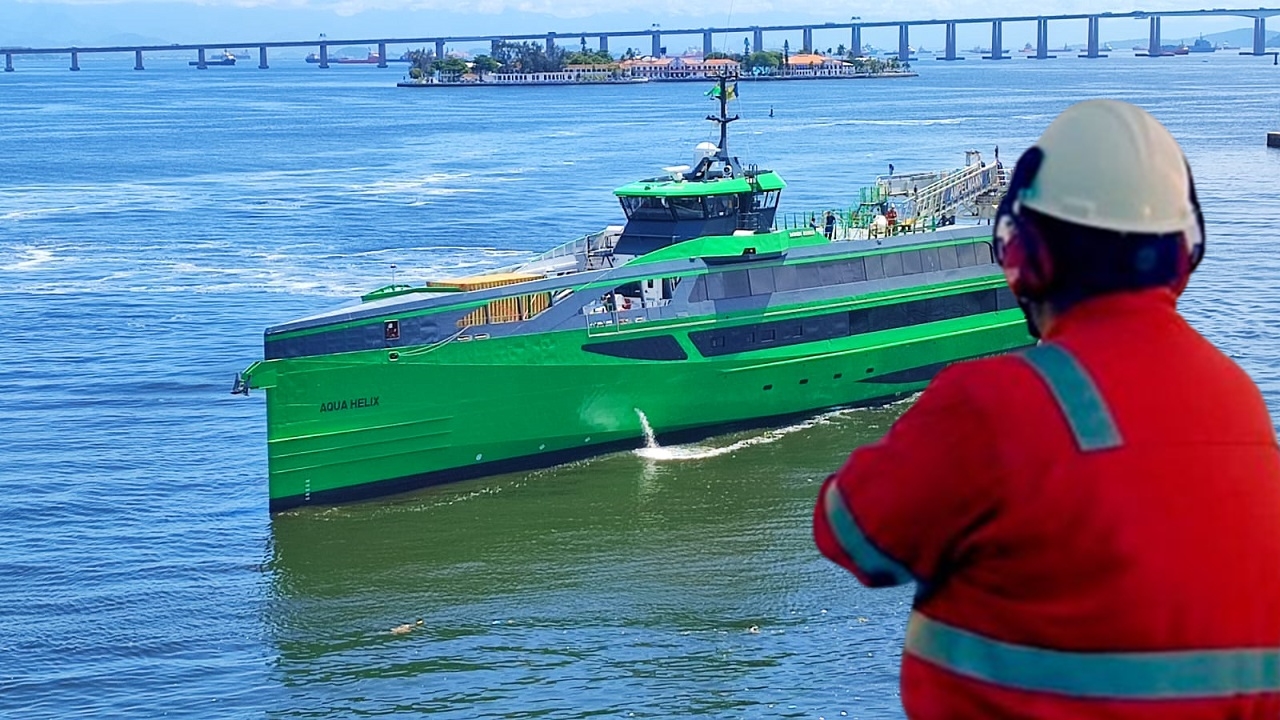
Nowadays, almost all offshore labor logistics are carried out by helicopters due to a series of advantages over vessels. The Damen Group is in Brazil and is trying to repopulate this logistical method that was widely used in maritime exploration of oil and gas in the past.
For those who have been in offshore operations in the 80s and 90s, whether currently active or retired, they have “felt it firsthand” how it was to board catamarans, vessels that facilitated logistics for oil workers to oil platforms in Brazil at that time. Now a new proposal from the German group Damen promises to resurrect this same type of transportation for people.
How Were Offshore Workers Transported to Platforms in the Past?
Trips were long, many workers arrived seasick at the platforms, and those on board had to keep eating salt or take the popular seasickness medication Dramamine during the journey. It also happened that upon arriving at the unit, the sea was too rough to carry out the transfer via basket, preventing the oil workers from boarding the platform, resulting in everyone returning to shore and waiting for favorable weather conditions to restart the whole process.
To support operations in the Campos Basin, many of these maritime embankments were made in Macaé, catering to Petrobras operations. Some of these personnel logistics vessels were:
-
São Paulo surprises the world with a colossal railway network project that promises over 1,000 km of tracks, R$ 194 billion in investments, and 40 projects connecting the capital to the interior with fast and sustainable trains.
-
The world’s largest escalator, measuring 905 meters in China, reduces urban travel time from 1 hour to about 20 minutes and transforms mobility in mountainous regions with an engineering solution adapted to the terrain.
-
A R$ 300 million logistics giant is taking shape in Serra with over 100,000 m² and raises a question: how can this transform e-commerce and distribution in the state?
-
Could Uber Rides Lose Minimum Fare? Understand What’s Happening!

- SpeedTide
- Margareth Jill
- Norsul Catamaran
- San Paul
We don’t remember all the platforms, but most of the units that workers traveled from catamarans were semi-submersible of the SS class (SS-11, 13, 14…) which later changed to P-09, 10, P-11, etc. The fixed ones were Enchova, PCH1, PCH2, PNA1, PNA2, PARGO, VERMELHO 1, VERMELHO 2, CARAPEBA I and II among many others.
Note* Anyone who has old photos and wants to share, we will attach them to this article and credit them accordingly, just get in touch.
About the New Offshore Personnel Logistics Vessel Aqua Felix from Damen Group, Which is in Rio de Janeiro
Last Thursday (26th), a unique vessel docked at the port of Rio de Janeiro. The “Aqua Felix” is the first vessel of the Fast Personnel Supplier (FCS) 7011 class from the Dutch Damen Group and was designed to replace helicopters in the crew change process between platforms.
Watch the Aqua Felix in Action in the Video Below
After its initial launch in 2021, the vessel is finally heading to Rio de Janeiro, where it will remain until the end of the afternoon this Friday (March 27th) for its owner to present it to companies operating in the offshore energy sector.
The FCS 7011 weighs 105 tons and measures 73.6 meters in LOA (length overall) and 11.2 meters in beam (width at the widest point). It can reach speeds of up to 40 knots (74 km/h) and transport up to 150 passengers.
Crew transfers can be safely completed in rough seas of up to 3 meters, thanks to the variety of motion compensation devices on the vessel. A distinct advantage is that more people can be moved over longer distances and more locations can be served in the same amount of time and fuel usage.









Seja o primeiro a reagir!