





 Portuguese
  English
  Spanish
  4 min of reading
  0 comments


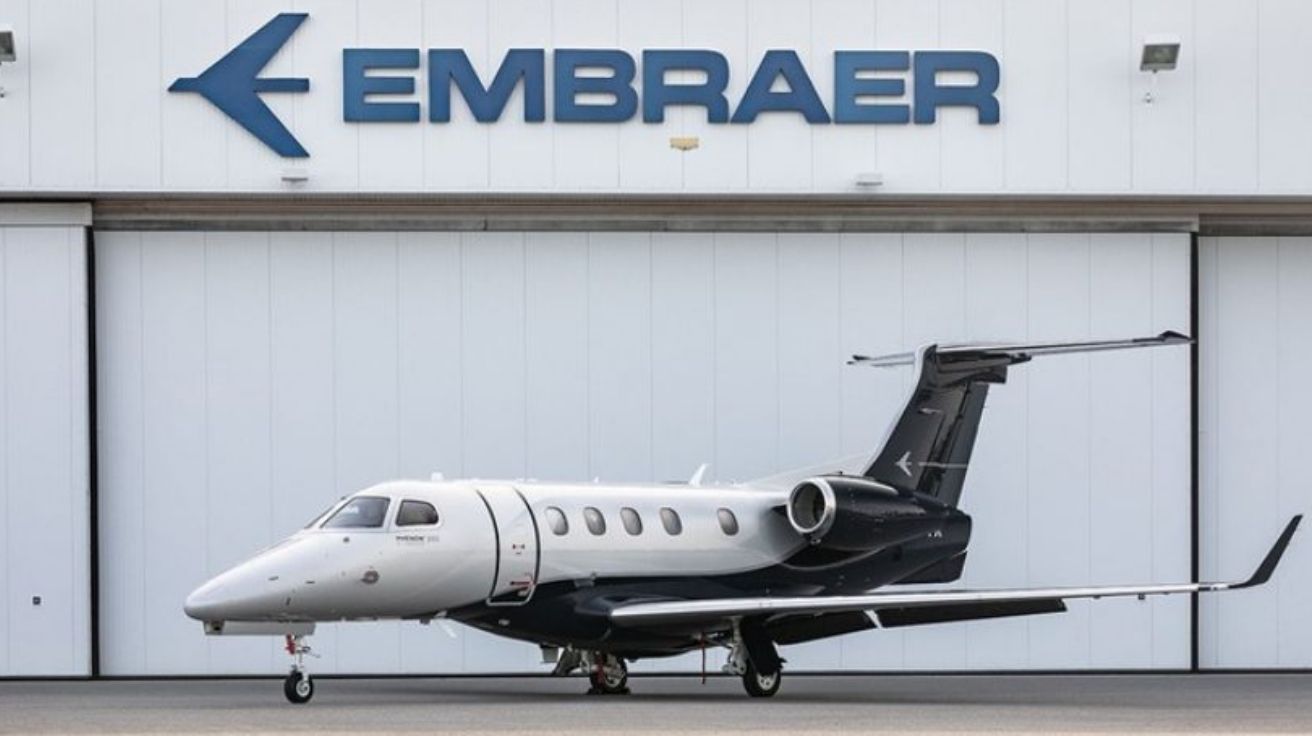
Geopolitics And International Agreements Influence Billion-Dollar Negotiations In The Aerospace Industry, Affecting Strategies Of The Largest Manufacturers In The Sector.
Embraer lost a billion-dollar contract to Airbus, and geopolitics played a decisive role in this decision, highlighting how international politics influence business in the aviation sector.
The episode occurred during the Paris Air Show, one of the largest global aviation fairs, when the European manufacturer surpassed its Brazilian rival to close a significant deal with Poland, according to a report published by Bloomberg Línea.
Billion-Dollar Contract Between Airbus And LOT Polish Airlines
LOT Polish Airlines, the country’s main airline, announced the purchase of 40 Airbus A220 jets, with the possibility of expanding the order to up to 84 aircraft.
-
The drought may be pushing a much larger crisis than just a lack of water; in addition to affecting crops, reservoirs, and cities, it can also help strengthen bacteria that no longer respond well to antibiotics.

-
A resident of Santa Catarina found a tunnel over 10,000 years old dug by animals the size of a car on her own property, and the video of the discovery has already surpassed 3 million views on social media.

-
The coldest region of Brazil will experience very hot weather in the first days of April, with maximum temperatures reaching up to 35 degrees in Rio Grande do Sul, and only in the last week of the month an intense cold front is expected to finally lower the temperatures in the South and Southeast.

-
Goodbye common refrigerator: essential appliance starts to gain competition with technology that preserves food for longer and reduces waste.


The deal, estimated at US$ 2.7 billion, already considers the usual market discounts, according to a report by Bloomberg Línea based on the aviation consultancy Ishka.
This choice represents a strategic shift for LOT, which until now had largely based its fleet on Boeing and Embraer aircraft.
Impact Of Geopolitics On Embraer’s Decision
The Brazilian manufacturer expressed dissatisfaction with the decision, pointing out that political influence was a determining factor for the defeat.
“We are experiencing an exceptional moment in which geopolitics plays an important role,” said Embraer in an official statement after LOT’s announcement.
According to the company, the continuation of the partnership with Brazilian jets would bring savings of “millions of euros” for the Polish airline, reinforcing the weight of politics over the economic and technical aspects of the negotiation.
Ceremony And Diplomatic Presence At The Paris Air Show
The political context became evident during the official ceremony at the Paris fair.
The Airbus conference room was packed with authorities from the governments of Poland, France, and Canada — the country where the Airbus A220 is manufactured.
Attendees included a Polish minister, ambassadors, and the French Minister of Transport, Philippe Tabarot, who made a brief speech.
This strong diplomatic engagement shows that the deal went beyond a simple commercial transaction, taking on a political character, as pointed out by the newspaper.
Experts’ Analysis On Political Influence
Aviation experts confirm this perception.
Nick Cunningham, an analyst at Agency Partners, stated that “competition has become much more political than even a normal order for a civil aircraft”.
The rapprochement between France and Poland, which seek to repair previous diplomatic relations, reinforces this view.
Diplomatic Context And Lula’s Visit To Moscow
Another point that reinforces the geopolitical influence was Brazilian President Luiz Inácio Lula da Silva’s visit to Moscow in May of this year to celebrate the 80th anniversary of the end of World War II.
The trip displeased the Polish government, which has a firm stance against the invasion of Ukraine led by President Vladimir Putin.
This diplomatic episode, highlighted by Bloomberg Línea, contributes to the scenario that complicated Embraer’s progress in the bidding process.
Positioning Of LOT Polish Airlines
The CEO of LOT, Michal Fijol, when asked about the possible weight of politics in the choice, avoided answering directly.
“It was not an easy process; we received two very competitive offers. But I am satisfied because Airbus wanted us more,” he limited himself to declare.
Influence Of Geopolitics In The Aviation Market
This negotiation reinforces the importance of geopolitics in the aviation market, where commercial decisions are influenced by international alliances and strategic positions of countries.
The case of LOT exposes the complexity of competition among aircraft manufacturers, which involves more than price and technology, but also the diplomatic context in which business takes place.
Consequences For Embraer
The agreement represents a setback for Embraer, which has been consolidating its presence in the European market and the fleet of the Polish airline.
The possibility of expanding the order to 84 Airbus A220 jets highlights LOT’s intention to progressively replace the Brazilian models.
This could impact Embraer’s growth strategy in a region that is crucial for the aviation sector.
Local Production And Impact On Airbus Choice
In addition to the political aspect, the contract with Airbus highlights the importance of local manufacturing in customer choices.
The Airbus A220, although a European project, has final assembly in Canada, a country with close ties to France and Poland.
This relationship reinforces the strategic dimension of industrial production in defining international contracts.
Regional Jet Market And Competition Between Manufacturers
LOT’s decision also points to the dynamic transformation of the regional and mid-size jet market, a segment where Embraer and Airbus compete for space.
As Airbus expands its line with the A220, designed to offer efficiency and performance, Embraer faces challenges in maintaining competitiveness in an environment where political and diplomatic factors gain weight.
Reflections For Future International Contracts
The repercussions of this choice may be followed by other countries that, faced with geopolitical tensions, begin to consider diplomatic ties when renewing their air fleets.
The case of Embraer and Airbus makes it clear that the civil aviation sector, even being highly technological, is not immune to external influences of a political and global economic nature, as highlighted by the report from Bloomberg Línea.






-

-

-

-

-

23 pessoas reagiram a isso.