





 Portuguese
  English
  Spanish
  6 min of reading
  0 comments



Dubai Faces Up To 45 °C, Zero Millimeters Of Rain In Summer And Depends On Desalination; Emirates Plan To “Create Mountain” To Induce Artificial Rain.
In Dubai, during the summer months, the average precipitation is zero millimeters. Not almost zero — zero. The thermometer reaches 45 degrees Celsius, the wind carries sand, and the water that supplies one of the most densely built cities on the planet comes almost entirely from desalination plants that turn seawater into drinking water at an enormous energy cost. The United Arab Emirates averages only five days of rain per year.
This scenario has led the UAE government to a conclusion that seems straight out of a science fiction movie: if there are no mountains to force the rain, perhaps it is worth building one.
The Problem That No Conventional Engineering Solves
The UAE’s water crisis is not new, but it is worsening. According to data from the Al Jazeera Centre for Studies, the demand for water in the region has grown by 140% while natural resources continue to decline due to droughts, low rainfall, and climate change.
-
While the world looks at oil, the war with Iran is already disrupting helium supply from Qatar, affecting car and iPhone chips, threatening AI expansion, and putting pressure on aluminum packaging at the highest value in four years.

-
Global warming will expose a treasure hidden under the ice of Antarctica and may spark an international dispute over gold and valuable minerals.

-
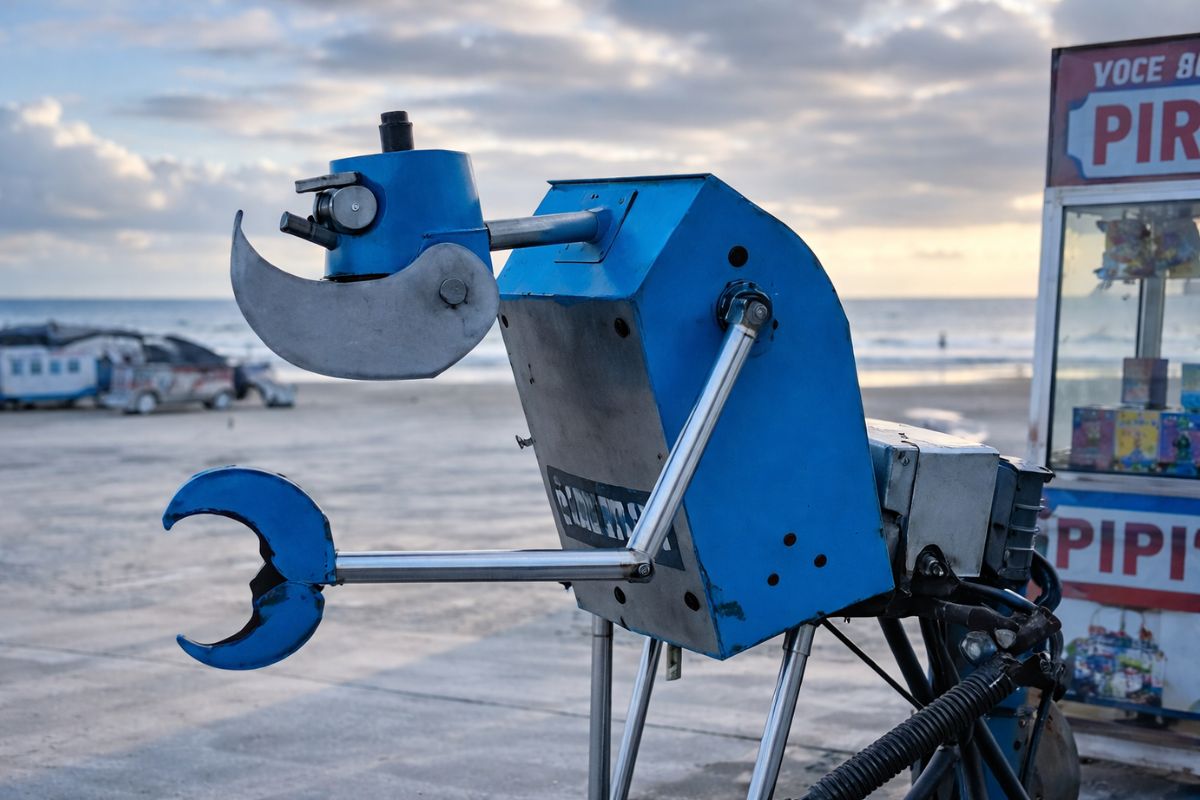
A street vendor from Praia Grande built a robot made of scrap from scooters and washing machines that pulls his popcorn cart on the beach, emits sounds, and interacts with customers, becoming an attraction on the coast of São Paulo.
-
The specifications of the Xiaomi 18 Pro Max have been leaked, and the highlight is a dual 200 MP camera with a new 22-nanometer technology that promises to consume less energy and capture details in shadows and bright areas using LOFIC HDR.


The average consumption per person in the UAE is 550 liters per day — almost triple the international average of 170 to 300 liters daily, according to the Federal Authority for Water and Electricity of the country.
Cloud Seeding – How Does It Work?
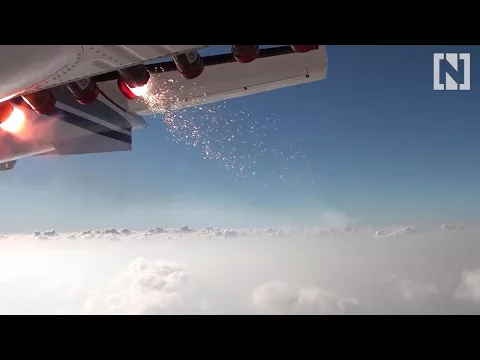
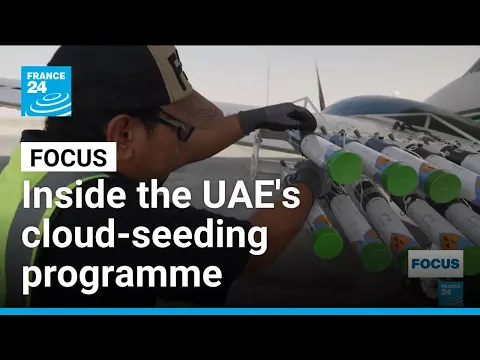
To compensate for the lack of rainfall, the government has been operating since the late 1990s one of the most advanced cloud seeding programs in the world. The technique involves injecting silver iodide or potassium chloride particles into clouds to induce precipitation.
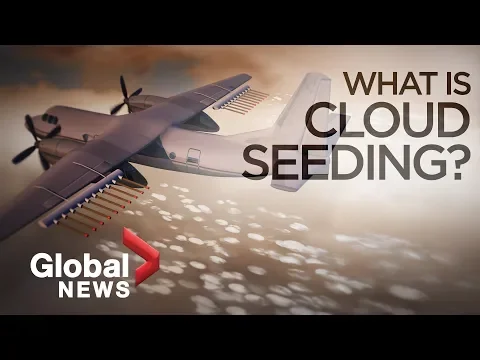

In 2010, the program produced artificial storms in the deserts of Dubai and Abu Dhabi with an investment of US$ 11 million. In 2015, there were 186 cloud seeding missions at a cost of US$ 558,000. A scientific study published in 2021 concluded that the program increased average annual rainfall in the target area by 23%, with the treated storms recording a 159% increase in total rainfall volume.
But cloud seeding has a fundamental physical limit: it only works when there are clouds. And for much of the year, over the desert of the UAE, there are simply no clouds to seed.
The Logic Behind Building A Mountain From Scratch
The idea of an artificial mountain is not as absurd from a scientific perspective as it seems at first glance.
The phenomenon it aims to replicate has a technical name: orographic lifting. When moisture-laden winds encounter a mountainous obstacle, they are forced to rise. As they rise, the air cools. Cool air holds less moisture than warm air. The result is the formation of clouds and, eventually, rain.
“Mountain ranges lift air masses into the atmosphere through orographic lifting”, explained Hans Ahlness, Vice President of Operations at Weather Modification Inc., a company that has already conducted cloud seeding operations in the UAE.
“It’s like a child on a skateboard going up a curb: the air rises quickly. And when the air and clouds are forced to higher altitudes, there’s a greater chance of precipitation — ideal targets for cloud seeding.”
In other words: an artificial mountain would not only create rain directly. It would create the conditions for existing cloud seeding to become much more efficient, operating for many more days throughout the year.
US$ 400,000 To Model The Impossible
In February 2015, the UAE government hired the University Corporation for Atmospheric Research (UCAR) and the National Center for Atmospheric Research (NCAR) — two of the most respected scientific institutions in the United States in the field of meteorology — to conduct a detailed feasibility study. The contract was for US$ 400,000 for the first phase of computational modeling.
The lead researcher Roelof Bruintjes from NCAR described the scope of the work: “What we are evaluating is basically the effects on the climate based on the type of mountain, how high it should be, and how the slopes should be configured.”
The team used three-dimensional models to simulate different heights, widths, and possible locations within UAE territory, trying to find the combination that would maximize cloud formation without creating unwanted side effects.
The main feared side effect is the so-called rain shadow: the upwind side of the mountain receives more precipitation, while the opposite side tends to become even drier. In regions with close boundaries, this can lead to international disputes over climate redistribution. In the case of the UAE, where the air is already extremely dry, experts considered it unlikely that this effect would be significant.
The Challenge Of Moving 1 Trillion Tons
The scale of the project puts in perspective why it remains a study and not a construction. Mount Fuji in Japan weighs approximately 1 trillion tons.
Building a structure of comparable dimensions would require an amount of concrete equivalent to a quarter of the entire annual global production of the material, just for the first layer. Bruintjes was straightforward about the obstacle: “Building a mountain is not a simple task.”
Raymond Pierrehumbert, a physics professor at the University of Oxford, raised a more fundamental criticism. To him, the UAE is a desert not due to lack of mountains, but because of global atmospheric circulation patterns.
“Any mountain they build will not change those patterns”, he stated. Pierrehumbert added that even if the structure worked as planned, the additional cloud seeding it would enable would have modest results, as there is little evidence that the technique consistently produces significant volumes of rain.
Bruintjes himself acknowledged the uncertainty: “If the project is too costly for the government, it logically will not move forward. But this gives them an idea of the types of alternatives available for the long-term future.”
Between Science Fiction And Climate Engineering
What makes the UAE’s artificial mountain project significant is not the certainty that it will be built — so far, there is no indication that the construction phase has been approved.
What matters is what it represents: the first time a national government has commissioned a serious scientific study to assess the feasibility of altering a country’s geography with the explicit goal of modifying its climate.
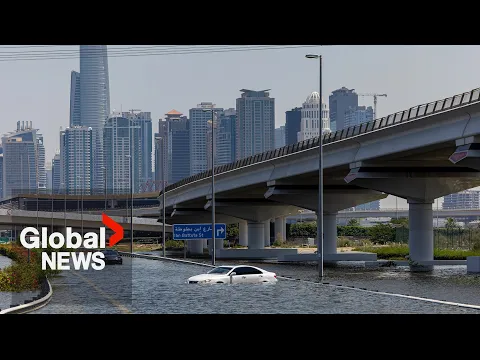
This is not the first geoengineering attempt on the planet. China launches rockets with silver iodide crystals into clouds to induce precipitation.
Russia has used similar techniques to ensure clear skies during military parades. But a permanent mountain designed to redirect winds and force cloud formation on a regional scale would be something qualitatively different from any climatic intervention attempted before.
The UAE has already shown a willingness for projects that challenge the logic of the possible: the Burj Khalifa stands 829 meters high and was built on soft ground on the edges of the desert; the Palm Islands are artificial archipelagos visible from space; the country has an artificial snow-covered ski slope operating in a tropical climate.
The rain mountain would be another chapter in that narrative — or the first sign that humanity is beginning to treat the climate not as a given condition but as a variable to be engineered.








-

-

-

-

11 pessoas reagiram a isso.