





 Portuguese
  English
  Spanish
  5 min of reading
  0 comments


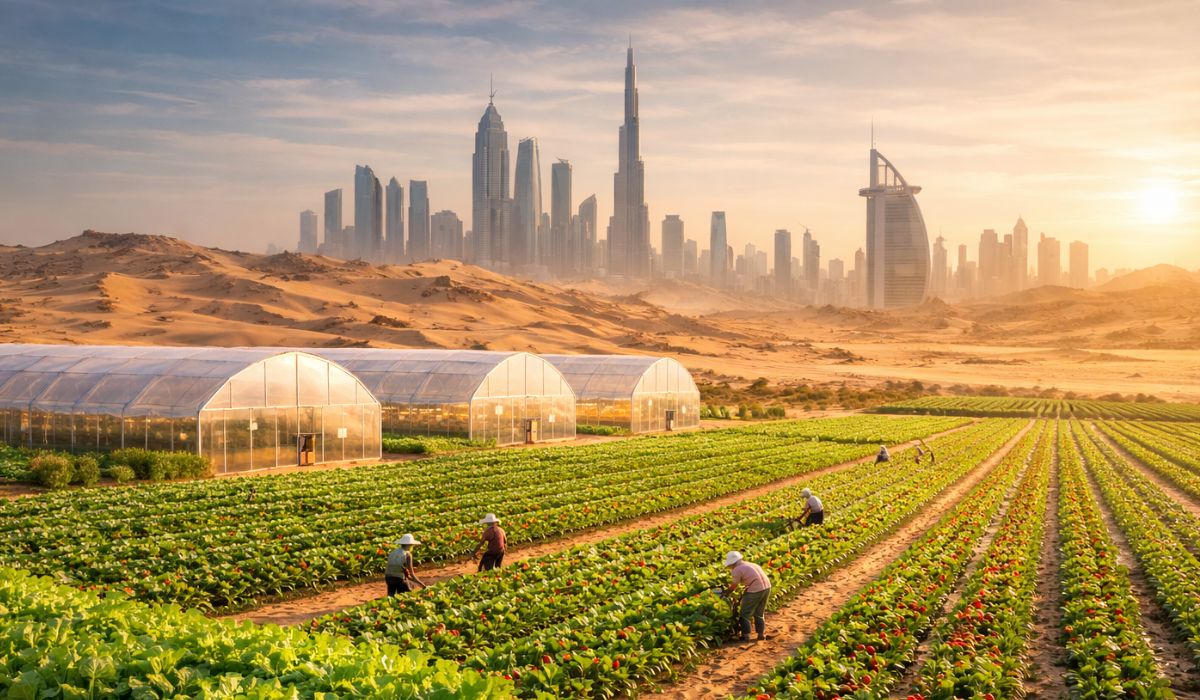
In The Desert, A Gear Of Technology, Trade And Logistics Advances To Redesign The Supply Of One Of The World’s Most Import-Dependent Countries, Amid Climate, Geopolitical And Economic Pressures.
The United Arab Emirates has placed food security among the State’s priorities in an attempt to reduce dependence on external purchases.
In a desert country, with little water, extreme heat, and limited agricultural land, the strategy combines local production with technology, expansion of logistics infrastructure, and investments in agricultural assets abroad to make supply less vulnerable to international shocks.
The pressure is real.
-
In a flooded well, archaeologists found a 1,700-year-old Roman egg that still contains clear and yolk intact inside the very thin shell.

-
Something is happening around the Earth: Inside the huge explosion of fireballs in 2026

-
A hot air bubble coming from Argentina expands over Brazil, causing thermometers to exceed 38 degrees with a thermal sensation of 40 degrees in late March, affecting 6 states at once.

-
The radish leaf that almost everyone throws away has more polyphenols, flavonoids, and fiber than the consumed root, and a 2025 study showed that the leaf contains compounds that protect the intestine, combat inflammation, and may inhibit the growth of cancer cells.


The country still imports about 90% of the food it consumes, according to recent estimates cited by international agencies and media when discussing Gulf supply routes.
This level of dependence exposes the UAE to crises such as wars, port bottlenecks, price fluctuations, droughts, and interruptions in strategic maritime corridors.
In recent years, episodes like the war in Ukraine and tensions in regional routes have reinforced, for authorities and analysts interviewed by international reports, that food supply has become a national security issue.
UAE’s Food Security Strategy Until 2051
The institutional response took shape in 2018, with the launch of the National Food Security Strategy 2051.
The plan aims to place the UAE among the most prepared countries in the sector through sustainable production, intensive use of technology, strengthening of domestic supply, and diversification of import sources.
In official documents and sector reports based on this strategy, one of the central goals is to raise domestic production to 50% of consumption by 2051.
In practice, this means investing in models that bypass some of the traditional conditions of agriculture.
Instead of relying solely on fertile soil and mild climates, the UAE has expanded the use of vertical farming, hydroponics, and controlled environment agriculture.
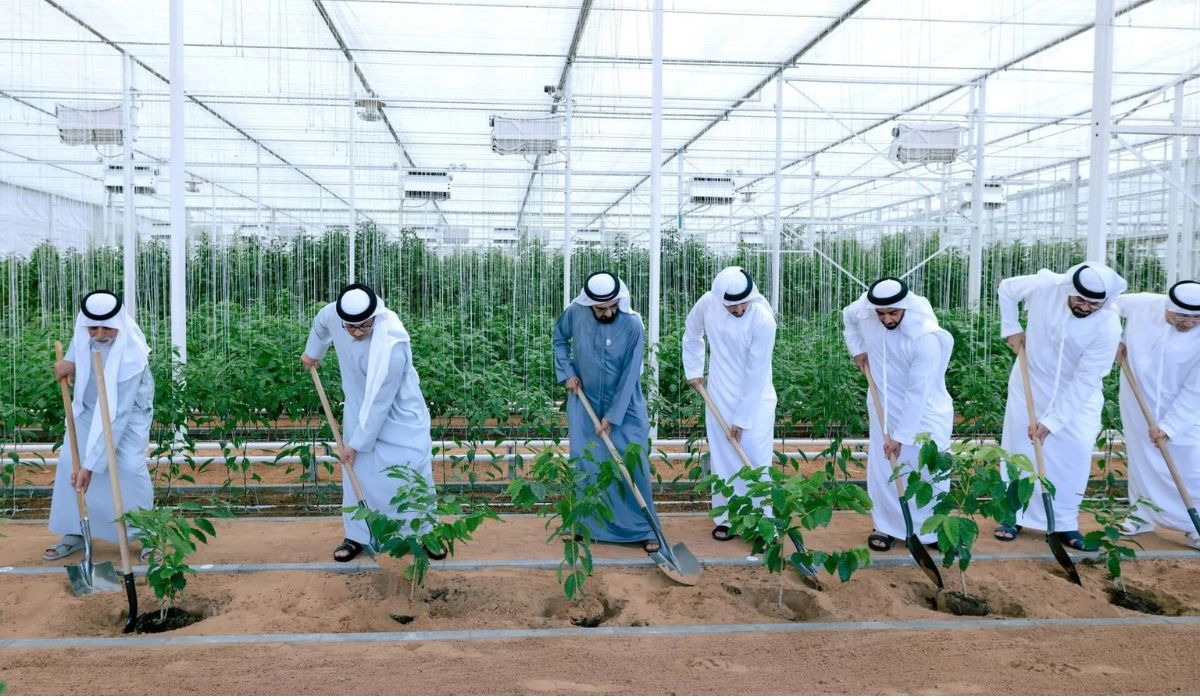
These technologies allow planting in closed structures, with more precise irrigation and less exposure to the desert’s extreme temperatures.
The proposal is not to achieve full self-sufficiency, something limited by the natural conditions of the territory, but to increase the share of locally produced food and reduce the system’s vulnerability.
Agriculture In The Desert Advances With Seeds And Technology
In addition to indoor farms, the country is trying to tackle a more structural problem: adapting crops to intense heat, drought, and soil salinity.
This effort is evident in both public incentives for agrotechnology and partnerships with companies specializing in plant genetics.
In Abu Dhabi, the incentive program from ADIO, launched with a fund of AED 1 billion, equivalent to about US$ 272 million at the time, was designed to attract companies capable of developing solutions for so-called desert farming.
Years later, the government reported that the program had already allocated this amount to dozens of companies, including projects related to the advancement of research and production in controlled environments.
More recently, this innovation axis gained new momentum.
On October 1, 2025, Silal and the French Limagrain Vegetable Seeds announced, in Al Ain, the creation of a center of excellence focused on abiotic and genomic resilience of crops.
According to the companies, the focus is to develop varieties more suitable for conditions such as heat, drought, and salinity, a relevant step for a country trying to increase food production under severe climate restrictions.
Dubai Food District And The New Food Logistics
The UAE also treats distribution as part of the equation.
It is not enough to buy or produce; it is necessary to store, refrigerate, inspect, and redistribute quickly.
In this context, Dubai placed food logistics at the center of the strategy by officially launching, on January 22, 2026, the Dubai Food District, a project by DP World that expands and repositions the central market for fruits and vegetables in Al Aweer.
According to the company, the new complex will have 29 million square feet, equivalent to about 2.69 million square meters, and is designed to integrate trade, storage, processing, and distribution in a single ecosystem.
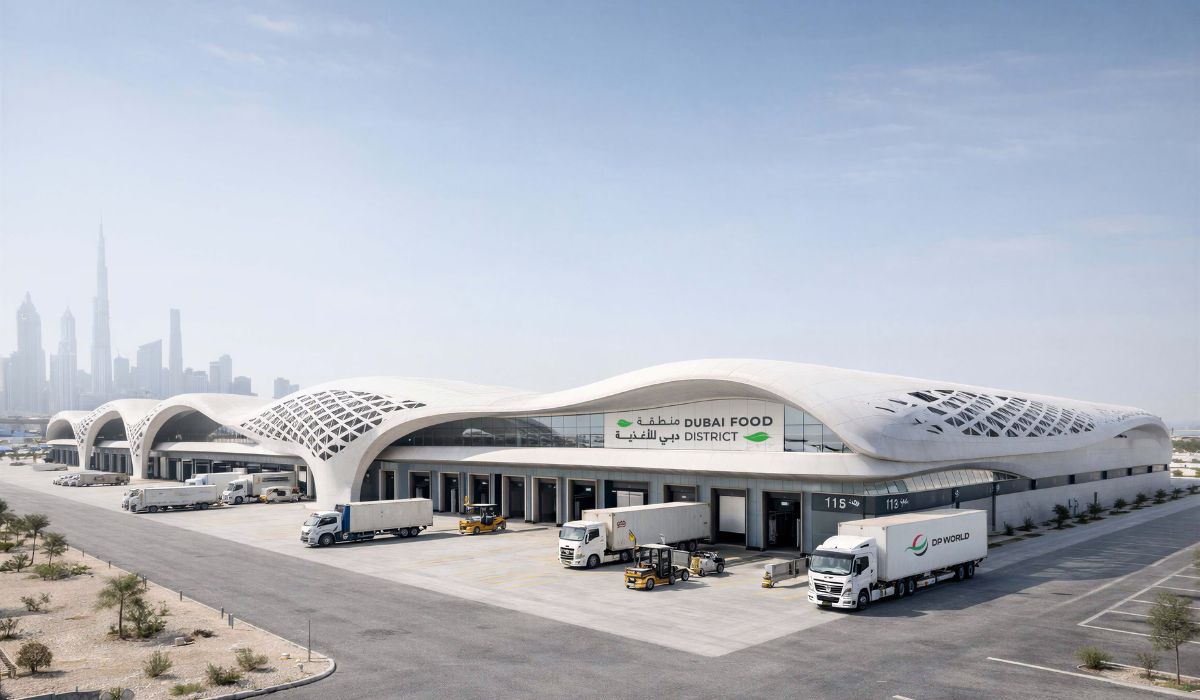
DP World claims that the expansion preserves the historical role of Al Aweer, opened in 2004, but scales it up to reduce risks in the supply chain.
Today, the market already supports more than 2,500 traders who supply the UAE and other countries in the region.
The logic of the project, according to DP World and analysts tracking the regional supply chain, is to reduce losses and increase operational predictability.
In a country highly dependent on imports, failures in the cold chain, customs delays, or logistical interruptions can compromise perishable products in no time.
By concentrating infrastructure, digital documentation, and quality inspection, Dubai seeks to enhance the system’s responsiveness.
UAE Agricultural Investments Abroad
While expanding local production, the UAE maintains another front of action: ensuring direct access to commodities and agricultural chains outside its borders.
This movement is not recent, but it gained more weight with the increase in global volatility.
One of the most well-known milestones was ADQ’s entry into the capital of Louis Dreyfus Company, one of the largest agricultural trading companies in the world.
The operation, completed in 2021, gave the Abu Dhabi group an indirect stake of 45% in the company.
The deal expanded Emirati access to global grain and agricultural commodity trading networks.
Another relevant player is Al Dahra, an agribusiness multinational based in Abu Dhabi.
In data published by the company itself, the group reports operating in more than 20 countries, serving over 40 markets, and maintaining a global land bank exceeding 100,000 hectares across four continents.
The company highlights large-scale operations in Romania, Serbia, Egypt, and the UAE, as well as involvement in feed, grain, and food chains.
This type of international presence helps the UAE diversify supply origins, a recurring point in the national food security policy.
The strategy, according to official documents and the positioning of sector companies, is to reduce dependence on a few suppliers or a single route, distributing risk among more partners, markets, and productive assets.
Population, Tourism, And Regional Tension Pressure The Supply
The race for food occurs in a country that continues to grow and attract expatriate population.
The latest estimates based on United Nations data indicate a population of around 11.5 million in 2026, above the levels officially recorded by the country in previous years.
More residents, more tourism, and greater food demand increase pressure on a supply chain that already operates under natural limitations.
At the same time, the regional environment remains unstable.
Recent reports have shown that new tensions in the Gulf have once again tested the food resilience of countries in the region, precisely because much of the supply depends on sensitive maritime routes.
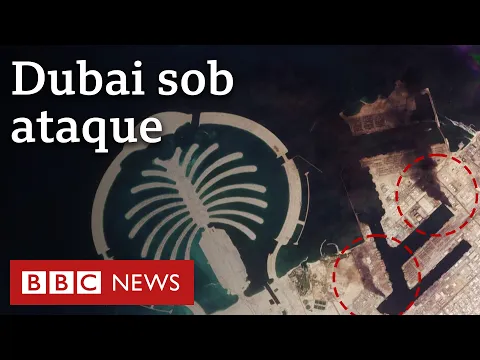

The UAE has reserves, financial capacity, and robust infrastructure, but remains exposed to such risks, as highlighted by analyses published by the international press.
Therefore, the Emirati policy is not limited to agricultural production in a desert environment.
What is underway is the formation of a broader network, in which agricultural technology, genetic research, foreign trade, logistics terminals, and global investments function as parts of the same system.
The declared objective of the authorities is to reduce vulnerabilities and enhance supply security in a scenario of climate and geopolitical instability.






-

-

-

-

-

-

37 pessoas reagiram a isso.