





 Portuguese
  English
  Spanish
  2 min of reading
  0 comments


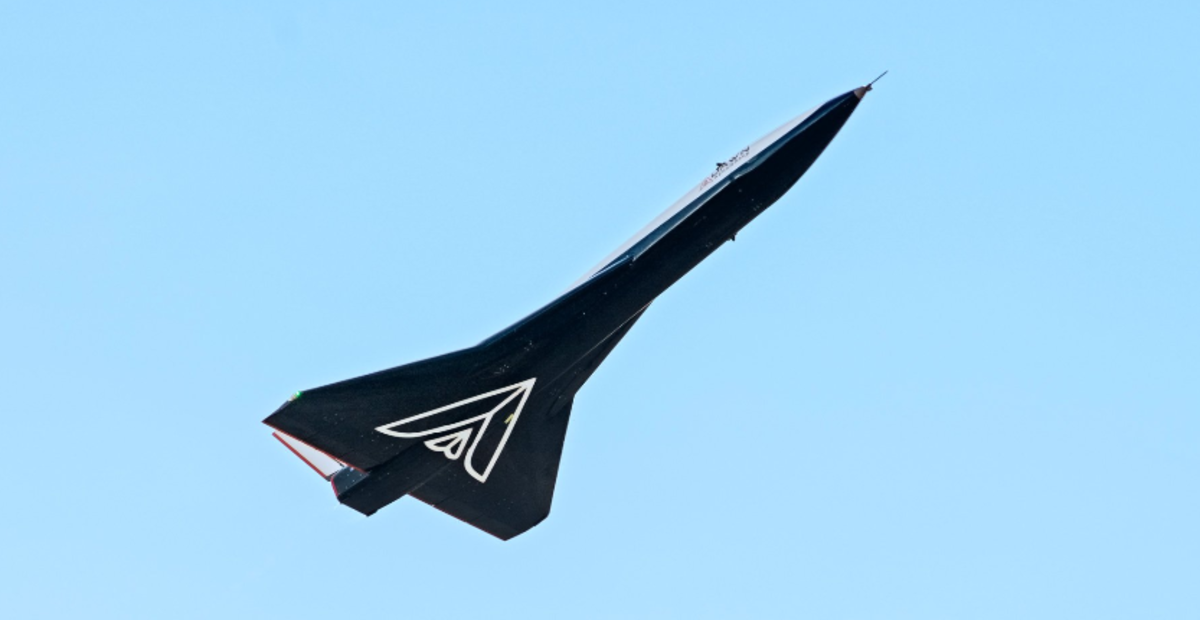
Suborbital Vehicle Mk-II Aurora From Dawn Aerospace Will Be Sold to Customers and Promises Frequent Access to Space From Common Runways
The New Zealand company Dawn Aerospace announced on May 22 that the Mk-II Aurora, a remotely piloted spaceplane, is now available for purchase. The first units are expected to be delivered in 2027.
According to Dawn, this is the first time a vehicle capable of reaching space – crossing the Kármán line, located at 100 km altitude – is being offered directly to customers. The proposal is to allow operators autonomous access to high altitudes and space.
The Aurora is set to become the fastest aircraft with the highest altitude range to take off from a conventional runway.
-
Japan is transforming dirty diapers from babies and the elderly into an ambitious and surprising project that could forever change the way the world deals with one of the most difficult types of waste to dispose of.

-
Goodbye to waste: a Brazilian created a revolutionary brick that uses construction debris, has already entered the markets of the United Kingdom and the USA, and promises to shake up the global construction industry.

-
China has created a mass-produced hypersonic missile that costs the same as a Tesla, and this is changing everything in modern warfare because the United States cannot defend itself without spending millions.

-
100% Brazilian technology transforms agricultural waste into a meat-scented ingredient using fungi from the Amazon rainforest. The process does not use excessive water or chemicals, and it also increases the nutritional value of the final product.

It combines rocket propulsion performance with the operational simplicity of traditional aviation. This may make it possible to conduct frequent flights at lower costs, with take-offs and landings on common runways.
According to the company, the direct sale of the Aurora inaugurates a new business model, comparable to that of airlines, where operators can purchase the aircraft and offer services independently of the manufacturer.
Designed for frequent operations, the suborbital airplane takes off and lands horizontally, with quick refueling and the capability to perform multiple flights per day.
Thus, local operators could reach high altitudes and access space on demand, without relying on large aerospace centers.
“For the first time, customers have the opportunity to own an aircraft capable of reaching the edge of space,” stated Stefan Powell, CEO of Dawn Aerospace.
“The Aurora is a transformative platform for governments, spaceports, and operators to develop space programs. It has been over a century since commercial flights began – now it is time to launch the first space line.”
The company also highlighted the Aurora’s potential in strategic areas. These include Life Sciences, with studies on cellular biology and regenerative medicine in microgravity; Semiconductor Technology, with material testing in extreme space conditions; and Defense Applications, to validate communications and sensors at high altitudes.
An important milestone was achieved in November 2024, during the 57th flight of the aircraft. At that time, Brazilian remote pilot Iagho Amaral flew the Aurora at supersonic speeds of Mach 1.12, reaching an altitude of 25.1 km.
This feat broke a nearly 50-year-old rapid ascent record above 20 km, previously held by the modified F-15 Streak Eagle.
With information from Info Money.







Seja o primeiro a reagir!