





 Portuguese
  English
  Spanish
 3 min of reading
  1 comment


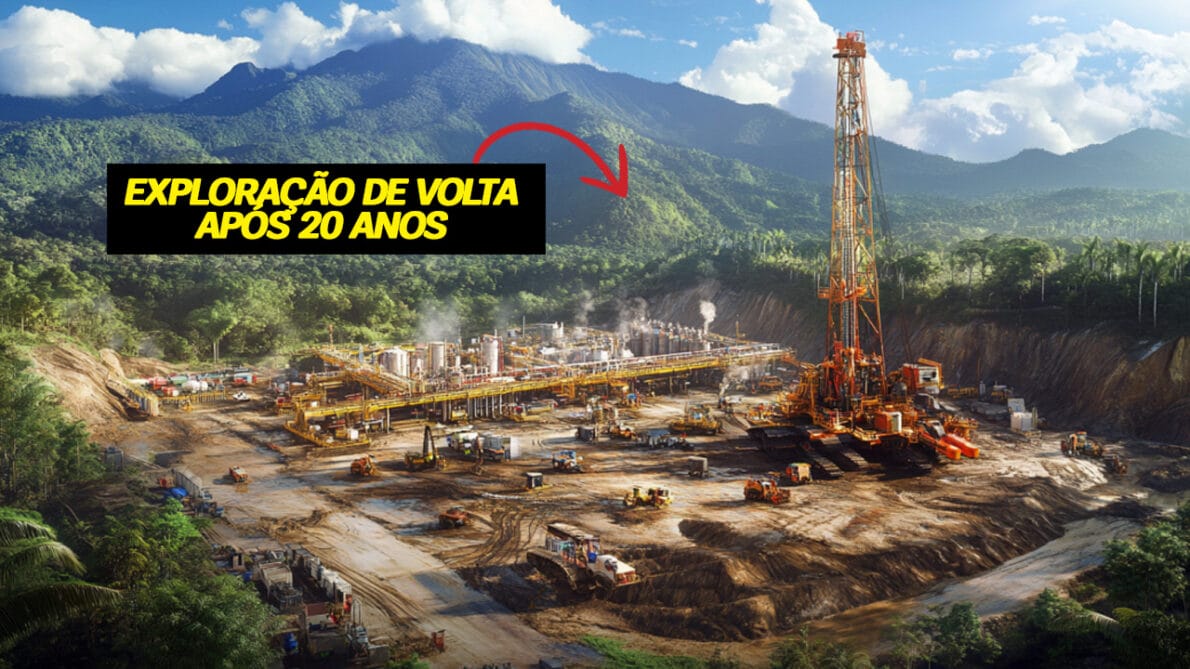

Eneva Is Resuming Natural Gas Exploration in the Paraná Basin with an Investment of R$ 200 Million. The Project Includes Carbon Storage and Aims to Support Ethanol Plants in Reducing Emissions. The Company Is Already Generating Jobs and Expects to Begin Drilling in 2027.
Eneva, one of the leading Brazilian companies in the energy sector, is about to shake up the market with an investment of R$ 200 million to resume natural gas exploration and launch a carbon capture project in the Paraná Basin.
The region, located between Mato Grosso do Sul and Goiás, has not seen exploratory activities for over 20 years, but promising studies indicate that there may be valuable resources there.
However, what Eneva is looking for goes beyond natural gas. Could the future of clean energy in Brazil lie in the depths of salt rock?
-
Petrobras evaluates suspension of sales to distributors and considers canceling the cooking gas auction following guidelines from the Federal Government.
-
Lula reveals a masterstroke by Petrobras to undo a deal made by Bolsonaro, which involves the return of an important refinery that currently produces less than half of what was expected and makes Brazil dependent on international diesel.
-
A study confirms that the natural gas sector will reduce greenhouse gas emissions in Brazil by 0.5% and accelerate the energy transition by 2026.

-
Petrobras implements a severe adjustment and confirms a 55% increase in the price of aviation kerosene with a proposal for installment payments for the companies.


The company began conducting seismic surveys last month to map the subsurface and assess the area’s potential.
With an estimated timeline of about a year and a half to complete this phase, Eneva is already eyeing 2027 as the year to start drilling exploratory wells.
As revealed by Frederico Miranda, Director of Exploration and Low Carbon Technologies at Eneva, the initial goal is to find natural gas.
However, the project also includes an innovative approach: carbon dioxide (CO₂) storage, aligning the search for energy with decarbonization efforts.
Exploring the Paraná Basin: Why Now?
Eneva’s investment in natural gas in the Paraná Basin reignites interest in the area, which has been forgotten for decades.
When the company acquired four exploratory blocks in 2021 during the second ANP bidding cycle, it already envisioned the potential of the basin for this purpose.
But it was through advancing studies that Eneva encountered another possibility: the use of so-called “saline reservoirs” for CO₂ storage.
According to Miranda, these deep geological structures could be ideal for containing carbon dioxide, contributing to the mitigation of environmental impacts.
Decarbonization Potential and Partnership with Ethanol Plants
Eneva has already begun discussions with ethanol plants interested in reducing their carbon footprint.
In these processes, the carbon dioxide generated can be stored in saline reservoirs, a practical solution for companies looking to improve their Energy-Efficient Environmental Scores.
Furthermore, the proximity of the plants to the exploratory blocks significantly reduces CO₂ transportation costs, making the project an attractive proposal from both an economic and environmental perspective.
Miranda emphasized that, although the company also operates thermal power plants, CO₂ capture in ethanol plants is more efficient.
“An ethanol plant generates exhaust with 95% to 98% pure CO₂, while in thermal power plants, this percentage is only 4%,” he explained.
This difference makes ethanol plants ideal partners for the carbon capture project, reducing operational costs and maximizing environmental benefits.
Financial Return and Challenges for the Future
Despite the excitement, Miranda notes that exploration aimed solely at CO₂ storage may not be financially viable.
He believes that the association with natural gas exploration adds value and justifies the investment.
However, the project still depends on external factors, such as the establishment of a regulated carbon market in Brazil.
The proposed “Future Fuel” bill, which aims to regulate the carbon market and promote the use of capture and storage technologies, is waiting for presidential approval.
In addition to environmental benefits, the project is already impacting the economy of the Paraná Basin region, generating around 500 direct jobs in seismic operations and many more indirectly in supportive sectors like hospitality and food.
Eneva believes that the operation of the wells could create new job opportunities and economic growth for the local population.
The resumption of exploration in the Paraná Basin shows that Brazil has the potential to become a pioneer in the integration of gas exploration and carbon capture.
However, important questions remain: how will the regulated carbon market affect projects like this? And is Brazil truly prepared to lead the global decarbonization movement?









Porquê investir na bacia do Paraná ao invés de ir pra foz do Rio Amazonas, onde há 11 bilhões de óleo aguardando para serem retirados?!!!