





 English
  Francês
  Alemão
  Italiano
  Japonês
  Norueguês
  Portuguese
  Spanish
 3 min of reading


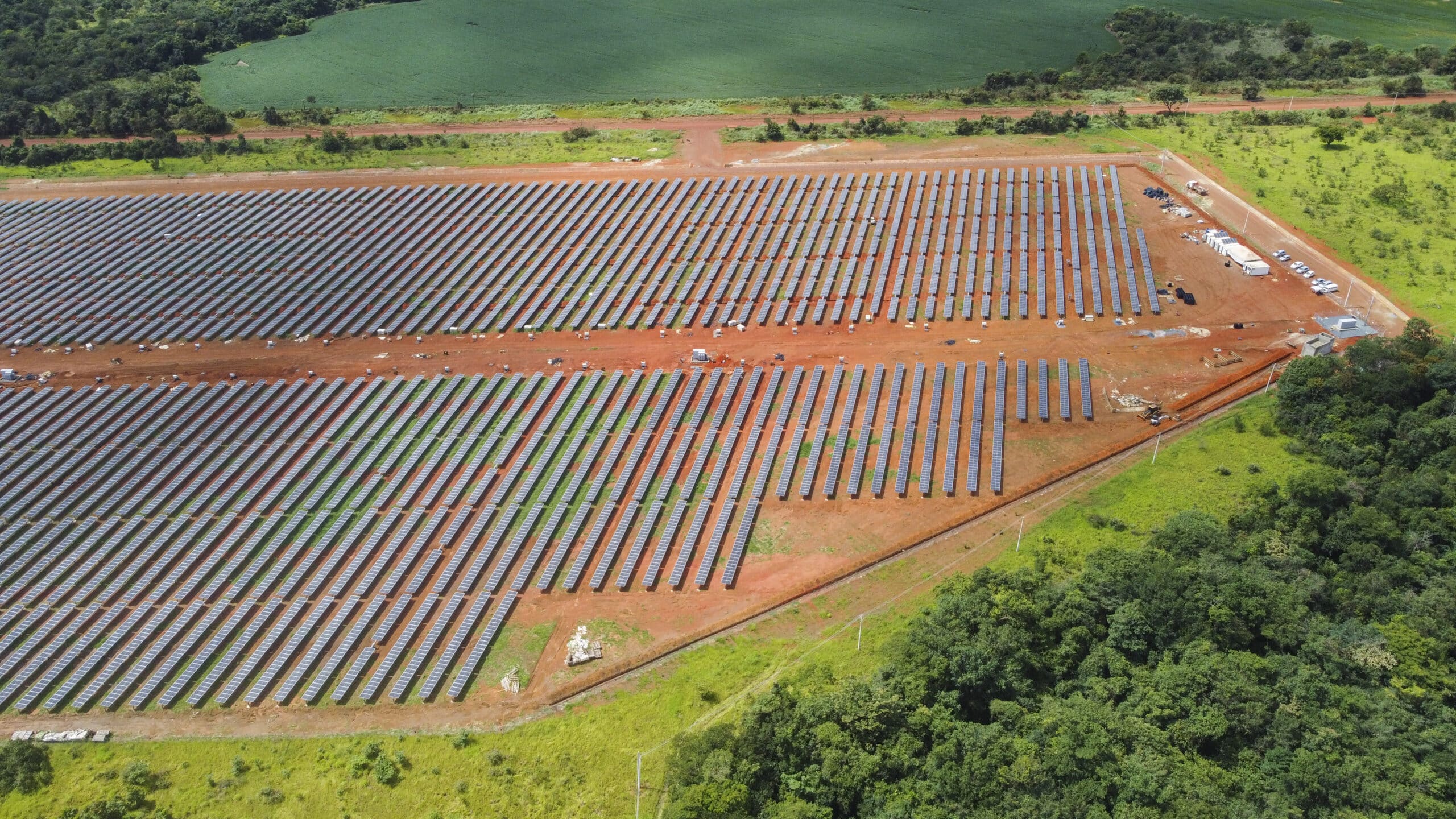
Completing 23 Photovoltaic Power Plants in Brazil, New Vivo Plant in the Federal District Has Already Contributed to the Creation of 150 Jobs
The Vivo operator, in partnership with Athon Energia, has established a new distributed photovoltaic power plant in the Federal District. With this new inauguration, the company has reached 23 operational units across the country.
Read Also:
- Vivo Inaugurates Its First Distributed Power Plant in Nova Cruz, Rio Grande do Norte
- Jaguatirica II Power Plant in Roraima Has Commercial Operations Authorized by Aneel. The Thermoelectric Plant Has an Initial Potential of 140.834 MW
- Job Openings for Butchers, Construction Assistants, Carpenters, Mechanics, Drivers, and More Are Available in the Federal District
According to the company, the plant “Brasília 200” was installed in the rural area of Paranoá and will transfer energy to the distribution network of Companhia Energética de Brasília (CEB).
The system of the new plant in the Federal District produces 11,766 MWh/year and has an installed capacity of 6.93 MWp. As published in the original news by Canal Solar, by writer Mateus Badra, during the construction phase, 150 jobs were created, both direct and indirect. In the operational stage, the plant will have 20 job positions.
-
Expansion of Federal Institutes: 38 new campuses and R$ 200 million for public education; see the cities included.

-
A study reveals the expansion of renewable energy procurement in Brazil and shows how companies are taking advantage of opportunities to reduce expenses, ensure energy efficiency, and strengthen strategic environmental commitments.

-
Roraima bets on the sun to escape high tariffs: Amid the energy crisis and price hikes, solar energy is growing in Roraima and transforming consumption in the North region.
-
Lula’s government changes rule in important benefit and thousands of Brazilians will no longer receive it; see what has changed.


The production of this plant adds to that of “Brasília 100,” inaugurated in January of this year, also in the Paranoá region. Together, they serve all of Vivo’s more than 530 low-voltage consumer units in the Federal District, such as stores, offices, antennas, and transmission devices.
Of all 85 units of the Vivo distributed generation project expected across the country, 9 are in the Central-West region, with 2 of them for the Federal District.
Supplying over 30,000 units of Vivo throughout Brazil and producing around 711,000 MWh/year of energy, the total project will account for 89% of the low-voltage consumption.
Caio Guimarães, Director of Assets at Vivo, states that distributed generation (DG) further strengthens Vivo’s sustainability business model based on Environmental, Social, and Governance factors, in addition to reaffirming the company’s long-term value creation capacity. “It also reinforces our commitment to maintaining our electricity consumption 100% renewable, drives efficiency, boosts the local economy, and contributes to cost reduction,” he said.
Total Sustainability Project of Vivo
Vivo’s energy expenses have been entirely renewable since the end of 2018, when the company jumped from a consumption of only 26% from clean sources – obtained through both distributed generation systems and the market – to 100%, through the purchase of energy certificates, known as International Renewable Energy Certificates, or simply I-RECs.
The acquisition enabled the operator to advance its target of fully sustainable consumption by 12 years, initially expected to occur only in 2030. In addition, the purchase of the certificates also helped reduce its carbon dioxide emissions by 70% compared to the year 2015, and also allowed for progress toward neutralizing overall emissions of pollutant gases, which contribute to the greenhouse effect. Since 2019, Vivo has been carbon neutral.
Government of Rio Grande do Norte Presents Proposal for EIA-RIMA Application to Wind Power Plants Above 150 MW
In a new proposal, the Government of Rio Grande do Norte suggests that new wind energy projects with a capacity above 150 megawatts present environmental impact studies and reports (EIA-RIMA). The proposal contradicts a recommendation from the Attorney General’s Office of the State (PGE-RN), which proposed studies for new projects above 10 megawatts (MW). To learn more, click here and read this article from CPG in full.







Seja o primeiro a reagir!