





 Portuguese
  English
  Spanish
  3 min of reading


Atlanta Company Develops Hybrid Engine That Can Reach Mach-4 Switching From Turbojet Mode To Hypersonic While Flying.
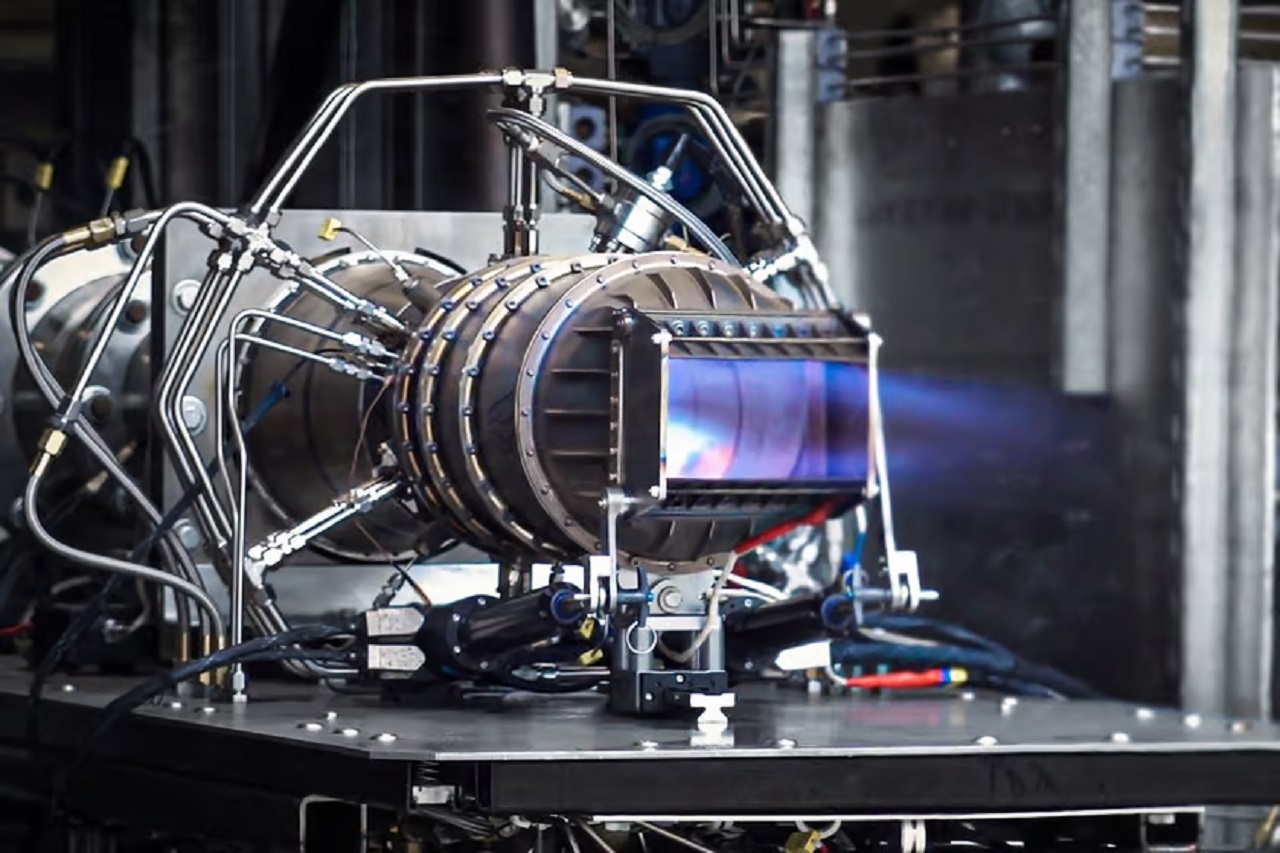
The Hermeus, a startup based in Atlanta, has developed a hybrid engine capable of switching from low-speed turbojet mode to hypersonic ramjet mode during flight. The company plans to develop the fastest aircraft in the world using its hypersonic engine, named Chimera.
Hybrid Engine Can Reach Mach-4

At Mach 3.3, equivalent to 2,532 miles per hour (4,074.86 km/h), the Lockheed SR-31 Blackbird is currently the fastest jet in the world. To surpass this model, the Atlanta company is developing an aircraft dubbed Quarterhorse powered by a hypersonic engine that promises to fly at Mach 4, 3,006.9 mph.
Hermeus conducted a simulated hypersonic flight test last November at the Notre Dame Turbomachinery Laboratory in Indiana.
-
Robot that climbs açaí trees in Pará cuts bunches with a remote control, reduces accidents for harvesters, and promises to harvest 10 times more, reaching 1,000 kg per day, costing R$ 21,000 with subsidized PRONAF.

-
Scientists have discovered for the first time a gigantic cave hidden beneath a volcano on Venus, nearly a kilometer wide and 375 meters high, using radar images that had been forgotten for over 30 years.

-
They were brilliant! Scientists discover that our ancestors in China were already making super advanced tools 160,000 years ago, changing everything we knew.

-
Scientists unveil 3 million years of climate secrets hidden in the ice of Antarctica.


The hybrid engine successfully transitioned from turbojet mode to ramjet mode during this test. The press release issued by the company states that it demonstrated the transition from turbojet to ramjet in its engine, Chimera. This is one of the most essential technological feats to make hypersonic flight operational a reality.
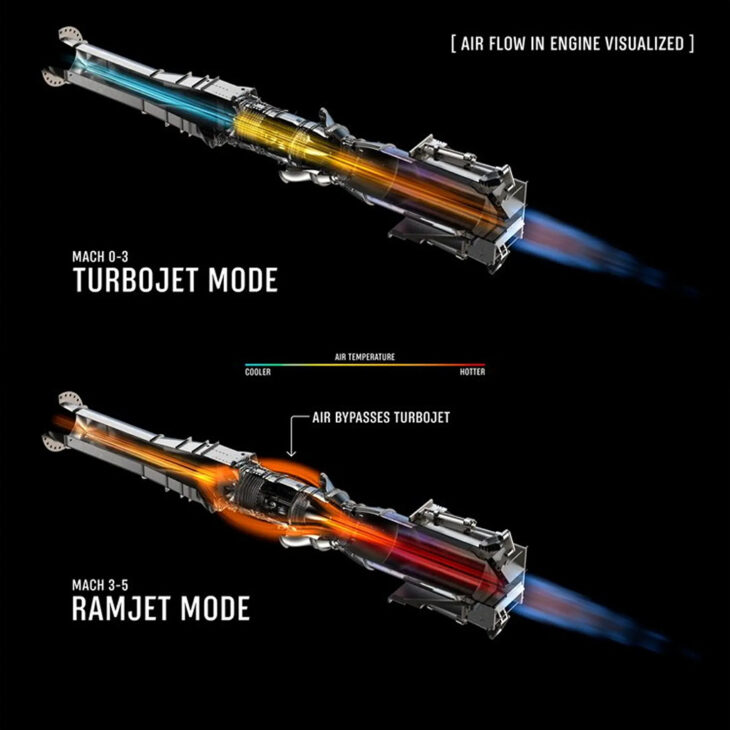
The ability to switch between the two modes allows Hermeus’s first aircraft, Quarterhorse, to take off from a regular runway and accelerate to high Mach speeds. It is important to mention that ramjet engines are much more fuel-efficient and more powerful than turbojet engines. For instance, a turbojet engine can only reach Mach 3, whereas a ramjet engine can make an aircraft fly at Mach 6.
This achievement is an important technical milestone for Hermeus. But, more than that, it is proof demonstrating how our small team can quickly design, build, and test hardware on budgets significantly smaller than industry competitors,” said AJ Piplica, CEO of Hermeus.
Main Differences Between a Hypersonic Ramjet and a Turbojet
While turbojets require a compressor to suck in air and compress it for combustion, a ramjet engine does not need a compressor, as its high-speed movement is sufficient to force and compress the air. However, these engines operate at speeds above 300 mph (482.8 km/h) and deliver great performance starting at Mach 3.
Thus, although they are ideal for powering missiles, they cannot be used in manned aircraft. On the other hand, a turbojet engine will operate efficiently at low speeds and even at zero speed. These engines are the right choice for use in commercial planes and various military aircraft.
The Chimera is a hybrid engine known as a turbine-based combined cycle engine (TBCC). When the Quarterhorse aircraft is in flight, the TBCC engine acts as a turbojet, allowing it to take off, accelerate, and reach high speeds. As the temperature and airspeed heading towards the Quarterhorse increase, the Chimera hypersonic engine begins the transition from turbojet to ramjet.
Hybrid Engine Features A Pre-Cooler
The transition process begins around Mach 2 and ends at Mach 3, when the vehicle’s engine begins to intake air at supersonic speeds.
This air is fast enough to ignite combustion without a compressor. It is now that the turbojet becomes inactive and the ramjet comes into action, increasing the aircraft’s speed and allowing it to fly at its maximum velocity.
According to the company’s official statement, the hybrid engine features a pre-cooler that reduces the temperature of the air entering the turbojet. This allows the vehicle to gain a bit more performance from the turbojet before transitioning to the ramjet.
Around Mach 3, the engine begins to redirect the air entering around the turbojet, and the ramjet takes over completely.








Seja o primeiro a reagir!