





 Portuguese
  English
  Spanish
  7 min of reading
  2 comments


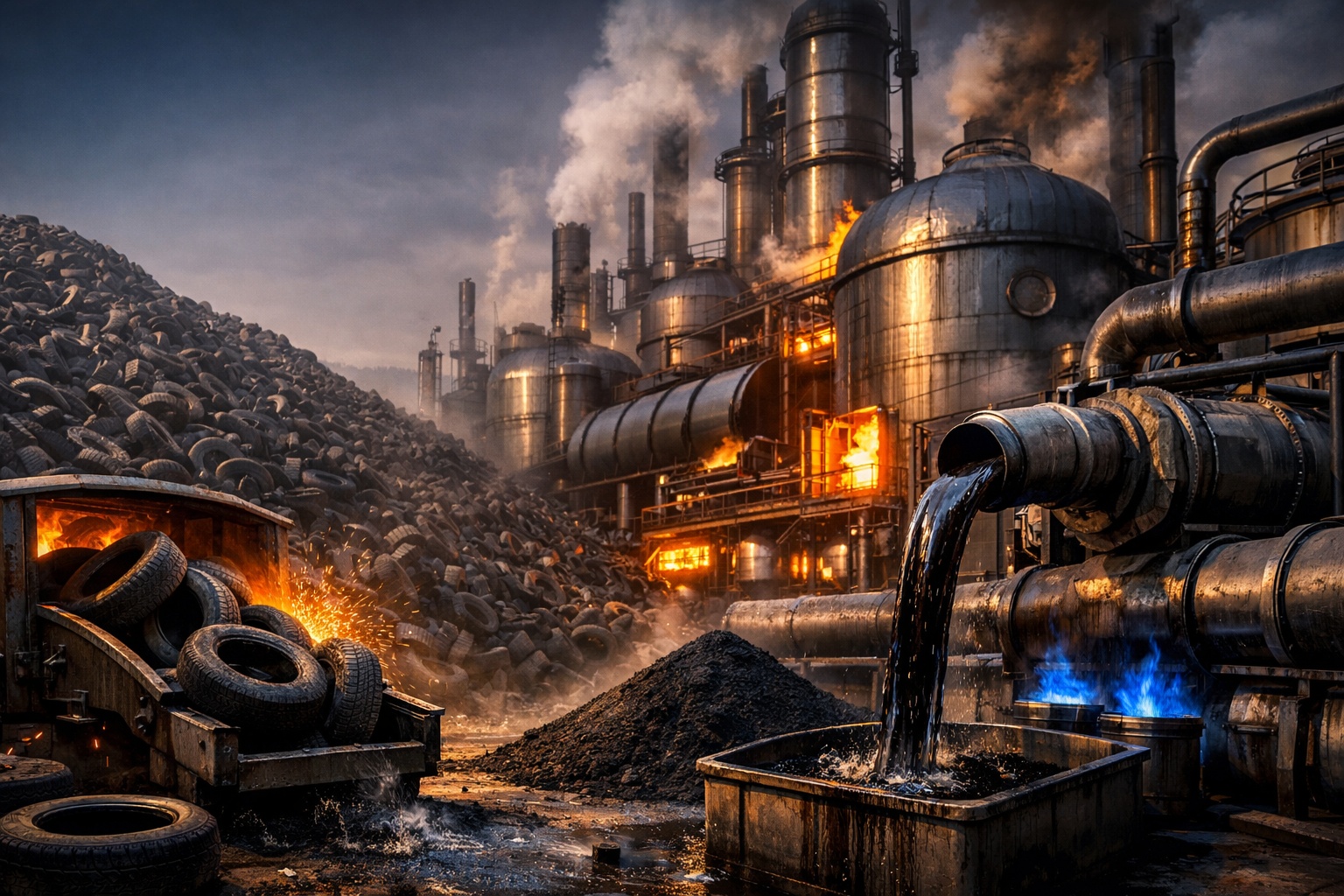


Tire Recycling in Brazil: Pyrolysis Technology Transforms Waste Tires into Oil, Black Carbon, and Energy and Can Reduce One of the Most Durable Waste Products on the Planet
The tire recycling in Brazil still faces a huge challenge: about 90 million discarded tires become waste every year, equivalent to approximately 450 thousand tons of waste tires, according to data from Anip (National Association of the Tire Industry). Part of this problem is starting to gain industrial solutions. In Pilar, in the Metropolitan Region of Maceió, the company Alagoas Ambiental operates a processing plant that transforms discarded tires into industrial fuel and recyclable raw material, preventing these wastes from ending up in landfills, vacant lots, or riverbanks.
The advancement of technologies such as industrial shredding and tire pyrolysis shows that wastes considered practically permanent can return to the production chain as energy, recycled steel, and industrial materials, reducing the environmental impact caused by improper disposal.
Environmental Impacts of Discarded Tires and the Risks of Irregular Disposal
The automotive tire is a product designed to withstand years of wear in contact with asphalt, temperature variations, and heavy loads. When discarded, it maintains this durability, turning tire waste into a persistent environmental problem.
-
While the world looks at oil, the war with Iran is already disrupting helium supply from Qatar, affecting car and iPhone chips, threatening AI expansion, and putting pressure on aluminum packaging at the highest value in four years.

-
Global warming will expose a treasure hidden under the ice of Antarctica and may spark an international dispute over gold and valuable minerals.

-
A street vendor from Praia Grande built a robot made of scrap from scooters and washing machines that pulls his popcorn cart on the beach, emits sounds, and interacts with customers, becoming an attraction on the coast of São Paulo.
-
The specifications of the Xiaomi 18 Pro Max have been leaked, and the highlight is a dual 200 MP camera with a new 22-nanometer technology that promises to consume less energy and capture details in shadows and bright areas using LOFIC HDR.


Discarded tires frequently end up in vacant lots, riverbanks, illegal dumps, or makeshift storage in tire shops and workshops. In these locations, they can remain for decades without any treatment.


During rainy periods, these tires accumulate water and become ideal breeding grounds for the Aedes aegypti mosquito, which transmits diseases such as dengue, zika, and chikungunya. In dry periods, large piles of tires pose a high risk of large-scale fires.
Another issue is environmental contamination. Waste tires slowly release chemical compounds present in synthetic rubber and industrial additives used in manufacturing. Substances such as aromatic hydrocarbons and heavy metals can infiltrate the soil and reach the groundwater. In Brazil, the volume of this waste grows alongside the expansion of the vehicle fleet. Manufacturers place more than 50 million new tires on the Brazilian market each year.
To reduce the environmental impact, legislation requires companies to carry out reverse logistics for tires, removing 1.2 waste tires for every new tire sold.
Tire Recycling Plant in Alagoas Transforms Waste into Industrial Fuel
In the city of Pilar, in the Metropolitan Region of Maceió, an industrial initiative seeks to change this logic. The company Alagoas Ambiental operates a Waste Treatment Center installed in an area of approximately 104 hectares along BR-316.
At the end of 2023, the company inaugurated a waste tire processing plant with the capacity to process up to two tons of tires per hour. This volume corresponds to about 200 passenger tires per hour, allowing for the shredding of approximately 3,000 tires per day, totaling about 20 tons daily.

In monthly operation, the plant can process approximately 400 tons of discarded tires. The industrial process begins with the reception and storage of tires in covered areas to avoid water accumulation and environmental contamination. Then, the tires go through shredding equipment that reduces the rubber into smaller pieces.
After this step, the fragments proceed to a classifier sieve, which transforms the material into rubber chips about 50 millimeters in diameter.
During this process, the steel wire present in the structure of the tires is mechanically separated and directed for metallurgical recycling. The remainder—composed mainly of shredded rubber—is sent to cement plants as alternative fuel with high calorific power used in clinker production ovens.

This model allows for the utilization of nearly all components of the tire, but still does not represent the most advanced stage of recycling.
Tire Pyrolysis: Technology That Transforms Rubber Into Oil, Gas, and Carbon Black
The technology that maximizes the value extracted from discarded tires is known as tire pyrolysis. In conventional burning, rubber combusts in the presence of oxygen, releasing pollutants such as carbon monoxide, sulfur dioxide, and polycyclic aromatic hydrocarbons, potentially toxic compounds.
Pyrolysis works differently. In this process, tires are heated in closed reactors without the presence of oxygen, usually at temperatures between 400°C and 600°C. The heat causes the thermochemical decomposition of the carbon chains in the rubber without direct combustion.
This process simultaneously generates three main products:
- Pyrrolytic oil, an industrial fuel with a calorific value similar to BPF fuel oil.
- Carbon black, a material widely used as a reinforcing agent in the manufacture of tires, paints, plastics, and industrial compounds.
- Synthesis gas, which can be reused to fuel the reactor itself and reduce the system’s energy consumption.
According to the Spanish company Greenval Technologies, which developed pyrolysis systems in partnership with the Spanish National Research Council, this process can generate up to six times less CO₂ emissions compared to traditional combustion methods.
Technical literature indicates that tire pyrolysis generates, on average:
- 35% to 50% fuel oil
- about 41% carbon black
- approximately 15% combustible gas
In practice, this means that 10 tons of discarded tires can yield up to 5 tons of industrial oil, about 4 tons of carbon black, and enough gas to keep the process active.
The material recovery rate can reach 98% of the total weight of the tire, drastically reducing the volume of final waste.
Pioneiro Ecometais: Brazilian Company Operating Tire Pyrolysis Since 2016
In Brazil, one of the companies already operating pyrolysis technology on an industrial scale is Pioneiro Ecometais, part of the Pioneiro Group. The company began its activities in 2007 recycling automotive lead-acid batteries, a process that requires high fuel consumption in metal melting furnaces.
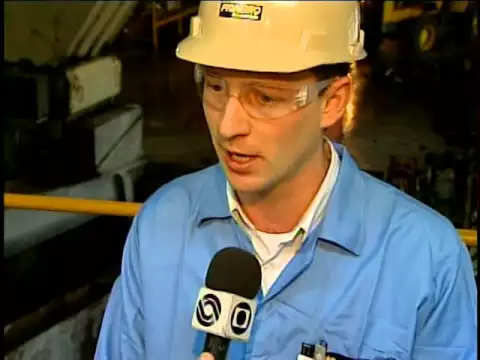
To reduce costs and dependence on fossil fuels, the company decided to invest in tire pyrolysis in 2013, implementing the technology as an alternative source of industrial energy.
The numbers show the scale of the operation. In the first half of 2024, the company processed 2,537 tons of discarded tires, generating:
- 990 tons of fuel oil
- 1,184 tons of pyrolytic charcoal
This charcoal has quality sufficient for export and is sent to Pioneiro Ecometais Paraguay, where it is used as an energy input.
By 2018, the company had already recycled about 6,000 tons of tires, producing over 2 million liters of pyrolytic oil.
Bio5 Project Aims to Build Brazil’s Largest Tire Pyrolysis Plant
If initiatives like Alagoas Ambiental and Pioneiro demonstrate that tire recycling technically works in the country, a new project aims to scale up this reality. The company Bio5 announced the construction of Brazil’s first large-scale industrial pyrolysis plant, located in Cuiabá, Mato Grosso.
The planned investment is R$ 100 million, funded by the private equity fund DMI Group with technology imported from China and the United States. The projected capacity of the unit is 20,000 tons of waste tires per year, equivalent to approximately 4 million discarded tires.
In addition to producing oil and carbon black, the plant will have a key advantage: pyrrolytic oil will be used for electricity generation.
According to projections from the company, the plant could produce enough electricity to supply a city of about 28,000 inhabitants. The expansion plan includes additional investments of R$ 500 million in new plants to recycle up to 20% of discarded tires in Brazil.
Tires Take Up to 700 Years to Decompose and Release Heavy Metals into the Environment
A common automotive tire can take between 600 and 700 years to decompose in nature. During that time, various chemical compounds present in the rubber can be slowly released into the environment. Among them are benzene, toluene, naphthalene, cadmium, chromium, nickel, and zinc.
When tires are exposed to rain, these compounds can infiltrate the soil and reach underground water reservoirs. When burned, they release thick smoke containing toxic and potentially carcinogenic particles.

Pyrolysis technology does not eliminate these chemical compounds, but transforms them into industrial products before they are released uncontrollably into the environment. The oil is recovered as fuel, the carbon black returns as raw material for new rubbers, and the structural steel is recycled as metal scrap.
Brazil Has Technology and Raw Materials, but Tire Recycling Still Needs to Scale Up
Brazil already has available technology, initial industrial capacity, and a large supply of raw material: millions of discarded tires every year. The challenge now is to scale up these solutions.

Between the 400 tons monthly processed in Pilar and the 20,000 tons annually projected for Cuiabá, there is a huge space for growth in tire recycling in the country.
This gap represents just the point where waste management can cease to be merely an environmental problem and transform into a new industrial chain of energy, materials, and recycling. And it is in this space that the future of one of the most durable waste products of modern society is still being defined.








O Brasil tinha tecnologia para reciclar pneus desde 1989 na Usina de Xisto em São Mateus no Paraná, mas o Governo Bolsonaro vendeu a Usina de Xisto e acabou com a reciclagem infelizmente.
Vendeu a preço de **** .
Lá se produzia, enxofre, óleo diesel, gás, etc.
O Brasil tinha a tecnologia para reciclar, porém não fazia ou não era eficiente. Vender mais uma planta que dava prejuízos aos cofres públicos. Ter a tecnologia e não fazer com que ela seja efetiva não adianta. E ainda assim se for viável financeiramente os atuais detentores dessa tecnologia irão utilizar.
Toda e qualquer tecnologia ou sistema de reciclagem só é aplicado se der retorno para alguém. Caso contrário fica somente no estudo e projeto.