





 Portuguese
  English
  Spanish
  5 min of reading
  0 comments


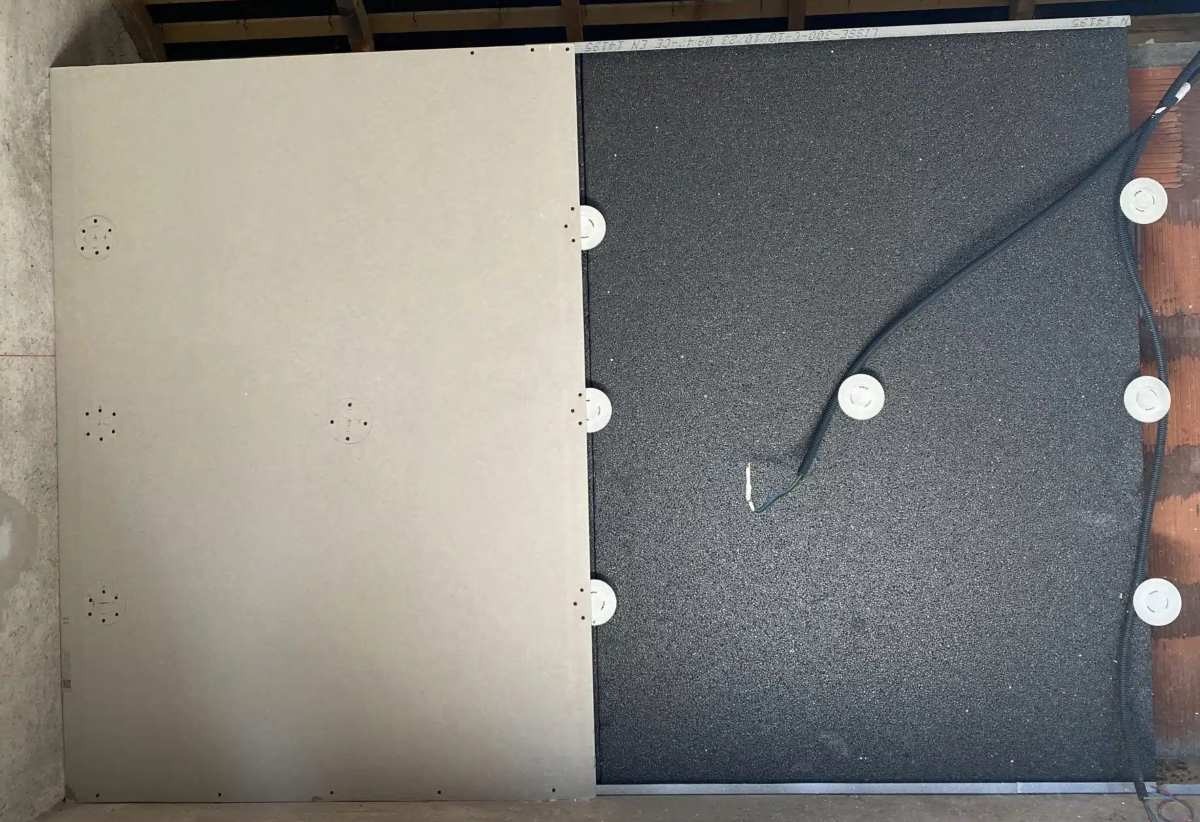
French Doublifix System Eliminates Metal Structures, Speeds Up Internal Insulation Installation, Reduces Costs, and Ensures Certified Thermal and Environmental Performance.
The year 2024 marked a turning point in the construction industry. The need to construct buildings with lower environmental impact and controlled costs pushed companies to seek new solutions. Energy efficiency and decarbonization have become mandatory requirements rather than optional goals.
Among the biggest challenges in the sector was the internal insulation of walls, which is usually complex, expensive, and time-consuming when done with traditional methods. It was in this context that Doublifix emerged, a system from the French company HIRSCH Isolation, designed to meet exactly these demands.
The immediate difference of Doublifix is clear: it eliminates the need for metal structures, adhesives, or special tools. The system is compatible with standard drywall, certified according to strict standards, and focused directly on reducing time, costs, and environmental impact.
-
Motorola launched the Signature with a gold seal from DxOMark, tying with the iPhone 17 Pro in camera performance, Snapdragon 8 Gen 5 that surpassed 3 million in benchmarks, and a zoom that impresses even at night.

-
Satellites reveal beneath the Sahara a giant river buried for thousands of kilometers: study shows that the largest hot desert on the planet was once traversed by a river system comparable to the largest on Earth.

-
Scientists have captured something never seen in space: newly born stars are creating gigantic rings of light a thousand times larger than the distance between the Earth and the Sun, and this changes everything we knew about stellar birth.

-
Geologists find traces of a continent that disappeared 155 million years ago after separating from Australia and reveal that it did not sink, but broke into fragments scattered across Southeast Asia.

How the System Works That Promises to Revolutionize Internal Insulation
The heart of Doublifix is an intelligent fastener. It consists of a set of pins, connectors, and screws capable of directly joining expanded polystyrene (EPS) insulation to the wall, and then the drywall to the connector.
This simple yet effective solution removes the use of metal profiles or glues from the equation. The installation becomes quicker, cleaner, and without unnecessary waits. The process reduces not only execution time but also waste and the weight of transported materials.
Each kit covers 22 m² of surface area, adapting to insulation thicknesses between 100 and 160 mm. The system was developed in collaboration with Fischer, a global reference in fastening solutions, and is protected by an innovation patent.
The lightweight nature of the material makes it easier for installers, reduces accident risks, and keeps the project lighter in terms of transportation and logistics.
Energy Efficiency and Respect for the Planet
The panels compatible with Doublifix are produced by HIRSCH Isolation itself. They have ACERMI certification for thermal performance and can be found in white or graphite versions, the latter with greater insulating capacity.
In practice, they achieve up to 5.30 m² K/W of thermal resistance in just 160 mm of thickness, aligning with the requirements of French standard RE2020 and European guidelines.
The EPS, in addition to being recyclable, does not emit volatile organic compounds (A+ classification), does not deform over time, and is easy to cut and handle. The installation does not require special protective equipment, reinforcing the simplicity and safety of the solution.
Another important point: since the system is removable, the insulation can be taken out and recycled at the end of its life cycle. This feature directly inserts it into a circular economy approach.
Compatibility with Already Established Standards
One of the biggest attractions of Doublifix is its versatility. It can be used with conventional drywall panels of 12.5 mm, whether standard or water-resistant, as long as they comply with standard NF EN 520. This eliminates the dependency on exclusive manufacturer components, a rare point in innovative solutions.
The finish has also received attention. L-shaped profiles, made of galvanized steel, ensure a clean and aligned result, adhering to standards DTU 25.41.
Certified Technical Performance
The solution has undergone various technical tests. The results confirm its thermal, acoustic, and safety performance.
In terms of acoustic insulation, the system adds up to +12 dB in brick walls and +8 dB in concrete, according to tests conducted by CSTB.
The behavior in fire situations has also been validated, with a 15-minute resistance as protection against fire.
From an environmental perspective, the reduction in the use of steel, components, and emissions reinforces its sustainable credentials. An FDES is being validated to officially prove this reduced impact.
Additionally, Doublifix has received CSTB ATEx certification (No. 3408_V1), validating its application in residential, office, and private installations.
An Adaptable System for Different Environments
The applicability of Doublifix is broad. It adapts to concrete, masonry, and pouring block walls.
In humid areas, such as bathrooms and kitchens, it can be combined with H1 water-resistant panels, following the technical recommendations of standard CSTB 3567_V2.
Its removable nature facilitates the recovery of materials at the end of the building’s life cycle, minimizing waste generation.
Field Tested with Practical Results
During practical tests, companies like Eoz Construction highlighted the speed and simplicity of the process. The absence of metal structure increases the available space for electrical and communication installations, reducing conflicts between different teams on site.
A concrete example came from a residence in Gignat, built with polystyrene blocks. The use of Doublifix was integrated into the project and improved energy efficiency without raising the final cost.
The Potential for Sustainable Construction
Doublifix presents itself not only as a technical solution but also as a tool for transforming the industry.
Its low environmental impact, the possibility of disassembly and recycling, and the ease of integration into different projects point to a realistic alternative on a large scale.
The elimination of metal structures and the reduction of auxiliary materials help to cut the carbon footprint from start to finish of the project. Its compatibility with standard materials further strengthens the use of local resources, reducing transportation and encouraging circular economy.
Among the proposed applications, the inclusion of Doublifix in subsidized energy renovation programs, its use in public buildings such as schools, promotion in rural areas, and the encouragement of quick training for installers stand out.
In an industry that urgently seeks faster, cleaner, and more accessible solutions, Doublifix shows that it is possible to build better without increasing costs. It combines technical innovation with environmental responsibility and proposes a new way of building: simpler, more efficient, and more connected to current challenges.








-

2 pessoas reagiram a isso.