





 Portuguese
  English
  Spanish
  4 min of reading
  0 comments


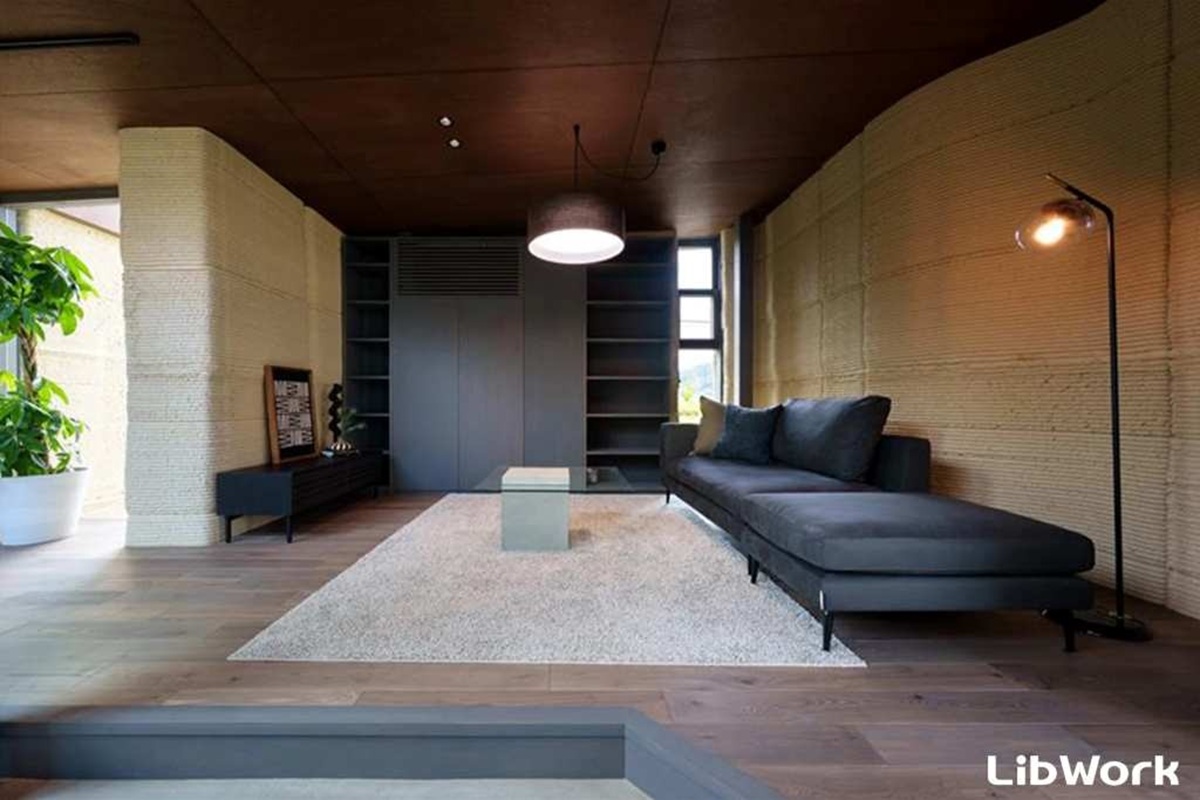
Japanese House of 100 m² Made with Earth, Lime and Natural Fibers Bets on 3D Printing and Autonomous Technology to Reduce Environmental Impact.
A house unlike anything seen in urban centers is grabbing attention in Japan. It has no cement, does not generate debris when dismantled, and can even be controlled by a smartphone.
The Lib Earth House Model B, built in Yamaga, Kumamoto Prefecture, combines high technology with natural and reusable materials.
With 100 square meters, the project represents an ambitious attempt to transform the way the world builds homes.
-
The Moon holds billions of years of frozen water in dark craters that could provide fuel, oxygen, and drinking water for astronauts, and a new study finally explains how that ice got there.

-
Pirita, the “fool’s gold,” deceived prospectors for centuries and today helps science uncover the origin of Earth’s magma.

-
The largest volcanic event in Earth’s history may have changed everything beneath the Pacific: a study shows that eruptions 110 to 120 million years ago reshaped the oceanic plate of the Ontong Java Plateau, the largest oceanic plateau on the planet.

-
The world’s largest acid geyser awakens in Yellowstone and reaches record heights after years of dormancy.
Printing with Earth in Place of Concrete
The most important aspect is that the house’s structure does not use concrete. The construction was made with a mixture of earth, lime, and natural fibers. This eliminates the need for cement, one of the main culprits for CO₂ emissions in the construction industry.
The assembly process begins with a 3D printer, which deposits layers of the compound until walls are formed. Then, professionals install doors, glass, roofs, and other finishes.
This technique allows for quick execution and generates little waste.
Moreover, the house acquires a peculiar aesthetic, with visible marks of the printing on the walls, giving it a modern yet artisanal look.
Technology for Autonomy and Comfort
In addition to eco-friendly materials, the Lib Earth House impresses with its embedded technology. Solar panels ensure the necessary energy, which is stored in a Tesla Powerwall system. This way, the house operates autonomously and efficiently.
The internal operation is controlled by a smartphone. The resident can activate lights, air conditioning, and even the bathroom through an app.
Sensors installed inside monitor humidity, insulation, and resistance, allowing the data to be used to improve future versions of the house.
Return to Soil at the End of Useful Life
Another point that stands out is the house’s ability to return to the environment safely. This occurs because the mixture of earth, lime, and fibers is biodegradable.
Therefore, when the house reaches the end of its useful life, its components can be reintegrated into the soil without causing impact.
This feature aligns the project with the principles of the circular economy. The idea is for the cycle to close with the least amount of waste possible, responsibly utilizing what nature already offers.
Japanese Project with Global Ambition
The model was developed by the Japanese company Lib Work, with support from the engineering firm Arup and the Italian printer manufacturer WASP. Together, they created the ideal material to support the house’s weight and withstand local climatic conditions.
Lib Work aims to build 10,000 units by 2040. The plan is to automate the entire production chain, from printing to finishing.
With this, the company hopes to lower costs, reduce construction time, and expand the project to other countries.
International Trend in 3D Housing
Although this model uses earth as a base, the construction of houses with 3D printing has been gaining traction in various parts of the world. In Italy, for example, WASP created Casa TECLA using local soil.
In Mexico and Colombia, organizations such as ICON and New Story are developing social projects using 3D-printed concrete.
The Lib Earth House, however, takes a step further by excluding concrete from the equation. This amplifies the environmental benefits and reinforces the concept of regenerative building, where the project’s impact is almost null, and materials return to nature.
Alignment with Climate Goals
This type of construction aligns with global guidelines aimed at reducing emissions. The Japan Green Growth Strategy and the European Green Deal are examples of public policies that encourage the use of eco-friendly alternatives in the sector.
Today, the construction industry accounts for about 37% of global CO₂ emissions. Therefore, adopting practices that involve local and biodegradable materials can represent a significant advancement towards a future with lower environmental impact.
Potential for Social and Environmental Impact
The project presents several benefits. The elimination of cement drastically reduces emissions. The use of local earth stimulates the regional economy.
The house can also decompose naturally, avoiding debris. With total automation, there is an expectation of making this model accessible, including in popular housing programs.
Another relevant point is the ability to respond to natural disasters. As the houses are lightweight and quick to build, they can be useful in climate emergency situations, especially in rural or isolated regions.
Therefore, the Lib Earth House is not just a technological innovation. It shows that it is possible to rethink architecture with a focus on sustainability, efficiency, and integration with the environment.
Earth, one of humanity’s oldest building materials, is once again taking center stage in the future of housing.







-

Uma pessoa reagiu a isso.