





 Portuguese
  English
  Spanish
  3 min of reading


Norwegian World Wide Wind Unveils New Offshore Wind Turbine Tower That Generates More Power at a Lower Cost
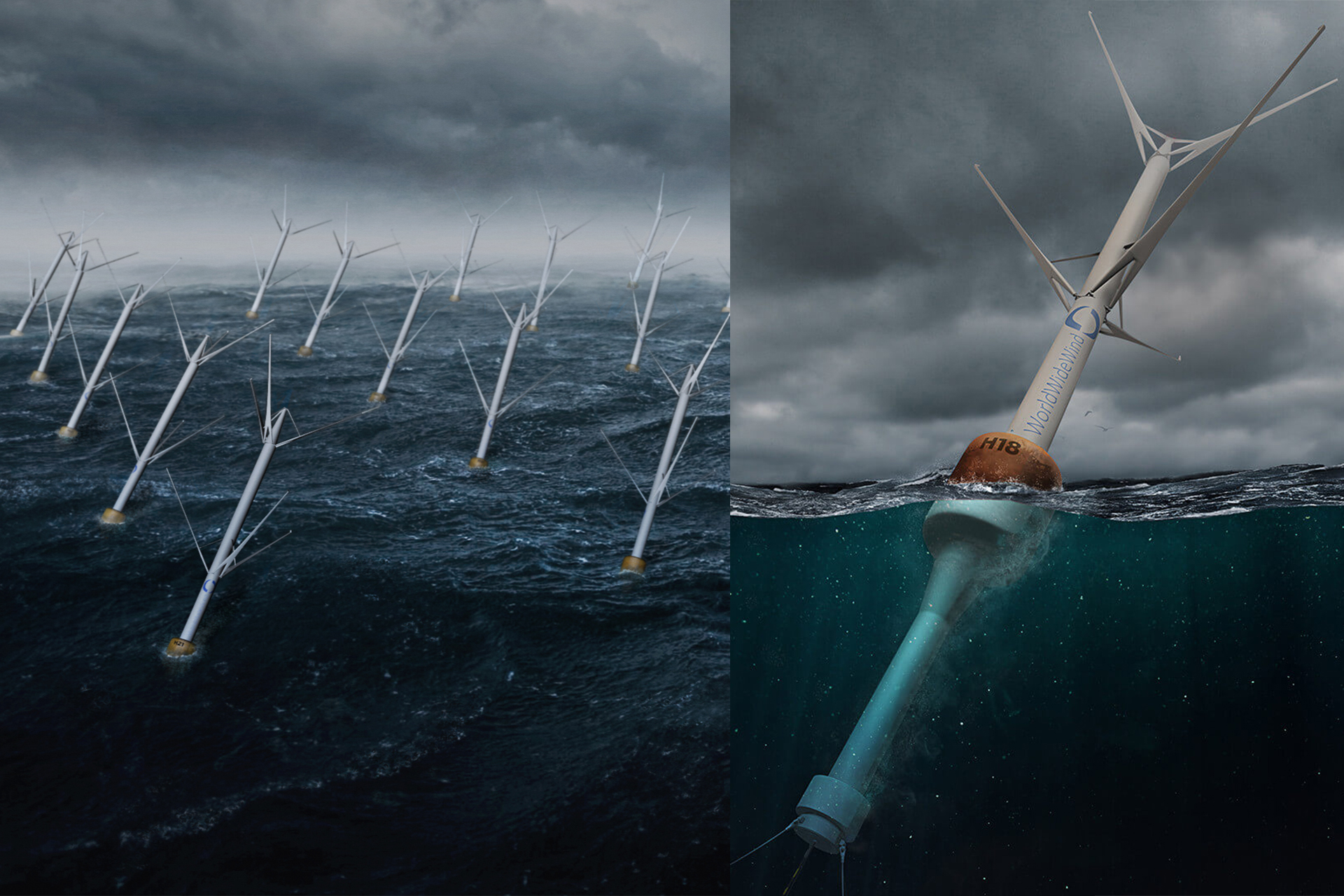
World Wide Wind, a company based in Norway, has just introduced a new project for a vertical axis floating wind turbine (VAWT). The project has the potential to completely transform the way we harvest and utilize offshore wind energy. The innovative concept of the WWW tower promises to provide double the power of the largest traditional turbines currently available on the market.
Wind is an inexhaustible resource, and harnessing this resource is a crucial component of many ideas to replace energy produced by fossil fuels with sustainable and less environmentally harmful energy. Counter-rotating turbines can provide a means to boost wind energy generation on a massive and less costly scale.
Counter-Rotating Floating Wind Turbine Delivers Double the Energy of the Largest Turbines Produced Today
Utilizing two sets of blades that tilt and rotate in opposite directions, the company claims that its enormous wind turbine has the potential to reach heights of up to 400 meters. With unparalleled power output and density, this will result in a significant decrease in the cost of offshore wind energy.
-
Researchers discover a possible hydrogen deposit of up to 46 million tons beneath an ancient coal basin, and the volume could exceed half of the entire global production.

-
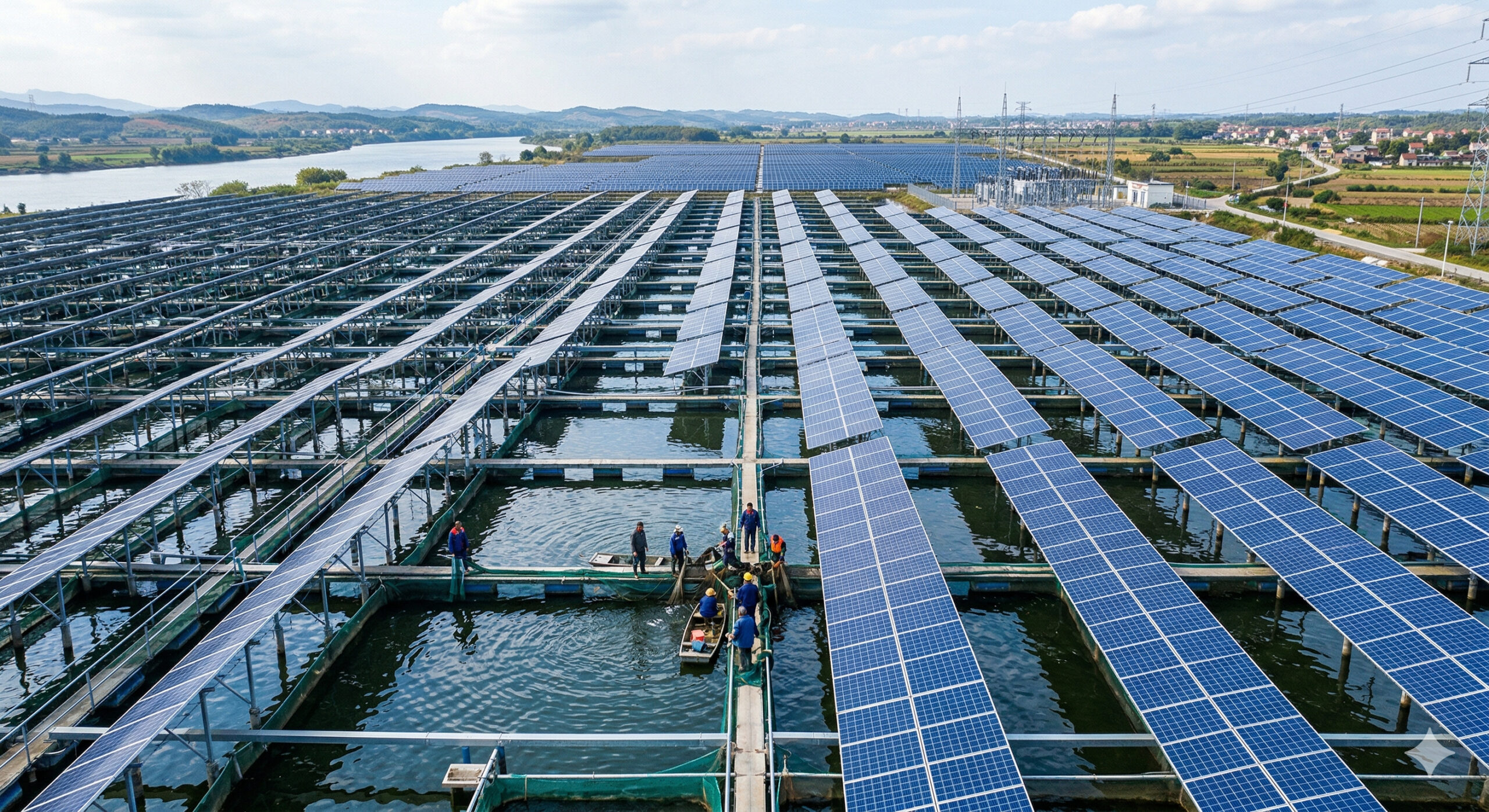
China bets on the Fishery-PV model and transforms fish farms into giant solar plants, covering ponds with panels that generate energy while utilizing the same space for large-scale aquaculture production.
-
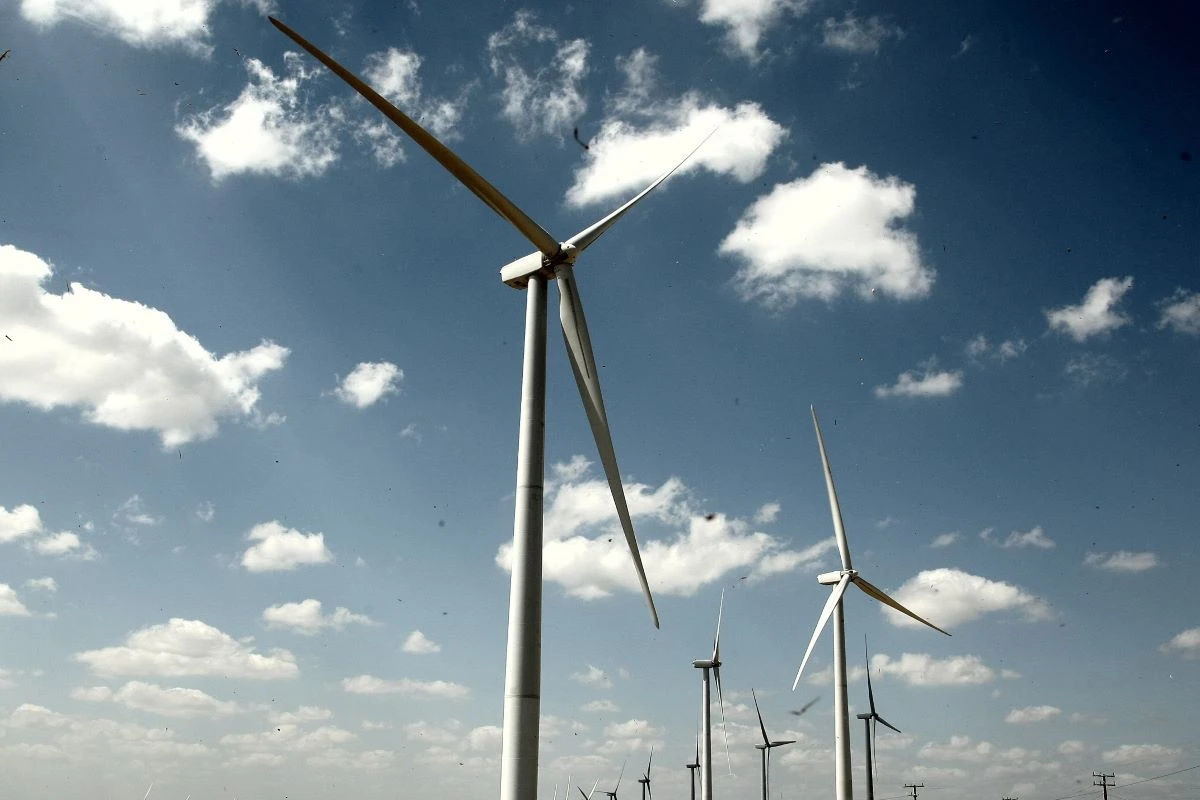
Urgent energy transition: Greenpeace advocates for massive investments and points to Brazil as a global leader in wind energy production in the coming years.
-
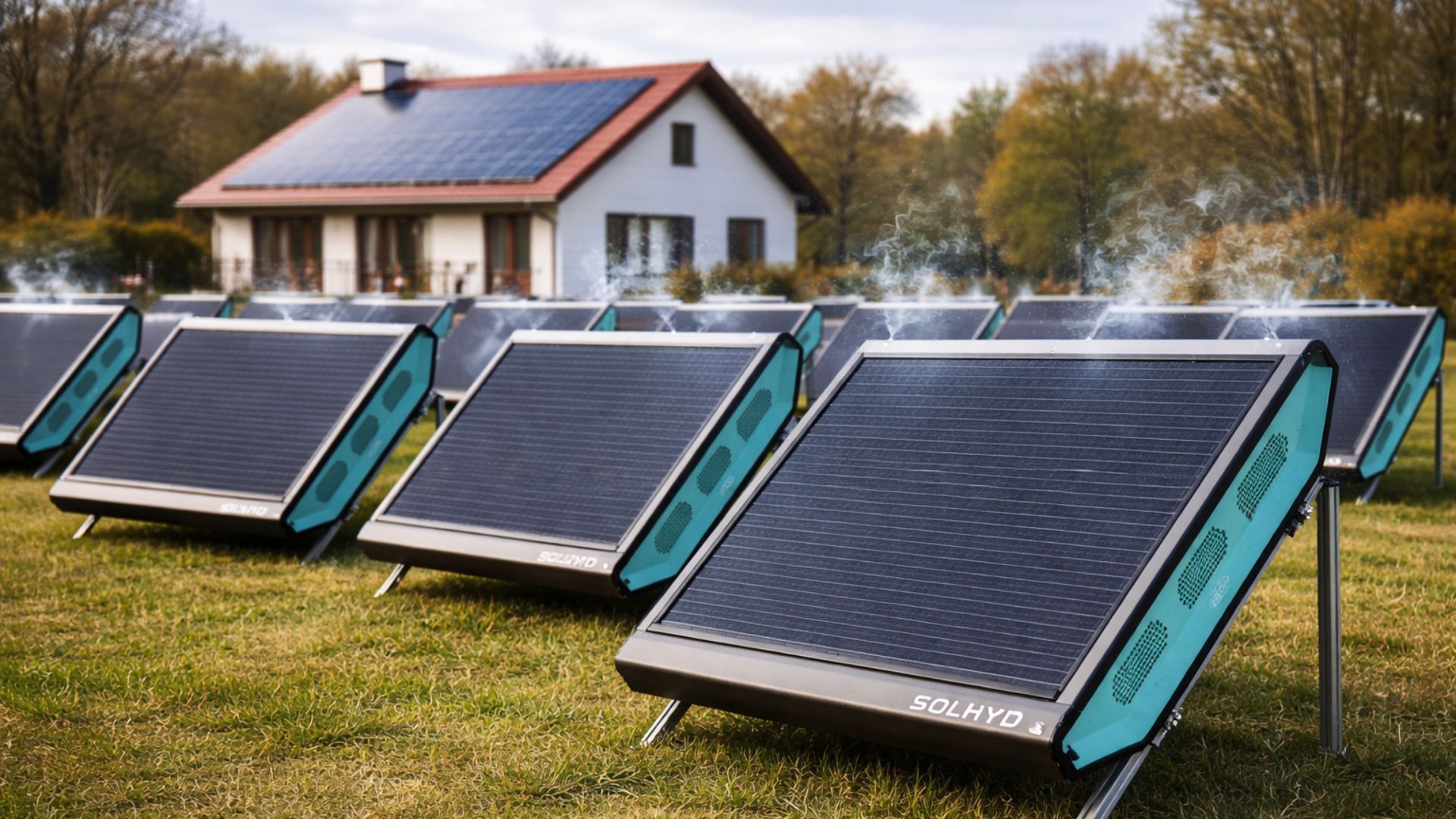
Green hydrogen at home: Belgium launches new technology that makes solar panels produce fuel from the moisture in the air, which could boost the energy transition.

The floating offshore wind turbine from World Wide Wind features a basic design and consists of two vertical axis turbines that rotate in opposite directions. The lower one spins around the tower shaft, while the upper one is positioned at the top, rotating in the opposite direction. One turbine is connected to the rotor, while the other is connected to the ‘stator’, resulting in an arrangement that doubles the relative rotational speed compared to a static stator of conventional towers, thus producing more power.
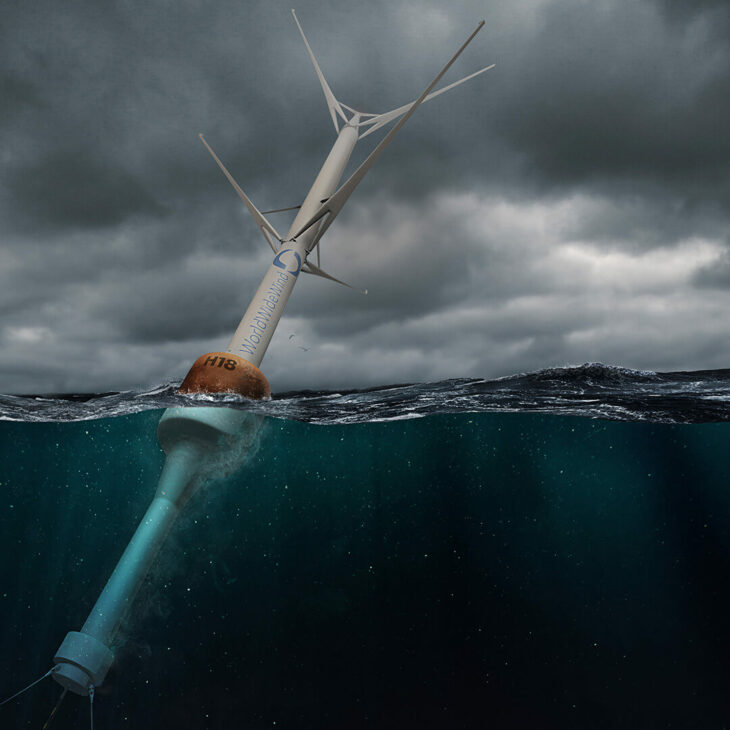
Norwegian Offshore Wind Tower Has the Potential to Produce More Energy at a Lower Cost
The CRVT, similar to sailboats, tilts with the wind, featuring blades specifically designed to help reduce the impact of the turbulent wake. According to the Norwegian company, this allows operators to shorten the distance between turbines, increasing the number of turbines that can be installed in a given area and thus generating more energy.
Unlike traditional offshore wind turbines, the new towers from WWW have their heavier components at the bottom, except for the blades, which are at the top, resulting in a lower center of gravity. They can also harness wind energy from any direction and do not need to turn to face the wind, reducing the need for certain heavy equipment, thereby lowering production costs.
Everything Designed to Protect the Environment
Unlike conventional rotating turbines, which are seen as natural obstructions, vertical axis turbines have a lesser impact on birds. The low tip speed of the rotor blade’s tip prevents incidents with birds, and additionally, the WWW design allows operators to use more recyclable materials.








Seja o primeiro a reagir!