





 English
  Francês
  Alemão
  Italiano
  Japonês
  Norueguês
  Portuguese
  Spanish
  3 min of reading


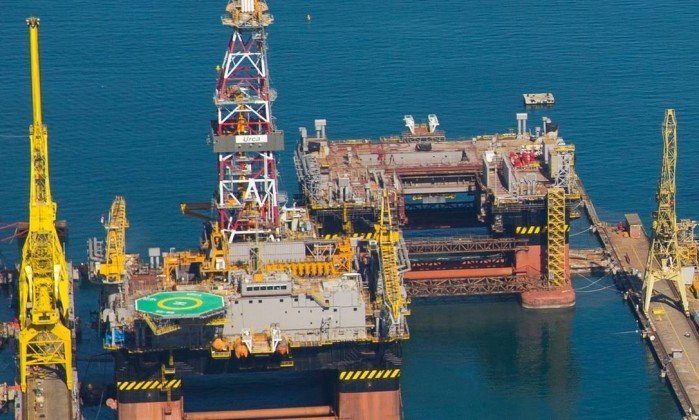
With the goal of securing contracts in shallow waters of the Campos Santos Basin, Petrodin Offshore promises to make a strong entrance in the coming months
The Brazilian Petrodin Offshore signed a memorandum of understanding on May 22 with the Shangai Shipyard, which foresees the purchase or leasing of three anchored rigs. The company intends to compete for contracts in Brazil, West Africa, and eventually Argentina to enable the operation. Each of the units – rigs Tiger 2, 3, and 4 – is valued at US$ 200 million and is expected to be ready by 2019. The rigs are equipped with a battery bank that meets energy demand during peak operational moments. The system allows them to operate with fewer generators, providing a 30% savings in diesel fuel consumption and a proportional reduction in pollutant emissions. The operational cost is 1/3 lower than a similar unit that relies solely on diesel generators.
The units are aimed at shallow water projects, between 130 m and 400 m. Petrodin’s CEO, Mats Rosengren, believes this is a very promising market. The company is completing a study, which has already identified that most of the rigs designed for these depths were built in the 1970s/1980s, many of them already in the cold stack process.
-
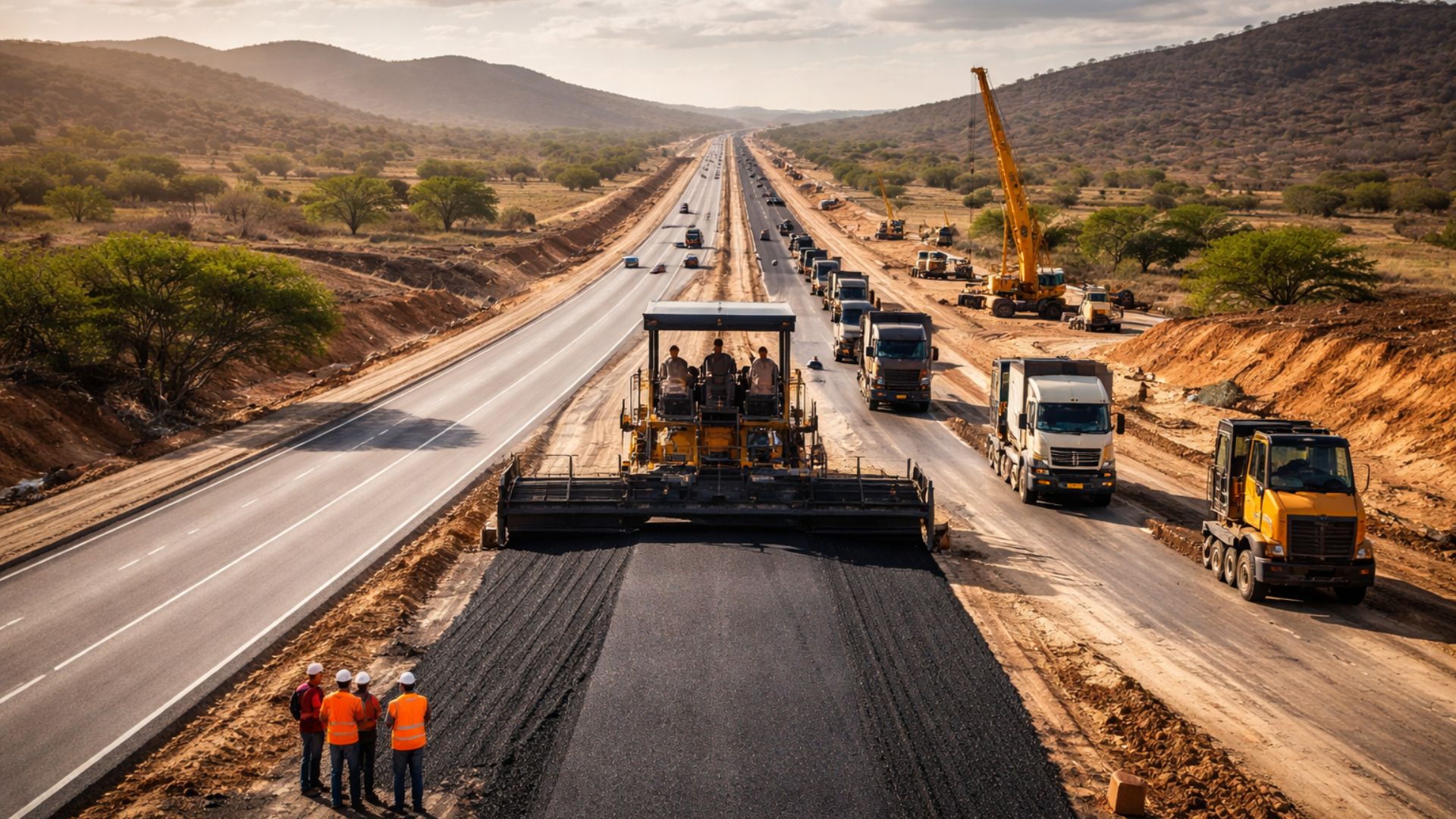
Government unlocks R$ 554 million for a highway that has been requested for decades and accelerates the duplication of BR.
-
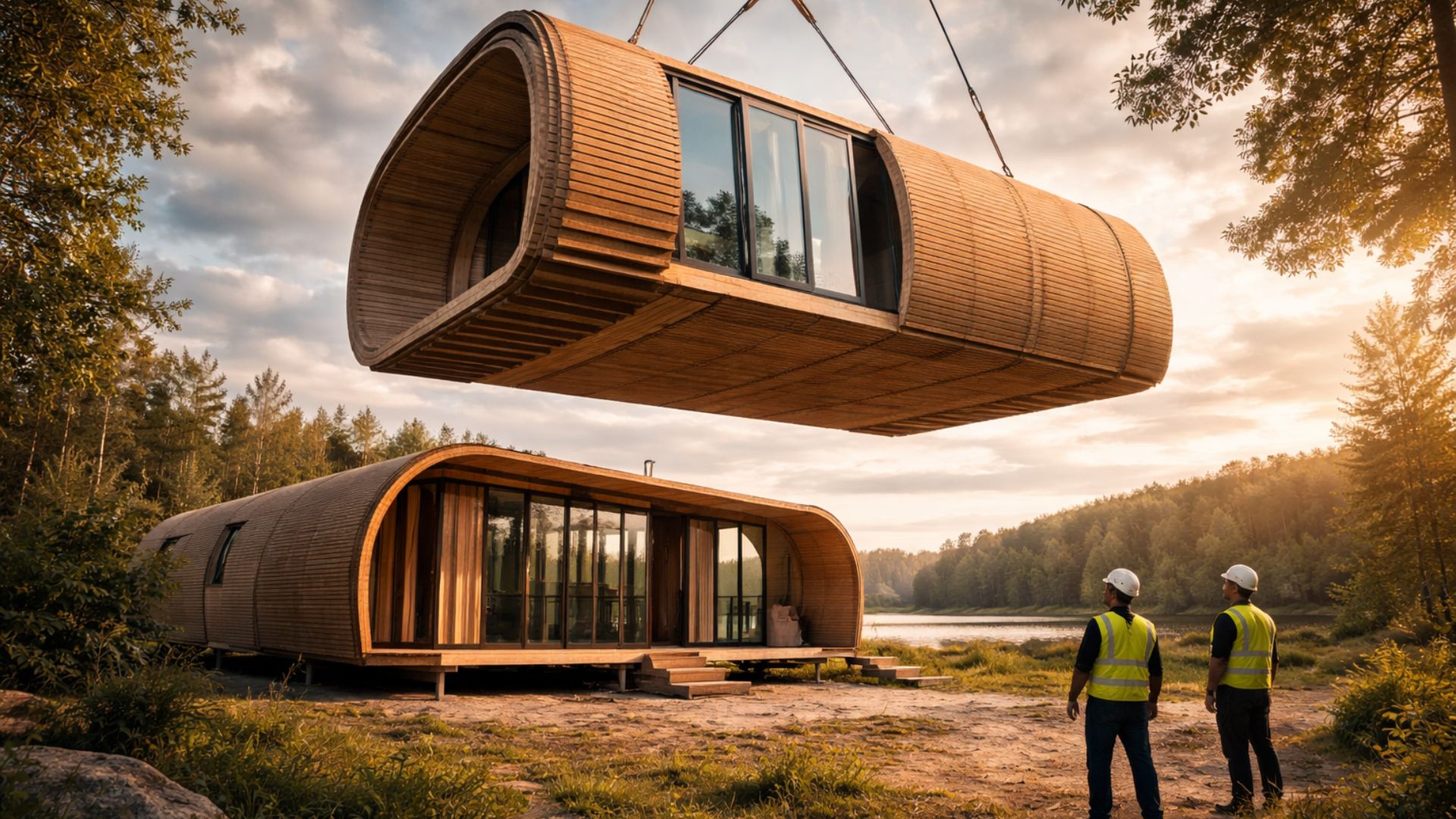
Without bricks, without cement, and without endless construction: the cardboard house that is assembled in modules and can be moved.
-
Billions of barrels on the equatorial margin could lead Amapá to double its oil production in Brazil — the state aims to enter the route of companies in the Campos Basin, attract investments, and boost jobs and businesses in the oil and gas sector.
-
Without bricks, without cement, and without endless construction: the cardboard house that is assembled in modules and can be moved.

Newer rigs aimed at this depth range are hybrid – capable of operating anchored or with dynamic positioning. In general, they were built for the North Sea, where conditions are quite adverse, and can cost up to three times more.
The units can operate at depths of up to 1,500 m, but in this case, they compete with dynamic positioning rigs. In the range between 130 m and 400 m, the company assesses that there are few units available worldwide.
In Brazil, the shipping company identifies opportunities in the North and Northeast regions and in shallow water projects in the Santos and Campos Basins six months a year. The focus is on projects awarded to oil companies in the last ten years that still have active drilling commitments. Other possibilities include work related to well abandonment.
Abroad, the company is negotiating the chartering of a unit with an undisclosed client in Nigeria. In Argentina, the focus is on drilling projects in the coming years from areas that will be auctioned off at the end of this year.
The ABS class rigs are equipped with five diesel generators, each with 2,580 kWe, a high-pressure drilling mud system of 7,500 psi, a BOP of 15,000 PSI, and a variable load capacity of 12,000 t.
Rosengren says that although Brazil is focusing on expanding its exploratory area in deep water projects, there is still plenty of room for exploration in shallow waters. He cites a number indicating that 64% of the world’s oil is in areas within this depth range.
Another bet is on the growing concern of operators with reducing emissions. The executive mentions Equinor, which has emphasized this topic in its projects. “The drilling area is still quite conservative, but given these new demands, it’s inevitable that shipowners will take innovations like this into account. We want to be part of this,” he stated. Source: Brasil Energia








Seja o primeiro a reagir!