





 Portuguese
  English
  Spanish
  5 min of reading
  0 comments


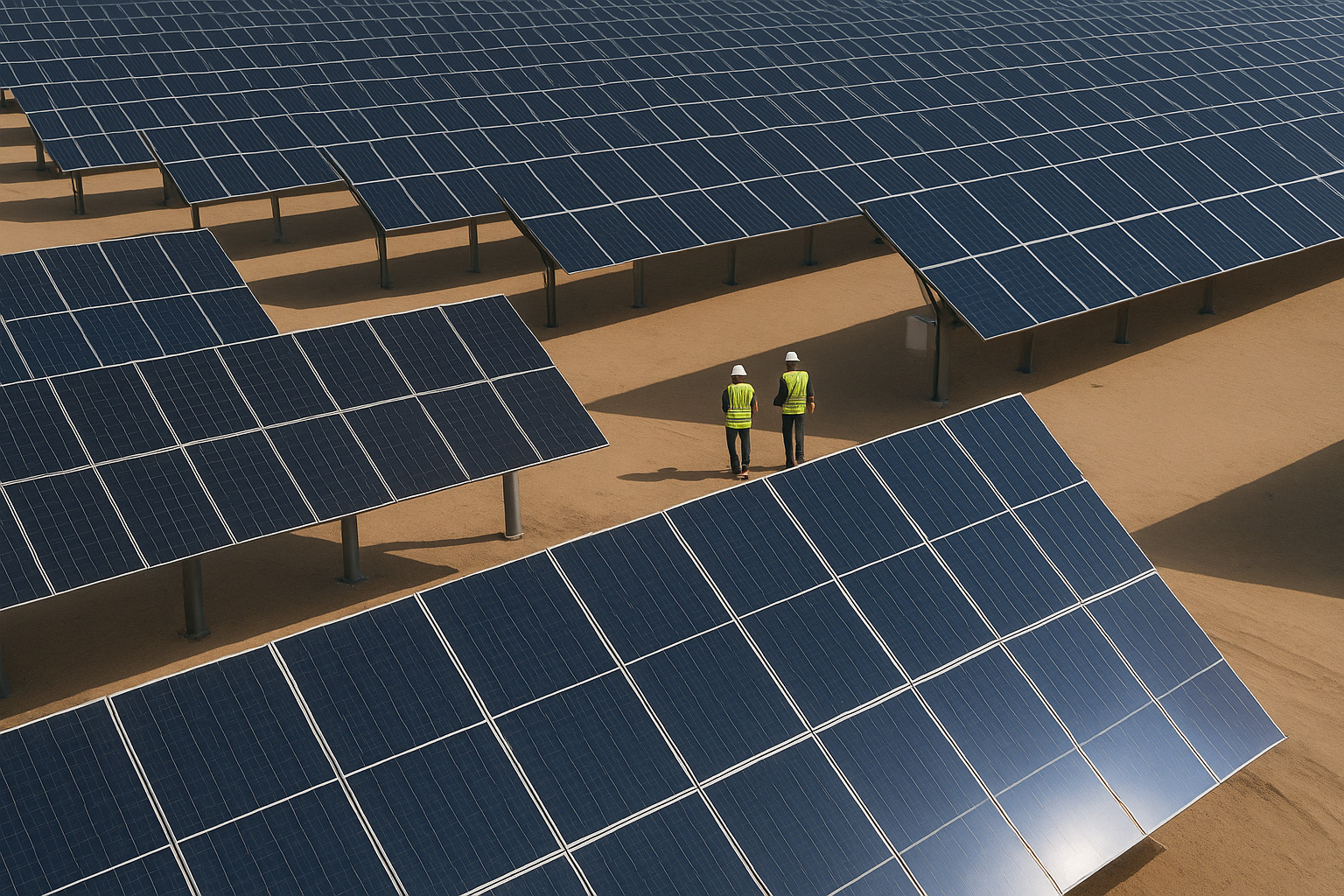
Chinese Solar Companies Face Losses In The First Half Of 2025 Due To Price War And Overcapacity.
The solar energy sector in China, which has established itself as one of the largest in the world for years, is currently facing a challenging moment.
Indeed, in the first half of 2025, several Chinese solar companies reported significant losses, reflecting the difficulties of an industry marked by rapid expansion, overcapacity, and slowing domestic and external demand.
Moreover, historically, China has distinguished itself in the development of solar technologies. Since the early 2000s, the country has heavily invested in research, production, and export of photovoltaic panels, solidifying its status as a global leader.
-
Europe records strong euro economy with solar energy in March and sparks curiosity about which country leads growth that redefines the energy market and reduces costs.
-
Piauí reaches a historic milestone in energy transition: State records nearly 160,000 households powered by solar energy and leads growth in the Northeast.
-
Argentina debuts its first 100% solar-powered highway and transforms an entire road into a showcase of clean energy.
-
Minas Gerais reaches a historic record and surpasses the power of Itaipu, but network costs generate debate: Understand why solar energy in MG impacts the electricity bill of those without panels.
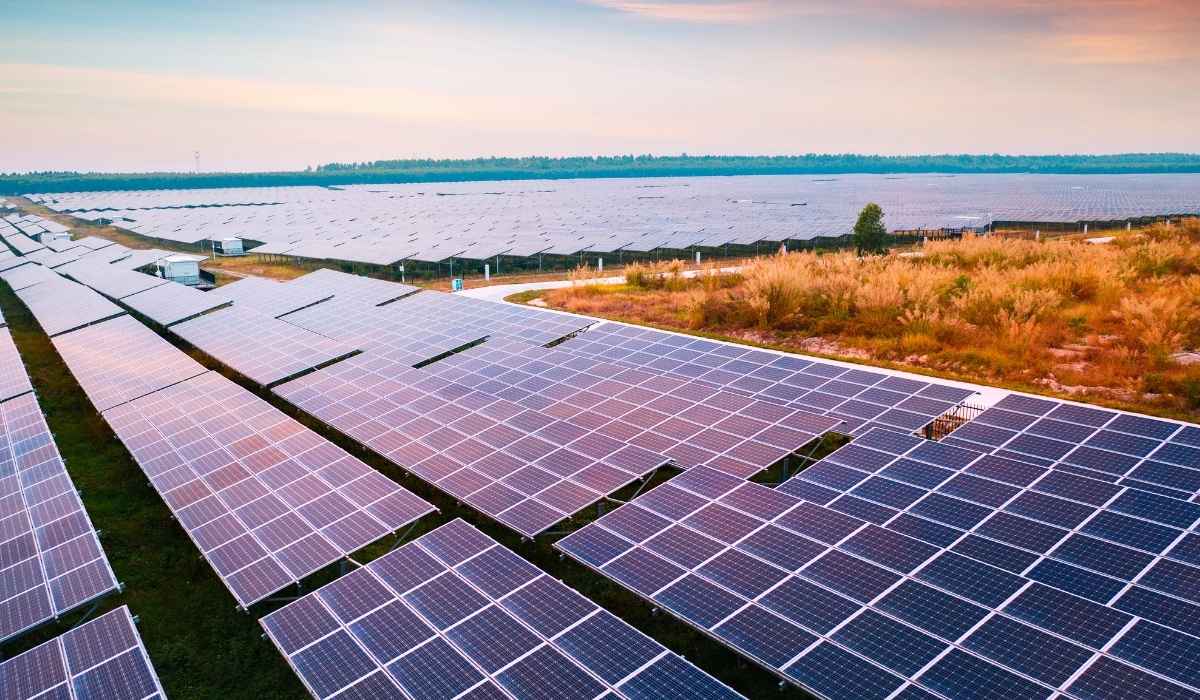

Therefore, the expansion of production capacity, combined with clean energy incentive policies, has driven growth in the sector.
However, this accelerated trajectory has created structural imbalances. Consequently, the overcapacity and intense competition among companies have resulted in a price war that pressures the financial results of major manufacturers.
Additionally, the global market directly influences the results of Chinese solar companies.
For instance, the reduction in demand in consumer regions, such as Europe and North America, combined with tariffs and trade barriers, has affected exports.
Thus, the economic slowdown in countries that previously purchased large volumes intensified the pressure on prices and profits, forcing companies to reassess their commercial and operational strategies.
Negative Financial Results In The First Half Of 2025
In the first half of 2025, five of the largest Chinese solar companies reported negative financial results. Among them, Tongwei Co. Ltd., Longi Green Energy Technology Co. stand out, among others.
Tongwei recorded the largest loss, just below 5 billion yuan, about R$ 3.8 billion.
Furthermore, this negative result surpassed the loss of 3.1 billion yuan recorded in the same period of 2024.
Similarly, Trina Solar went from a profit of 526 million yuan to a loss of 2.9 billion yuan, highlighting the intensity of the crisis.
Experts indicate that the root of the losses lies in the severe overcapacity in the photovoltaic industry, coupled with a historic decline in prices of key products, such as modules, cells, and silicon wafers.
Since mid-2024, prices have dropped below production costs, eliminating profit margins across the entire production chain.
For this reason, this phenomenon has hit especially companies that rely on selling large volumes to maintain financial sustainability.
This has made the environment extremely competitive and challenging.
Longi Green Energy managed to reduce its losses compared to 2024, thanks to improvements in operational efficiency, which reduced selling and administrative costs.
However, the company still faces difficulties, demonstrating that fierce competition and pressure for lower prices remain significant obstacles.
In internal reports, Longi emphasized that the industry is going through a “painful transition period”, marked by imbalances between supply and demand and recent changes in guaranteed energy purchase policies by state network operators.
Additionally, other companies like JA Solar and TCL Zhonghuan reported significant year-over-year increases in their losses, reinforcing the perception that the crisis is not merely temporary, but systemic.
For industry experts, this situation highlights the need for strategic reformulation.
The goal is not only to reduce costs but also to diversify markets and invest in differentiated technology.
Government Intervention And Industry Initiatives
The situation of Chinese solar companies also reflects the actions of the government.
Indeed, Beijing, concerned about the effects of the price war and the risks to sector sustainability, recently organized a symposium involving six central government agencies.
During the meeting, participants discussed measures to limit practices such as selling below cost and misleading advertising.
Moreover, they reinforced price monitoring and advised the industry to avoid disordered competition.
Thus, these initiatives aim to stabilize the sector and create conditions for companies to resume growth in a healthy and sustainable manner.
Additionally, the companies themselves seek collective solutions.
For instance, the China Photovoltaic Industry Association, in July 2025, called major companies in the sector to discuss the creation of a joint venture.
The aim would be to acquire about 700,000 tons of excess capacity from competitors, removing this volume from circulation and preventing prices from falling further.
Despite being promising, the initiative is still in the initial stage.
Important details, such as acquisition price and share structure, remain undefined.
The challenge facing Chinese solar companies is also heightened by the continuing growth of production capacity.
Recent reports from the China Nonferrous Metals Industry Association indicate that domestic polysilicon production increased by 5.7% in July 2025 compared to the previous month.
The expectation was for an additional growth of 16% in August.
Thus, this constant increase in supply, without a corresponding demand, maintains the pressure on prices and prolongs the crisis of negative financial results.
At the same time, experts argue that the consolidation of the sector could reduce fragmentation and fierce competition.
Thus, mergers, joint ventures, and strategic agreements could allow companies to achieve greater scale, reduce costs, and increase negotiating power in the international market.
Moreover, this movement also encourages investments in technological innovation and in more efficient and integrated solar energy solutions.
Historical Context And Future Prospects
Historically, the trajectory of the solar sector in China shows that moments of overcapacity and price pressure are not unprecedented.
During the early years of expansion, incentive policies and rapid capacity increases led to periods of intense competition and reduced profit margins.
However, the experience of the last decade indicates that technological innovation, combined with consolidation and regulatory strategies, can overcome cyclical crises and place the industry on a path of sustainable growth.
Another relevant point is the strategic importance of solar energy for China.
The country aims to reduce dependence on fossil fuels, decrease carbon emissions, and establish itself as a global leader in green technologies.
In this context, the temporary financial difficulties faced by Chinese solar companies represent necessary adjustments, not structural failures, within a rapidly transforming industry.
The sector’s future trajectory will depend on factors such as companies’ adaptability, implementation of effective government policies, and the rate of technological innovation.
Furthermore, investments in research, development, and integration of new energy solutions, such as energy storage and efficiency optimization, may enable companies to resume consistent profits and maintain global competitiveness.
Opportunities Amid The Crisis
In summary, the first half of 2025 highlighted that even global leaders like Tongwei, Longi, TCL Zhonghuan, Trina Solar, and JA Solar are not exempt from the challenges of a constantly transforming market.
Therefore, the negative period reinforces the need for balance between supply and demand, innovation strategies, and greater coordination between government and the private sector.
At the same time, the historical trajectory of the sector shows that cyclical crises can be overcome.
China remains well-positioned to maintain its central role in the global solar energy development.
The current scenario serves as a warning for the entire production chain, reminding that accelerated growth without strategic planning generates financial instability.
However, it also offers opportunities for reformulation, consolidating more efficient companies and encouraging investments in technology and sustainability.
Thus, even in the face of temporary losses, the future of Chinese solar companies remains promising.
It rests on long-term policies, technological innovation, and growing global demand for clean energy.









Seja o primeiro a reagir!