





 Portuguese
  English
  Spanish
  5 min of reading
  0 comments


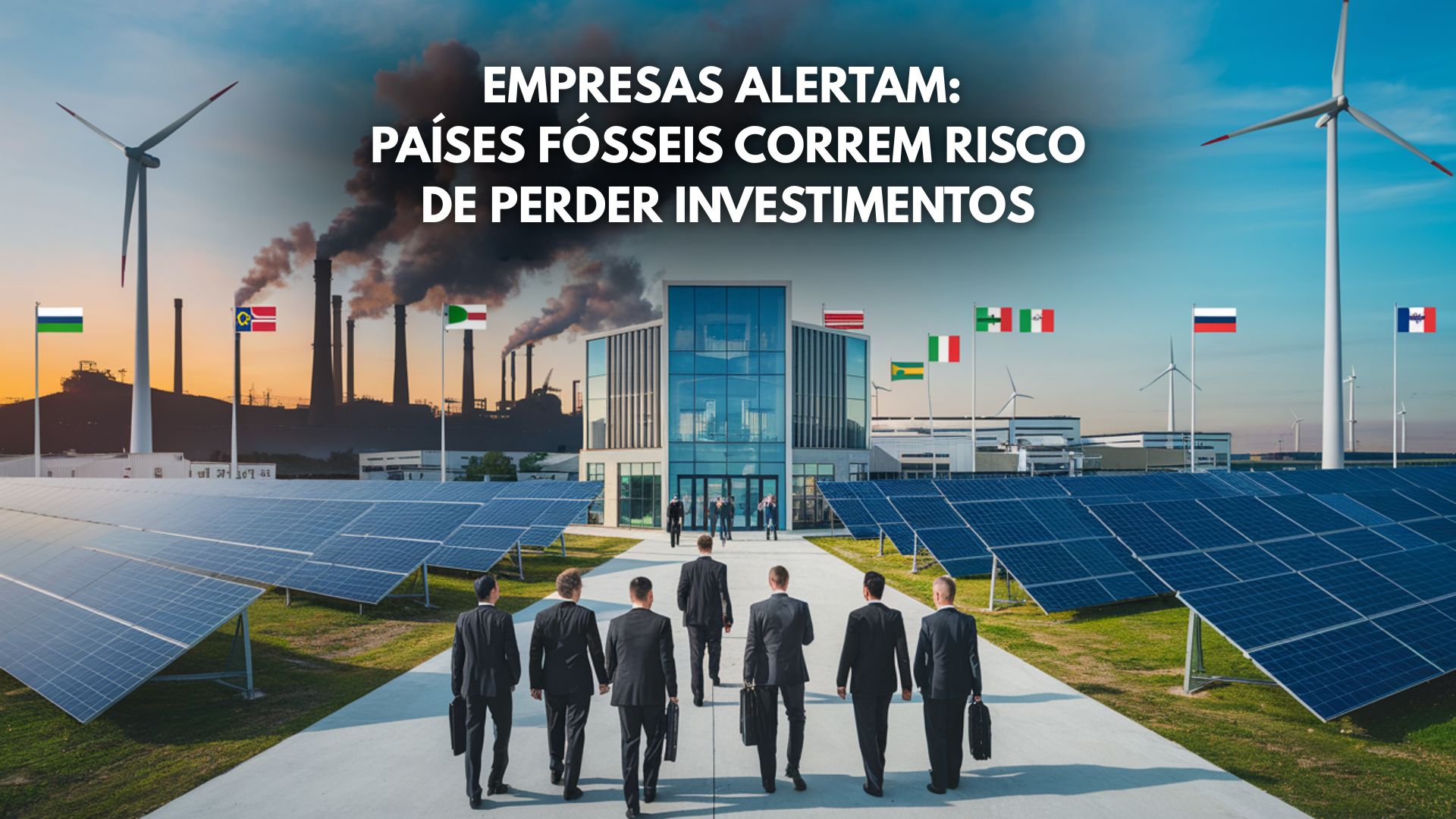
Global Survey Reveals That Large Companies Prioritize Regions With Renewable Matrix, Pressuring Fossil Countries to Accelerate Transition or Face Investment Flight and Loss of Competitiveness.
Medium and large companies are increasingly inclined to choose regions with a greater supply of renewable energy as the destination for their operations. This trend, highlighted by an unprecedented global survey, raises an alarm for governments of countries with an electricity matrix still dominated by fossil fuels, which may face a growing flight of investments in the coming years.
The study was conducted with more than 1,400 executives from private and public companies across 15 countries, covering various sectors of the economy. The survey was commissioned by three entities linked to the energy transition: the think tank E3G, Beyond Fossil Fuels, and the We Mean Business Coalition.
Energy Transition Becomes a Priority for Business Leaders
According to the data, 90% of executives stated that access to renewable sources is a priority when making decisions about new investments. Additionally, 62% said they are considering changing operations, and 68% intend to transfer supply chains to regions with a broader supply of renewable energy.
-
The Brazilian state accelerates industrial competitiveness with a focus on the extraction of strategic minerals to boost the energy transition in Goiás.

-
A Canadian retiree creates a hydroelectric system on a real river, generating energy continuously throughout the day and demonstrating how the power of water can supply a house with stability even in a simple structure.

-
Petrobras reaffirms its commitment to the market and ensures that it will carry out the energy transition safely to maintain national sovereignty.

-
Researchers discover a possible hydrogen deposit of up to 46 million tons beneath an ancient coal basin, and the volume could exceed half of the entire global production.




The results indicate that, contrary to what was assumed, the business sector shows strong interest in accelerating the energy transition. More than just adapting to environmental regulations, leaders see the change as a strategic part of the business, associating the adoption of renewable sources with benefits such as energy security (75%), reduced electricity costs (50%), and increased profitability (42%).
Investment Flight Concerns Countries With Fossil Matrix
The survey reveals a scenario in which regions dependent on fossil fuels, such as coal and natural gas, risk facing investment flight if they do not advance in policies that encourage the energy transition. Governments that do not prioritize the development and financing of projects focused on renewable sources may see jobs and investments migrate to more prepared countries.
Of the total respondents, 97% stated that they support a renewable-based energy transition. Additionally, 78% wish for this process to occur by 2035 or earlier. Meanwhile, 67% advocated for the closure of coal plants and their replacement with clean energy, without the construction of new infrastructures based on fossil gas.
These data reinforce that renewable energy has ceased to be seen merely as an environmentally correct alternative and has begun to integrate the strategic planning of companies seeking competitiveness, supply stability, and alignment with climate goals.
Companies Plan to Generate Their Own Renewable Energy
The survey also shows that the adoption of concrete measures is already underway. About 43% of the companies consulted intend to fully decarbonize their operations by 2030, while 27% plan to reach this goal by 2035.
Approximately 93% of executives said they are considering investing in their own renewable energy generation in the coming years. The choice to install their own systems, such as solar plants or private wind farms, reflects a pursuit of energy autonomy and a reduction of risks associated with instability in local power grids.
Solar and Wind Lead Preferences Among Renewable Sources
When asked about which technologies they prefer within the realm of renewables, 85% of respondents highlighted their desire to see their countries prioritizing investments in solar and wind energy. The two sources emerged as the most viable in terms of cost, scalability, and direct application to industrial and commercial operations.
Despite the enthusiasm, executives also pointed out obstacles that hinder the transition. The main challenge identified was the high initial cost of installing renewable energy systems, mentioned by 46% of participants. Other cited barriers included the lack of transmission and storage infrastructure (38%) and the limitation of clean electricity supply in the market (37%).
Lack of Funding Is a Bottleneck for Governments
In addition to the internal challenges faced by companies, the survey also investigated the main barriers faced by governments to accelerate the energy transition. The most critical point, according to respondents, is the lack of funding for renewables, identified by 36% as the biggest national obstacle.
Other highlighted problems included the absence of clear goals and policies for the replacement of fossil fuels with renewable sources (35%) and the difficulty of financial and social support for communities affected by the closure of coal mines or other structures linked to fossil energy (34%).
Experts who participated in the data analysis indicate that if these barriers are not overcome, countries lagging in the transition may lose global competitiveness. The flight of investments to regions with a cleaner electricity matrix could compromise not only the attraction of new companies but also provoke the departure of already established operations.
Companies Call for Stronger Public Policies
In response to the identified challenges, the business leaders consulted in the study are calling for more concrete actions from governments. Companies expect firmer regulatory guidelines, tax incentives, and credit lines that reduce the implementation costs of renewable energy projects.
There is a growing demand for partnerships between the public and private sectors to enable transmission infrastructure, energy storage, and development of skilled labor to operate the new systems based on renewables.
The survey also indicates that executives view the energy transition not only as an environmental measure but as a competitive differentiator. With renewable energy gaining prominence in investment decisions, the race between countries for leadership in the sector is likely to intensify in the coming years.
Brazil Can Benefit, But Depends on Investments and Public Policies
For Brazil, which already has a predominantly renewable electricity matrix, the study’s data represent an opportunity. However, experts warn that the country needs to expand its transmission infrastructure, invest in energy storage, and ensure regulatory certainty to attract companies interested in renewable energy.
Otherwise, even with high potential in sources like solar, wind, and biomass, the country may fall behind other markets that offer more security and incentives for those looking to migrate from fossil to renewable sources.
Source: Portal Solar









Seja o primeiro a reagir!