





 Portuguese
  English
  Spanish
  5 min of reading
  0 comments


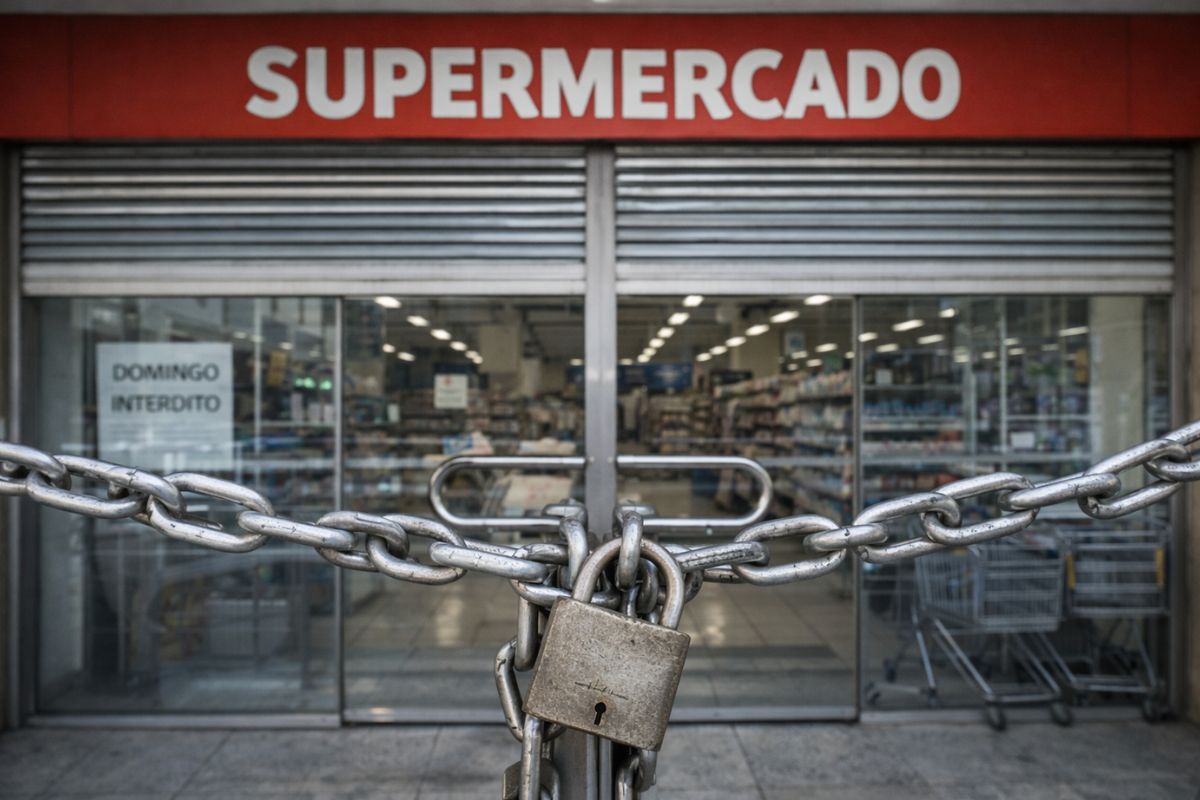
Supermarkets in Espírito Santo are prohibited from opening on Sundays since March 2026, ensuring weekly rest for 70 thousand workers, and states like Goiás and Bahia are negotiating to adhere to the measure that divides opinions among employees who ask for time off and business owners who fear losing revenue.
Since the beginning of March 2026, those living in Espírito Santo can no longer find supermarkets open on Sundays. The prohibition was established by a collective agreement between unions and sector representatives and also applies to wholesale stores and mini-markets, with the exception of small family-owned businesses. The measure guarantees a fixed day of weekly rest for about 70 thousand workers in the sector and has already changed the routine of consumers, who need to anticipate purchases or reorganize their schedules throughout the week.
Espírito Santo is, so far, the only Brazilian state where the rule is in effect. But the movement is not expected to stop there: supermarkets in other states may follow the same path still in 2026. Goiás is the main candidate, with ongoing negotiations between unions and business owners. In Bahia, especially in Salvador, the topic has also entered the agenda. The possibility that more states adopt the measure places the debate about the operation of supermarkets on Sundays at the center of labor discussions in the country.
How the prohibition of supermarkets opening on Sundays works in Espírito Santo

The rule was established through a collective agreement, a legal instrument negotiated between workers’ unions and employer associations in the retail sector.
-
“The country can be destroyed in one night”: Trump makes historic threat to Iran after ceasefire rejection and the world awaits what comes this Tuesday (04/07)

-
A petition seeks to prohibit elderly people from driving, and no one is prepared for the consequences: without decent public transportation, revoking the license of those over 75 years old could be a sentence.

-
All truck drivers and bus drivers must take the tests to obtain a commercial driver’s license in English.

-
Buying a car may suspend Bolsa Família in 2026 and trigger automatic government oversight.

All supermarkets, wholesale stores, and mini-markets in the state are required to keep their doors closed on Sundays, ensuring that employees have at least one fixed day of rest per week. The exception is for small family-owned businesses, which can continue to operate normally.
For consumers in Espírito Santo, the change required immediate adaptation. Those who were used to shopping on Sundays now need to plan their trips to supermarkets during the week or concentrate them on Saturday.
The first months of enforcement showed that the population adjusted, although reports of longer lines on Saturdays and rushes on weekdays have become common. The routine has changed, but the impact on supply, according to supporters of the measure, did not materialize in the way critics feared.
Which states can prohibit supermarkets from operating on Sundays in 2026
Goiás is leading the negotiations to become the next state to adopt the measure. Unions and business owners in the supermarket sector are in talks that have been postponed but are expected to resume by the end of April. If an agreement is reached, the state could implement the rule still in the first half of 2026, following the Espírito Santo model of collective agreement.
The decision depends on the balance between workers’ demands and the concerns of the business sector.
In Bahia, the debate about closing supermarkets on Sundays has also gained traction, especially in Salvador. The topic has entered the agenda of union negotiations and may advance this year, although it faces significant resistance from business owners in Bahia.
The trend is that, with the adherence of more states, the model will create a chain effect in the country, potentially establishing a new standard of operation for Brazilian food retail. Each state that adheres increases the pressure on neighboring states.
What supermarket workers gain from fixed time off on Sundays
For the 70 thousand workers in the sector in Espírito Santo, the change represents a concrete achievement. The majority of supermarket employees work on a shift basis that includes Sundays and holidays, with compensatory time off that does not always coincide with the days when family and friends are available.
Having Sunday guaranteed as a day of rest allows for more predictable personal life organization.
The debate about the operation of supermarkets on Sundays connects to a broader discussion about working conditions in Brazilian retail. The agenda to end the 6×1 shift, which gained traction on social media and in the National Congress, reflects the same desire for balance between professional and personal life that motivated the collective agreement in Espírito Santo.
For the unions, ensuring the closure of supermarkets on Sundays is a concrete step towards better working conditions that does not depend on federal legislative approval.
Why part of the retail sector resists the closure of supermarkets on Sundays
Not everyone agrees with the measure. In Santa Catarina, representatives of the supermarket sector dismissed the adoption of the rule, arguing that closing on Sundays could compromise supply and service to the population, especially in tourist areas where demand for weekend shopping is high.
The argument is that tourists and residents of coastal cities depend on supermarkets being open on Sundays to stock up.
From a financial perspective, business owners fear revenue losses that would not be compensated by increased sales on other days of the week. The logic is that the consumer who does not shop on Sunday does not necessarily transfer all their purchases to Saturday or weekdays.
Part of this demand may shift to other channels, such as delivery apps, bakeries, and neighborhood markets, which represents a net loss for supermarket chains. The clash between those who advocate for Sunday time off and those who fear the economic impact is at the center of each state negotiation.
What could happen if more states prohibit supermarkets from opening on Sundays
If Goiás and Bahia adhere to the measure, Brazil will have three states with supermarkets closed on Sundays, creating a precedent that other states may follow.
The trend is that the movement will grow through regional collective agreements, as there is currently no federal legislation mandating national closure. Each state negotiates its own rules based on the relationships between local unions and business associations.
For Brazilian consumers, the possibility of not finding supermarkets open on Sundays may require a change in habits that many have not yet considered. Planning shopping during the week, using more organized lists, and concentrating supply on Saturday are adaptations that residents of Espírito Santo are already making.
If the model spreads, millions of Brazilians will have to rethink their shopping routines. And the question that will define the direction of this discussion is simple: is the rest of 70 thousand workers worth the change in habits of millions of consumers?
What do you think about the prohibition of supermarkets opening on Sundays? Do you think it is fair to guarantee time off for workers even if it changes shopping routines? Share in the comments. This debate is growing and may affect your state sooner than you think.









Seja o primeiro a reagir!