





 English
  Francês
  Alemão
  Italiano
  Japonês
  Norueguês
  Portuguese
  Spanish
  5 min of reading
  0 comments


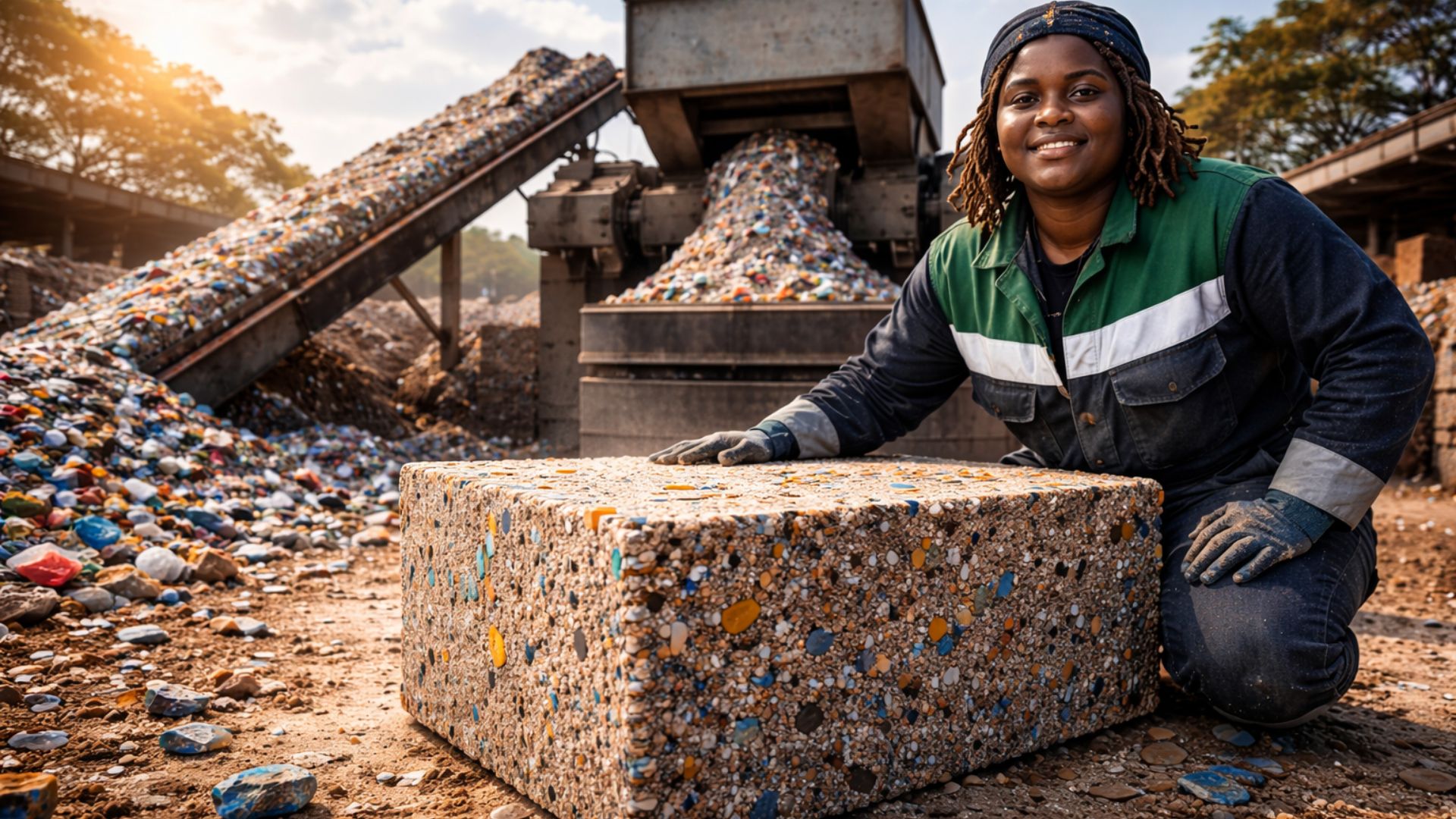
Kenyan innovation transforms plastic waste into more resistant and accessible construction material, with environmental impact and local job creation.
The Kenyan engineer Nzambi Matee gained international recognition by developing, in Nairobi, a technology that transforms plastic waste into paving blocks used in sidewalks, patios, and outdoor areas.
At the helm of Gjenge Makers, she began repurposing plastic mixed with sand to manufacture pieces sold as a cheaper and more durable alternative to conventional concrete models, in an initiative that also expanded the discussion on recycling and circular economy in Kenya.
How plastic becomes sustainable construction material
The basis of the process involves different types of discarded plastic and sand.
-
Seen from space, a colossal ‘Y’ cuts through the largest desert in China, blending a jade-filled river, red and white mountains, and revealing the absurd scale of the transformation of the Taklamakan surrounded by a green wall with billions of trees.

-
The Pacific Ocean reveals what the cliffs of Big Sur have hidden for millennia: Pfeiffer Beach, in California, features swirling purple sand formed by garnet crystals and displays a stone arch that is illuminated by the sun in winter for just a few days each year.

-
Aursjøvegen in Norway is a 100-kilometer gravel road that crosses chasms and dark tunnels carved into the rock at an altitude of 947 meters in the fjords and is only open for four months a year.

-
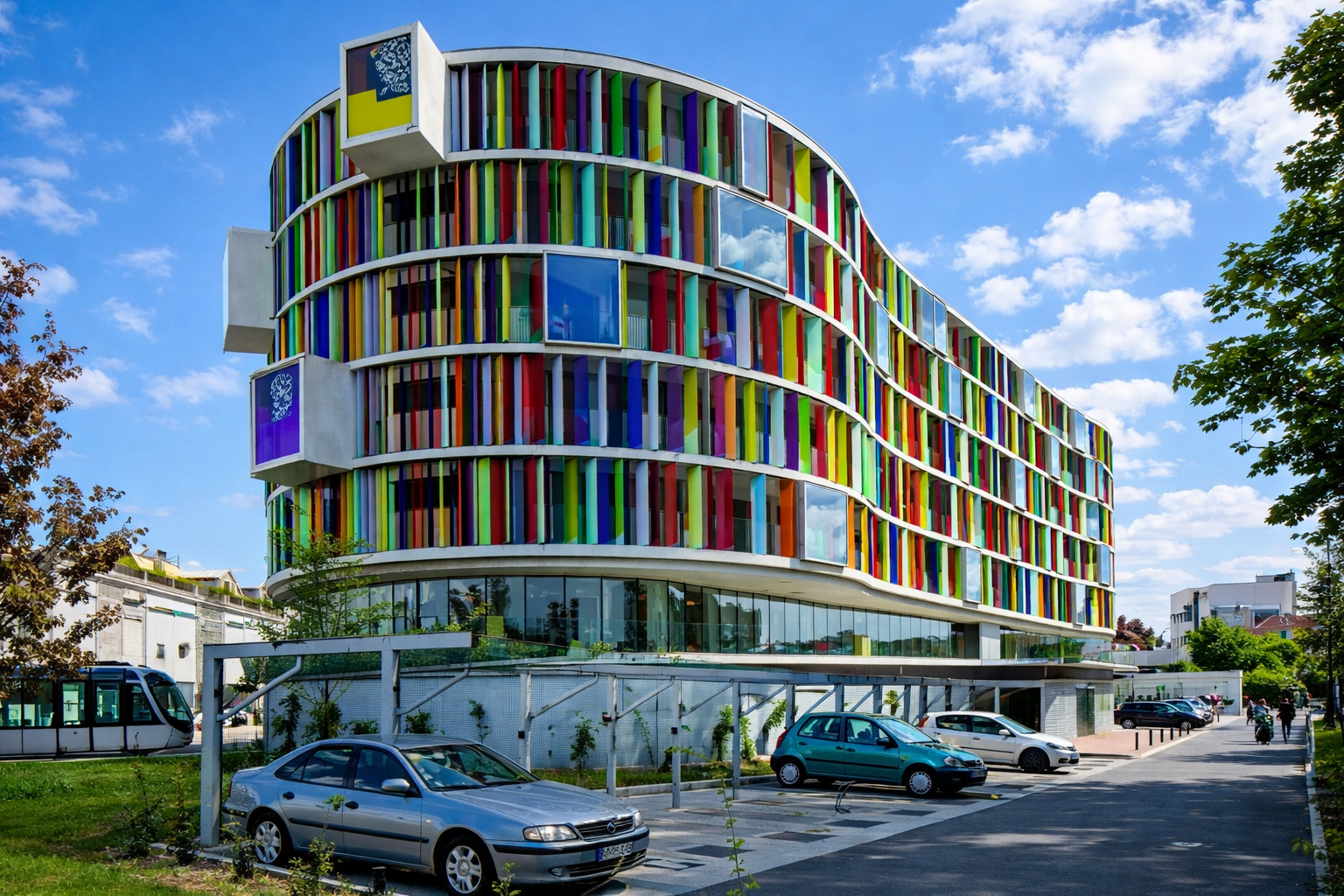
With about 4,000 m², the building constructed in a traditional neighborhood in France looks like a rainbow, has a colorful facade, mixes vibrant glass, and creates one of the most unusual visuals in Bordeaux.

According to Reuters, the company works with materials such as high-density polyethylene, low-density polyethylene, and polypropylene, found in packaging, caps, containers, and bags, but does not use PET, common in beverage bottles.

After sorting, this material is heated, combined with sand, and compressed until it takes the final shape of the blocks.
Nzambi Matee herself stated that the development required a long testing phase to arrive at the right proportion between plastic and sand.
In a report published by the United Nations Environment Programme, she mentioned that she left her job, set up a laboratory in her mother’s backyard, and went through successive attempts until defining a formula capable of combining strength, commercial viability, and scalability.
In addition to the product composition, the engineer also designed the machines used in manufacturing.
This point was crucial in transforming the laboratory experience into continuous production.
Instead of relying on ready-made equipment, the founder of Gjenge Makers adapted the industrial process to the available raw material and the type of block she wanted to introduce to the Kenyan market.
Blocks more resistant than concrete gain space
The most repeated fact about the initiative is the product’s strength. In an interview with Reuters, Matee stated that the blocks manufactured by the company are “almost five to seven times stronger than concrete.”
Meanwhile, the official website of Gjenge Makers currently states that its pavers have three times the compressive strength of conventional concrete blocks, as well as a melting point above 350°C.
As the sources use different metrics, the safest reference is that the company and international reports assert that the blocks outperform the concrete used in paving.

The scale of production also helped boost the project’s notoriety. Reuters reported in February 2021 that the factory produced 1,500 blocks per day.
The company’s website, updated in 2026, continues to present the same order of magnitude by highlighting the line of pavers and its commercial presence in Nairobi, indicating the maintenance of operations.
Another relevant aspect was the certification.
The UNEP reported that Gjenge Makers’ pavers are certified by the Kenyan Bureau of Standards, the country’s standardization body.
This recognition was important for the product to be seen not just as an environmental experiment but to circulate as a construction solution for schools, homes, and other urban spaces.
Plastic recycling as an urban and economic solution
The proposal was born in a context of increasing pressure on waste management in Nairobi.
Justifying the creation of the company, Matee stated that she got tired of waiting for the government to solve the plastic pollution problem on its own.
“I was tired of being on the sidelines,” she told Reuters while recalling the decision to step out of passivity and try to build a practical response to improper plastic disposal.
In material published by the UNEP, the engineer also summarized the logic behind the invention by saying that “Plastic is a material that is misused and misunderstood. The potential is enormous, but its afterlife can be disastrous.”

The phrase encapsulates the central axis of the business: treating plastic not as a worthless waste but as an industrial input capable of returning to the productive cycle in another form.
This conversion has a direct economic impact. In 2021, Reuters reported that the company had already recycled 20 tons of plastic since its founding.
The World Intellectual Property Organization later recorded that the project had created more than 100 jobs for waste pickers, women, and youth.
In more recent institutional publications linked to the Kenyan innovation ecosystem, Gjenge Makers continues to be presented as generating over 100 direct and indirect jobs.
International recognition boosts initiative
The journey of Nzambi Matee gained global reach when she was announced as the African winner of the Young Champions of the Earth 2020 award, granted by the United Nations Environment Programme.
The recognition placed the engineer among young environmental leaders highlighted for developing local responses to global challenges.
Since then, the story of Gjenge Makers has circulated in international media and in discussions about climate innovation, low-cost construction, and waste repurposing.
Still, the most accurate description of what the company manufactures requires caution.
Although many publications use the word “bricks,” the product is presented by the main sources as pavers or paving blocks, aimed primarily at outdoor areas, and not as structural bricks for building walls.
The case of Nzambi Matee has become emblematic because it unites three fronts that rarely advance together quickly.
Waste reduction, income generation, and the provision of competitively priced construction material appear combined in the same industrial solution applied to the urban context.
In a scenario where African cities face irregular disposal, pressure on landfills, and demand for accessible urban infrastructure, the Kenyan initiative has come to be observed as a concrete example of industrial repurposing of plastic on a commercial scale.








Seja o primeiro a reagir!