





 Portuguese
  English
  Spanish
  3 min of reading
  0 comments


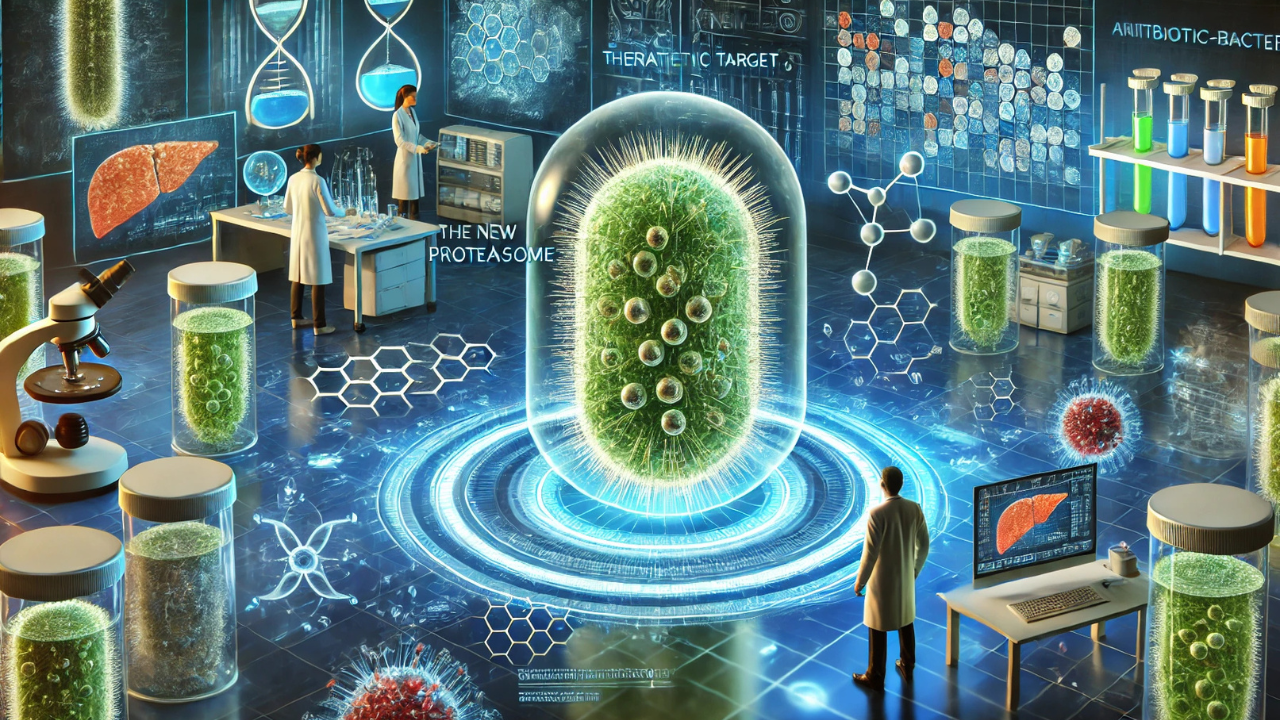
Scientists Explore The Proteasome As A Therapeutic Target To Replace Traditional Antibiotics And Contain Bacterial Resistance.
In recent years, combating antibiotic-resistant bacteria has become one of the biggest challenges in modern medicine. Scientists are turning their attention to the proteasome, a protein complex essential for cell survival.
This focus may pave the way for new treatments against bacterial infections and reduce reliance on traditional antibiotics.
The Role Of The Proteasome In Cells And Bacterial Resistance
The proteasome functions as a protein degradation system in eukaryotic cells and some bacteria, playing a fundamental role in protein quality control.
-
Motorola launched the Signature with a gold seal from DxOMark, tying with the iPhone 17 Pro in camera performance, Snapdragon 8 Gen 5 that surpassed 3 million in benchmarks, and a zoom that impresses even at night.

-
Satellites reveal beneath the Sahara a giant river buried for thousands of kilometers: study shows that the largest hot desert on the planet was once traversed by a river system comparable to the largest on Earth.

-
Scientists have captured something never seen in space: newly born stars are creating gigantic rings of light a thousand times larger than the distance between the Earth and the Sun, and this changes everything we knew about stellar birth.

-
Geologists find traces of a continent that disappeared 155 million years ago after separating from Australia and reveal that it did not sink, but broke into fragments scattered across Southeast Asia.

In the human body, this mechanism recycles damaged proteins, prevents neurodegenerative diseases, and strengthens the immune response.
In some pathogenic bacteria, the proteasome helps these microorganisms survive under stress conditions.
In light of this discovery, the scientific community is seeking ways to inhibit this system as an innovative strategy to treat infections without resorting to traditional antibiotics.
The Problem Of Bacterial Resistance To Antibiotics
The indiscriminate use of antibiotics has led to the emergence of superbugs, microorganisms that have developed resistance to conventional treatments.
According to the World Health Organization (WHO), if no effective solution is implemented, antimicrobial resistance could cause up to 10 million deaths annually by 2050.
Therefore, researchers are investing in innovative alternatives, and the proteasome appears as a possible path to overcome this problem.
The Proteasome As A Therapeutic Target
Recent studies indicate that some pathogenic bacteria depend on the proteasome to eliminate damaged proteins and maintain their viability in hostile environments, such as within the human body.
Thus, inhibiting this system could compromise the survival of these bacteria and make them more vulnerable to the host’s immune system.
Experimental research with proteasome inhibitors has already demonstrated promising results in eliminating pathogens without significantly affecting human cells.
This approach could revolutionize the treatment of infections, reducing the need for conventional antibiotics and minimizing the selection of resistant bacteria.
Benefits And Challenges Of This New Approach
The development of proteasome inhibitors to combat infections could bring various benefits, such as:
Less Dependence On Traditional Antibiotics
Reducing selective pressure on bacteria.
Fewer Side Effects
As this approach would not indiscriminately attack other beneficial bacteria in the human microbiome.
Greater Efficiency Against Various Bacterial Species
Becoming a versatile option in the treatment of severe infections.
However, some challenges need to be overcome.
First, scientists still need to develop selective inhibitors that target only the bacterial proteasome without compromising the functions of human cells.
Additionally, broader clinical research is needed to validate the safety and efficacy of these compounds.
The Future With The Proteasome In Infection Treatments
With bacterial resistance growing rapidly, finding new ways to combat infections becomes essential.
Thus, the proteasome emerges as a promising therapeutic target, capable of transforming the way we treat infectious diseases.
If research advances continue, doctors will be able to rely on a new class of effective medications to combat infections without exacerbating the global crisis of antibiotic resistance.
Therefore, this innovative approach could represent a significant advance for modern medicine, ensuring safer and more effective treatments for patients worldwide.








-

Uma pessoa reagiu a isso.