





 English
  Francês
  Alemão
  Italiano
  Japonês
  Norueguês
  Portuguese
  Spanish
 6 min of reading


Oil And Gas Giants Want To Install Offshore Wind Farm In Bacia De Campos, On The Coast Of Rio De Janeiro!
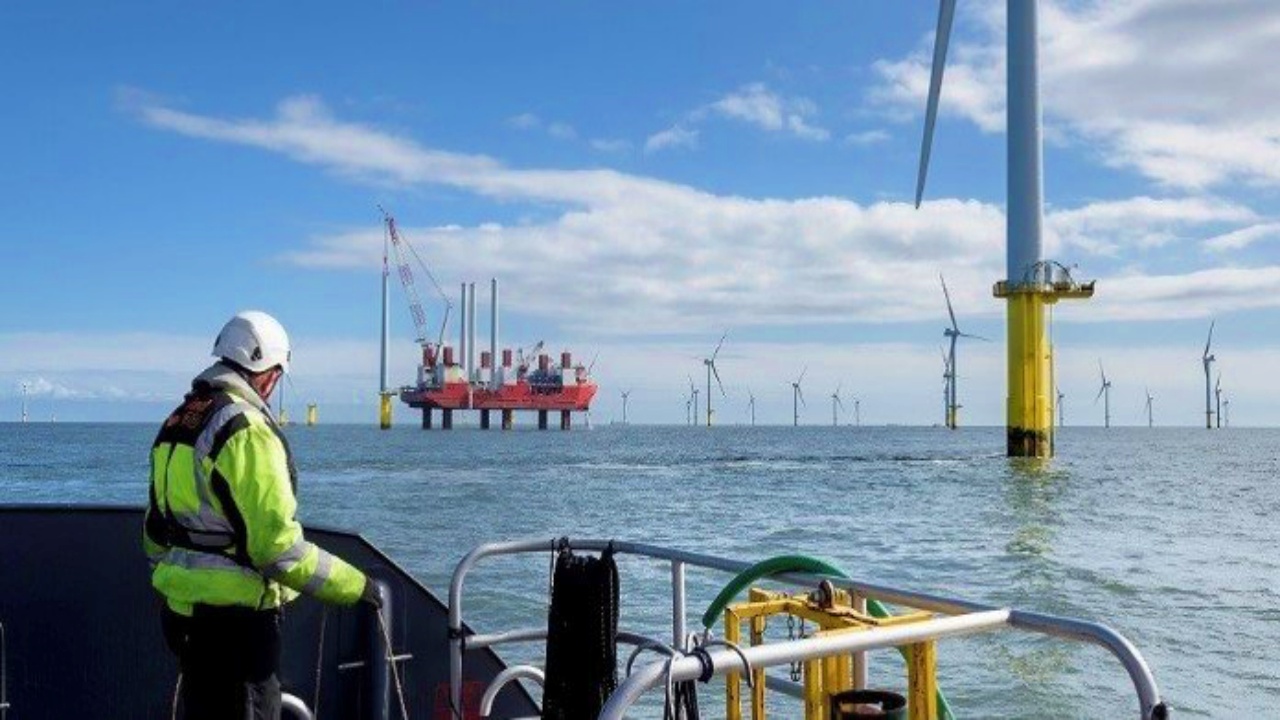
Brazil remains a “market to watch”: this is stated in the 2022 report from GWEC (Global Wind Energy Council), a global wind energy forum, and global oil giants like Shell, TotalEnergies, Petrobras, and Equinor are targeting billion-dollar investments in the Brazilian offshore wind market!
According to data from the National Energy Balance, produced by EPE (Energy Research Company, a government agency linked to the Ministry of Mines and Energy), the installed capacity of onshore wind power jumped from 1.426 GW installed in 2011 (0.5% of the national electricity matrix) to 20.771 GW in 2021 (11.4% of the matrix).
The source played a leading role in facing the water crisis the country experienced in 2021, accounting for 12% of the total energy generated in the country – ranking third, behind hydro and thermal sources – avoiding rationing like that seen 20 years ago, in 2001.
-
Rio Grande do Sul accelerates energy transition: State invests in renewable technologies and consolidates decarbonization strategies and pathways to attract billions in new industrial investments.

-
With 160,000 m² of collectors, an area larger than 20 football fields, Silkeborg, in Denmark, hosts a solar thermal plant that heats 19,500 homes and could become the largest solar heating plant in the world.

-
A study reveals the expansion of renewable energy procurement in Brazil and shows how companies are taking advantage of opportunities to reduce expenses, ensure energy efficiency, and strengthen strategic environmental commitments.

-
Mato Grosso do Sul excels in the sugar-energy sector: the state reaches a milestone of 22 operating mills and accelerates the production of clean energy in MS with a focus on sustainability.

Decree Establishing The Legal Framework For Wind Energy Exploration In The Marine Area Of The Union Was Published In January
With onshore wind energy – that is, on solid ground – evolving “full speed ahead,” national and foreign entrepreneurs are starting to launch the initial efforts for the new frontier to be overcome: offshore wind energy.
After much anticipation, Decree No. 10,946/2022 was published in January, establishing the legal framework for the exploration of wind energy in the marine area under the control of the Union. In 2020, the “Offshore Wind Roadmap” published by EPE indicates the potential for installing 700 GW of capacity in locations with depths up to 50 meters, equivalent to almost 4 times the total installed power generation capacity in Brazil.
The publication of the Decree, while allowing the first projects to begin development, highlights the complexity of implementing such an enterprise.
From Ibama, responsible for environmental licensing, to the Ministry of Tourism, which will assess the impacts on tourist regions, passing through the Air Force Command (interference in airport approach areas) and the Ministry of Agriculture, Livestock, and Supply (conflicts with aquaculture and fishing), interested parties must maintain dialogue with 9 agencies – in addition to ANEEL and MME themselves – to obtain all the necessary licenses for the exploration of this vast resource.
Nevertheless, Ibama reported, in an April 2022 report, that more than 130 GW of offshore wind capacity is currently undergoing environmental licensing, reinforcing entrepreneurs’ interest in this market.
The interest encompasses not only traditional players in the electricity market, such as Neoenergia (part of the Spanish group Iberdrola), but also groups with significant presence in the oil and gas sector, like Shell, TotalEnergies, and Petrobras – which joined forces with Equinor, already operating offshore wind farms (including plants in the UK, the northeastern United States, and Norway), to evaluate the installation of a wind farm in Bacia De Campos, on the coast of Rio De Janeiro.
Synergy Between The Oil Sector, With Recognized Expertise In Infrastructure Construction In Shallow, Deep, And Ultra-Deep Waters Is Clear
The synergy between the oil sector, with recognized expertise in infrastructure construction in shallow, deep, and ultra-deep waters, is evident. The sector combines its offshore project experience with the desire to invest in renewable sources, driven by the pressure of international agreements to develop more sustainable energy policies, the financial market’s interest in rewarding ESG practices, and the public’s willingness to consume clean energy.
If on one side we have a large availability of offshore wind resources, and on the other, a clear interest from the market in investing in this type of energy, it remains for policymakers to structure the pathways that will lead to this development.
The success of onshore wind energy in Brazil is directly linked to contracts within the regulated environment, such as the PROINFA auctions, Energy Reserve Auctions, Alternative Sources Auctions, and a privilege for this source in New Energy Auctions. However, the momentum of this contracting environment for enabling new projects has significantly decreased.
From 2012 To 2016, 8.4 GW Of Onshore Wind Projects Were Enabled In Brazil
From 2018 to 2021, 4.2 GW of onshore wind projects were enabled, a reduction of nearly 50% compared to the 8.4 GW enabled from 2012 to 2016. The reduction in expansion opportunities in the regulated market forced wind energy to shift its focus to the free market, quite successfully. Accompanied by an increased risk appetite and maturity of financing agents, the growth of this source did not decelerate despite the decrease in demand in the ACR.
Still, the regulated auctions were essential for this source’s maturation, allowing a reduction in installation costs from about R$ 6,500 /kW in 2007 to around R$ 4,300 /kW in 2021, a decrease of over 30%. The average estimated cost of offshore wind energy by EPE is significantly higher, in the range of R$ 10,300 /kW. The efficiency gain in energy generation, a consequence of the greater consistency of winds over water surfaces, will contribute to a decrease in the average cost of energy production, but it is not enough for the financial viability of the projects.
Offshore Wind Energy Will Be A Major Challenge
With the pathway of regulated auctions already saturated – and even more threatened by the total market opening proposed by PL 414/2021 – encouraging offshore wind energy will be a major challenge to be addressed by policymakers. How to promote the same price decline curve and increasing installation of offshore projects with the same success as the onshore experience without relying exclusively on the regulated market for these purposes?
The association with the production of green hydrogen (H2V) could be part of the answer to this question. Hydrogen can be produced through water electrolysis, a process that consumes a lot of electrical energy. It is considered green when this electrical energy comes from low-carbon sources. The production of hydrogen is of interest because it can provide more energy per unit of mass than other fuels (such as diesel or natural gas), making it a very attractive source for energy storage and use in the transportation sector. Since its combustion produces only water vapor, the reduction of emissions in this sector is closely tied to the production of H2V.
The 2020s Promise To Be Marked By Advances In This New Frontier, Led By Offshore Wind Energy
The formalization and strengthening of a national carbon credit market will also play an important role in enabling this type of venture, providing additional revenue to projects beyond the production of electrical energy itself.
The traditional route of regulated auctions should not be overlooked, with exclusive competitive processes for offshore wind energy starting as early as 2023.
Finally, the capital market will play a central role in the financial viability of these enterprises, alongside development banks. The issuance of green debentures, along with the valuation of shares of companies with ESG practices, will be central to raising funds for the construction of wind farms at sea.
As the 2010s were marked by the expansion of onshore renewable sources, the 2020s promise to be characterized by advances in this new frontier, led by offshore wind energy. The Brazilian continental shelves, which in the last decade attracted investors and provided development through the exploration of oil and natural gas, especially from the pre-salt layer, now gain renewed relevance, this time with a greener and more sustainable focus.
by – Gustavo Morais, coordinator of generator management at Trinity Renewable Energies.





Seja o primeiro a reagir!