





 Portuguese
  English
  Spanish
  6 min of reading
  6 comments


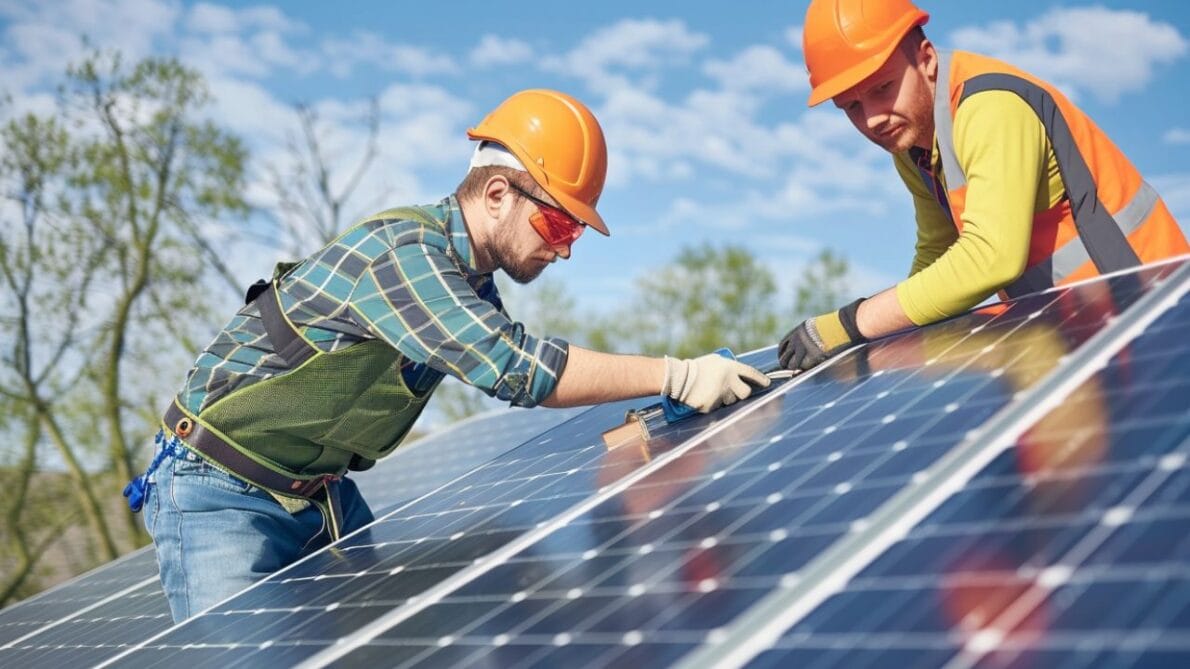

Discover How to Calculate Your Monthly Energy Consumption, How Many Photovoltaic Panels Are Needed, and All the Steps for Installing a Solar Energy System, Whether On-Grid or Off-Grid, Including the Costs Involved and the Estimated Time for Complete Replacement of Traditional Electricity with Solar.
Are you tired of high electricity bills every month? Solar energy could be the solution you’re looking for to save money and also help the environment. With the collaboration of Bruno Lowczy, an expert with 10 years of experience in the renewable energy sector, we will explain how you can calculate your energy consumption, choose the number of photovoltaic panels and understand everything about the installation.
Investing in a photovoltaic system not only reduces your expenses but also increases your independence from energy companies. We will detail what you need to know to set up your own solar energy system, including costs, types of equipment, and installation processes. Stay with us to find out how to get rid of electricity bills for good!
How to Know How Much Energy Is Consumed Per Month?

For the on-grid system, your monthly energy use is calculated by averaging how much you used throughout the entire year. It’s like taking all your electricity bills for the year, adding them up, and then dividing by the number of months to get an idea of how much you spend on average per month.
-
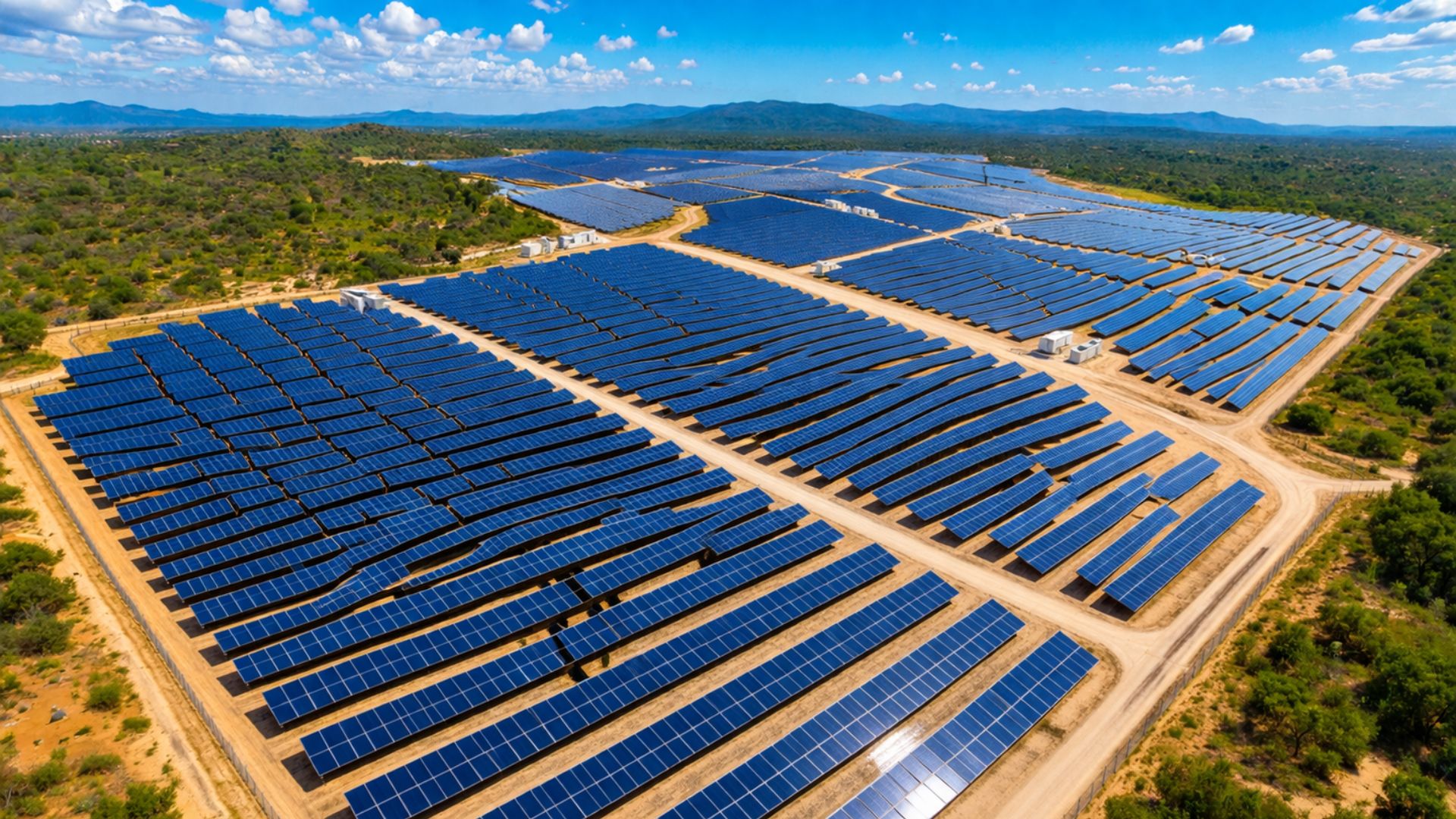
The Sol do Agreste Photovoltaic Complex begins operations in Pernambuco and accelerates the expansion of solar energy in Brazil, directly impacting the reduction of emissions and strengthening the sustainable energy matrix.
-
Renewable energy advances over protected areas in Brazil, and a survey by the Energy Transition Observatory reveals silent impacts that challenge environmental conservation and pressure sensitive traditional territories.

-
Rio Grande do Sul accelerates energy transition: State invests in renewable technologies and consolidates decarbonization strategies and pathways to attract billions in new industrial investments.

-
With 160,000 m² of collectors, an area larger than 20 football fields, Silkeborg, in Denmark, hosts a solar thermal plant that heats 19,500 homes and could become the largest solar heating plant in the world.


For the off-grid system, which does not use the common electricity grid, the calculation is done daily. A list is made of the devices that will use solar energy, checking how much each one consumes and how many hours they are on each day. By multiplying these numbers, we can determine how much energy the system needs to generate to keep everything running.
On-grid solar energy systems are connected to the electricity grid, allowing energy exchange and cost reduction through compensation, but they do not work during power outages. On the other hand, off-grid systems are independent from the grid, require batteries for energy storage, ensuring continuous supply even without grid power, ideal for remote locations or for those seeking total energy independence. Although off-grid systems offer more autonomy, they also require a higher initial investment due to the need for additional components for storage and energy regulation.
How Many Photovoltaic Panels Do You Need to Use Solar Energy?
To know how many photovoltaic panels you need, it’s important to consider how much energy you use every day. This number varies depending on how many electrical devices you have at home, where your house is located, and how and where the panels will be installed. Therefore, it is always a good idea to have a qualified professional, who is registered with CREA or CRT, perform this calculation to ensure that everything is done correctly. There are two main types of photovoltaic panels available on the market:
Polycrystalline: These are slightly less efficient, which means they convert a lower percentage of sunlight into electrical energy, but they are cheaper. They can be a good choice if you have plenty of space to install several panels. The ones with a capacity of 10W cost on average 79 reais, and the more powerful ones with 595W cost on average 1,299 reais.
Monocrystalline: These are more efficient, meaning they can convert more sunlight into electrical energy using less space, but they cost more. If you have limited space or want to maximize energy production, they might be the best option. These solar panels with 10W cost on average 89 reais and the 595W ones cost on average 2,000 reais.
The price of each panel varies according to its type and efficiency, so the final cost will depend on how many panels you need and which type you choose, based on your home’s energy consumption calculations.
And What About Inverters for Solar Energy?
A solar inverter is a very important component of a photovoltaic system because it converts the sun’s energy, which is collected by the panels in direct current (DC), into alternating current (AC), which is the type of electricity we use at home to power our devices. Depending on your needs, you can install a central inverter that manages everything, or you can have more than one inverter, some even with special functions to improve system efficiency. The average price of an inverter is 1,600 reais.
Besides inverters, a complete photovoltaic system also needs other important components, such as protective devices, which ensure the system’s safety; structures to hold the panels on the roof; cables to connect everything; charge controllers, which help manage the energy collected by the panels; and batteries, which store energy for when the sun isn’t shining. The charge controller acts like the brain of the system, especially in off-grid systems (which are not connected to the grid). It controls where the energy goes and ensures everything runs smoothly and safely.
- Mounting structure: R$ 600 – R$ 1,200
- Cables and connectors: R$ 150 – R$ 300
- Solar battery: starting at 1,500 reais
- Charge controller: R$ 200 – R$ 500
After Buying All the Components, What Is the Next Step?
After purchasing all the necessary components for the solar energy system, the next step is installation. Bruno explains how this works in a very simple way:
First, you connect the solar panels to the charge controller. The panels capture solar energy and convert it into electricity, which is sent to the controller. Next, you connect devices that operate on direct current (DC) directly to the charge controller. These devices will use the energy that comes directly from the solar panels or from the batteries.
Then, devices that need alternating current (AC), which is the most common type of energy used in homes, are connected to the frequency inverter. The inverter converts the direct current energy into alternating current.
The inverter is also connected back to the charge controller to ensure that energy distribution is correct. Finally, the battery bank is connected to the charge controller. The batteries store energy to be used when there isn’t enough sunlight, like at night or on cloudy days.
What Is the Average Installation Cost? Can You Install It Yourself?
The cost of installing a solar energy system can vary greatly. It depends on how many panels you are going to use, the size of the system, and how many additional functions it has. For a house with four people, typically, you can expect to pay between R$ 3,000 and R$ 20,000 for the complete installation.
As for the question of installing it yourself, technically, it is possible to install an off-grid photovoltaic system on your own, because it does not need to connect to the public electricity grid. This means that the responsibility for installation is entirely yours. However, it is not easy. Installing solar panels involves heavy and technical work, especially when you need to attach them to the roof.
While you might attempt to do this on your own, it is recommended to hire a qualified professional, like Bruno, who has been in the field for 10 years (Linkedin). A specialist can ensure that the system is installed correctly, which can save you money in the long run by avoiding material waste and maximizing system efficiency. Moreover, many system components come with warranties that are only valid if the installation is carried out by a licensed professional. These warranties can cover everything from manufacturing defects to the longevity and performance of the equipment over time.
How Long Does It Take for the Complete Replacement of Traditional Electricity Until Living Only with Solar Energy?
The time required to install a solar energy system in your home and start using only solar energy varies greatly. This time depends on many factors, such as the size and complexity of the system, how many people are working on the installation, and whether all necessary materials are available. On average, the complete installation of a residential system can take from 2 days to 4 weeks. Typically, a responsible technician and three installers work together to set everything up.
As for maintenance of the system, it usually involves simple tasks such as cleaning the solar panels and tightening some electrical connections, like terminals and connectors, to ensure that everything works well. There are also more complex maintenance tasks, which are less frequent and include adjustments to charge controllers, inverters, and monitoring or automation systems. These more detailed maintenance tasks are rarely necessary, especially if the system was well installed and uses high-quality equipment.







Posso montar um sistema off gride só para o ar condicionado
Gostei da matéria. Muito proveitoso
Bom dia tenho energia fotovoltaica na minha casa perfeito economia mensal em torno de 600,00 reais,na empresa a economia chega a 4.000,00 separo como uma economia para completar a aposentadoria,para mim perfeito