





 Portuguese
  English
  Spanish
 3 min of reading


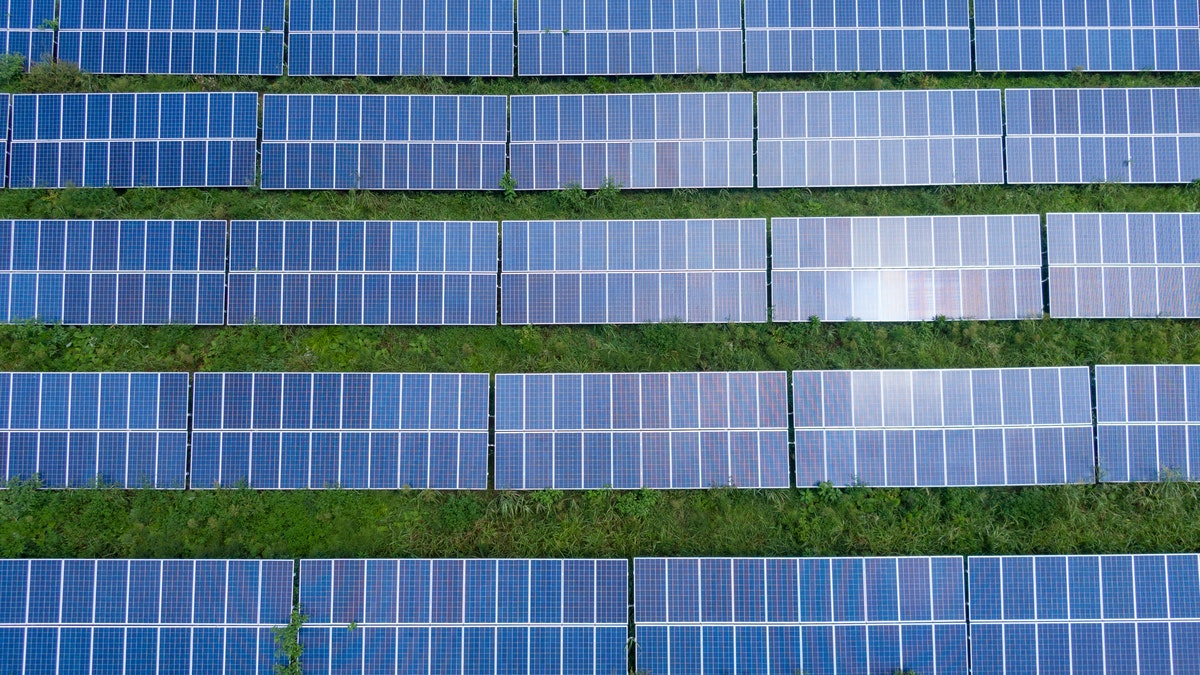
The Energy Supply of More Than 1,300 Points Distributed Along São Paulo’s Conceded Highways Comes from Solar Energy
This week, it was announced by the State Transport Agency of São Paulo (Artesp), in a press release, that the supply of more than 1,300 points scattered across the state’s conceded highways is carried out using solar energy. Today, the Agency oversees more than 11,100 kilometers of conceded highways in the state of São Paulo.
The Artesp points out that, although the practice of sustainable policies is not a contractual requirement, it has become one of the standout factors for the monthly evaluation of competing companies for the Concessionaire of the Year award.
Pedro Romanini Highlights the Economic and Environmental Benefits of Using Solar Energy
Pedro Humberto Romanini, active in the environment sector of the Agency’s Investment Directorate, emphasizes that solar energy is a completely clean energy source, capable of preventing the use of components that could release greenhouse gases into the atmosphere.
-
Renewable energy advances over protected areas in Brazil, and a survey by the Energy Transition Observatory reveals silent impacts that challenge environmental conservation and pressure sensitive traditional territories.

-
Rio Grande do Sul accelerates energy transition: State invests in renewable technologies and consolidates decarbonization strategies and pathways to attract billions in new industrial investments.

-
With 160,000 m² of collectors, an area larger than 20 football fields, Silkeborg, in Denmark, hosts a solar thermal plant that heats 19,500 homes and could become the largest solar heating plant in the world.

-
A study reveals the expansion of renewable energy procurement in Brazil and shows how companies are taking advantage of opportunities to reduce expenses, ensure energy efficiency, and strengthen strategic environmental commitments.


According to Romanini, in addition to the environmental benefits, the sustainability actions implemented on the conceded highways also impact the economy of resources, which can be directed to other benefits for users.
The Artesp further explains that, for solar energy production, it is necessary for photovoltaic panels to be installed at specific points where this energy source will be used.
The statement indicates that energy is generated through the panels and subsequently conducted to equipment responsible for converting it into electric current, which will be distributed to consumption points and instruments, such as, in the case of highways, toll plazas, Wi-Fi networks, and emergency phones.
Locations Where Photovoltaic Energy is Employed
Carvalho Pinto Highway: located in the municipality of São José dos Campos, the solar plant was installed by Ecopistas at km 92, operating with 240 solar collection panels. It will enable the concessionaire to avoid emitting 15.5 tons of carbon dioxide annually into the atmosphere, which is equivalent to the planting of 230 trees.
Anchieta/Imigrantes: the SAI System (Anchieta/Imigrantes) corresponds to the main link between the São Paulo capital and the coast, while utilizing two types of solar energy, on grid and off grid. The on grid refers to generation connected to the public grid, where, when excess energy is produced, part of it is returned and converted into credits for future use. The off grid, on the other hand, has no relation to the public grid, being used to power equipment on the highways, such as electronic panels. Sustainable resources are utilized at around 260 points.
Tamoios Highway: installed at km 48, the User Service Unit is 100% sustainable, thanks to the supply provided by 65 solar panels.
Highways in the Central North Region: in total, there are 380 km of highways managed by the Intervias concessionaire, where 100% of the energy used for the operation of 414 points is clean. Additionally, another 573 points of SP 255, between Araraquara and Riversul, under the management of Via Paulista, also already operate in a completely sustainable manner.
Highways in the Marília and Ribeirão Preto Region: 100% of the energy needs for the operation of equipment in the 570 km network managed by Entrevias are met by clean energy. Thus, eight toll plazas are sustained, along with monitoring cameras (CCTV) and traffic analysis systems (SATs).
Campinas Region: the D. Pedro I (SP-065) and Magalhães Teixeira (SP-083) highways, managed by Rota das Bandeiras, have more than 540 points powered solely by solar energy. In this context, the bases of the User Service System (SAU), call boxes, and instruments for counting and analyzing vehicle flow are included.
AB Triângulo: the highways managed by the concessionaire, such as Washington Luís Highway (SP 310), Brigadeiro Faria Lima Highway (SP-326), and SP 333, have photovoltaic solar panels responsible for generating solar energy for their operation, capturing around 200 MWh of energy annually.








Seja o primeiro a reagir!