





 Portuguese
  English
  Spanish
  5 min of reading
  0 comments


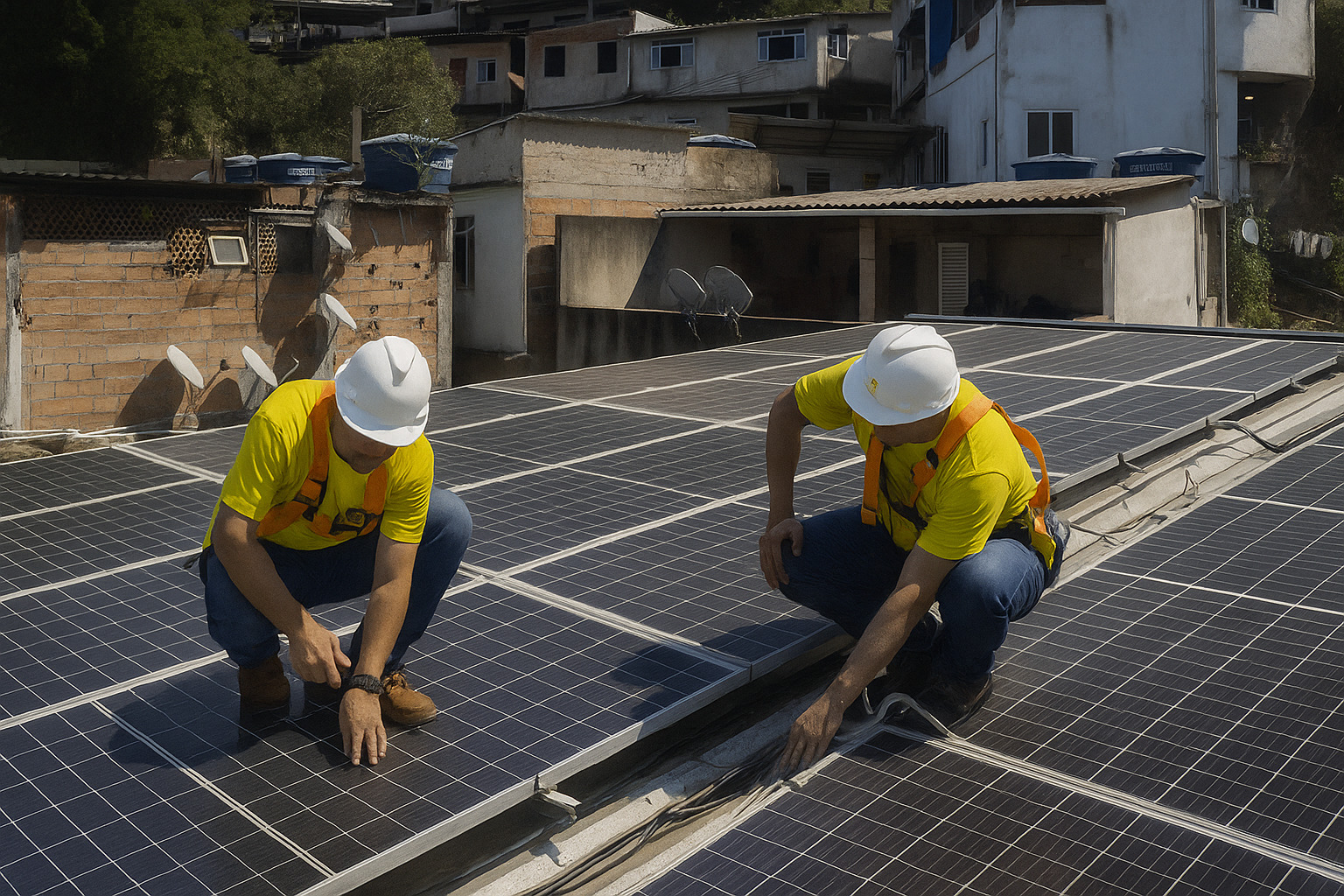
Learn How Solar Energy Transforms Slums, Promoting Autonomy and Sustainability in the Babylon Community in Rio de Janeiro, and Creating a Model for Energy Self-Sufficiency.
Solar energy transforms slums in a surprising way, promoting profound changes in the lives of people living in popular communities in Rio de Janeiro. Indeed, amidst daily hardships, the arrival of clean and renewable energy brings not only savings but also dignity, autonomy, and new opportunities.
This transformation is happening in the Babylon community, which is currently on track to become the first energy self-sufficient slum in Brazil.
Historically, slums emerged as a reflection of Brazilian social and economic inequalities. They mark urban areas with a lack of adequate infrastructure, poor public services, and difficult living conditions.
-
Europe records strong euro economy with solar energy in March and sparks curiosity about which country leads growth that redefines the energy market and reduces costs.

-
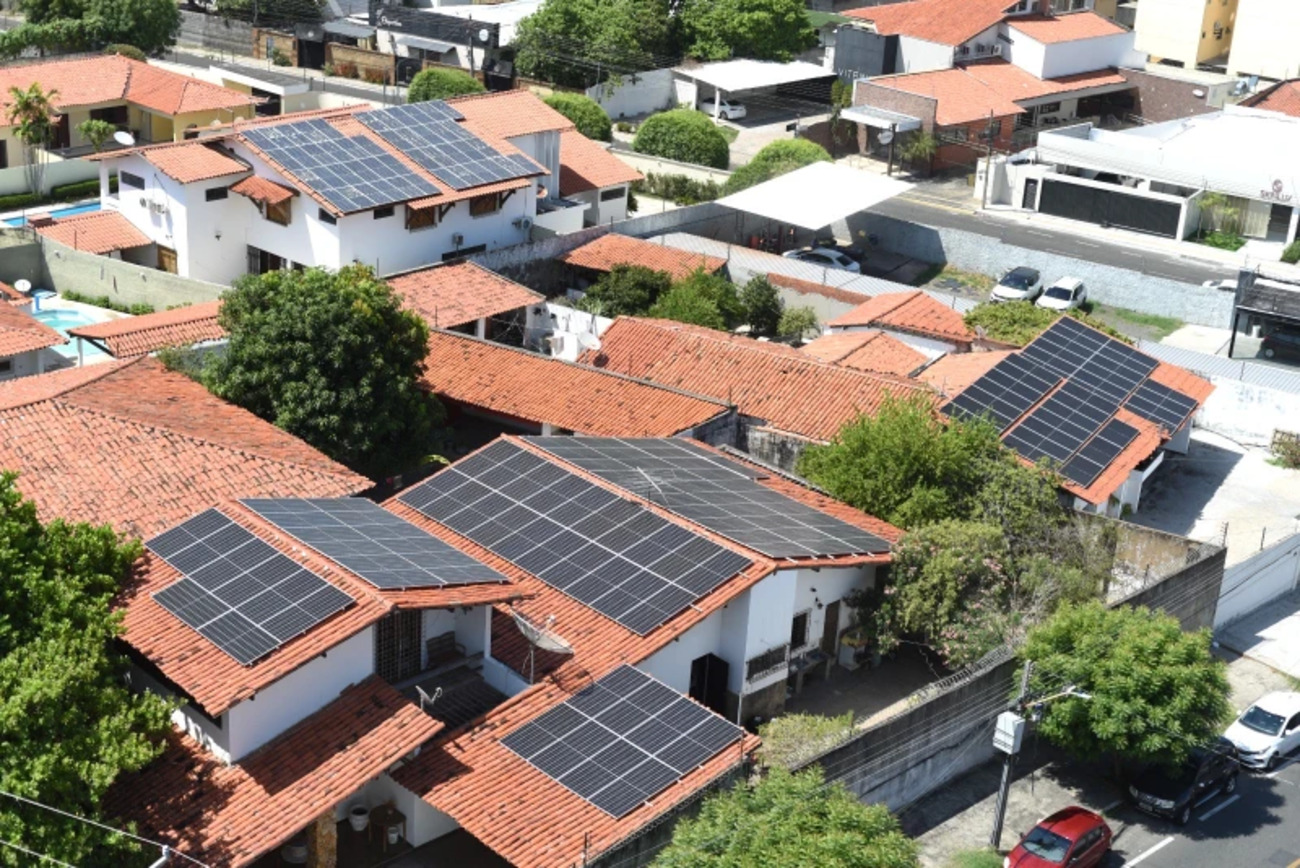
Piauí reaches a historic milestone in energy transition: State records nearly 160,000 households powered by solar energy and leads growth in the Northeast.
-
Argentina debuts its first 100% solar-powered highway and transforms an entire road into a showcase of clean energy.

-
Minas Gerais reaches a historic record and surpasses the power of Itaipu, but network costs generate debate: Understand why solar energy in MG impacts the electricity bill of those without panels.

Despite many challenges, slums have always served as spaces of creativity, resistance, and solidarity. Therefore, solar energy, when combined with a community project, reinforces this strength and opens a new path for local development.
Until recently, access to electricity in slums faced irregularities and high tariffs. Many families suffered from illegal connections and paid bills with arbitrary values estimated by the utility company.
This scenario, consequently, negatively affected the family budget, reducing quality of life. For this reason, solar energy emerged as a possible solution, capable of addressing excessive costs while also being environmentally friendly.
The Pioneering Spirit of the Babylon Slum
The case of the Babylon slum, located in front of the famous Copacabana beach, stands out as an example. In 2015, two hostels in the community decided to invest in the installation of solar panels on their rooftops.
This pioneering initiative arose from the need to reduce electricity bills, which represented a significant burden for local businesses. By doing so, they overcame technical and bureaucratic difficulties, paving the way for real change.
The initial installation, although focused on commercial establishments, quickly caught the attention of the community. Solar energy began to be seen not as a distant luxury, but as a viable alternative for residences and public spaces.
The residents’ association joined the project, installing their own panels and taking advantage of the benefits of energy savings.
Over time, Revolusolar, a non-governmental organization involved in the project, expanded its role. More than just providing equipment, the NGO trained young people from the slum to become electricians and installers specialized in photovoltaic systems.
This movement created a virtuous circle: the jobs generated within the community help maintain the project sustainably and strengthen the social fabric.
The professional training offered by Revolusolar represents a significant cultural shift. Young people who previously faced few future prospects now find a profession with growth potential and social relevance.
This technical training not only generates income but also empowers these young people to become protagonists of change in their own communities.
Energy Cooperatives and Community Self-Sufficiency
The idea of an energy cooperative emerged as a natural step in this evolution. Organizing energy production and consumption in a community manner collectively empowers the population, reducing dependence on traditional utility companies and promoting self-sufficiency.
The Babylon slum is on track to become a model for other Brazilian communities.
In addition to economic benefits, the presence of solar energy in the slum generates a significant environmental impact. The substitution of fossil fuels for clean energy reduces pollution emissions, improves air quality, and helps combat climate change.
This environmental awareness, built alongside the community, reinforces values of care and sustainability, essential for the future of cities.
Another relevant aspect is the savings generated for families. By reducing electricity bills, solar energy frees up resources that people can use for basic needs such as food, health, and education.
Thus, this directly improves quality of life and can help break the cycle of poverty in many slums.
Looking back, we realize that the transformation of Babylon results from a set of historical, social, and technological factors. The development of photovoltaic solar technology, which made panels increasingly accessible and efficient, opened a window of opportunity.
Community mobilization, supported by public policies and special financing, took this technology where it previously seemed impossible to reach.
Social, Economic, and Environmental Impacts of Solar Energy
The impact of solar energy in slums goes beyond reducing electricity bills. It promotes social inclusion, stimulates the local economy, and strengthens community identity.
The technical knowledge disseminated through the training of young people generates employment and prepares the slum for a future where sustainability will gain increasing importance. In this way, solar energy transforms slums not only physically but also culturally and socially.
Therefore, we must expand this model to other regions of the country. Brazilian slums are numerous and diverse, each with its characteristics, challenges, and potentials.
The replication of initiatives like Revolusolar can help many other communities achieve energy autonomy, reduce inequalities, and promote local development.
Moreover, the use of solar energy in slums brings an important symbolic effect. It shows that innovative and sustainable solutions do not belong solely to wealthy areas or large cities.
In summary, solar energy is a powerful tool that transforms the reality of slums. In Rio de Janeiro, the Babylon community demonstrates that it is possible to move towards self-sufficiency, uniting technology, social organization, and professional training.
This trajectory reinforces the importance of investing in renewable energies and participatory models that respect the particularities of each place and strengthen people’s capacity to build their own future.
The transformation brought about by solar energy in slums is, therefore, an inspiring example of how innovation and solidarity can walk hand in hand.
This is a change that involves not only energy generation but also the generation of hope, autonomy, and dignity for thousands of Brazilians.






-

Uma pessoa reagiu a isso.