





 Portuguese
  English
  Spanish
  4 min of reading
  0 comments


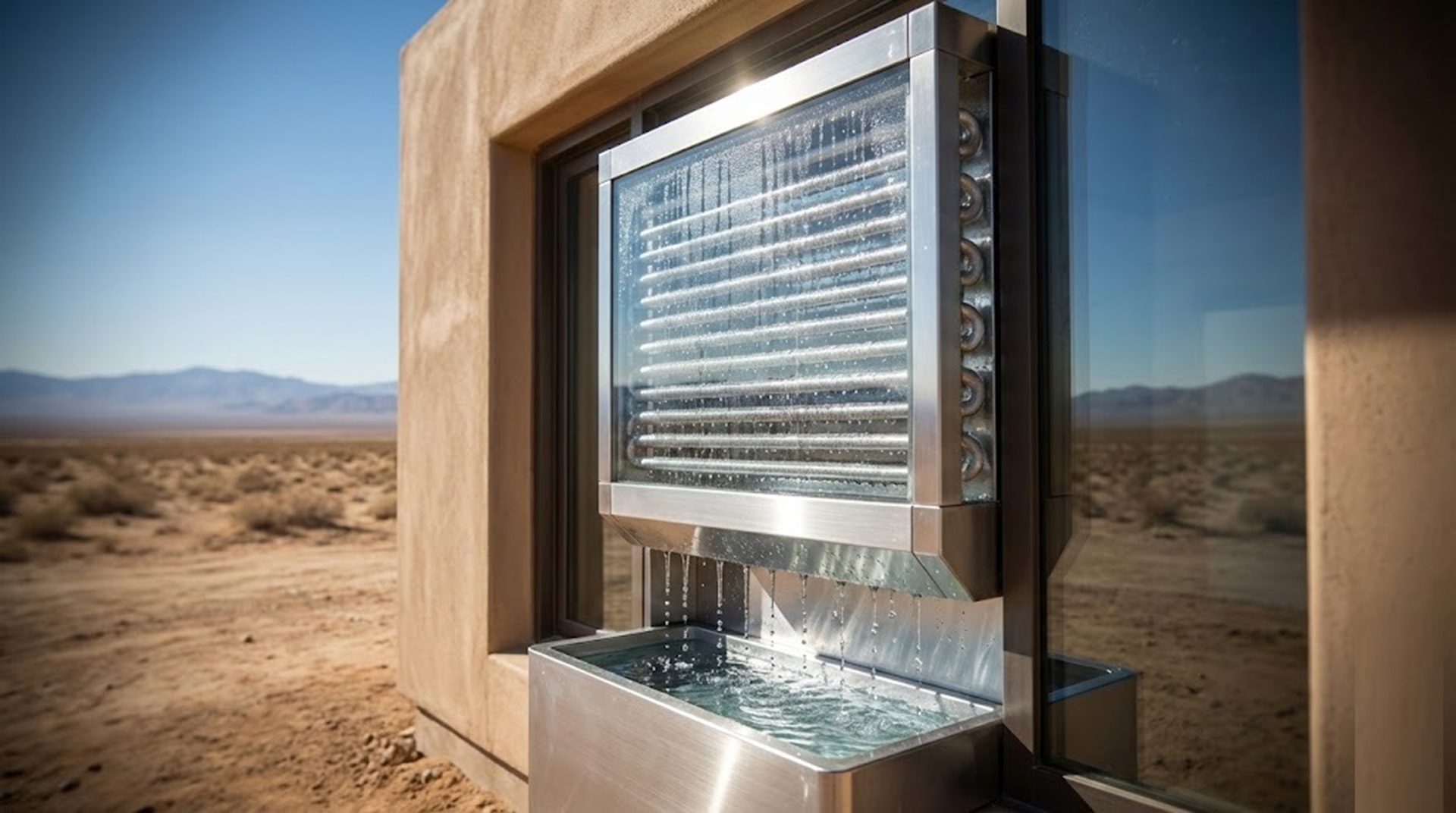
The New Technology Developed by MIT Engineers Promises to Revolutionize Access to Drinking Water in Arid Regions, Using a Passive Hydrogel System That Absorbs Moisture from the Air and Converts It into Safe Liquid for Human Consumption Without Relying on Any External Electric Power Source.
MIT engineers have developed a passive device that generates up to 161.5 ml of drinking water daily using hydrogel. The system operates without electricity and has been tested in Death Valley, aiming to serve 2.2 billion people without access to water.
More than 2.2 billion people worldwide live without guaranteed access to drinking water. The problem is not distant and also occurs in countries with advanced infrastructure.
Millions rely on poor-quality water or fragile systems vulnerable to droughts and failures. Rivers, reservoirs, and aquifers show clear signs of depletion under the growing pressure.
-
With R$ 22.5 million from BNDES, J. Assy accelerates the hybrid diesel-electric autonomous planter, featuring remote monitoring and AI: it promises to plant without an operator and adjust to the terrain; the prototype will be ready in the second half of 2026.

-
Robot that climbs açaí trees in Pará cuts bunches with a remote control, reduces accidents for harvesters, and promises to harvest 10 times more, reaching 1,000 kg per day, costing R$ 21,000 with subsidized PRONAF.

-
Scientists have discovered for the first time a gigantic cave hidden beneath a volcano on Venus, nearly a kilometer wide and 375 meters high, using radar images that had been forgotten for over 30 years.

-
They were brilliant! Scientists discover that our ancestors in China were already making super advanced tools 160,000 years ago, changing everything we knew.


MIT engineers decided to look to the Earth’s atmosphere for viable solutions. The air contains immense amounts of water vapor, even in areas considered extremely dry.
The central issue was not the existence of the resource, but the ability to capture it efficiently. The goal was to create a passive and safe system to harness this ubiquitous source.
The answer takes the form of a black, vertical panel the size of a window. The device utilizes a smart hydrogel capable of “breathing” the moisture present in the environment.
Material Innovation and Mechanism of Action
The device is based on a highly absorbent hydrogel housed within a glass chamber. The outer layer has been specifically designed to promote the condensation of captured moisture.
The appearance resembles dark bubble wrap made up of small functional domes. Each dome serves an essential function by maximizing the surface area contact with the air.
The hydrogel absorbs water vapor and expands at night with high humidity. The ambient heat of dawn causes this accumulated vapor to be released naturally.
The glass remains cooler thanks to its coating and acts as a condensation surface. The liquid water flows by gravity and is collected through a simple tube system.
The system delivers clean water ready for immediate use without the need for treatment. There are no motors, pumps, or electricity, as everything operates through the natural dynamics of the materials.
Field Tests in Death Valley
The team installed the system in Death Valley to test the idea outside the lab. The goal was to verify its operation in one of the driest environments in America.
The local conditions were far from ideal, with low relative humidity and extreme temperatures. Intense solar radiation also posed a significant challenge to the stability of the practical experiment.
The device produced between 57 and 161.5 milliliters of drinking water per day during these tests. The relative humidity of the air during collection was close to 21%, a critical index.
This volume surpasses many existing passive systems and competes with active projects that require energy. The number is significant when analyzed from the perspective of efficiency in adverse conditions.
The most important factor demonstrated is not the isolated number but the scalability of the system. Several panels operating in parallel could meet the basic water needs of a household.
Technical Overcoming of Saline Contamination
Saline contamination is a historic problem in capture systems based on hydrogels. Previous projects incorporate salts like lithium chloride that end up infiltrating the final collected water.
The team made a crucial decision to incorporate glycerol directly into the hydrogel composition. This compound stabilizes the salt, prevents crystallization, and drastically reduces leakage during operation.
The developed hydrogel has no nanoscale pores, which limits the escape of salt. The result is water with salt levels well below the limits for consumption.
The technology eliminates the need for complex filters or additional purification processes. This advancement resolves a technical obstacle that had enormous practical implications for water safety.
Advantages Over Metal-Organic Frameworks
Porous metal-organic frameworks, known as MOFs, have been the focus of research in water capture. They are efficient but have clear limitations, such as the physical inability for volumetric expansion.
The storage capacity of MOFs is fixed, and their large-scale production is expensive. The new hydrogel is unmatched because it swells, contracts, and adapts to transport water.
The material can be produced using relatively simple processes, essential for practical applications. The design was conceived for the real world, not just as a laboratory prototype.
Future Applications and Social Impact
The solution is viable for regions with limited resources where installing solar panels is complicated. The required maintenance is minimal, and each component has been designed to optimize costs.
The team plans to optimize materials and enhance the geometry to adjust performance to different climates. Tropical regions could yield water production results superior to those tested in the desert.
The potential includes use in emergency systems for extreme droughts and refugee camps. The technology can also reduce the need for logistical transport of bottled water.
The device represents a different way of thinking about access to drinking water globally. The innovation leverages a ubiquitous and underutilized resource through smart and well-designed materials.







-

-

-

3 pessoas reagiram a isso.