





 Portuguese
  English
  Spanish
  3 min of reading
  10 comments





Ancient Technology Created in Iran Cools Environments Efficiently Even Today, Without Using Motors, Electricity, or Refrigerants
What appears to be a 21st-century eco-innovation is, in fact, a solution created over two millennia ago. In the Iranian desert, populations developed a passive ventilation system that still works without consuming any electrical energy. These are the badgirs, or “wind towers,” a type of “air conditioning” that is 2,000 years old that continues to impress modern engineers and architects.
The technology is still used today in cities like Yazd, where temperatures can reach over 45 °C. These clay towers can cool indoor environments by up to 10 degrees using only wind and physics. According to a report from Olhar Digital, the system has become a symbol of sustainability and thermal efficiency in extreme climates.
What Is This “Air Conditioning” That Is 2,000 Years Old?
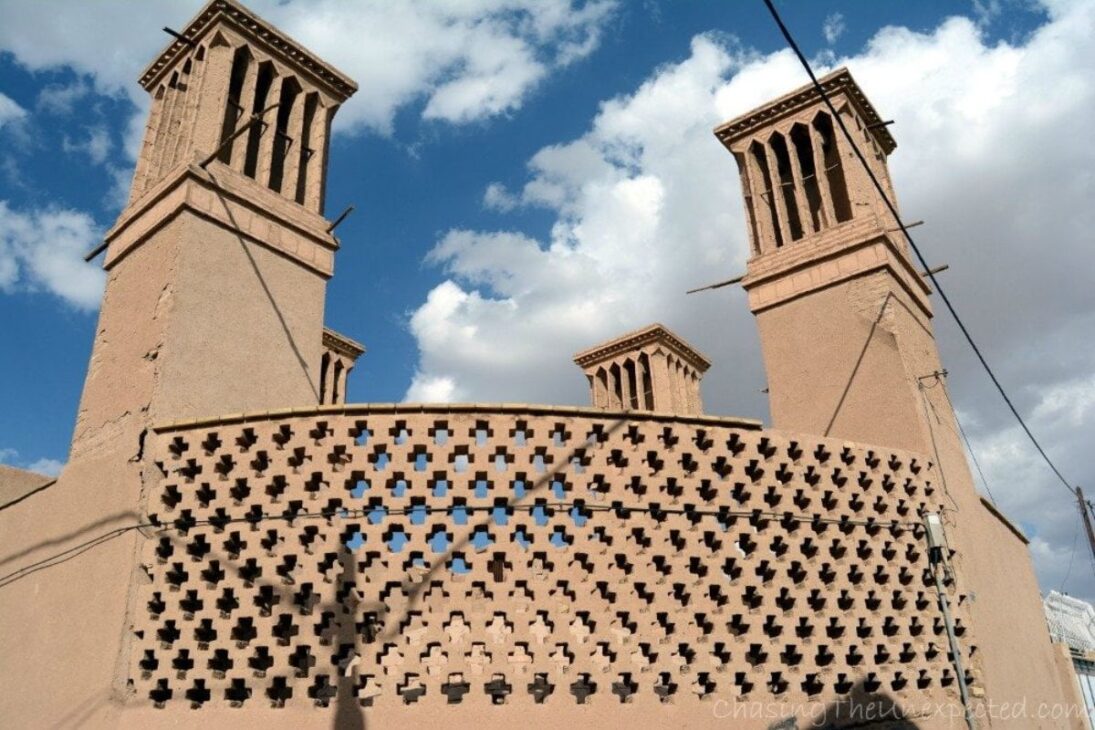
The badgirs are vertical structures made from clay and adobe. They capture the wind and channel air into homes, schools, and mosques, reducing internal heat. They do not use electricity, have no motors, and have no moving parts.
-
Darkness can surpass light in an optical phenomenon confirmed by scientists, which expands the understanding of relativity and reveals new behaviors of waves in the universe.

-
A Brazilian scientist created a pen that touches human tissue and identifies cancer cells in seconds using a drop of water and artificial intelligence, and Lívia Eberlin’s invention has already been used in over 400 surgeries in the United States and Brazil.

-
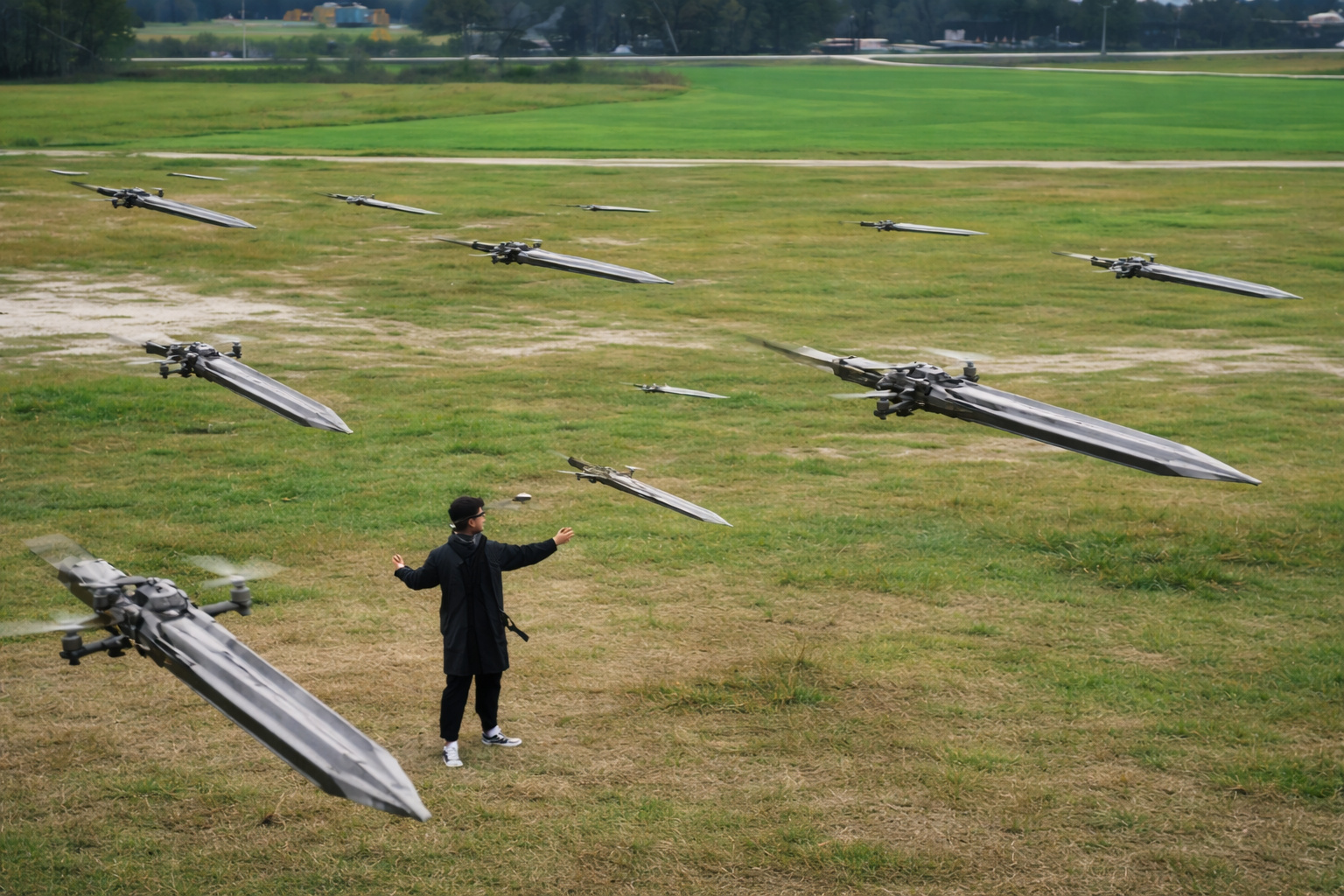
An inventor in China creates flying drones shaped like swords that respond to hand gestures in real time, with technology based on motion sensors transforming interaction into a scene worthy of a movie and redefining the control of machines in the air.
-
100 times less energy consumption: the innovation that could solve the huge energy crisis of AI.


The city of Yazd, in Iran, is considered the largest example of the application of this technology, with dozens of historical buildings still operating with natural ventilation. The technique is passive, meaning it relies on physical principles such as thermal convection and evaporative cooling.
How Do They Work?
The system relies on a temperature and pressure difference between external and internal air. The wind enters through the upper openings of the towers, descends through vertical ducts, passes through cool and humid surfaces (such as cisterns), and finally reaches the rooms with more moderate temperatures.
Even without wind, the internal hot air tends to rise naturally and escape through the tower, creating a continuous flow of renewal and ventilation. The efficiency of the system varies according to the size of the tower, the materials used, and the layout of the building.
Who Created the Badgirs?
The invention is attributed to the Persian civilizations of antiquity, who were already mastering hydraulic and architecture techniques adapted to the desert climate. The earliest records of wind towers date back 2,500 years, although many of the structures still standing are between 800 and 1,000 years old.
These constructions are part of Iran’s historical heritage and have been recognized by UNESCO in cities like Yazd. Even after centuries, they remain operational and serve as inspiration for modern projects.
How Are They Constructed?
The towers are made with thermal materials such as clay and adobe bricks. Their height can range from 5 to 30 meters, with multiple openings facing different directions, allowing them to capture wind regardless of its direction.
Many towers are also connected to subterranean environments, such as basements and reservoirs, which help cool the air even further before it enters the main rooms. The result is an integrated, economical system adapted to the arid climate.
Is It Still Used Today?
Yes. Besides historical buildings, the concept of badgirs has been rediscovered by contemporary architects and engineers seeking sustainable solutions. Countries like Iran, the United Arab Emirates, and even regions of Europe are exploring passive ventilation in new buildings.
At a time of high energy consumption and climate change, this “2,000-year-old air conditioning” is being studied again as a viable alternative for energy-efficient buildings. The revival of this ancient technology shows that innovation does not always mean novelty.
Would you live in a house with this type of natural cooling? Do you think this model can be used in Brazil? Leave your opinion in the comments — we want to hear from those interested in sustainable solutions in everyday life.






Formidável , seria maravilhoso se uma empresa ou uma ONG implantase esse projeto no nordeste , aliás em todo região Brasileira, digo assim devido o clima muito quente em todo o Brasil
Vamos aprender com os outros e fazermos o mesmo.
Claro que sim , maravilhoso saber disto!