





 Portuguese
  English
  Spanish
  3 min of reading
  0 comments



Understand How Ford Is Revolutionizing Safety With A Drug Detection System That Protects Your Vehicle From Accidental Trafficking, Ensuring Illegal Substances Are Not Inserted Without Your Knowledge
Ford’s latest patent aims to protect drivers from inadvertently becoming drug traffickers, a scenario that, as unusual as it may seem, has been a real concern for some drivers.
Modern vehicles are becoming increasingly intelligent, equipped with sensors, cameras, and systems that monitor various aspects of driving and safety. Now, Ford wants to go further, preventing its vehicles from being used by criminals to transport drugs without the owners’ knowledge.
Innovative Ford Patent for Smuggling Detection
Registered in March 2023 and published in September of the same year, Ford’s patent describes a “unknown load detection and evidence collection system.”
-
A French brand placed a car on four huge red balloons to prove that its suspension made the vehicle “float,” and the surreal scene became one of the most iconic and unusual images in automotive history.

-
Jeep Avenger begins production in Brazil, debuting as the brand’s new entry-level SUV and inaugurating an unprecedented phase by becoming the first national Jeep manufactured outside of Goiana, as part of a R$ 3 billion plan.
-
Costing R$ 12,490, the new Shineray Urban Lite 150 “cheap one” arrives in Brazil with a CVT transmission, digital dashboard, and LED lights, making it more affordable than the Biz and targeting those who want to abandon the bus.
-
Ducati brings to Brazil the Superleggera V4 Centenario: 228 hp that become 247 with a track kit, carbon fiber and carbon-ceramic brakes, estimated price between R$ 1.5 and 2 million, deliveries only in 2027.


This system is designed to prevent vehicles from becoming tools for drug traffickers, who use the technique of “blind mules”—people who cross borders transporting drugs without even knowing they are involved in a crime.
This practice has been used by traffickers looking to bring contraband into the United States without exposing themselves to the risk of arrest.
How Does The System Work?
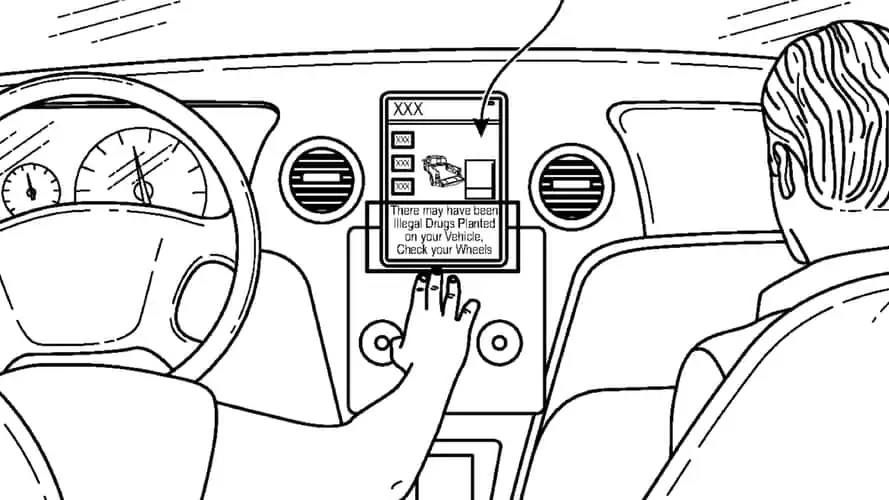
The technology proposed by Ford utilizes existing sensors in vehicles, such as cameras and microphones, to detect suspicious behaviors and activities. The system can monitor the weight of the car, record sounds near the vehicle, and even look for unusual GPS signals.
Traffickers often track their victims’ cars to know where to collect drugs from the other side of the border, and this monitoring can be intercepted by Ford’s system.
If the system identifies unusual activity—such as someone lingering near the car for a long time—it can activate cameras and record the environment, storing the recording as evidence.
Additionally, significant changes in the weight of the vehicle, such as the addition of hidden drugs, can alter how the car drives. The system would be able to identify these changes and alert the owner.
Blind Mules and Legal Impact
The concept of “blind mule” is not new and has led many innocent people to face serious legal problems. In a 2023 report, inewsource detailed cases of individuals who were caught and prosecuted for transporting drugs unknowingly, many of whom were later exonerated.
Ford’s idea is to prevent drivers from going through this type of situation, which can lead to years of legal headaches.
Some drivers manage to discover the contraband before crossing borders, while others only realize the trap after they are already on the other side.
However, it is not always possible to prevent traffickers from retrieving the planted drugs, as many use sophisticated surveillance systems to track vehicles from a distance.
Modern Challenges
The smuggling landscape has become even more complicated with the rise of fentanyl trafficking. This extremely potent substance can be transported in much smaller quantities, making it even easier to smuggle without raising suspicion.
Furthermore, the technology used by criminals has also evolved. Techniques such as relay attacks, where thieves copy electronic key signals to steal vehicles, could be adapted by traffickers to access cargo compartments and plant drugs without the owner’s notice.
This combination of factors makes Ford’s proposed system an important innovation for driver safety, although, for now, it remains just a patent.
Many patents registered by large companies never reach implementation, serving merely as a way to protect intellectual property.










Seja o primeiro a reagir!