





 English
  Francês
  Alemão
  Italiano
  Japonês
  Norueguês
  Portuguese
  Spanish
 6 min of reading
  0 comments


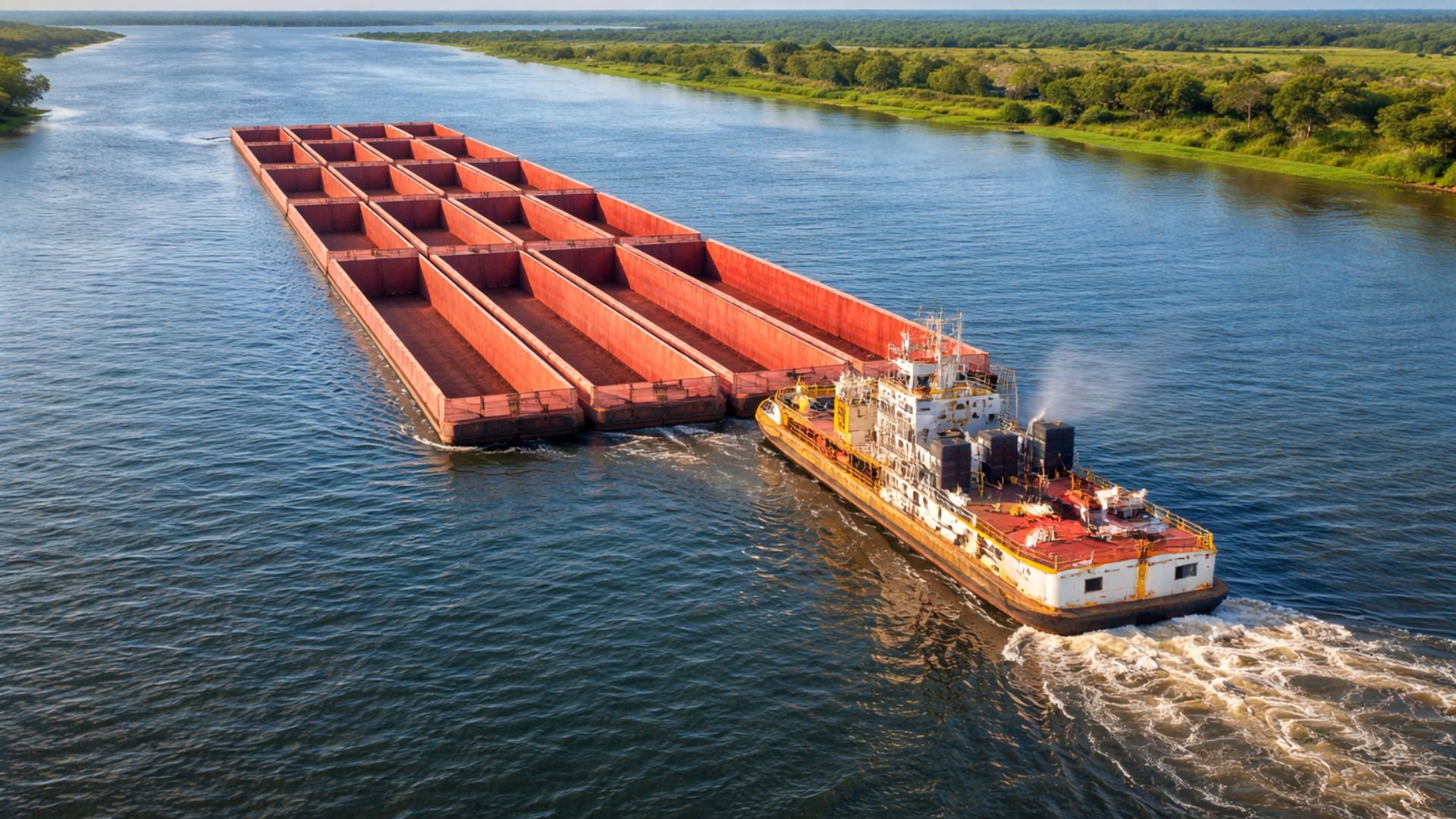
The Tapajós Waterway Takes Center Stage in Energy Logistics by Reducing Emissions, Replacing Thousands of Road Trips, and Expanding Efficient Fuel Transport with More Sustainability in the Amazon.
The expansion of waterway transport in Brazil has been gaining prominence as a strategic solution to improve logistics, reduce costs, and decrease environmental impacts. A clear example of this transformation occurs in the Tapajós Waterway, which has increased its importance in the transport of fuels and biofuels in the North Region.
According to a publication by the Brazilian Institute of Oil, Gas and Biofuels (IBP) on March 4, by replacing thousands of road trips, the logistics corridor between Miritituba and Santarém demonstrates how the fluvial modal can contribute to the reduction of emissions and strengthen sustainability in energy supply.
Understand the Impact of the Tapajós Waterway on Sustainability
Currently, approximately 1.2 million cubic meters of fuels and biofuels are transported annually through this logistics corridor. Of this total, about 840 thousand m³ correspond to derivatives that arrive at Miritituba, while 360 thousand m³ of biofuels leave the region.
-
With earth, bamboo, straw, and lime mortar, a specialist builds a house for just over $460 and draws attention for its cost being much lower than traditional construction.

-
Rodrigo de Freitas Lagoon advances in environmental recovery with sanitation, elimination of irregular sewage, and the resumption of water sports in Rio de Janeiro.
-
Sustainable housing gains strength with a nationally awarded project in Campo Grande, highlighting innovative solutions that combine sustainability, urban integration, and efficiency in the use of natural resources.

-
City Where Residents Live Underground to Escape 52°C May Be a Picture of the Future on an Increasingly Hot Planet

This flow of cargo represents a significant logistical impact: it avoids approximately 20 thousand annual road trips, reducing truck circulation on roads that often have infrastructure limitations.
In addition to logistical gains, there are significant environmental benefits. A study by the consulting firm Future Climate Group indicates that waterway transport can emit up to 73% less CO₂ than road transport and about 36% less than rail transport. These numbers reinforce the role of the Tapajós Waterway as a more efficient alternative to transport fuels and reduce emissions associated with energy logistics in the country.
At the same time, experts point out that strengthening Brazilian waterways can contribute to increasing supply reliability, reducing logistics costs, and supporting the sustainability agenda for cargo transport.
Tapajós Waterway Gains Relevance in Fuel Logistics in the Amazon
The Tapajós Waterway has become a strategic route for transporting fuels in the Amazon region. The corridor connecting Miritituba to Santarém allows large volumes of petroleum derivatives and biofuels to be moved more efficiently.
This logistical model has gained strength in recent years because fluvial navigation enables the transport of large loads in a single operation. This reduces the need for multiple road trips, which were traditionally used to ensure the supply of cities and economic hubs in the North Region.
By transporting about 1.2 million m³ of fuels and biofuels per year, the Tapajós Waterway demonstrates how the waterway modal can enhance logistics efficiency. The movement includes 840 thousand m³ of derivatives sent to Miritituba and 360 thousand m³ of biofuels departing from the region, creating a continuous logistical flow.
This type of operation strengthens regional supply and reduces dependence on long road trips, which contributes directly to improving the sustainability of the transport system.


Less Emissions and Fewer Road Trips in Fuel Transport
One of the most relevant impacts of the expansion of the Tapajós Waterway is the reduction of greenhouse gas emissions. Fluvial transport demonstrates superior energy efficiency compared to other transport modes.
According to the study by Future Climate Group, vessels used in waterways can emit up to 73% less CO₂ than road transport and 36% less than rail transport. This is because energy consumption per ton transported is significantly lower.
Additionally, the fact that a single fluvial convoy can transport large volumes of fuels drastically reduces the need for trucks on the roads. The volume moved in the Miritituba–Santarém corridor is equivalent to approximately 20 thousand annual road trips that no longer have to happen.
This reduction in road transport not only decreases emissions, but also reduces road wear, diesel consumption, and the likelihood of accidents involving hazardous cargo.
Therefore, the expansion of the Tapajós Waterway directly contributes to a more efficient energy logistics system aligned with global carbon reduction goals.
Logistical Sustainability and Efficiency in Supply for the North Region
The increasing use of the Tapajós Waterway also reinforces the importance of sustainability in cargo transport logistics. In areas like the Amazon, where the presence of navigable rivers is extensive, fluvial transport becomes a natural alternative to reduce environmental impacts.
The waterway modal has significant advantages compared to road trips, especially over long distances. Key benefits include lower energy consumption per ton transported and higher cargo capacity of vessels.
These characteristics make the transport of fuels via waterways more efficient from both logistical and environmental perspectives. Furthermore, utilizing the Tapajós Waterway helps alleviate pressure on highways that already face maintenance and infrastructure challenges.
Another important point is that well-structured waterways help reduce the risk of supply interruptions. Excessive dependence on road trips can create logistical vulnerabilities, especially in regions where road conditions vary throughout the year.
With the strengthening of fluvial transport, regional supply gains greater predictability and security.
Tapajós Waterway Strengthens Multimodal Fuel Corridors
The role of the Tapajós Waterway goes beyond merely replacing road trips. It is part of a multimodal logistics system that connects different stages of the fuel chain, from production to final distribution.
This model integrates fluvial transport with storage, refining, and distribution operations, creating more efficient logistical corridors. The presence of waterways also enables connections between producing regions and consumer markets at lower operational costs.
Studies by the National Waterway Transport Agency (ANTAQ) indicate that structured waterways can enhance logistics efficiency, reduce road congestion, and generate positive impacts on the regional economy.
Moreover, the investments necessary to expand waterways are usually lower than those required for the construction of new highways or railways. This underscores the potential of the Tapajós Waterway as part of a national infrastructure strategy aimed at sustainability and emission reduction.
By integrating different transport modes, this type of logistical corridor also increases the reliability of fuel supply in regions far from major industrial centers.

Investments and Governance Are Essential to Maintain the Waterway’s Efficiency
Despite advancements, experts point out that the full utilization of the Tapajós Waterway depends on continuous investments in infrastructure and operational management.
The lack of proper maintenance of navigable channels can lead to issues such as vessel groundings, logistical interruptions, and navigation restrictions. These factors can directly affect the transport of fuels and increase operational costs.
To avoid these risks, measures such as periodic dredging, navigation signaling, efficient management of fluvial traffic, and environmental monitoring are necessary.
The Brazilian Institute of Oil, Gas and Biofuels (IBP) advocates that the modernization and concession of structuring waterways should be treated as a public policy priority. According to the organization, expanding waterway infrastructure can reduce emissions, enhance logistics efficiency, and ensure greater energy security.
Another important aspect is that the development of the Tapajós Waterway must respect environmental regulations and consider the rights of riverside communities and traditional peoples who rely on the rivers of the Amazon.
A Strategic Path to Reduce Emissions and Modernize Brazilian Logistics
The recent experience of the Tapajós Waterway shows that fluvial transport can play an increasingly relevant role in modernizing Brazilian logistics.
By moving around 1.2 million cubic meters of fuels and biofuels annually, the waterway corridor between Miritituba and Santarém demonstrates how the integration of modes can increase logistics efficiency and reduce costs.
The replacement of approximately 20 thousand annual road trips evidences the direct impact of this model on reducing road traffic and decreasing emissions of carbon.
In addition to environmental benefits, strengthening waterways contributes to increasing the security of energy supply in regions far from major logistical centers.
With adequate investments, efficient governance, and long-term planning, the Tapajós Waterway can solidify itself as a pillar of a more modern, efficient logistics system aligned with the principles of sustainability.








Seja o primeiro a reagir!