





 Portuguese
  English
  Spanish
 5 min of reading
  0 comments


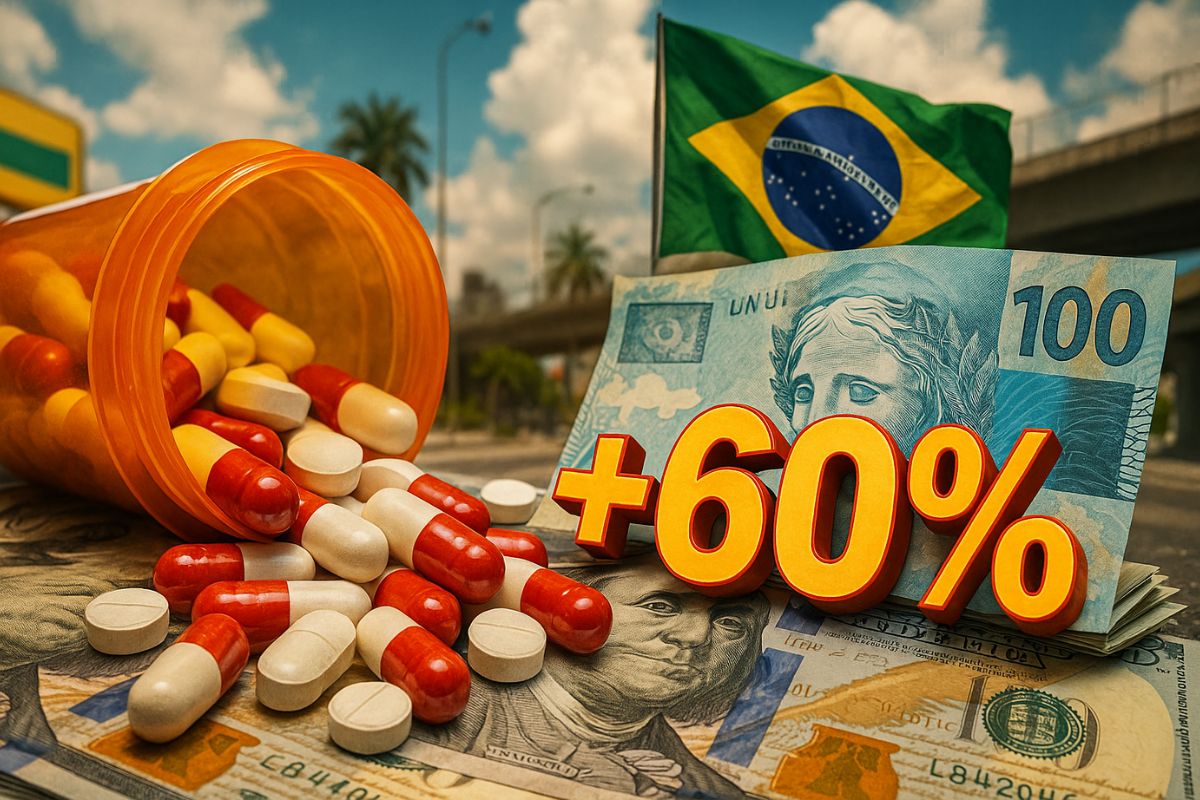
Change in ICMS Collection in Minas Gerais, Which Will Use the Average Price Weighted to Final Consumer (PMPF) Instead of the Added Value Margin (MVA), May Raise Drug Costs by Up to 60%
A significant change in the ICMS collection on medications in Minas Gerais promises direct impact on both the pharmaceutical sector and consumers’ wallets. Decree No. 49.107/2025, signed by the state government, changes the tax calculation criterion: instead of using the Added Value Margin (MVA), it will adopt the Average Price Weighted to Final Consumer (PMPF), an indicator based on actual market prices.
The stated goal is to align taxation with commercial reality, but experts warn that the new methodology could increase the final price of medications by up to 60%. The PMPF will be defined based on price surveys conducted in pharmacies and drugstores. If a medication does not have an available PMPF, the Maximum Price to the Consumer (PMC), set by the Drug Market Regulation Chamber (CMED), will be used.
What Changes with the New Calculation and Why It Might Raise Drug Prices
With the new rule, the State stops assuming a fixed margin and starts using market values as a direct reference for ICMS collection.
-
Brazilian city bets on the business environment to generate jobs and attract investments in the energy sector — secretary reveals strategy at Macaé Energy 2026.

-
50 viaducts, 4 tunnels, 28 bridges, and 40 kilometers of bike paths: BR-262 in Espírito Santo will receive 8.6 billion reais for the largest engineering project in the state’s history, inspired by the Immigrant Highway in São Paulo.

-
Brazil produces too much clean energy and doesn’t know what to do with it: over 20% of solar and wind capacity was wasted in 2025 while investors flee and 509 renewable generation projects were abandoned in the last year.

-
Piauí will produce a new fuel that replaces diesel without needing to change anything in the truck’s engine and reduces pollutant gas emissions by half: truck drivers from all over the Northeast are already celebrating the news that will arrive later this decade.


This change creates a hierarchy: first the PMPF, then the PMC, and only as a last resort, the old MVA.
In practice, this means that pharmacies and distributors may pay tax on a higher price than what is actually practiced at the counter, especially for products with large discounts or promotions.
Tax specialist Jiovanni Coelho explains that “the average price method may not reflect the reality of pharmacies,” leading to regional distortions and artificial increases in the tax base.
The legal-tax coordinator of Fecomércio MG, Danielle Iranir, emphasizes that “the change alters the way the tax is collected and tends to increase the operational cost for companies, which will have to review tax parameters and pricing before the regulation comes into force, scheduled for December 1, 2025.”
Pharmaceutical Sector Warns of Risk of Passing Costs to Consumers
Representative entities of commerce warn that the new ICMS model could make medications more expensive in small and medium-sized pharmacies, especially in rural areas.
“Medications without a defined PMPF may have the maximum price of CMED as a base, which completely distorts reality,” says Lucas Rosa, head of marketing for Grupo AMR Saúde.
According to him, pharmacies with less digitalization and reduced margins will feel the most impact, needing to review tax systems and pricing strategies.
The result could be reduced promotions, loss of competitiveness, and partial cost passing to the final consumer.
Additionally, there are concerns about the transparency of the criteria used to define the PMPF.
Tax lawyer Luís Garcia from Tax Group points out that “without clarity on which pharmacies will be considered, which price period will be analyzed, and if discounts and loyalty programs will be included, the calculation could lead to questions and legal disputes.”
Fecomércio MG Calls for Review and Warns of Economic Impact
Fecomércio MG has already sent a letter to the state government requesting the reversal of the decree and the maintenance of MVA as a reference.
The entity states that the new model affects the entire chain, from industry to pharmacies, and could result in an increase in the effective tax burden.
Danielle Iranir warns that “when the tax is calculated on a base higher than the market reality, the amount to be collected increases, and the sector may not be able to absorb the additional cost.”
Thus, part of this increase tends to be passed on to the final consumer, raising the prices of essential medications and compromising public access to treatments.
Comparison with São Paulo Shows Opposing Directions
While Minas Gerais opts to adopt the PMPF as the tax calculation base for ICMS, the state of São Paulo is going in the opposite direction.
There, the government has decided to end the tax substitution model (ST), allowing the tax to be collected at each stage of the marketing chain, from industry to consumer.
According to Fecomércio SP, the elimination of ST reduces bureaucracy, improves cash flow for companies, and favors the natural formation of prices.
“While São Paulo acknowledges the flaws of PMPF and abandons it, Minas Gerais decides to implement it, which could create competitive mismatches between states,” analyzes Jiovanni Coelho.
Practical Consequences and What to Expect from December
The new ICMS rules come into effect on December 1, 2025, but still depend on the official publication of reference values.
Until then, pharmaceutical companies will need to adapt, reviewing systems, parameterizations, and supply contracts.
The most likely scenario is a gradual increase in drug prices in Minas Gerais, especially in higher value-added categories.
At the same time, pressure is growing for adjustments and a review of the model if the negative effects on consumption and access to health are confirmed in the first months of implementation.
The change in ICMS on medications in Minas Gerais raises a broader discussion about tax fairness and regional balance.
While the official goal is to update the calculation base, the practical impacts may directly affect those who most depend on continuous access to medicines.
And you, do you believe that the new ICMS calculation will bring more fairness or just price increases? Do you think this change could affect public access to medications? Leave your opinion in the comments — we want to hear from those who experience this in practice.








Seja o primeiro a reagir!